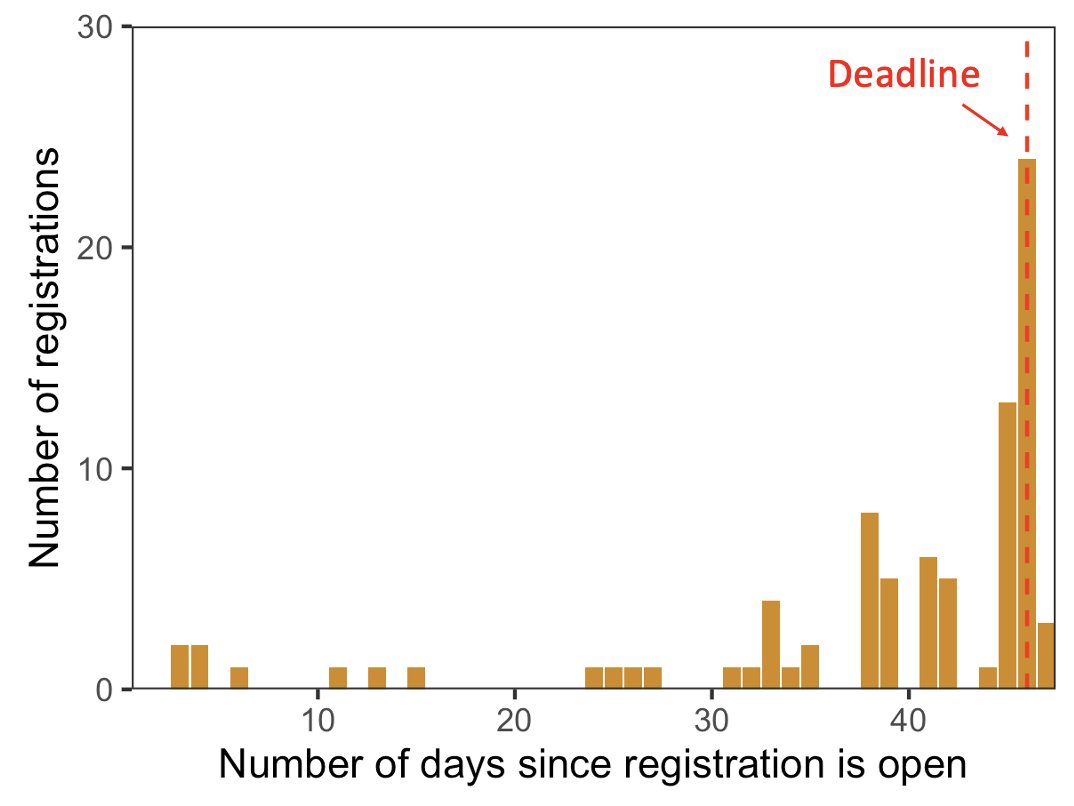
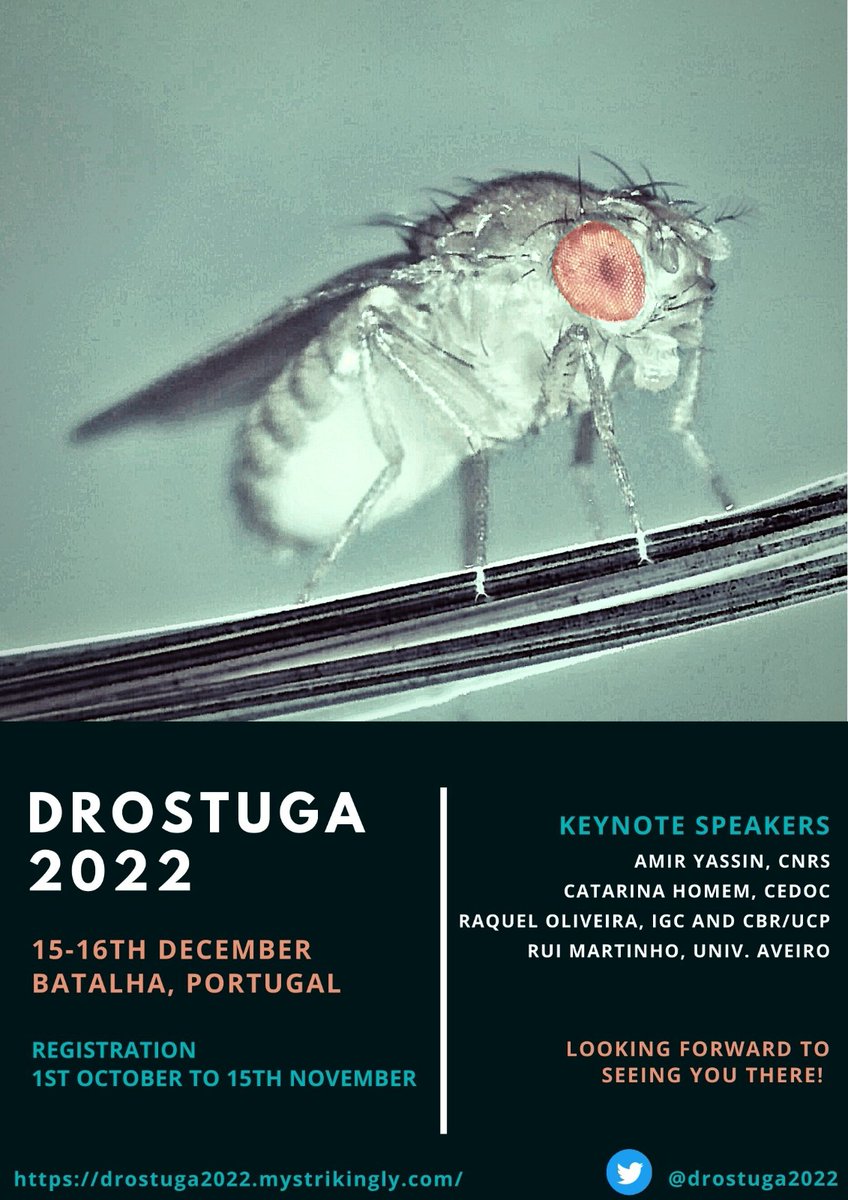
Registration for DrosTuga 2022 is done! Who would guess that Portuguese researchers would leave it to the last minute to register for a meeting? Thank you all, we are expecting a great meeting!
This can be the scenario for you next talk… but you have to hurry, registrations for DrosTuga will close in one week! Follow the link to share your latest research: https://t.co/Di6O0R2hiK
How many antibodies from DSHB have you used throughout your career? Can you imagine your life without them? We certainly cannot. That is why DrosTuga 2022 is so proud to be sponsored by @_DSHB_!
Did you know that DrosTuga 2022 is proudly sponsored by @Co_Biologists? Amongst the many beautiful examples published by their journals, you can find this recent video from the lab of Ivo Telley @IGCiencia
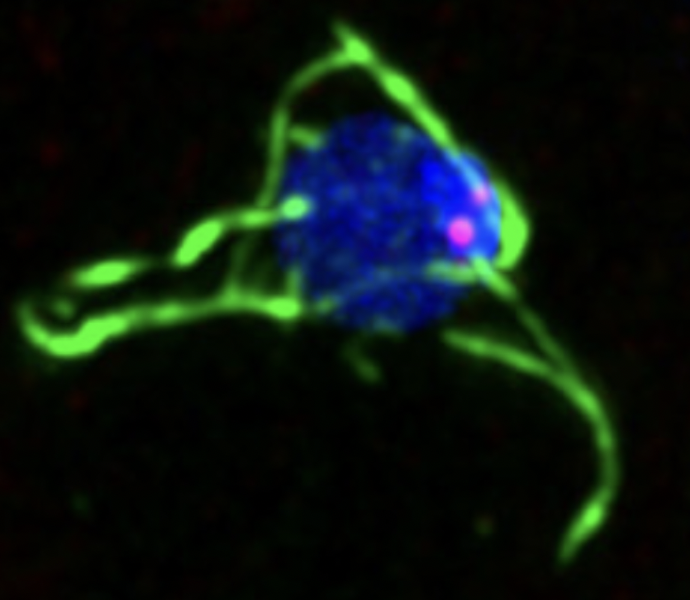
Today we will leave you with this enigmatic image. You know that in blue is DNA, in red are centromeres, but about the green? You can read all about it bellow or, even better, you can register for DrosTuga 2022 and learn it from @martinho_lab (Keynote) and Tália (Organizer).
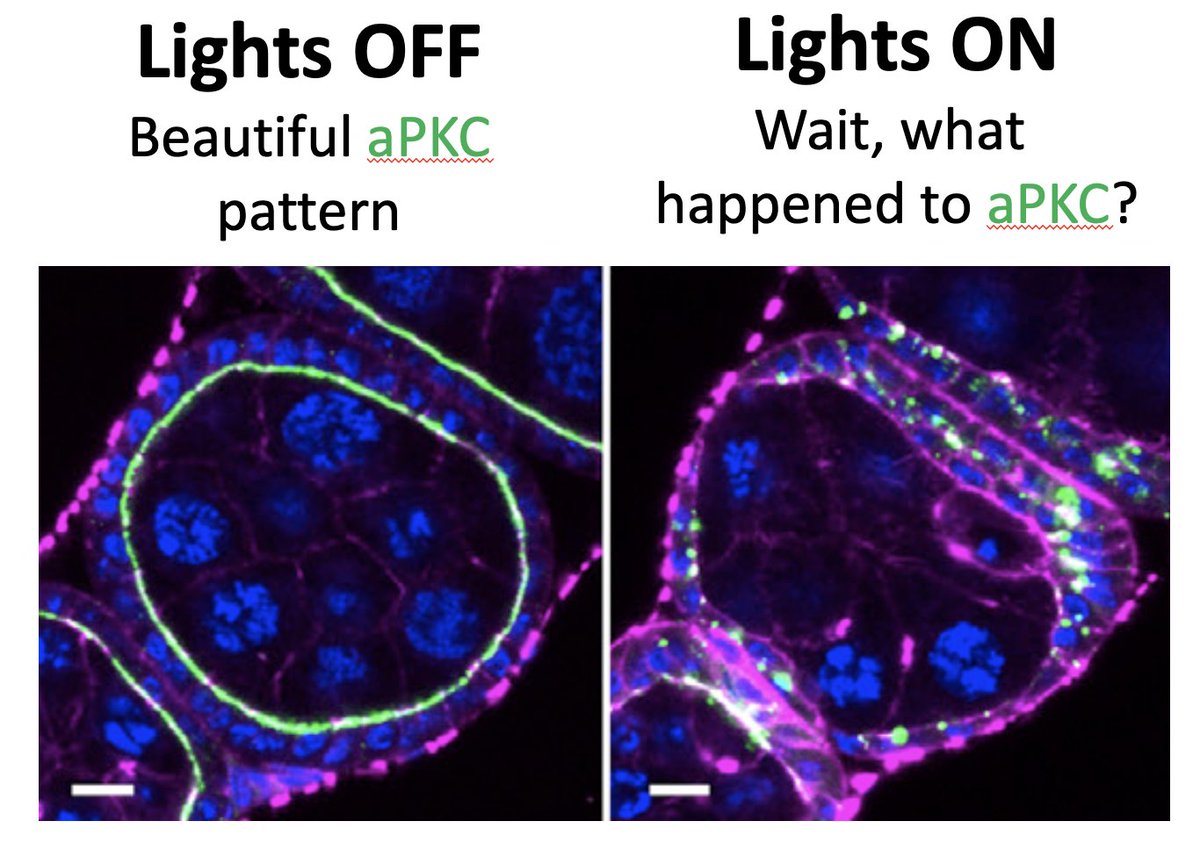
Can you see the defects on those follicular cells? @Polarity_i3S lab uses an exciting optogenetic tool to control aPKC activity very precisely. If you want to know its impact on tissue homeostasis, follow the link bellow
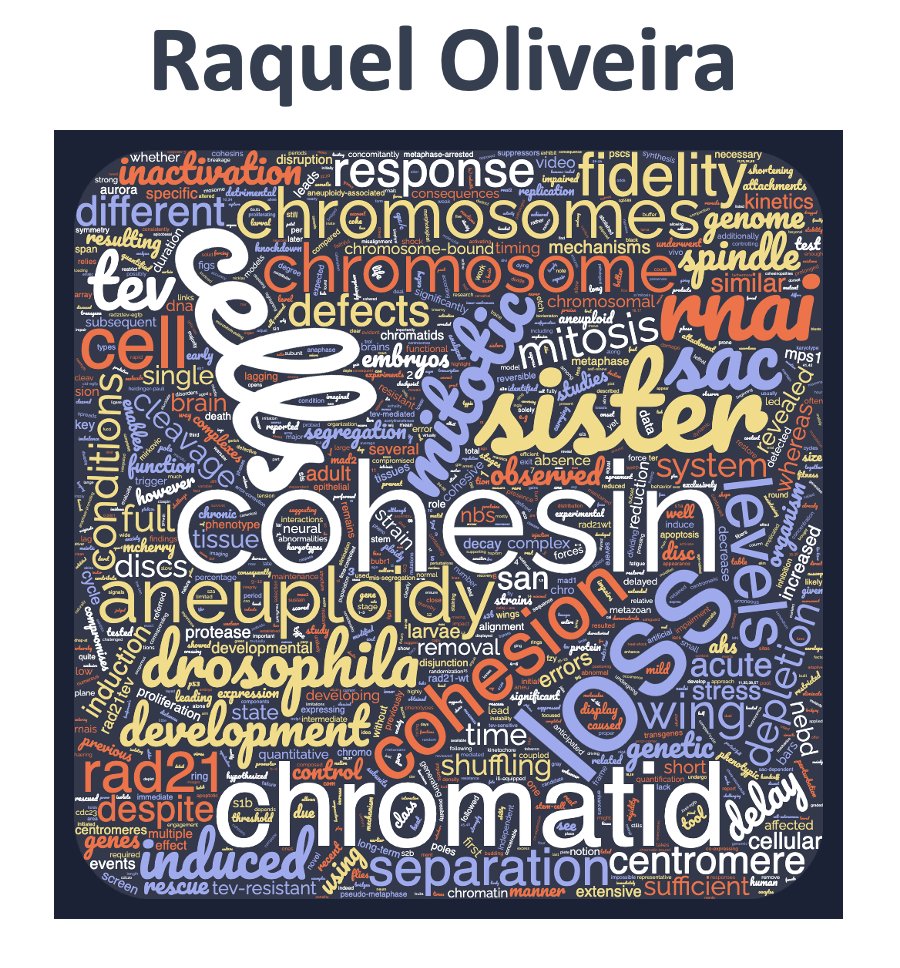
Today we present you another keynote speaker in a word cloud, Raquel Oliveira @CHR_lab. With a kind reminder that, if you want to help with the cohesion of the community, registrations for are now open for DrosTuga 2022!
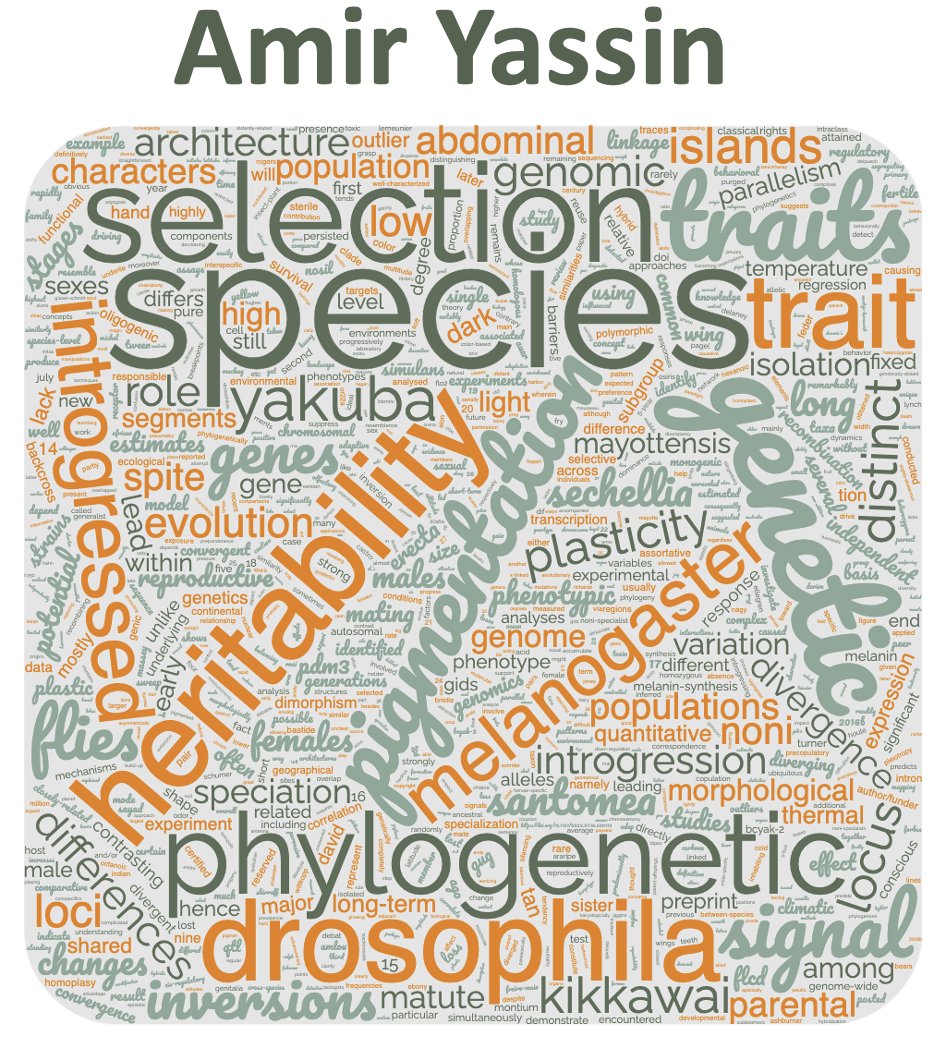
Let’s remind ourselves that D.melanogaster is not the only Drosophilid out there... just look at Amir Yassin, DrosTuga 2022 keynote speaker, in a word cloud.
Time for another DrosTuga 2022 keynote speaker! Today we present you @martinho_lab with the lab’s most recent work in a word cloud. Yes, you have the reassuring dance style reference in there.
Get to know our keynote speakers through word clouds, using the text from their most recent publications. Today: @TheHomemLab. Yes, Drosophila is in there.
Going through the archives you realize that nipagin has been part of Drosophila’s diet for a long time, but honey has been substituted by the boring glucose in most of menus.
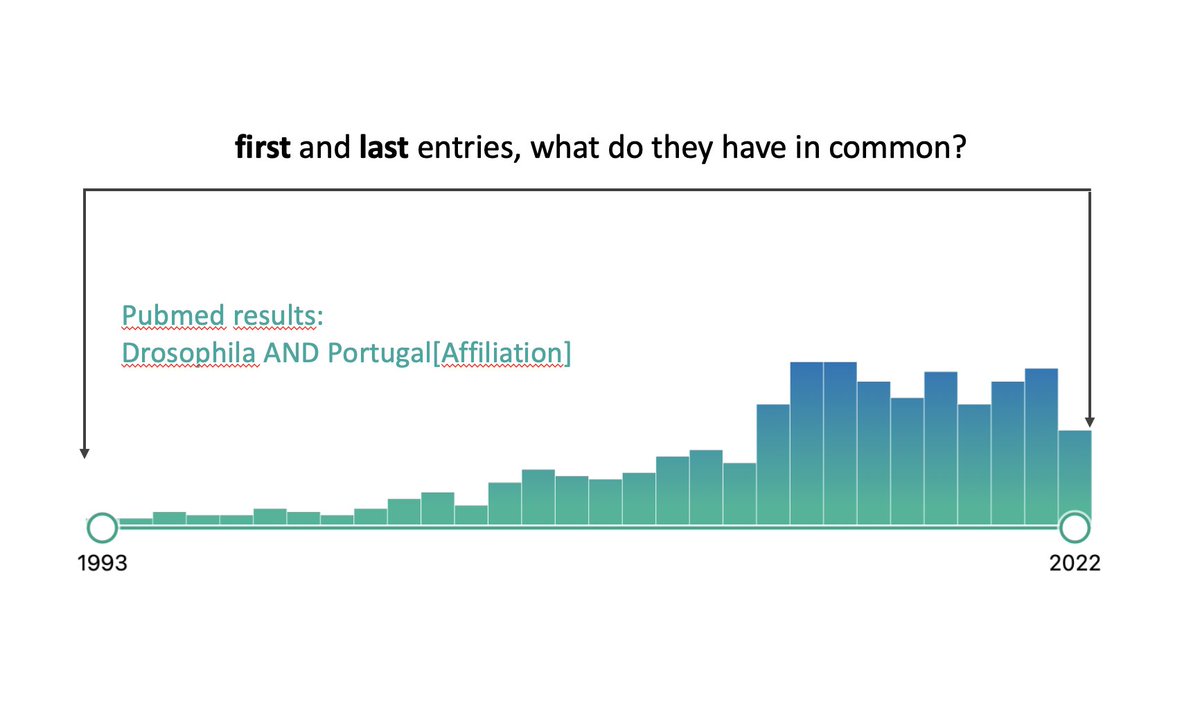
This is what happens when you search the topic Drosophila & Portugal in Pubmed. Certainly, Drosophila research in Portugal did not start in 1993, but it is still a humbling moment when you realize that both the first and last entries have Claudio Sunkel as an author…
Sometimes, losing or multiplying a genomic region confers the same phenotype! This is a puzzling and fascinating story published last year by @lmvteixeira lab, where the authors show that two genomic reconfigurations in Wolbachia genome result in over-proliferation in Drosophila.
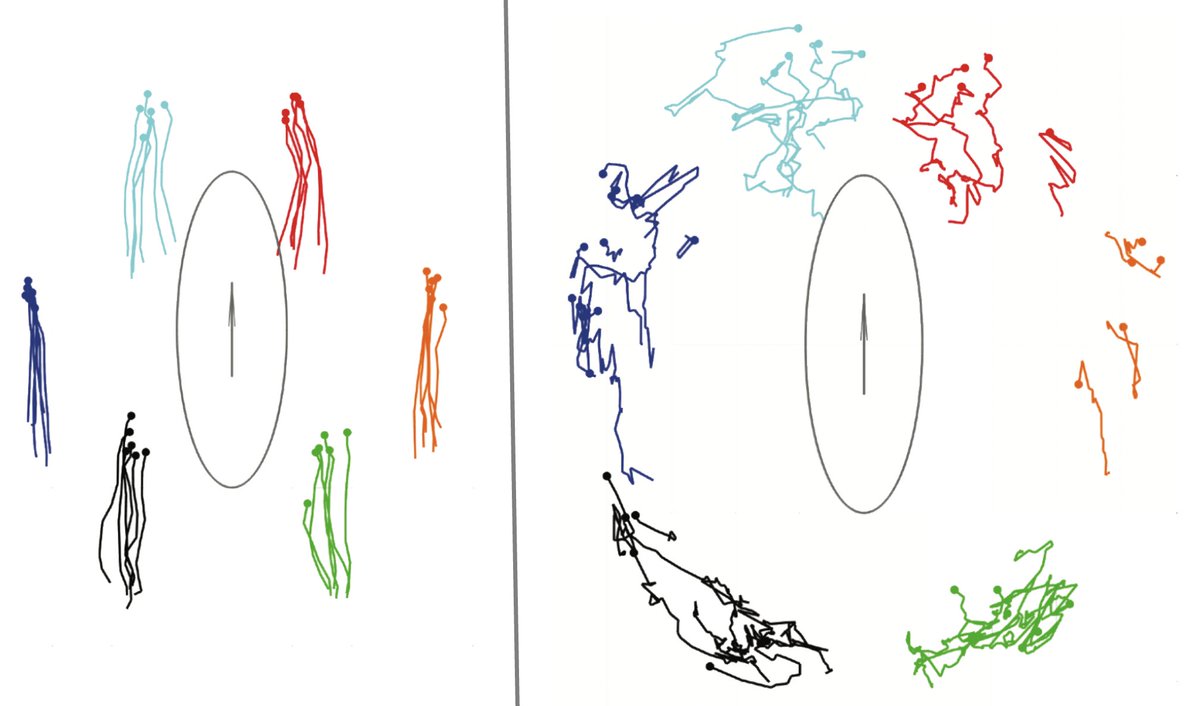
What can cause beautifully parallel and coordinated lines (left) to behave so wiggly (right)? You can find the answer in the last preprint from @CMendesLab that shows that stimulating mechanosensory bristles in the Drosophila leg can initiate locomotion, uncoordinated at first...