The remarkable dance of abnormal SC structures (polycomplexes) within a Prophase I-arrested Drosophila oocyte (stage 7). Lots of nuclear action in this meiotic arrested cell... (1/2)
Have you seen this paper in @Nature ? https://t.co/v0yl5jt54K
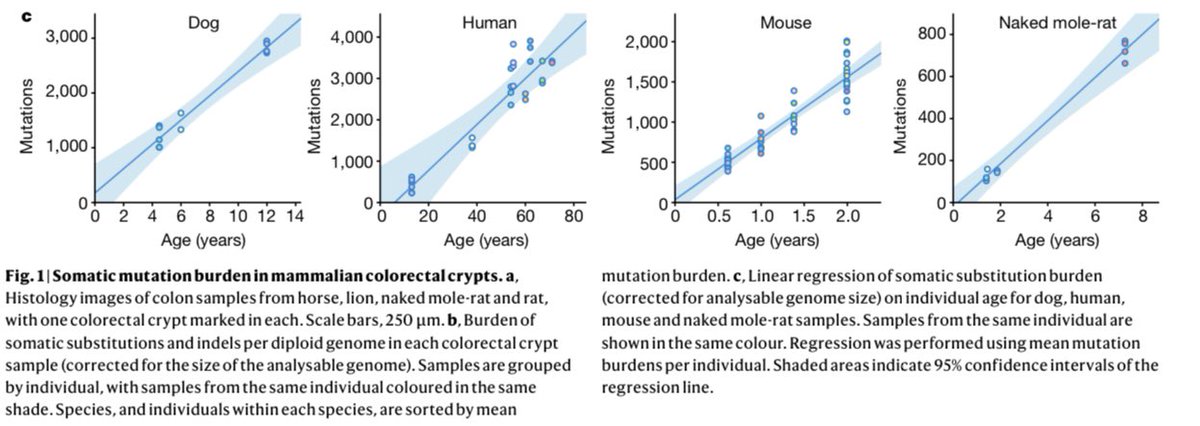
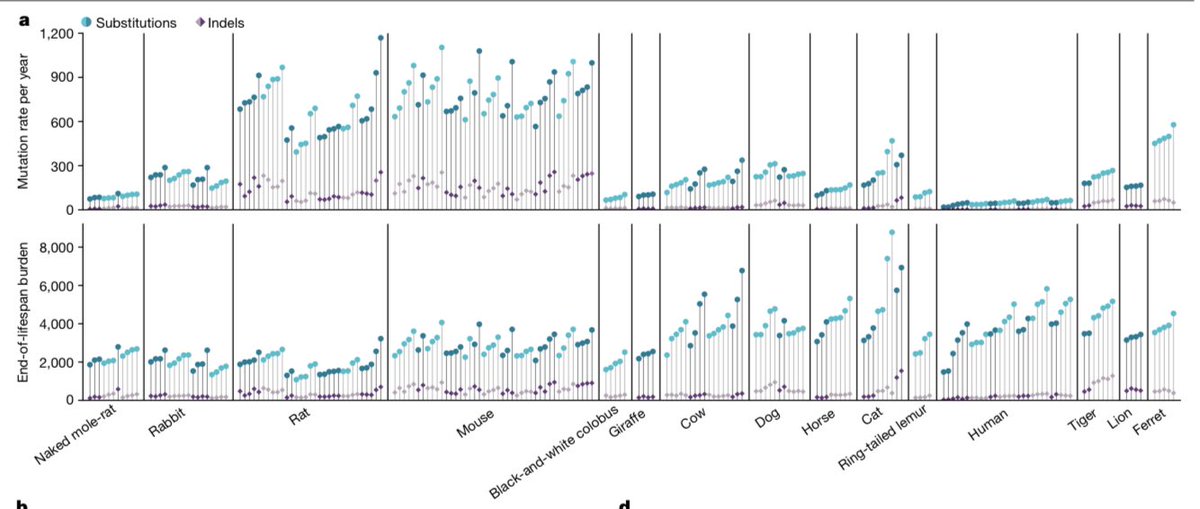
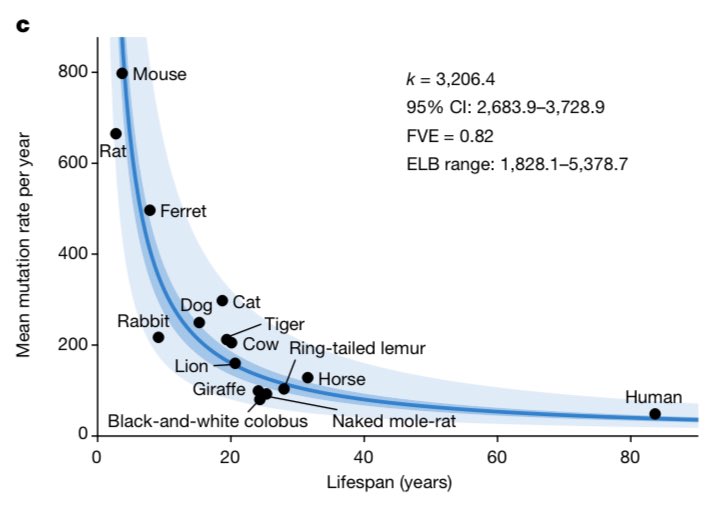
I’m very skeptical about the idea that accumulation of somatic mutations could be the cause of aging. However, in this study authors demonstrated how strikingly accurate rate of mutations accumulation between species correlate (inversely) with species lifespan.
Also note, that absolute number of mutations per genome is extremely low in naked-mole rats compared to mice. (Does it mean that NMRs have more faithful DNA polymerase?)
But my skepticism still holds. Without mechanistical evidence I would say that accumulation of somatic mutations is rather consequence of aging, than its driver.
Again, look at the data. Animals ultimately accumulate around 4,000 mutations per genome. But more than 90% of our genome does not code proteins. Hence we might say that only 400 of these mutations target genes. But out of 20,000 genes in our genome one type of cell uses less than half of them. Thus, we have now only 200 plausibly detrimental mutations. However, not all mutations are missense: decrease the number again. Next, our genome is diploid and for vast majority of genes one functional copy is more than enough. What’s the probability that among these 150 mutations you will hit one of those rare genes, for which the loss of a single copy results in a strong phenotype? Or what’s the probability that among these 150 mutations you hit both copies of one gene? Finally, many proteins have isoforms with partially or even fully overlapping functions. Moreover, in this study authors used intestinal cells, a tissue known for one of the highest rate of mutations in the organism.
However, I’m not the specialist in genomics and maybe I’m totally wrong. If the answers to my doubts are already given I would be happy to hear them!
For example, I know that @VijgJan lab have data on a strong correlation between increased number of mutations in the cell and augmentation of transcriptional noise. Another argument coming to my mind is that untranslated regions of genome are less susceptible to DNA damage just because of passive protection with histones and thus mutations might target the actively translated (and hence pivotal for a cell function) regions of genome with higher probability.
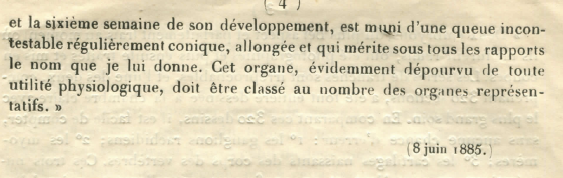
Yes 'From these facts, it results that the human embryo....has an 'incontestable' tail' Hermann Fol, 1885. (Former private collection of Friedrich Miescher)
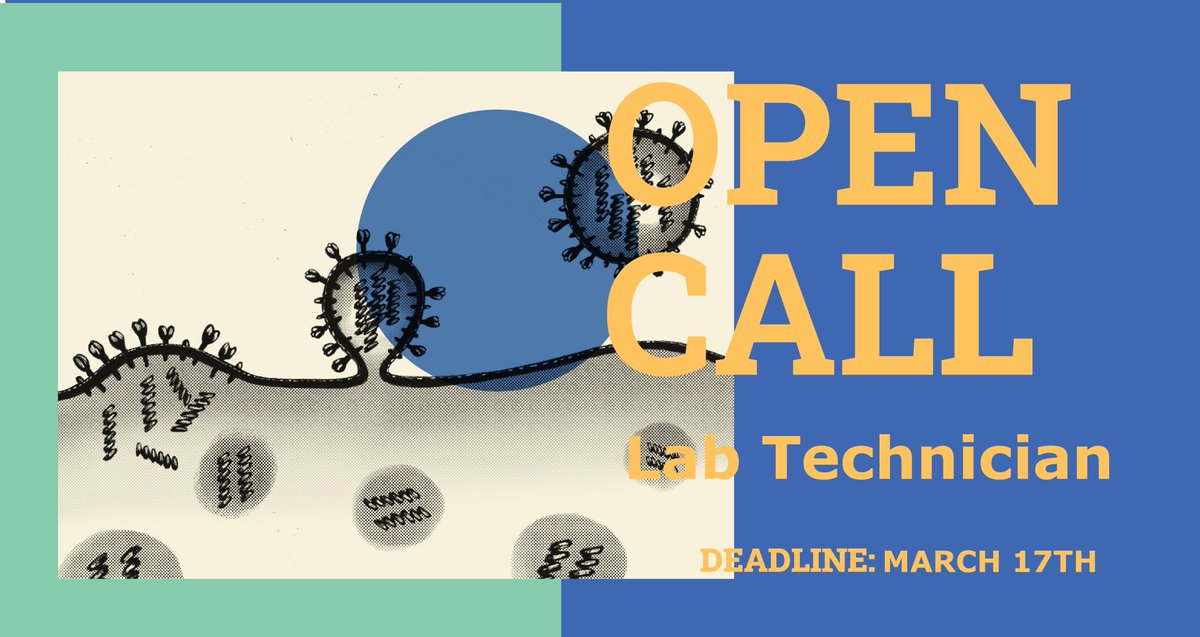
A position is open in my laboratory @IGCiencia for a lab technician to start in April 2024 to work in influenza antivirals. The position will initially last 5 months and is renewable.
Please see the details at https://t.co/VIGnyhCBD0:
Under: Cell Biology of Viral Infection Lab
1/ 📢New #paper alert! Ever wondered how mammalian #oocytes deal with protein #aggregation during their prolonged #life? Check it out in our new paper led by @zaffagg3 out today in @CellCellPress: https://t.co/mH7Hcb41is
👇🏽a thread:
My former PhD student Pamela Borges @PAMELAB69441699 returned to her home country and is revolutionising #breast#cancer#diagnostics in Cabo Verde 🇨🇻. @PGCD_IGC was revolutionising PhD programme that I am proud to have been a teacher and PhD supervisor.🙏
https://t.co/kfQhOfOIum
Really happy to see this out:
https://t.co/zxeI4xAf90
We use FCS to reveal that Bicoid dynamics vary spatially across the Drosophila embryo. We demonstrate this can explain previous observations about gradient extent and time scale of formation.
🎉 🎉Our paper, "Single-nucleoid architecture reveals heterogeneous packaging of mitochondrial DNA," is now published! https://t.co/EWg8FtAWrF @NatureSMB
See the tweets below ⬇️ for a summary. Congratulations to the whole team! @rsisaac@mtcicero26@stergachislab 🎉🎉
Left: Two leading labs show, with an impressive set of experiments, that nucleosome positioning patterns drive chromatin compartmentalization in yeast. (Nature Genetics, 2024)
Right: A peniless nobody describes the same concept by analyzing public data. (Current Genetics, 2018)
🧠 🎥 Ever wonder how we see movies as smooth motion instead of flickering images? @ShemeshL@ChampalimaudF's latest study reveals the brain's "Continuity Illusion" trick, spotlighting the often-overlooked #superiorcolliculus 🔎
👉 @NatureComms Paper: https://t.co/3Dm4ImqoZW
“Ghrelin administration rescues molecular and histopathological progeroid features, prevents progressive weight loss in later stages, reverses the lipodystrophic phenotype, and extends lifespan of #Progeria mice”.
Congrats @claudiacavadas & C Aveleira!👏
https://t.co/4kzxGaWMOR
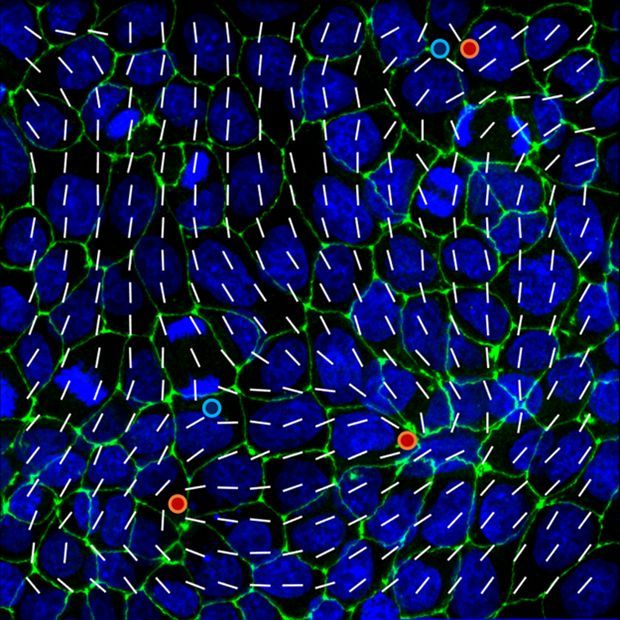
What do star fish, snowflakes, and even cells have in common?
I am @JuliaEckert10 and I would like to take you on a journey into the field of soft matter and give you a brief overview of experimental observations on symmetries in biological systems. #EpithelialMechanics