India’s poorest pay higher effective tax rates than the rich, finds major new study by Prof Mukulika Banerjee of the LSE.
Speaking on cine ink podcast London Vārta: New World Order, Prof Banerjee notes:
Lower-income Indians are shouldering a disproportionately heavy tax burden compared with the wealthiest sections of society, according to new research that challenges widely held assumptions about the country’s tax system.
Dr Mukulika Banerjee, a leading political anthropologist, has revealed that while everyone pays the same Goods and Services Tax (GST) on everyday items, the impact falls far more heavily on the poor when measured as a proportion of their income.
“Everyone pays GST – indirect tax – and the poor in India end up paying a higher proportion of their income in tax than the rich,” Dr Banerjee explained. “If you buy a packet of biscuits and a rickshaw puller also buys a packet of biscuits, the GST charged on that packet is exactly the same for both of you. But the rickshaw puller earns far less than you, so in proportion to his income, he is paying a much higher rate of tax. When you aggregate this across the country, the bottom fifty per cent of the Indian population is paying a higher proportion of their income in tax.”
Her findings, part of a British Academy-Leverhulme Senior Fellowship, raise serious questions about taxation, inequality, and the health of India’s democracy. Fieldwork data paints a stark picture of the country’s extreme wealth gap: a daily-wage construction worker, fruit vendor, or pavement tailor earning around ₹30,000 per month qualifies for the top 10 per cent of earners, while half of all Indians survive on just ₹6,000 a month. Meanwhile, the top 1 per cent captures a strikingly large share of national income.
#londonvārta #profmukulikabanerjee #cineinkpodcast #hindipodcast
@Aunindyo2023 Schools timings in summer were 7 am to 1 pm. Summer vacation in May & June (2 months). Farmers would work in fields only before Noon.
The West uses its power over the SWIFT system to strangle any country that refuses to align with Western economic and geopolitical interests. It is imperative for global South countries to establish alternative financial institutions.
Whenever global South states pursue real economic sovereignty they become targets for Western military intervention and sanctions. The assaults on Iran and Cuba are just the latest in a long history of such violence.
38 million deaths since 1971. “When you consider the scale of the violence and damages, it becomes clear that this system is not something we can continue to accept.”
जब सच बोलने की कीमत चुकानी पड़ी, तो फिर से शुरुआत की। Prannoy Roy - NDTV के संस्थापक, भारतीय टीवी पत्रकारिता के जनक। 1984 में NDTV शुरू किया, 2022 में Adani Group को सौंप दिया। लेकिन 75 साल की उम्र में हार नहीं मानी। 2024 में DeKoder शुरू किया - AI-आधारित डिजिटल प्लेटफॉर्म। 15 भारतीय भाषाओं में चुनाव विश्लेषण और वैश्विक मुद्दों का विश्लेषण। आज खुद फोन से इंटरव्यू रिकॉर्ड कर रहे हैं। कोई बड़ा स्टूडियो नहीं, लेकिन जुनून वही है। पत्रकारिता से बड़ा कुछ नहीं। यह कहानी हर उस व्यक्ति के लिए है। जो मानता है कि उम्र सिर्फ एक नंबर है, और आत्मसम्मान पैसे से बड़ा है। RT करो
Participated in discussion on Career Opportunities in Public Health Sciences with Bachelor of Public Health Sciences students at University Institute of Public Health Sciences, MDU, Rohtak, 26th February 2026
A great explainer on what has actually happened to the rural employment guarantee because of the new bill hastily passed by the Modi government, by @rajendran_naray
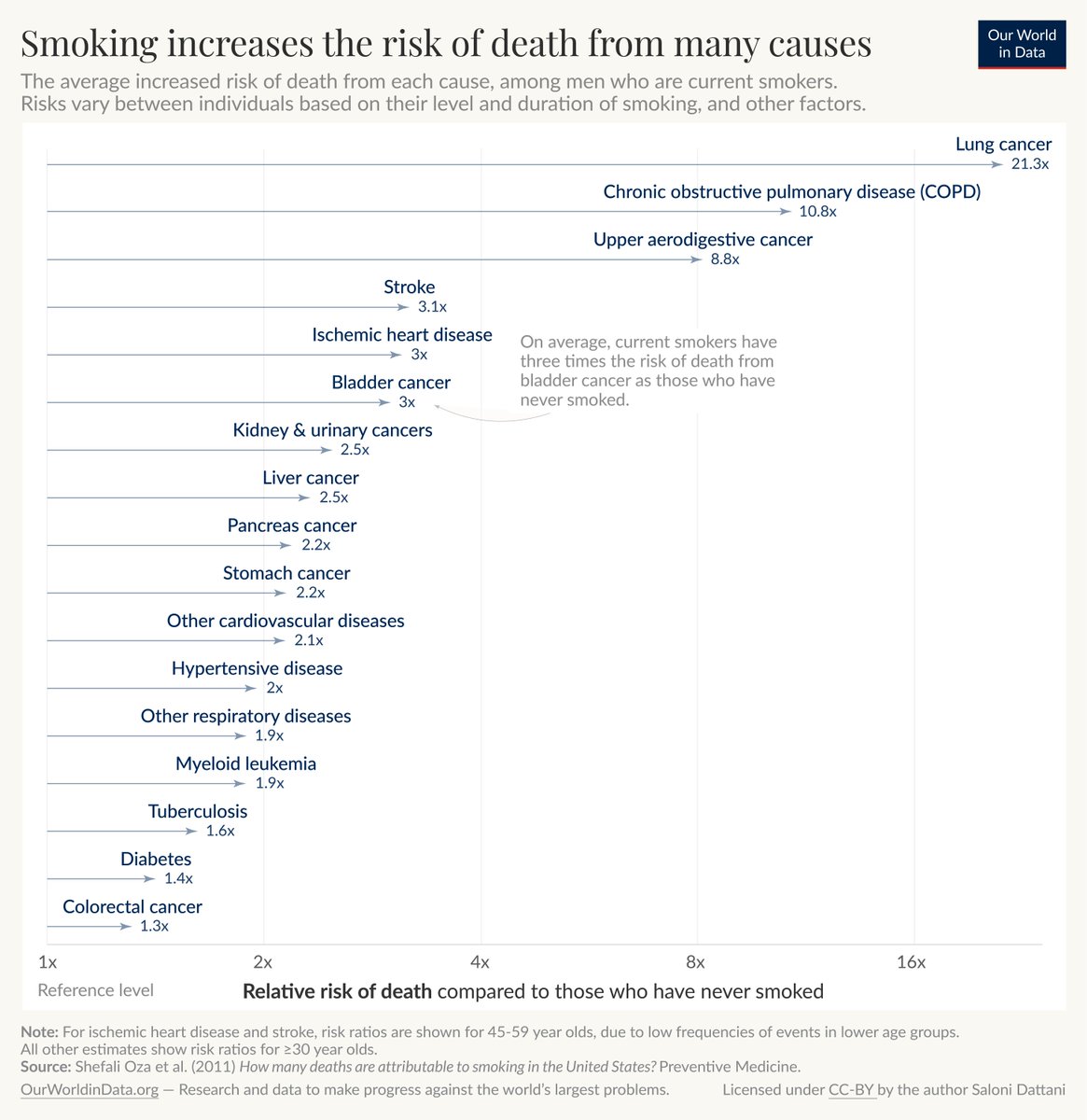
When someone dies, they are usually given a single underlying cause — a particular disease or injury — on their death certificate. But beneath each disease or injury, there can be a range of factors that make the disease or injury more likely to occur.
These are called risk factors. We’re all familiar with many: for example, smoking is a risk factor for lung cancer and a multitude of other causes of death, as you can see in the chart.
Understanding these factors is important because they can help us identify how to reduce disease and death.
You can read the World Inequality Report 2026 in 10 different languages: English, Arabic, Chinese, French, German, Hindi, Portugese, Spanish, Russian, Thai
Spread the world and join the global fight for equality!
https://t.co/mnkh4fbQFE