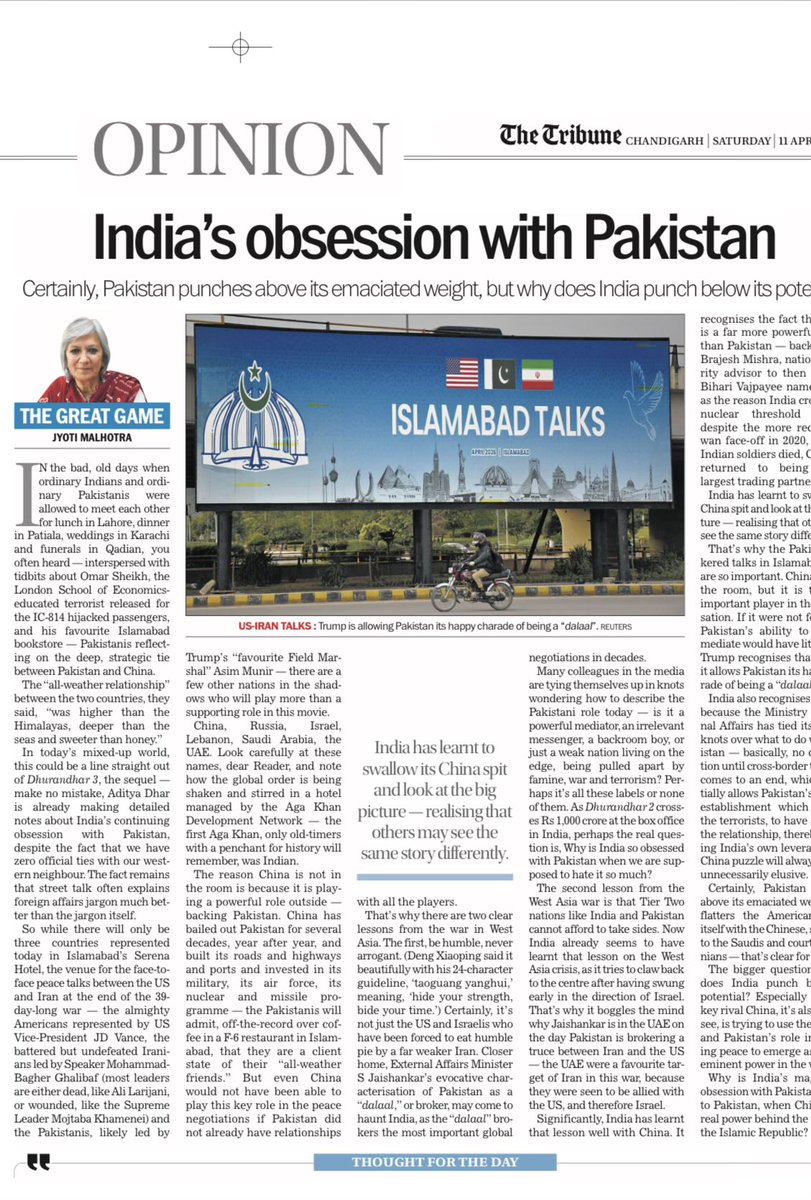
India calls Pakistan a ‘dalaal,’ so what explains India’s obsession? From Dhurandhar to Jaishankar, I argue that Delhi has to look beyond, to the spectre of the China hand. My column #TheGreatGame in The Tribune @thetribunechd
American universities, in bowing to authoritarian power, have forfeited both their purpose and their moral authority. “Science and the arts should always be under the guardianship of the republic of letters.” — Karl Polanyi" @naderalihashemi@mehdirhasan@nntaleb
American president announces his intent to commit war crimes of bombing electric and water installations, and no one in the media is commenting on this. Trump wants the Arabian Gulf go up in flames.
@RyanRozbiani Trump is clearly delusional, if he hits Iran's power plants as a war crime, who does he think is going to bear the brunt of the retaliation. He is clearly not thinking at all.
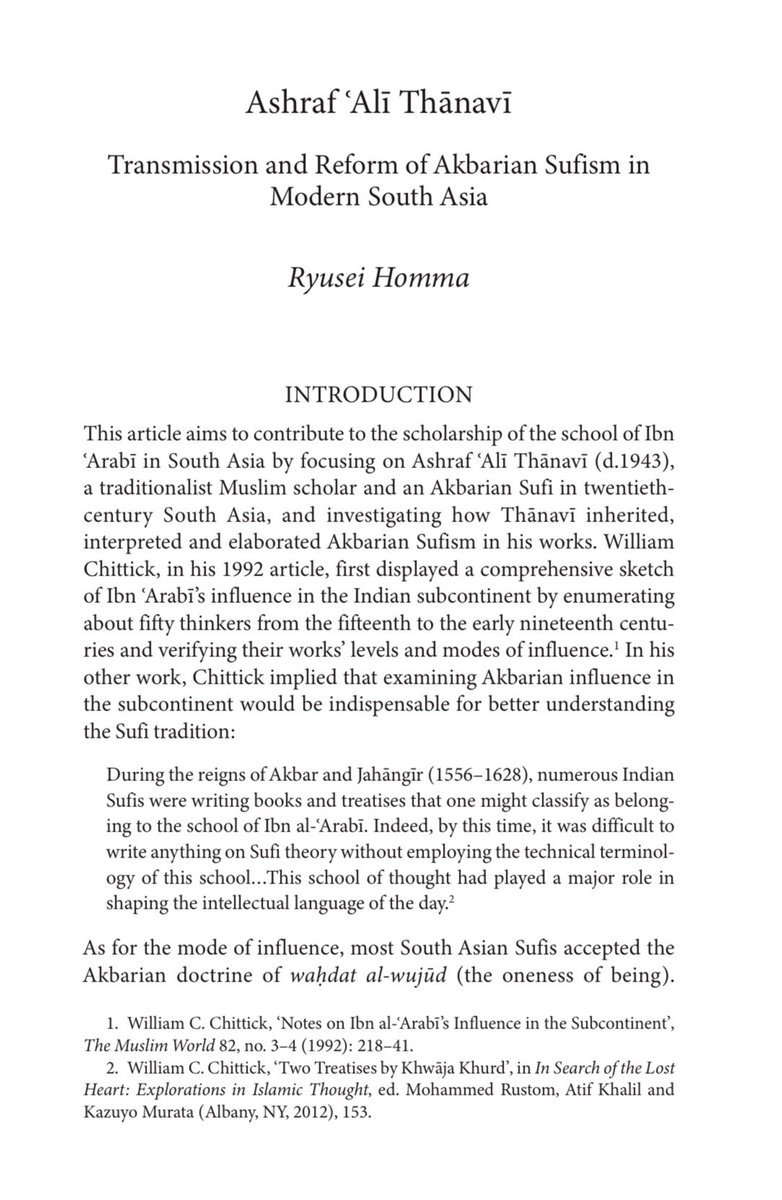
Dear friends, my latest article on Ashraf ʿAlī Thānavī’s Akbarian Sufism is finally out in the Journal of the Muhyiddin Ibn ʿArabi Society. Please be sure to download it from my Academia page! https://t.co/9LKMuB7qvx
In 1931, as Gandhi travelled to London for the Round Table Conference, not everyone in Britain welcomed him with respect. Winston Churchill famously mocked him, calling him a “half-naked fakir” who dared to walk into the corridors of imperial power as an equal.
But Gandhi had already made his choice years earlier. He had given up stitched suits and Western attire, choosing instead a simple loincloth and shawl—cloth he spun himself. It wasn’t a fashion statement. It was a message. He dressed like the poorest Indian because he represented them.
That same year, he was invited to Buckingham Palace for tea with King George V and Queen Mary.
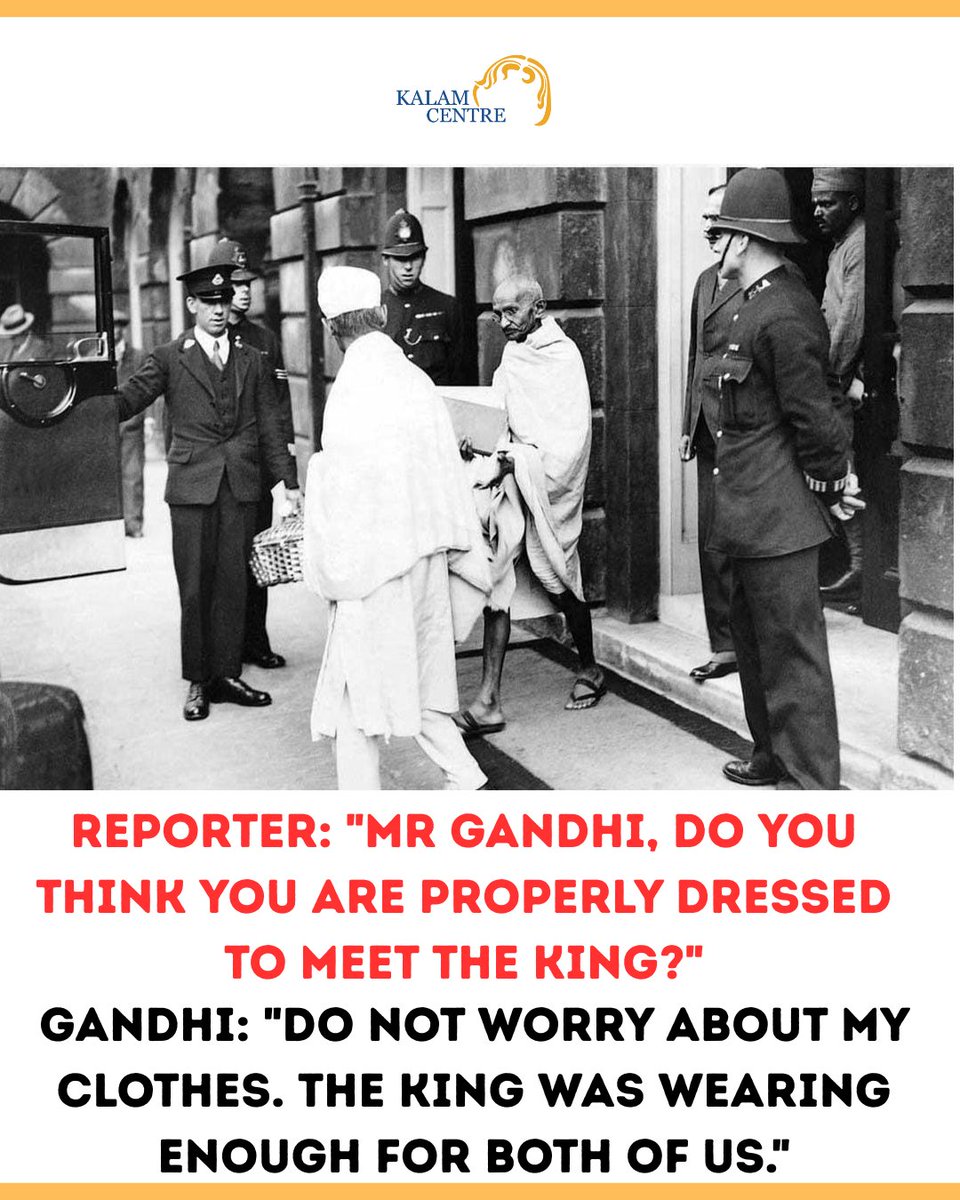
Gandhi arrived exactly as he always did—wearing his handmade sandals, a loosely draped shawl, and his loincloth. No attempt to impress. No attempt to conform.
After the meeting, as he stepped out of the palace, a reporter asked him cheekily, “Do you think you were dressed appropriately to meet the King?”
Gandhi smiled and replied with calm wit:
“The King had enough clothes on for both of us.”
The remark travelled across the world faster than any speech. The next morning, newspapers carried the image of a simply dressed Indian man walking out of the most powerful palace in the world—without changing who he was.
Because Gandhi didn’t need royal clothes to carry royal dignity.
He walked into Buckingham Palace dressed like the poorest man in India…
and walked out as the richest man in character.
#MahatmaGandhi #Bapu #IndianHistory #FreedomMovement #Simplicity #Ahimsa #Truth #Leadership #History #Inspiration
"Sometimes the lack of substantive freedoms relates directly to economic poverty, which robs people of the freedom to satisfy hunger, or to achieve sufficient nutrition, or to obtain remedies for treatable illnesses, or the opportunity to be adequately clothed or sheltered, or to enjoy clean water or sanitary facilities".
(Amartay Sen)