doctor’s duty is to treat patients, not to tolerate abuse and intimidation. When attendants aggressively confront a doctor and start filming her, walking away from an escalating situation is not ego. It is self-defence.
You cannot expect doctors to work under fear of assault and then lecture them about their duty when they try to protect themselves.
Patient safety matters. But doctor’s safety is a prerequisite for that.
Doctors are perhaps the only professionals expected to be highly trained, permanently available, legally accountable, emotionally invested & somehow embarrassed about charging for it.
A ₹1,500 consultation after 10–12 years of training is “loot”
₹1,200 for a drink at a fancy bar? Lifestyle.
₹900 for a neopolitan pizza? Experience.
₹3,000 for a fancy haircut in Khan Market? Expertise.
But when a doctor charges for expertise, suddenly medicine must become charity.
By all means, PUNISH kickbacks, unnecessary tests & unethical practice. Ruthlessly.
But stupid politician who turn isolated malpractice into a morality play against an entire profession is not reforming healthcare. He is feeding an already convenient public prejudice. This dude, with not an ounce of morality, is suddenly targeting a profession already under so much scrutiny. (KEEP IN MIND NOBODY IS DEFENDING UNETHICAL PRACTICES)
Doctors are expected to charge like saints & pay rent, salaries, taxes & compliance costs like everyone else.
You cannot demand capitalism from the doctor’s expenses & charity from the doctor’s income.
I saw a girl on the Latent Show who hated the entire male species.
She used to say that all men look the same to me… every single one of them feels disgusting and worthless. I even hate my own father simply because he’s a man.
The girl in this picture is Asmita De. She’s from Tripura.
In her village the usual mindset was that once a girl grows up, her greatest achievement in life should be getting married. But Asmita’s father was completely against that outdated thinking. He poured every bit of his energy and every last rupee into his daughter “If you want to do judo, do it. I’m right behind you.”
Asmita says that when she came to Delhi for training, even if she got the smallest injury, her father would drop everything and rush to take care of her. Relatives and the rest of the family kept discouraging them “What’s the point of all this?” but her father never listened.
In 2023 she got a job in the UP Police through the sports quota. Things became a little easier. With the remaining time she started training even harder.
Then in December 2025 her father passed away after a brain stroke. In that moment Asmita felt everything was over.
But just ten days later her mother sent her back to training with these words: “If I stop you today, your father will be furious. He’ll say that after I’m gone, no one is left to look after my daughter.”
Asmita turned that pain into strength. Two months later she topped the Asian Trials and began preparing for the Glasgow Commonwealth Games.
Today this girl has won India’s first-ever gold medal in judo. First gold… that’s no small thing. Asmita has dedicated this medal to her coach and to her father.
I don’t remember the name of that girl from the Latent Show, and I don’t want to. I want Asmita’s name on every post, every newspaper, every Indian tweet and Instagram story.
These are the real heroes of our country the ones who carry the tricolour on their shoulders and light up India’s name on the world stage. Instead of some bitter, frustrated girl, Asmita’s story is the one that deserves to go viral.
Proud of you, girl.
Glasgow 2026 just concluded yesterday.
A slew of medals & a fourth place overall finish for India.
But of everything from these games, two stories touched me deeply.
A judoka whose father fixed cycles for ₹300 a day, in a mud house, & didn’t live to see his daughter become the first Indian, man or woman, to win Commonwealth Games judo gold.
And a farmer’s son from an Aligarh village who ran on dirt trails just to pass the Army fitness test, & last week became the first Indian ever to win two track medals at a single Games.
Asmita Dey. Gulveer Singh.
No shortcuts, no head starts.
Just hunger & the refusal to stay where they started.
This is what ‘Rise’ actually looks like.
A mud house & a village trail.
No words would be enough to explain why they inspire me.
#MondayMotivation
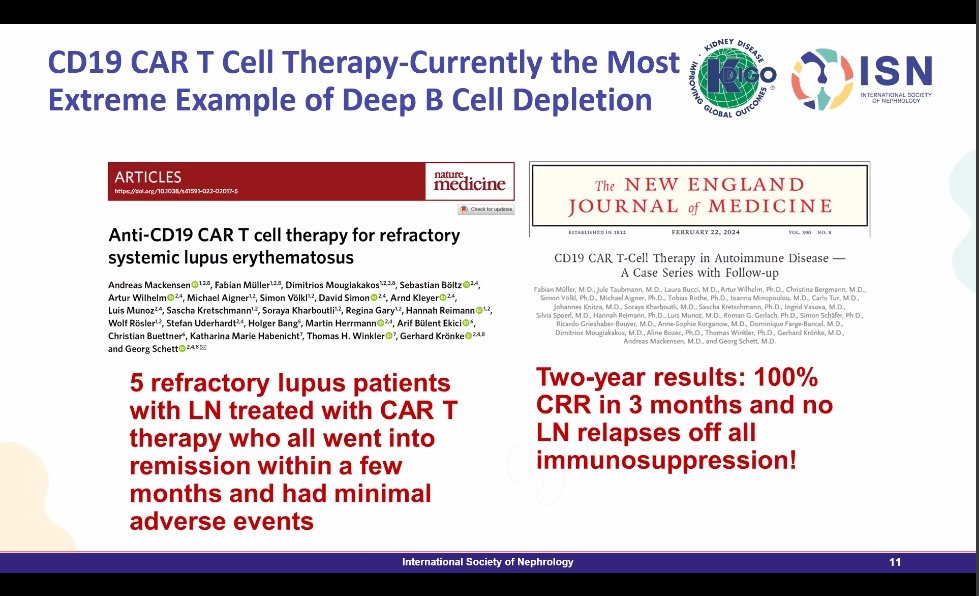
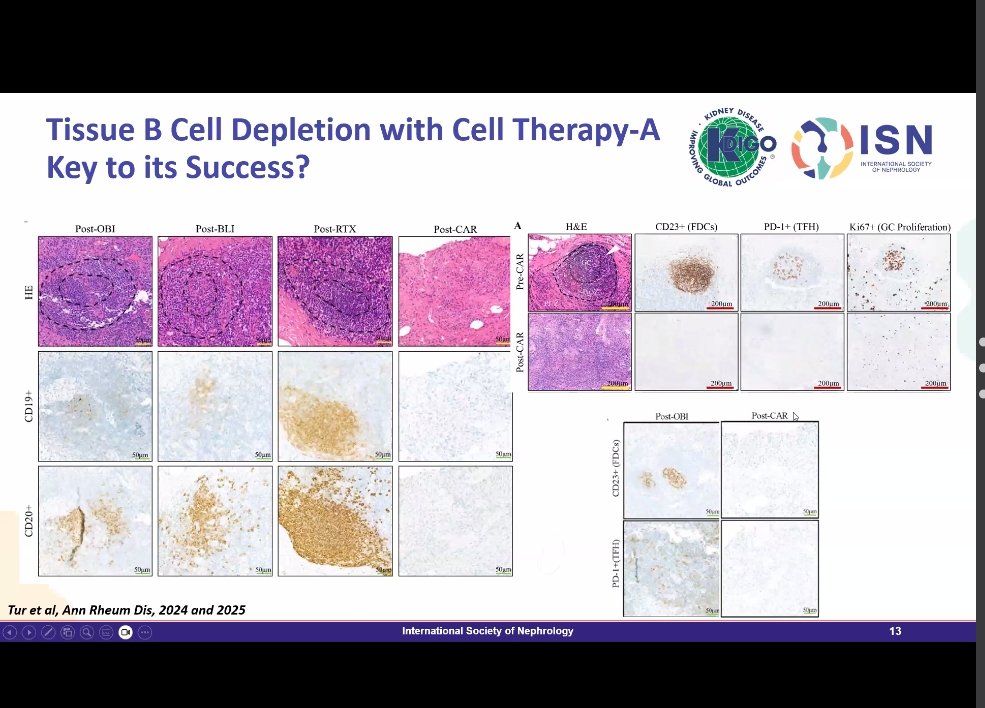
@ISNeducation@ISNkidneycare@KajareeG@krithicism@myadla@BradRovin CD19 CAR-T may represent the ultimate form of B-cell depletion
Showed success in early studies of refractory SLE/LN
Eliminating not just peripheral B cells but also tissue-resident B cells and germinal centers may be the 🔑
💊THE MISSING MEDICINE 💊
This morning in the nephrology clinic, I met Abdul, a 46-year-old gentleman with diabetes and hypertension.
Like many of our patients, he navigates a complicated healthcare journey, visiting his primary care physician at our institution’s LCECU (Low cost effective Care unit), meets endocrinology when referred by them, and comes to our nephrology clinic every few months for his kidney care. Medications come from different clinics, different prescriptions, and different doctors. Keeping track of them is not always easy.
As we reviewed his reports, he asked the same questions patients often ask. “How is my sugar, madam? How are my kidneys? Has the protein in the urine improved?”
We went through everything together. Then came the medication review. I reassured him that most of his prescriptions were visible in our hospital system & I’ll cross check them with him. But he gently interrupted me.
“No, madam. My wife has told me that every time I come, I must confirm all the medicines with the doctor by listing it out myself.” I smiled and began reading out the medications one by one.He listened carefully. After I finished, he paused.
“No, madam. One sugar tablet which I take at night is missing. It was prescribed newly after I met you last time.” He knew the medicine. He took it every day. But he did not know its name.
His wife usually accompanied him to appointments, but that day their son had an exam, so she stayed home. I told him not to worry. He could confirm it and come back after the next patient. Or I could call him back next week. But he shook his head frantically. “No, madam. I will tell you now.” He immediately called his wife.
The conversation that followed lasted only a few minutes, but it was perhaps the most memorable part of my clinic that day.
On the phone, he urged her playfully, “Tell me fast, tell me fast. The doctor is waiting!” I could hear the faint sound of a woman moving around the house, searching through medicine strips and boxes.
He guided her like google maps navigation.
“Go to the “Peeche” (back) room. → “Check the cupboard.” → “No, not that one.” → “Jaldhi Dekh (Search faster)” !
She asked patiently, “Is it in the before-dinner box or after dinner?” Eventually she found it and read out the name. He repeated it to me triumphantly (It was Gliclazide BTW) but also apologetically, relieved that the mystery had been solved but knowing that I had a long list of patients ahead.
To anyone else, it might have seemed like an ordinary exchange about an ordinary tablet. But sitting there, watching him, I saw something else. I saw a wife who knew every corner of her husband’s medicine cabinet, every detail of his treatment. A husband who took her instructions seriously enough to insist on getting the drug list right. I saw two people sharing the invisible work of chronic illness, each quietly looking after the other.
We often speak about family support in medicine as though it is a statistic or a checkbox. But family support is this. It is a woman making sure her husband never misses a medication review. It is a husband calling home because he wants to get one missing tablet right. It is knowing which cupboard holds the medicines. It is knowing whether a tablet is taken before dinner or after dinner. It is caring enough to pay attention to details that most people would overlook.
Every day in the OPDs, we treat the disease. We adjust doses. We interpret Urine ACRs. We prescribe medications. But every now and then, between discussions about Creatinine and blood sugars, we get a glimpse into people’s lives.
And sometimes what stays with us isn’t the diagnosis. It is the tenderness. The quiet partnership. The ordinary, everyday love that helps people carry chronic illness one tablet, one appointment, and one phone call at a time. Those are the moments that make my day. 🥹
@hswapnil@ISNkidneycare@KidneyKolumns@kidney_warriors@onconephsociety@rc_oncneph@brian_rifkin
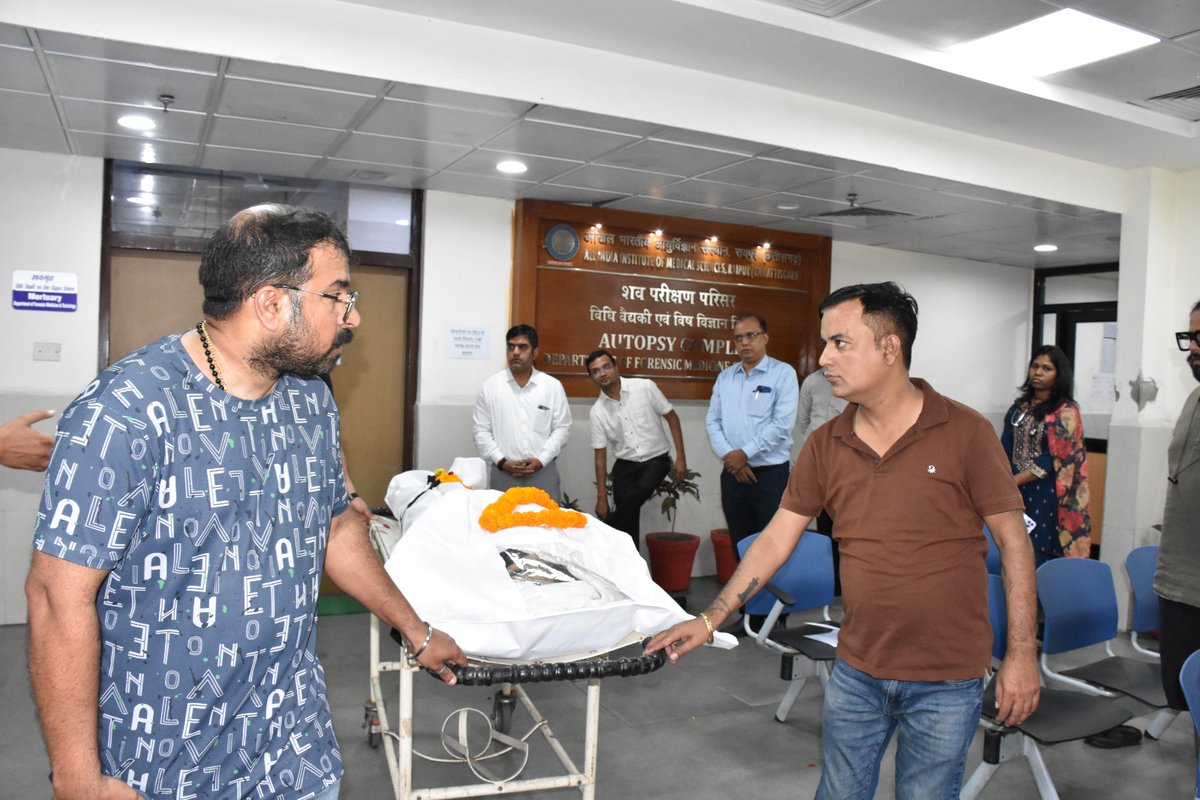
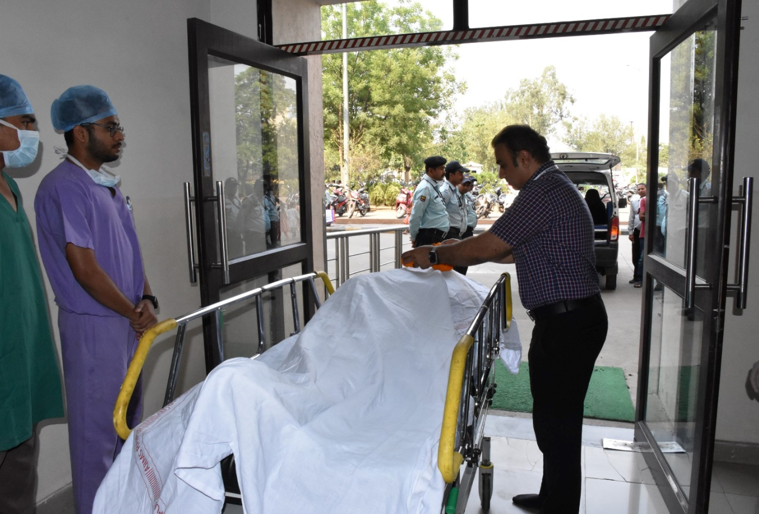
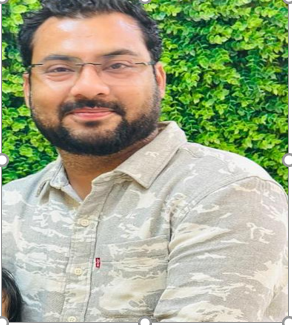
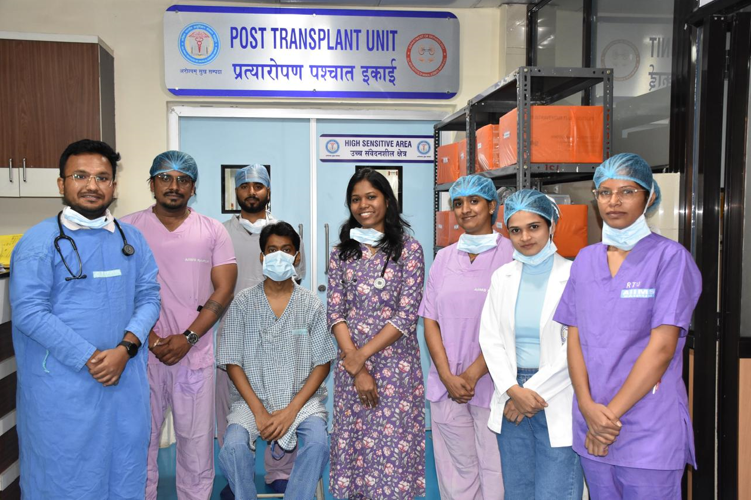
Chhattisgarh's 13th Organ Donation at AIIMS Raipur. 2 Kidneys transplanted at AIIMS Raipur and Shri Balaji Hospital. Sunil Kumar (39) donated his organs via Green Corridor from AIIMS to Shri Balaji Hospital.
#organdonor#organdonation#chhattisgarh#savelives#beanorgandonor
SOTTO-Chhattisgarh के दिशानिर्देशों के अनुसार प्रतीक्षा सूची से दो मरीजों को किडनी आवंटित की गई। AIIMS रायपुर में 7वाँ मृतक अंगदान और राज्य में सबसे अधिक प्रत्यारोपण—दाता परिवार के साहस और करुणा को नमन। #OrganDonation#SaveLives#AIIMSRaipur@MoHFW_INDIA#SOTTO#NOTTO#aiims
दुःख की घड़ी में अद्भुत मानवता—शंकर नगर (Raipur) के 39 वर्षीय दाता के परिवार ने अंगदान कर दो मरीजों को नई जिंदगी दी। AIIMS Raipur में दोनों किडनी प्रत्यारोपण सफल रहे और मरीज अब स्थिर हैं। यह निर्णय कई परिवारों के लिए आशा की किरण है। #अंगदान#GiftOfLife#AIIMSRaipur