My God. Pulling out of Iran can't be more embarrassing than the Afghanistan exit after 20 years.
Imagine doing all this on behalf of a foreign nation that brags about how they sucked you into their war.
The human-perceived RGB is image 1 and the Tesla AI photon count reconstruction is image 2.
This is why Tesla FSD can see so well at night or through extreme glare.
WTF happened October 10 to February 5?!
Part 2 of the HK Fund Blow up. This is the other side of the story.
BTC (-48.38%) underperformed the S&P 500 (+0.53%) by a whopping 49.05% in 118 days!! What the actual fuck. BTC was supposed to be rapidly institutionalizing, but this is the largest multi-quarter depeg from the S&P 500 ever. And all with ZERO explanation. No cause, only effect.
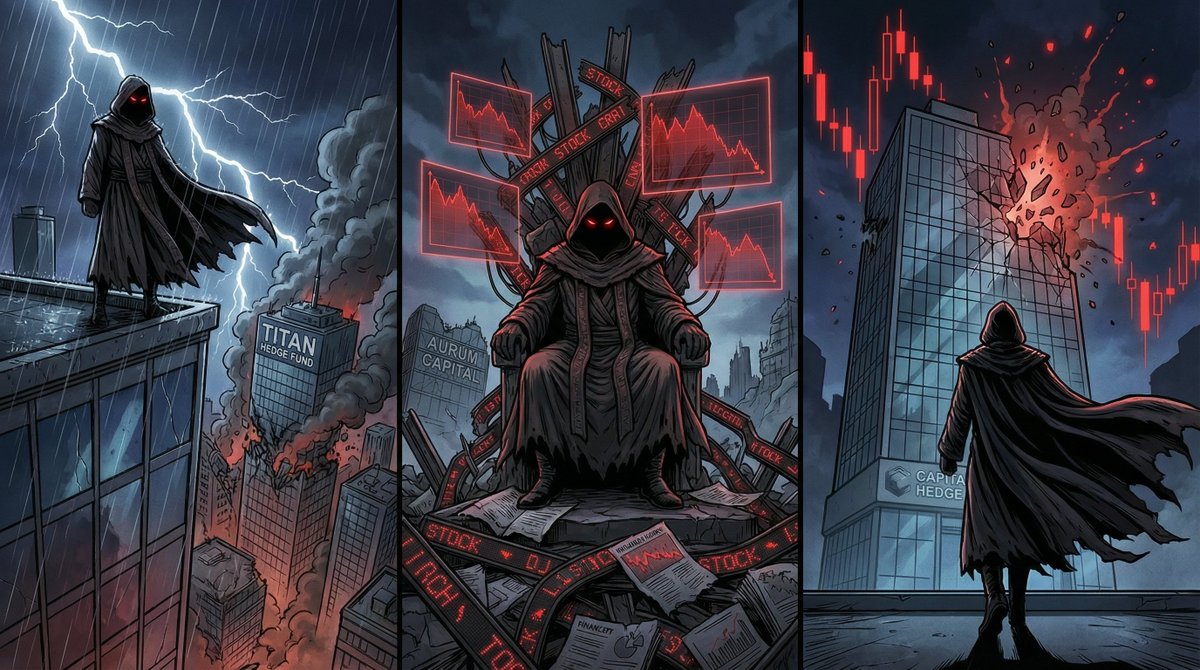
There is always a cause though, we just have to find it. Typically, when a hedge fund blows up in catastrophic fashion, “the market” isn’t the killer, it’s something - or someone - specific, an actual killer. Amaranth Advisors didn’t lose $6B and blow up in a week due to “the market”, John Arnold’s (legendary Enron trader) Centaurus Advisors killed them and John personally made $1B that week. The Bank of England didn’t break due to “the market”, Soros killed them. John Paulson made $15B in 2007 when subprime CDS blew out and kicked off the GFC, killing some big banks in the process. Paul Tudor Jones made his entire career on Black Monday, 1987, when the Dow dropped 22% and he was massively short, killing a number of funds along the way. Behind most deaths is a killer.
I believe there is a killer here too.
Let’s look at the evidence. This will be a long read.
First, we need to look at the environment leading up to 10/10. A few big things were at play here. First, realized volatility massively tapered over the summer. On August 11, 30-day realized vol hit 11.83%. That is comically low for Bitcoin, which normally sits in the 30-60% range. Implied vol fell off a cliff as well, hitting a low of 34.49% on September 18. This made buying calls and puts incredibly cheap.
We also know that shorting vol on Bitcoin has historically been a pretty successful trade most of the time. Bitcoin vol has been in secular decline, so as long as you didn’t get blown out in one of the random spikes in vol, you are printing cash. In many ways, shorting vol on BTC is like shorting the VIX itself. 95% of the time, you make money, and then you just have to avoid blowing up in the 5%. You’re the market insurance provider when you’re shorting vol.
Now, on July 29, the single entity cap on IBIT options was increased to 250k contracts (Jan 21 was for a bunch of other crypto ETFs, not IBIT). This allowed anyone running a short vol trade to increase exposure; however, it also allowed anyone wanting to build a long vol position to increase leverage. As an aside, the IBIT contract limits aren’t particularly restricting, because (1) Market Makers can be exempt, (2) waivers can be received, and (3) OTC derivatives exist with no limits.
#3 is the biggest problem, because the OTC market is entirely opaque. No one has ANY idea how much aggregate delta exposure is in the market. We’ll come back to this.
On October 2, CME announced that they were going to launch 24/7 trading on crypto contracts sometime in early 2026. This is relevant, because we know that large crypto funds like to fuck around, especially on Saturdays and over holidays. This is where the famous CME gaps come from. Once 24/7 CME futures trading is turned on, bye bye CME gaps. Weekends have served as an artificially low-cost time for large funds to push the price in a direction they need the price to go. Without this window, the cost to push the price would just be too high, which is why you don’t see these same scam wicks outside of crypto. So, on October 2, the clock started ticking on one last epic push. This timing coincides with the rough timeline for passage of the CLARITY Act as well, which will likely make it harder for some of these shenanigans.
So, what does a fund do when vol is the cheapest in history, there’s significant size available to buy, it’s common knowledge that lots of funds are shorting vol, and there’s a ticking clock on the opportunity to artificially push prices around? Go big.
In the thread, I put together a quick example showing how a $50M long position (775k contracts) opened on 10/03 in $60 strike, 11/07 IBIT puts would have materialized into a total of $4B of sales by the dealers needing to delta hedge the position, because of the way gamma works. This is using all real numbers from that period. During the week of 11/07, the daily delta swings would have resulted in the dealer trading 25-30% of the volume on IBIT each day to hedge. This $50M position would have become 80x levered by expiration and the fund would have made $168M in profit on the trade (335%). This position isn’t even the most leverage you can get playing high gamma games. And you thought perps on Binance were crazy.
You might rightfully note that the contract limit on IBIT options at this point was 250k contracts. The counter to that is that dealers have different restrictions that allow for netting either on a contract or delta basis. If you look at the largest MMs on IBIT options, some names become immediately familiar to anyone in crypto. Maybe more importantly though, a burgeoning OTC market has emerged around IBIT to bypass the 250k limit. This is why on November 23, Nasdaq asked the SEC to allow them to increase the limit to 1M contracts, citing concerns about the opaque OTC market growing, potentially adding risk to the system. I think Nasdaq knew something was afoot in the OTC market.
You might also argue that no single contract ever has this much open interest, which is true. But this size of a position can be spread around the book, both with different strikes and different tenors, and further built in the OTC market. There’s an interesting opportunity here to build a gamma cascade where one gamma squeeze pushes the price into the next gamma squeeze.
So let’s say that a giant hedge fund put on a $50M position (or why not more) in IBIT puts and/or OTC derivatives tracking IBIT in early October, hoping for vol to mean revert. Then, 10/10 happens, causing vol to MASSIVELY revert (60% spike in BTC ivol intraday) creating the perfect storm to REALLY push this trade. In the following 4 weeks, BTC spot bid liquidity fell by 25-50% (depending on depth measure). The cost to push the price around just then got much cheaper.
So now this fund starts pushing the price using large amounts of leverage. We see this over and over in crypto, nothing particularly novel here and there are a number of strategies available to move the price with significant leverage and modest risk, i.e. liquidity arb where you short spot long futures or vis versa to capitalize on the liquidity differential between the two.
These strategies, coupled with the massively increased liquidity in IBIT options and related OTC derivatives, and the sudden drop in liquidity created the perfect storm. What was originally just an opportunity to Go big became an opportunity to GO FUCKING BIG.
If you look at the activity in Q4, a pretty obvious pattern emerges. The BTC price often drifted lower overnight (NY time) and on the weekends, all when liquidity was thinnest. Then, at the NY open, the options dealers were forced to dump to rebalance the delta they had accumulated while the market was closed, printing large selloff candles on many of the opens in Q4. It would be pretty easy to create this trade. Imagine on Wednesday, the killer would buy some OTM puts expiring on Friday. They could be very cheap with very low delta, but high gamma potential (the greek here is called speed - so high speed put options). Then, overnight on Wednesday, the killer would push the spot price down. At the Thursday open, the dealers are forced to immediately hedge by dumping IBIT, because they now have positive delta due to the overnight move. As the dealers dump, this increases the delta as the gamma increases due to the high speed and high charm (change in gamma due to change in ivol). Remember, high gamma options are those that are really close to expiry and right at the money, so as the price goes down and approaches the strike on the OTM puts, the delta rapidly increases, forcing the dealers to sell more. This pattern could be repeated each week with a new set of weekly options to push the price further and further down.
Over the following months, this fund continued to push the trade, racking up hundreds of millions to billions in profits, which could be recycled into further pushing the trade. The massive amount of retail perps leverage on the offshore exchanges (crypto was supposed to have a supercycle, all the influencers said so) was an additional accelerant. Adding to that, the basis trade began to unwind, both on the CME and in crypto, with Ethena processing $7B in redemptions in a month. These basis trade unwinds put a lot of pressure on a thinning spot book.
I believe the first leg of the trade was wrapped up in late December, because a trader of this size would want to close their position by year end to avoid 13F filing requirements (although 13F requirements don’t apply to OTC derivatives). Looking at the chart, it also seems obvious that the trade was closed out in December. By mid January however, implied vol had subsided to levels below 10/10, meaning restarting the trade wasn’t going to be too expensive. Coupled with the giant profits this fund was sitting on and the somewhat tepid environment for tech (AI P/Es stretched, Fed nominee fears, etc), there appeared to be another opportunity to squeeze in one last push right before CLARITY and the CME 24/7 futures. Double or nothing, bitches.
So, over the latter half of January, a new high-gamma-potential (high speed) put ladder was built. Then, on Jan 26, Nasdaq greenlit Monday, Wednesday, and Friday options, so now triple the gamma available!! The killer could basically roll the trade every 2 days instead of once a week now. So, on January 29, with Silver and Gold retracing significantly, with bags loaded, and a machine gun instead of a bolt action rifle, the killer started the push, getting the price to the support level for the range. Below this range, there would be a lot of leverage as retail traders banked on the support holding. On Saturday, when the CME was closed, BAM, support was blasted with BTC down 6.5% on the day, kicking off >$2.5B in liquidations, more than any day since 10/10 and the 2nd highest of this cycle. This created the largest CME gap of this cycle and the largest gap in $ terms in history (~$6k).
After this push, it was straight carnage. The put ladder worked perfectly, creating cascading delta hedging by the dealers. Any stalls in collapse could be followed up with new high-speed puts on one of the new M/W/F tenors. Silver and Gold continued to puke and risk assets took it on the chin across the board. In exactly 1 week (29th to 5th), BTC was down 30%, one of the largest % weekly moves in history, and by far the largest $ move ever (-$26,500). This culminated in the HK-based fund(s) completely blowing up on Thursday (02/05), and everyone panic-closing positions, giving this new legendary billionaire crypto trader his exit liquidity.
Whoever the killer is, I would expect them to have some or all of the following traits:
Have been in crypto for 5+ years, with a deep understanding of how liquidity dynamics work over weekends and how liquidity arbitrage between spot, perps, and IBIT work.
Have been in tradfi for a long time as well, deeply understanding options trading, vol surfaces, liquidity dynamics within ETFs, ETF options, CME futures, and options position limits.
Have been a market maker in IBIT, IBIT Options, and likely OTC options. This would have allowed them to increase their position size above the 250k limit and source meaningful amounts of gamma in the OTC market. Their Authorized Participant status probably also tipped them off to the fact that someone big was on the other side of the trade in either/both IBIT options and OTC options. Being a dealer could have also allowed them to build a large position more quietly, potentially by simply providing liquidity to the victim(s) on the other side.
Have a history of past manipulation in other markets or strong accusations of manipulation, either in crypto or equities. Additionally, you might expect to see former trader(s) who left and went on to take some huge bets (bordering on or full blown manipulation) that either blew up catastrophically or printed bigly. This point is admittedly total speculation, but could illuminate a culture of pushing huge bets into deeply grey areas.
Given how privacy-oriented hedge funds and crypto can be, we may never know who the killer is. There may have also been a few tag along accomplices on the second push over the last week.
Make no mistake though, there was absolutely a new billionaire crypto trader minted this week.
This is my hypothesis on what happened between October 10th and February 5th, based on bread crumbs and circumstantial evidence. This move had nothing to do with the fundamentals of Bitcoin or Solana, and everything to do with technical market microstructure dynamics. CLARITY should help fix some of this, because the root problem is that the spot BTC market is not nearly liquid enough to support all these derivatives. BTC spot is supporting perps, CME futures, ETFs, derivatives on the ETFs, derivatives on the CME futures, and a host of OTC products. We need all of the world's largest market makers active in spot BTC to help solve this problem. Additionally, we need more flows to move onshore, on exchange, and ultimately on chain. On chain is the objectively best solution here as net and gross positioning cannot be hidden. We need to see reduced opaque OTC and offshore activity that creates the opportunity for these issues. There are some other easy fixes as well, e.g. CME futures going 24/7, better risk management at funds in trading vol, more spot liquidity overall, increased IBIT options position sizing (as Nasdaq has requested), etc. Most importantly though, market participants learned another great crypto lesson this week/quarter that must be applied. Be VERY VERY careful trading on leverage.
Live by the leverage, die by the leverage.
Hey @YouTube I would pay an extra $10/month on top of YouTube Premium to disable shorts.
I don't want to see another short ever again. Please let me toggle them off.
1/ Two years ago, we set out to build a full node that could verify Solana Mainnet on modest hardware and home internet, making decentralization accessible.
Today we're releasing the Alpha version of Mithril, our Solana full node client in @golang, and it can do exactly that.
DDoS attacks on Solana
The @solana network has been targeted by a sustained DDoS attack over the past week, with traffic peaking at approximately 6 terabits per second (Tbps).
IMO: This attack was intended to disrupt the Breakpoint conference but failed as Solana defenses are the best in the industry as they have been challenged more than any other blockchain from competitors like Binance and Ethereum.
This scale ranks it as the fourth-largest DDoS attack ever recorded against any distributed system (behind larger incidents mitigated by providers like Cloudflare, Google Cloud, and Microsoft Azure in recent years).
Despite the intensity equating to billions of packets per second Solana experienced no measurable impact: Transaction confirmations remained sub-second.
Slot latency stayed stable.
No downtime, missed blocks, or visible congestion for users or validators.
Ecosystem contributors (e.g., Helius CEO Mert Mumtaz, Pipe Network, and Solana co-founders) highlighted this as evidence of significant engineering improvements in resilience, including better QUIC protocol handling, parallel processing, and distributed validator infrastructure.
DDoS attacks on blockchains are increasingly common as they become high-value targets, but Solana's ability to absorb this without disruption is being viewed positively in the community some even calling it "bullish" for demonstrating real-world stress tolerance.
The attackers' identity and motive remain unknown.
This event highlights Solana's matured defenses compared to past congestion issues.
Bank of America Launches Bitcoin-Backed Credit
A Major Step in Crypto Mainstream Adoption on December 11, 2025, Bank of America (@bofa ) the $1.7 trillion asset giant announced the launch of BTC-collateralized credit loans.
This allows clients to use their #Bitcoin holdings as collateral to secure cash loans without selling their assets, marking a pivotal shift from crypto skepticism to institutional integration. It's part of a broader trend where eight of the top 10 U.S. banks, including BofA, JPMorgan, Citibank, and Wells Fargo, now offer similar Bitcoin-secured lending products.
What This Means and How It Works
Core Mechanics: Borrowers deposit Bitcoin into a BofA-managed custody account. The bank issues a loan (typically in USD) based on the BTC's value, with loan-to-value (LTV) ratios ranging from 50-70% to buffer against volatility. Interest rates are competitive at 4-6%, lower than many DeFi alternatives. If BTC's price drops sharply, triggering a liquidation threshold (e.g., LTV >80%), the bank can sell the collateral to cover the loan though BofA emphasizes risk-managed terms.
Key Benefits for Users:Liquidity Without Selling: Unlock cash for investments, real estate, or spending while retaining BTC upside potential (no taxable sale event).
Regulated Security: Unlike crypto-native platforms, BofA provides FDIC-insured custody and compliance with U.S. regs, reducing hack or insolvency risks.
Tax Efficiency: Borrowing against assets often avoids capital gains taxes that come from selling BTC.
Broader Market Impact: This elevates Bitcoin from "speculative" to a credit-grade asset, akin to stocks or real estate. Crypto loan volumes hit $150 billion annually in Q4 2025, with traditional banks capturing 40% of the market. It signals regulatory thaw post-2024 elections and Fed rate cuts, potentially spurring more hybrid products (e.g., ETH-collateralized loans).
People - we are very advanced in L1 development. The limitation to throughput is the public internet which suffers from congestion above 1500tps. This goes for every blockchain network with high nakamoto coefficient.
Only L1s that have frontrun this issue by engineering and building dedicated private L1 physical networks between distributed validators will be able to compete for the worlds transactions.
Only one network has already deployed and is running on such a L1 internet. @solana on @doublezero.
All other networks will fail when they reach only 1500tps. (they are not even managing 100 tps currently)
The only way to bypass this limitation is to run all nodes in the same networking cluster, destroying nakamoto coefficient (decentralization) and increasing risk of attack. Like Hyperliquid does. Ethereum L2s are sequencers that also run in the same cluster or on one server or data center reducing decentralization to near zero. Dont be gaslit.
New L1's are years behind, L2s are a huge mistake. They will all fail to scale and maintain decentralization.
Focus. Im here to explain advanced crypto concepts. Not shill nonsense.
Yes!!!! We are being heard!!!! @SECPaulSAtkins is listening to us. WE WILL NOT TOLERATE BAD ACTORS IN OUR ASSET CLASS!!!
#SEC Announces Formation of Cross-Border Task Force to Combat Fraud
"The Securities and Exchange Commission today announced the formation of a task force that will strengthen and enhance the Division of Enforcement’s efforts to identify and combat cross-border fraud harming U.S. investors.
The Cross-Border Task Force will focus initially on investigating potential U.S. federal securities law violations related to foreign-based companies, including potential market manipulation, such as “pump-and-dump" and "ramp-and-dump" schemes. The task force also will focus enforcement efforts on gatekeepers, particularly auditors and underwriters, which help these companies access the U.S. capital markets. In addition, it will examine potential securities law violations related to companies from foreign jurisdictions, such as China, where governmental control and other factors pose unique investor risks.
“We welcome companies from around the world seeking access to the U.S. capital markets,” said SEC Chairman Paul S. Atkins. “But we will not tolerate bad actors ��� whether companies, intermediaries, gatekeepers or exploitative traders – that attempt to use international borders to frustrate and avoid U.S. investor protections. This new task force will consolidate SEC investigative efforts and allow the SEC to use every available tool to combat transnational fraud.”
“I have also directed the staff in other SEC divisions and offices, including the Divisions of Corporation Finance, Examinations, Economic and Risk Analysis, and Trading and Markets as well as the Office of International Affairs, to consider and recommend other actions that would better protect U.S. investors, including new disclosure guidance and any necessary rule changes," continued Chairman Atkins.
Division of Enforcement Director Margaret A. Ryan said, “The Cross-Border Task Force will leverage the Division of Enforcement’s resources and expertise to combat international market manipulation and fraud. We are pleased to be part of this critical effort to enforce the federal securities laws and protect U.S. investors.”
https://t.co/2XxU7aftRz
Manuel Blay @ManuelBlay3 has also adjusted the Buffett Indicator to include the Global Liquidity increase. The Buffett Indicator, which claimed the stock market is overvalued and hence Buffett moved to cash, did not account for Global Liquidity and when adjusted shows no bubble, which supports the theory that we have not even close to starting the ever increasing liquidity fueled bull market. @TheDowTheory
🐋 Whale Alert!
A whale deposited 7.60356094 $BTC ($905,650.18) to Solana via @ApolloByZeus
🔗 See it here 👉🏻 : https://t.co/KYxjdOuRdG.
Looks like Zeus is flexing again, but whatever, right?
Solana summer isn’t slowing down 🌞
Last week, tokenized equities went live on Solana and a winner was crowned from amongst 10,000 aspiring founders in crypto’s biggest startup competition.
Here’s what you might’ve missed:
- @xStocksFi tokenized U.S. equities went live on Solana, bringing stocks available 24/7/365 to the masses, with support from @krakenfx, @Bybit_Official, @byreal_io, @kaminofinance, @RaydiumProtocol, @JupiterExchange, @BackedFi, @solflare, @phantom, @ranger_finance, @VECTORDOTFUN, @loopscale and more. One step closer to internet capital markets!
- @Colosseum announced the winners of the Solana Breakout Hackathon, crypto’s largest hackathon competition. @tapedrive_io by @zelimir__ took home the $50,000 USDC prize, tickets to @SolanaConf Breakpoint ‘25, and eternal Solana glory, emerging as the Grand Champion
- @Anchorage Digital Bank became the first federally chartered U.S. bank to enable Solana liquid staking for institutions with jitoSOL (@jito)
- @1inch wallet added Solana swap support, enabling traders to swap 1M+ Solana tokens in a few taps
- @CodigoPlatform, first AI dev platform built exclusively for Solana and @Solana_Devs, went live
- @grass launched their app on Android, allowing more users around the globe to earn from sharing their unused internet bandwidth
- @solanamobile kicked off the Solana Mobile Hackathon by @RadiantsDAO, with $100k in prizes on the line and a chance to launch directly into the hands of 150k+ crypto-native users as Seekers start shipping on August 4th
- @koshmoney launched stablecoin banking on Solana, featuring USDC payouts, virtual US Bank accounts, offramping to fiat, and corporate card issuance
- @arcium introduced the development of Confidential SPL Token, a unified standard merging core SPL programs to bring native confidentiality to Solana
- @pancakeswap added Solana support, giving LPs the chance to earn up to 84% of trading fees and enabling traders to swap Solana-based tokens with fees as low as 0.01%
- @transporter_io, the bridge powered by @chainlink CCTP, launched Solana support
- @oshikatsu_co announced that they’re bringing an established and beloved anime IP that has captivated millions worldwide onchain and integrating with Solana, with GATE2: Tides of Conflict going #1 trending on X in Japan and getting over 4.5M views
- @moonshot launched Apple Pay purchases with no KYC
- @Blupryntco integrated the Solana Attestation Service (SAS) and launched a MiCA Checker, a free tool to help crypto companies expanding in the EU get MiCA-ready
- @cabbagedotapp launched Cabbage Clash: Season 2 with over 20k in prizes on their memecoin trading and alpha app powered by Solana
- @SuperteamVN launched the Solana Super Game Jam 2025, APAC Edition, with over $50k in prizes up for grabs
- @jupiterexchange launched @jup_studio, a token creation lab powered by Solana. The token launchpad wars continue to heat up, with @bonkfun surpassing $500M in 24 hour volume
- The @getPyra team launched their mobile app, enabling users to hold crypto, earn yield on it, and spend with a DeFi-powered neobank built on Solana
What’d we miss? Tag it below, please just don’t get me fired.
Keep shipping and have a great week ahead fam 🫡
BREAKING: $1.92M cbBTC Withdrawn via APOLLO!
A record $1.92 million in cbBTC was permissionlessly moved from Solana back to Bitcoin on APOLLO - no KYC or centralized bridge required.
What was impossible six months ago is now POSSIBLE on SOLANA ☄️
Cutting off government subsidies to Elon's companies is one thing.
But even just mentioning stripping Americans of citizenship and deporting them is the most un-American shit I've ever heard; especially one whose companies employ over 100,000 Americans.
The Everything Code TL;DR.
The labor force participation rate isn’t going to rise anytime soon – it’s set to keep declining over time. This is a structural problem…
We’ve got aging demographics, falling birth rates, and now the rise of automation.
Humans are already being replaced by AI and robots at a staggering pace, and that shift is only just beginning. This is deflationary.
It also reinforces the need for ongoing stimulus to keep the system afloat.
Fewer workers. More tech. Same debts…