Every once in a while you work at a company that only hires people who know what they're doing, and suddenly its 20 people doing the same work as 400 somewhere else. There's zero meetings, everyone talks once a week on slack, and you go huh, how much garbage is there actually.
Our summit next week (July 21) has reached capacity. Thanks to everyone who submitted an RSVP request. We will be filming and posting everything. One thing is for sure, there is huge demand in Boston and beyond to ensure the U.S. shores up its position in biotech and science.
Ramp cofounder @eglyman says AI is reducing the need for specialized expertise and forcing leaders to rethink how they structure their businesses:
“ We used to be in a world where skills were very scarce and very hard to find.”
“ We're starting to get to a place where a very determined generalist can do much more than they used to be able to do.”
“LLMs have read more lines of code than any engineer alive. More medical case texts than any doctor alive. More company filings than any accountant who's ever lived or probably ever will live.”
“In some sense, if I can just ask a good question, I'm the best doctor I've ever been in my life, and I'm not a doctor.”
“ It leads you to question—you design organizations with lots of subspecialties, which can lead to walls and barriers and things that get lost between organizations.”
“ I think we’ll start seeing fewer types of specialties within organizations, and it's leading a lot of organizations right now to question: do I have the right shape of an organization for the world that we're starting to enter into?”
Our failures are our moat.
A scientific paper is a clean repackaging of a messy process of failed syntheses, dead ends, hints of success. That mess is the durable asset: what was tried, what worked, what failed, and why.
Compound it into weights you own. Frontier labs live by this principle. If tokens-in-context were enough, pre-training would have died years ago.
@venus_in_adidas Yeah unfortunately that’s a common scenario.. many PhD domains too niche/esoteric for industry.. and the academic tenure path is for very very few
This. Anyone who has built in biotech knows how important great RA's are and how disruptive it is when they leave.
I remember talking to a guy at DropBox about "rock engineers", people who are just like, happy doing their job, know how everything works, are hyper productive, and have no desire to climb a ladder because they love what they do. Solid and reliable. So much of biotech runs on people like this. More should be done to incentivize them.
This. Anyone who has built in biotech knows how important great RA's are and how disruptive it is when they leave.
I remember talking to a guy at DropBox about "rock engineers", people who are just like, happy doing their job, know how everything works, are hyper productive, and have no desire to climb a ladder because they love what they do. Solid and reliable. So much of biotech runs on people like this. More should be done to incentivize them.
“Nobody touched biology for 20 years”
Meanwhile biology 1992-2012
1992 — ICSI: The first pregnancies from intracytoplasmic sperm injection were reported, transforming treatment for severe male-factor infertility.
1993 — MicroRNA: The discovery of lin-4 revealed an entirely new layer of gene regulation by tiny non-coding RNAs.
1994 — BRCA1: Researchers cloned the major hereditary breast- and ovarian-cancer susceptibility gene, laying foundations for genetic risk testing and prevention.
1995 — Whole-genome sequencing: Haemophilus influenzae became the first free-living organism to have its complete genome sequenced.
1995–96 — Modern HIV treatment: Protease inhibitors and multidrug HAART transformed HIV care; in 1996, US AIDS incidence and deaths declined for the first time in the epidemic.
1996 — Eukaryotic genomics and cloning: Yeast became the first eukaryote with a complete genome sequence, while Dolly demonstrated that a nucleus from an adult somatic cell could support development of an entire mammal.
1997–98 — Antibody and precision cancer drugs: Rituximab became the first monoclonal antibody approved for cancer treatment; trastuzumab then targeted HER2-positive breast cancer.
1998 — RNA interference: Double-stranded RNA was shown to produce potent, sequence-specific gene silencing, creating a central experimental and therapeutic platform.
1998 — Human embryonic stem cells: Researchers derived and maintained pluripotent cell lines from human blastocysts.
1999–2003 — The genome era: Chromosome 22 became the first human chromosome to reach finished sequence status; the human-genome draft followed in 2000, the mouse-genome draft in 2002, and the Human Genome Project’s essentially complete sequence in 2003.
2000 — Synthetic gene circuits: Scientists constructed a genetic toggle switch and a synthetic oscillator in living bacteria—foundational demonstrations that cellular behavior could be rationally engineered.
2001 — Imatinib/Gleevec: A drug aimed at the molecular driver of chronic myeloid leukemia helped establish modern targeted oncology and changed a usually fatal disease into a manageable one for many patients.
2005 — Next-generation sequencing: Massively parallel 454 sequencing showed how DNA sequencing could become dramatically faster and more scalable.
2005 — Genome-wide association studies: A landmark genome-wide screen linked variants in CFH to age-related macular degeneration, helping launch large-scale common-disease genetics.
2005–08 — The key mRNA breakthroughs: Karikó, Weissman and colleagues showed that modified nucleosides suppress harmful innate immune recognition, and that pseudouridine-modified mRNA has greater translation and stability. These were central foundations of the later mRNA-vaccine platform.
2006 — HPV vaccination: Gardasil became the first vaccine approved to prevent cervical cancer.
2006–07 — Induced pluripotent stem cells: Adult mouse cells, and then adult human cells, were reprogrammed into pluripotent stem cells using defined factors.
2007 — CRISPR’s biological function: Experiments demonstrated that CRISPR-Cas systems provide bacteria with acquired resistance to viruses.
2008 — Gene therapy revival: Independent clinical trials showed that gene transfer could improve visual function in patients with inherited retinal disease.
2010 — Synthetic genomics: Researchers created a bacterial cell controlled by a chemically synthesized genome.
2010 — HIV PrEP: The iPrEx trial provided major clinical evidence that pre-exposure antiretroviral medication could prevent sexual acquisition of HIV.
2011 — Cancer immunotherapy: Ipilimumab brought checkpoint blockade into clinical oncology, while early CAR-T reports showed striking antitumor responses in advanced leukemia and lymphoma.
2012 — Programmable Cas9: Researchers showed that engineered guide RNA could program Cas9 to cut selected DNA sequences—the pivotal biotechnology step, rather than the original discovery of CRISPR in bacteria.
The faster technology moves, the more I think about Bezos' question
What won't change in the next 10 years?
Things I've been writing down over time:
- Humans will always need shelter, food, energy, and healthcare.
- The desire for ownership and the accumulation of wealth.
- The physical world will move more slowly than the digital one.
- Every increase in technological capability, especially AI, will require more energy.
- People and businesses will continue to need access to capital.
- Capital will continue to seek returns that exceed inflation.
- Underwriting methods evolve, but demand for credit (loans) is persistent.
- Trust remains scarce and becomes increasingly valuable as content, code, and fraud become cheaper.
- Verified identities and reputation becomes more important as information becomes abundant and synthetic.
- Long-term wealth creation and dynastic (multi-generational) thinking predate modern technology, and will persist.
- Coordination and transaction costs never fully disappear; market friction will continue to justify the existence of firms and intermediaries.
- People will continue to compete for status.
- Consumers will pay a premium for products and services that confer status.
- Time remains fixed at 24 hours per day.
- But attention is a finite resource and an enduring constraint.
- Products that credibly save time (or enable delegation) have a perpetual market.
- Inaccessible, proprietary data will be a persistent moat. The more inaccessible and difficult to aggregate, the deeper the moat.
- People want accountability, recourse, and clearly identifiable responsibility when things go wrong.
- Regulation consistently lags technological innovation.
- Compliance requirements, licensing, and regulatory moats persist even when machines can perform the underlying task.
- Local knowledge remains valuable and difficult to replicate.
- Heterogeneous markets (like real estate) continue to reward people with deep contextual understanding.
- Incumbent organizations tend to underinvest in disrupting their own businesses, which always creates opportunities for challengers.
Bezos' insight on what wouldn't change in 10 years was "Customers will always want lower prices and faster delivery."
It's boring/ true, but I think that's the point.
Everything we build today can and will be rebuilt more cheaply, faster by someone else.
Build on the invariants, not the trends.
What have I missed?
PALANTIR CTO:
“FOR $10 BILLION, ELON MUSK PUT 300 ROCKETS IN ORBIT.”
“FOR $11 BILLION, THE STATE OF CALIFORNIA HAS BUILT 1,600 FEET OF ELEVATED RAIL...
WITH NO RAIL.”
Age.
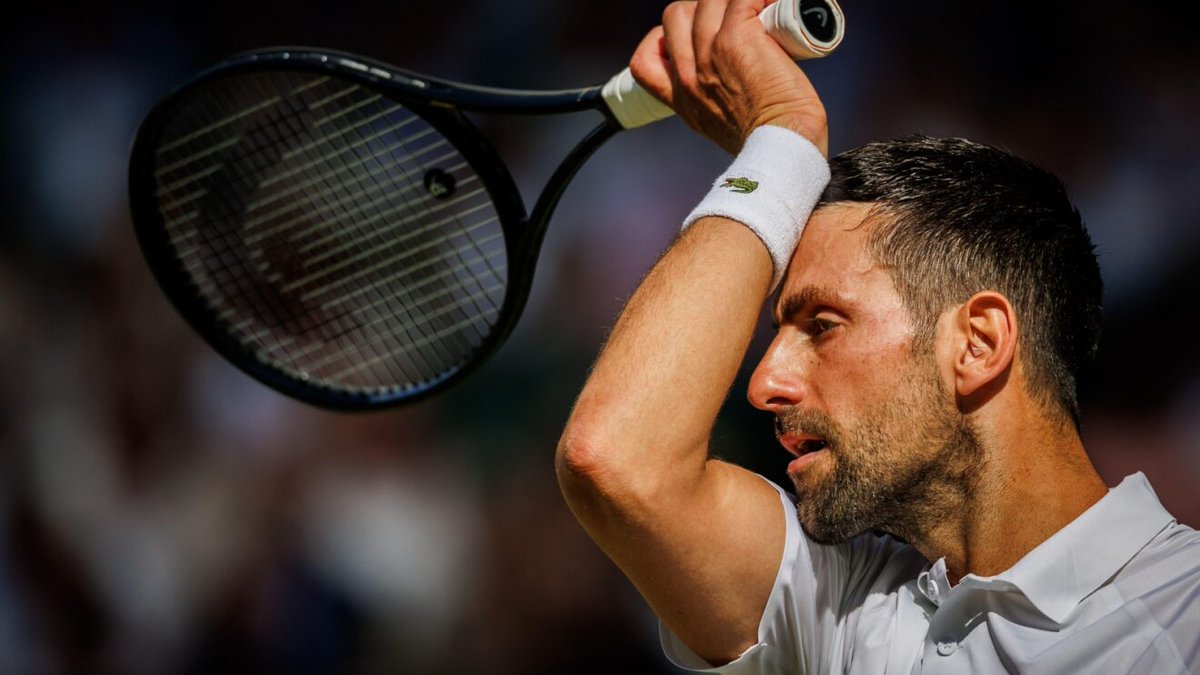
That's the only thing that ever separated Novak Djokovic and Jannik Sinner. That 15-year difference is massive.
Father Time is undefeated, unfortunately.
Prediction: the relative demand for design will increase along with the increasing demand for software.
Example: Every technology that made printing easier and cheaper made the work of typography and design more important not less and increased demand for those skills.
Probably of success of drug trials is going to go way up in the coming years. Though it’s largely because there are so many me-too and me-better drugs being invested in at the expense of everything else.
Data is the limiting factor of machine learning. AI's success in biotech depends on more and higher quality experimental data. Those who can generate it will find themselves in demand.