@Jays200@Qantas@Starlink@X I flew in November and there's no WiFi at all on the A380 which was very annoying. I think the plan for Qantas to have WiFi on all international flights by the middle of this year.
NEW research: https://t.co/yE1LogIFHO
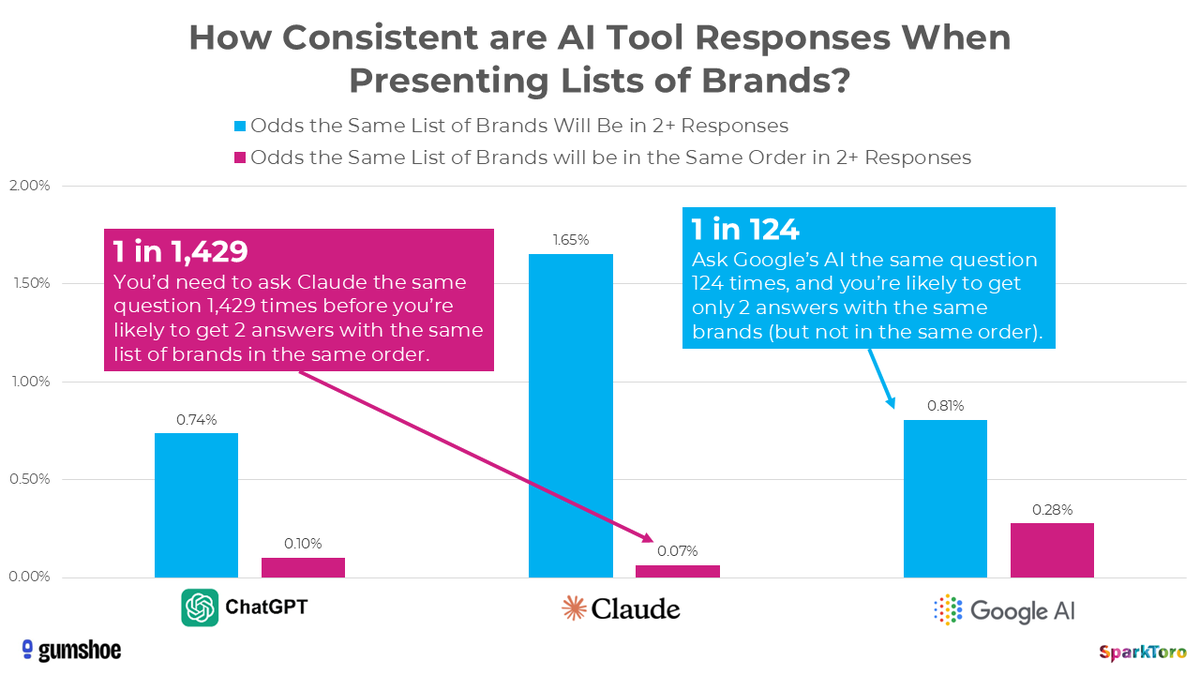
If you give ChatGPT the same request for product recommendations 100X, will you ever get the same list twice?
And what does that answer mean for folks who try to track their brand presence in AI tools?
Finally, some real answers 🧐
I think @top5seo's article is one of the most helpful and comprehensive breakdowns of how ChatGPT (most likely) works that I've ever read.
Note: parts of the article are speculative, but David provides a lot of compelling evidence for why ChatGPT is most likely to work this way:
Absolutely worth reading the whole thing, but the TL;DR:
⭐️ ChatGPT works a lot like a search engine-like system: it pulls in real-world info and stitches it together, rather than actually “thinking” on its own.
⭐️ It doesn’t automatically browse the web. It only goes looking things up when the system decides it actually needs to.
⭐️ Behind the scenes, it’s not just one model doing everything:
⭐️⭐️ First, a small model looks at your question and decides whether the answer can come from training data or needs a search.
⭐️⭐️ If a search is needed, another model handles finding and filtering web results before the main model writes the response.
⭐️ Those search decisions are based on probabilities — things like “no search,” “quick search,” or “deep search,” depending on how complex the question seems.
⭐️ When web search is used, ChatGPT starts by pulling in a small set of top search results. But ranking alone doesn't guarantee inclusion; the page still has to pass semantic relevance checks.
⭐️ When ChatGPT does search, it doesn’t just grab whole pages. It pulls in candidates, scores them by meaning, and feeds only the most relevant snippets into the final answer.
⭐️ It uses tiny chunks of pages, not full articles, and it cares more about meaning than exact keywords.
⭐️ Speed and cost matter. If a page is slow or expensive to process, it might get skipped - even if the content is good.
⭐️ For anything complicated, timely, or niche, fresh web info is key. Training data alone usually isn’t enough, so real-time context makes a big difference.
⭐️ If you want your content to show up in AI answers, clarity helps - clean structure, direct answers, and well-written explanations make it easier for the system to pull useful snippets.
https://t.co/NhzoiBnlOG
“AI tools are prone to hallucination; that’s why people use Google Search and other tools that are grounded in providing accurate information”
LOL ok but you literally put AI Overviews at the top of Google Search with no (visible) opt-out button 😩😩😩
I loved @patrickstox's entire deck, but especially this slide.
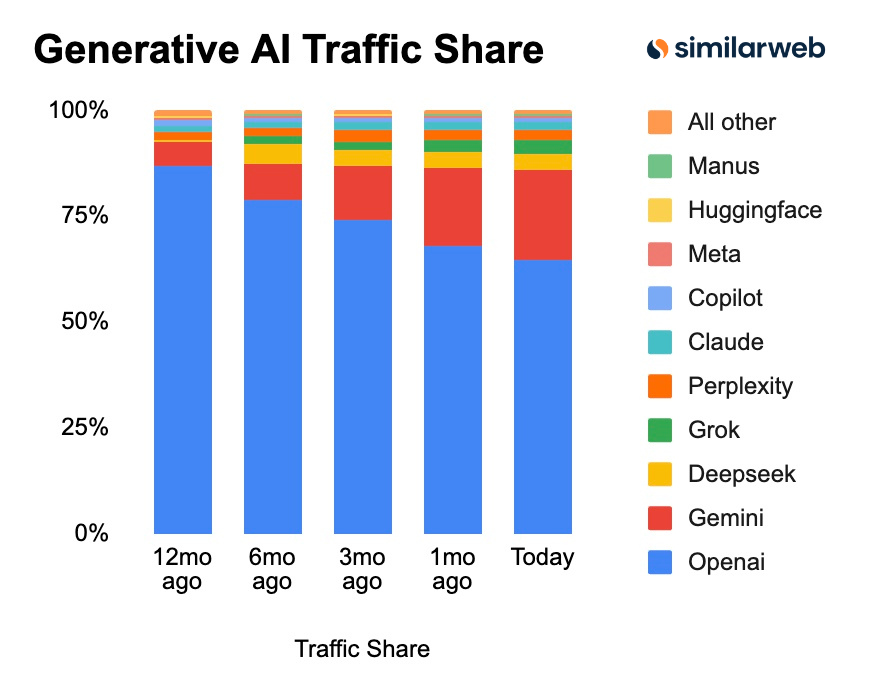
When people talk about AI Search and GEO, they often talk about ChatGPT as if it's the only player in the game (and often claim that "Google is dead")
They seem to forget that the most heavily used AI assistant right now is actually Google's AI Overviews; whether or not users *choose* to use it, it's right there in front of their face for billions of searches globally, every day 🫠
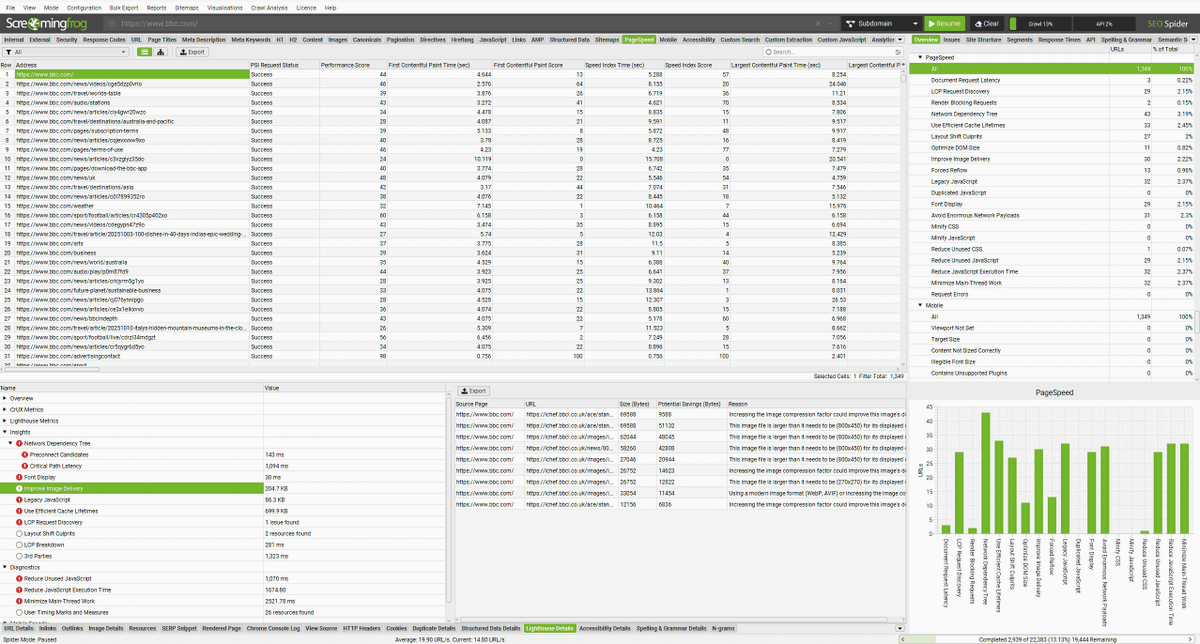
Just released @screamingfrog SEO Spider v.23:
https://t.co/pdDkcO72xq
Includes -
💡Lighthouse & PSI Updated to Insight Audits
⚙️Crawl Retention Config
🧑🤝🧑Semantic Similarity Embedding Rules
📊Display All Links in Visualisations
🍇Links in Content Cluster Diagram
& more!
% of Americans who...
Don't use AI tools at all: 62%
Use AI tools 1-3X/month: 9%
Use AI tools 4-9X/month: 8%
Use AI tools 10X+/month: 21%
How that's changed since 2023 👇
Today we released the August 2025 spam update.
It may take a few weeks to complete, and we'll post on the Google Search Status Dashboard when the rollout is done:
https://t.co/VyY24LVujq
NEW research: https://t.co/DUmJkGi2vv
Thanks to @LiveDatos, we've got remarkable charts showing:
- The changing growth rate of AI tool use
- Distribution of AI usage
- How traditional search engines have fared
Trust me, you don't want to miss it 😉👇
Fantastic new article by @dejanseo that explains why GPT-5 is actually a good thing for SEOs:
It relies on grounding (web search) and other tools to be accurate
Worth a read
https://t.co/nwsTOeqaSc
In 15 years I have never been busier as an SEO consultant
Sadly, I think the reason is that so many websites are seeing declining Google traffic all around
After hearing clients' complaints about their experiences with SEO Agencies & Freelancers, here is a comparison of pros and cons of each service model: https://t.co/vXgnTNwARc #seo
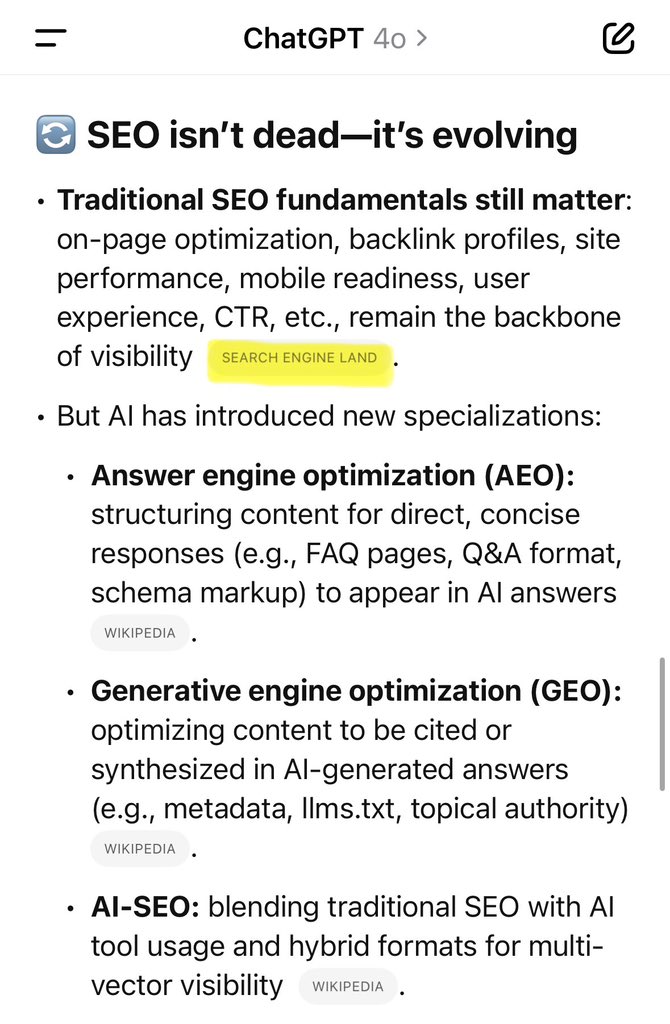
Oh look, my day-old article is cited in ChatGPT within 24 hours, no AI magic required.
It works on Perplexity too. (See thread)
Btw, this works the same way on my personal site and/or agency blog.