A 21-year-old MIT student wrote a master's thesis in 1937 that Harvard's most famous professor of cognitive science later called "possibly the most important master's thesis of the century."
I read it at 2am and could not believe one paper had quietly built the entire foundation of every computer that exists today.
His name was Claude Shannon. The thesis is called "A Symbolic Analysis of Relay and Switching Circuits."
Every smartphone in your pocket. Every server farm running ChatGPT. Every chip Nvidia ships. Every line of code an engineer has ever written. All of it traces back to a single insight one graduate student had at 21 years old, working on a side project at MIT.
Here is the story almost nobody tells you.
Claude Shannon was born in 1916 in a small town in Michigan. He grew up tinkering. Built a telegraph between his house and a friend's house using barbed wire from a nearby fence. Repaired radios for the local department store. He studied both mathematics and electrical engineering at the University of Michigan because he could not decide which one he loved more. That refusal to choose is what eventually made him.
When he got to MIT for graduate school in 1936, he was assigned to operate a strange machine called the differential analyzer. It was room-sized. Mechanical. Built by Vannevar Bush. It used a tangle of gears, shafts, and electrical relays to solve calculus problems. Most students just operated it.
Shannon did something else. He stared at the relay circuits inside it. The way they clicked open and closed. The way they routed signals through the machine.
He noticed something nobody had noticed before.
The relays inside the machine had two states. Open or closed. On or off. One or zero. And the way the relays were wired together to make decisions looked exactly like a 90-year-old branch of mathematics that almost everyone had forgotten about. Boolean algebra. Invented by a British mathematician named George Boole in the 1850s. Boole had built a system of logic where statements could be true or false, and you could combine them with operators like AND, OR, and NOT to derive new statements.
For 90 years, Boolean algebra had been a curiosity. A philosophical tool. Nobody saw a practical use for it.
Shannon saw it.
He realized that an electrical circuit was not just an electrical circuit. It was a physical implementation of a logical statement. A switch that closed when both A and B were true was an AND gate. A switch that closed when either A or B was true was an OR gate. The entire branch of pure mathematics that Boole had invented as a thought experiment could be built out of wires and relays. And once you could build logic out of wires, you could build anything that could be expressed in logic out of wires too.
This was the insight that quietly created the modern world.
Before Shannon's thesis, electrical engineers designed circuits the way artisans built watches. By feel. By experience. By trial and error. Every new circuit was a craft project. There was no theory underneath it.
After Shannon's thesis, circuit design became a branch of mathematics. You could specify the logic you wanted on paper, and translate it directly into a wiring diagram. You could prove a circuit was correct before you built it. You could simplify a circuit by simplifying the underlying logical expression.
The MIT historian who reviewed his thesis described the shift in one sentence. It transformed circuit design from an art into a science.
Shannon was 21 years old when he wrote it.
That alone would have earned him a place in every computer science textbook on Earth.
But Shannon was not done. He spent the next 11 years working on a problem nobody had even framed properly. He wanted to know what information actually was. Not what messages were. Not what signals were. What information was. Mathematically. Quantitatively. As a measurable thing.
In 1948, while working at Bell Labs, he published a 79-page paper called "A Mathematical Theory of Communication." The paper invented the entire field of information theory in a single shot.
He proved that all information, regardless of whether it was a voice on a phone, a photograph in a magazine, or a chess move on a board, could be measured in a single unit. He named that unit the bit. Short for binary digit. It was the first time anyone had given information a unit of measurement.
The paper proved something that sounded impossible. He showed that you could send a message reliably through a noisy channel, with arbitrarily low error, as long as you encoded it correctly and stayed below a specific limit he called the channel capacity. Every Wi-Fi connection, every satellite signal, every cell phone call, every fiber optic transmission across the floor of the Pacific Ocean operates inside the mathematical bounds that Shannon proved in this single paper.
He did all of this in his spare time while officially working on cryptography for the war effort.
The strangest part of the man is what he did when he was not inventing the future.
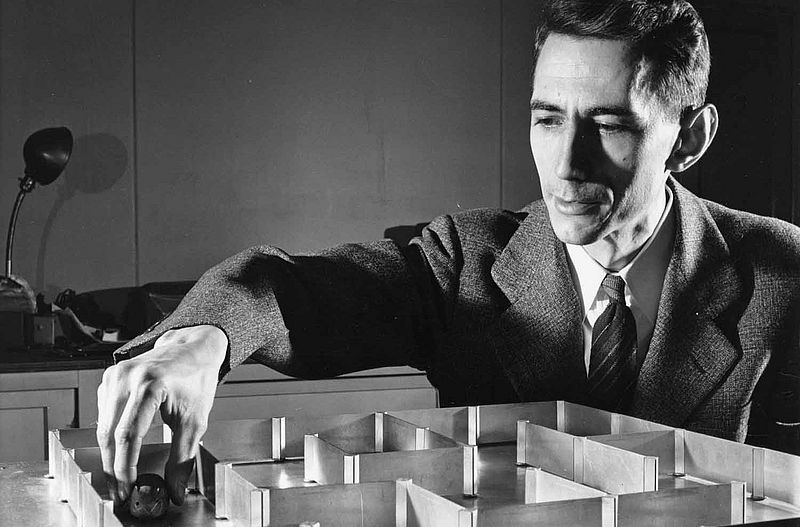
He rode a unicycle through the hallways of Bell Labs at night while juggling. He built a chess-playing machine in 1950 that played a primitive form of chess decades before computers were supposed to be capable of it. He built an electronic mouse named "Theseus" that could solve a maze and remember the solution. It was one of the first machines on Earth that learned. He built a flame-throwing trumpet for fun. He had a closet full of unicycles in different sizes. He installed a chairlift across his backyard so his kids could get to the lake faster.
Marvin Minsky, one of the founders of artificial intelligence, said Shannon was the most genuinely playful great scientist he had ever met. Other people approached research with seriousness. Shannon approached it like a kid who had snuck into the toy store after closing time.
Stevens Institute of Technology called him the least known genius of the 20th century.
That title is exactly correct. Most people have heard of Einstein, Turing, von Neumann. Shannon's name barely registers outside engineering departments. Yet without his master's thesis, there is no digital circuit. Without his 1948 paper, there is no internet. Without his framework, there is no measurement of information at all, which means no compression, no error correction, no cryptography, no machine learning.
He died in 2001 at age 84, after years of Alzheimer's disease that took away his ability to recognize the world he had built. Most newspapers ran a small obituary. The world he had given us did not pause.
His thesis is on the MIT archive. His 1948 paper is on the Bell Labs site. Both are free. Both are short. Both are still readable today by anyone willing to spend an evening with them.
The least known genius of the 20th century is one click away from you.
Most people will never open the file.
I’ve honestly found it crazy that, given the profit margins at journals, there isn’t standard house teams of statisticians, graphic designers, editors (in the magazine sense), people whose job it is to make sure all the code and results are reproducible, etc.
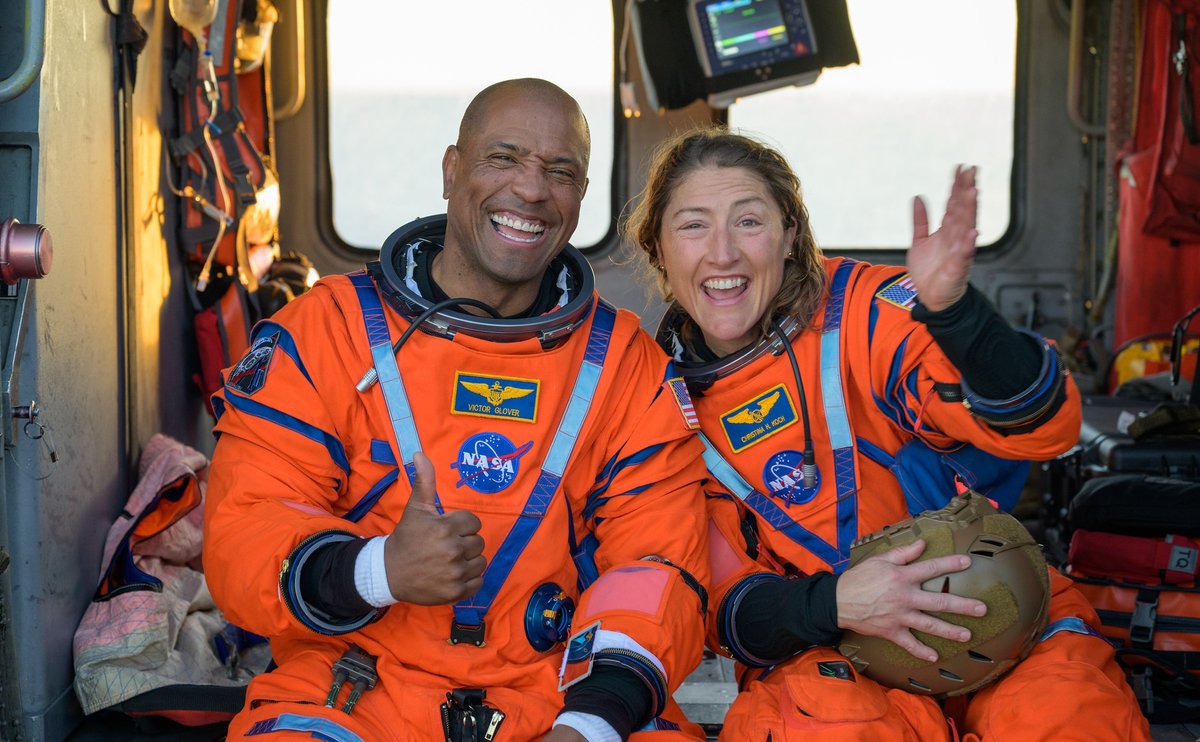
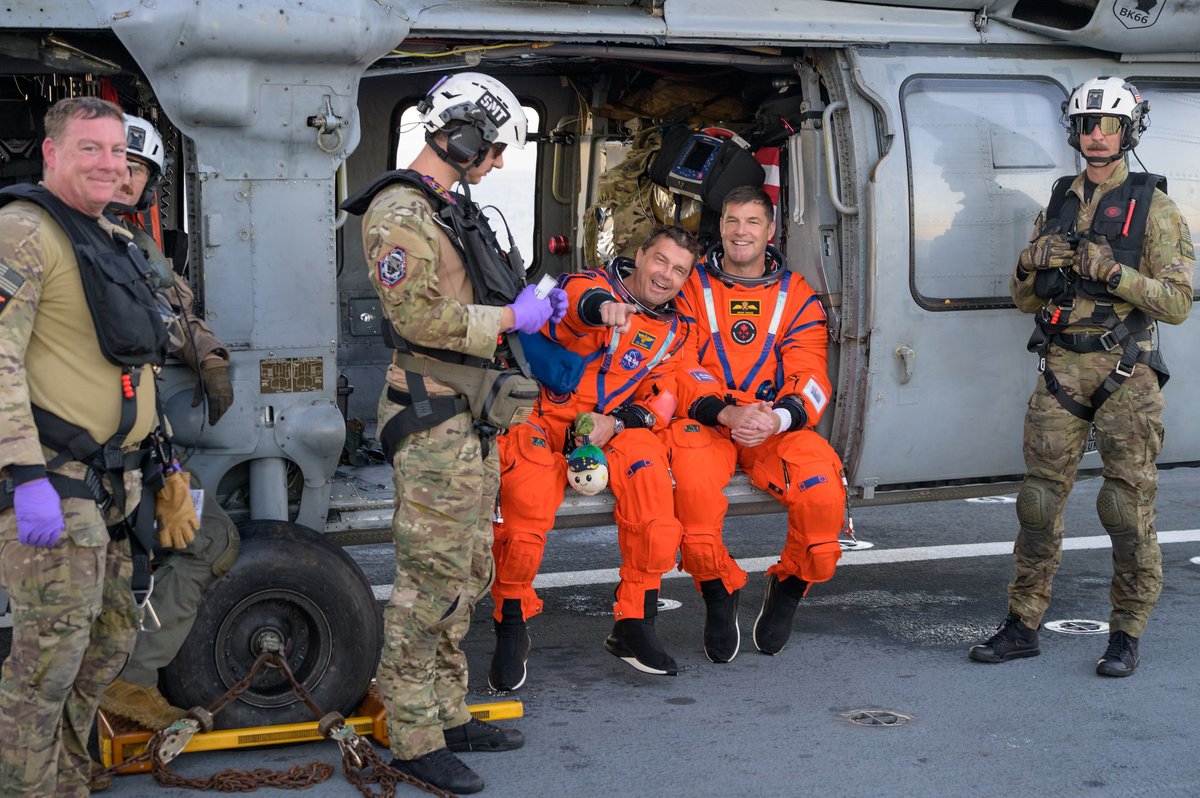
The Artemis II astronauts were all smiles on the flight deck of USS John P. Murtha after they were extracted from their Orion spacecraft after splashdown.
Orion's main parachute has deployed. The spacecraft has a system of 11 chutes that will slow it down from around 300 mph to 20 mph for splashdown.
Get more updates on the Artemis II blog: https://t.co/7gicm7DWBt
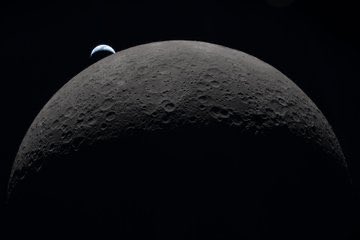
Artemis II crew captured this view of an Earthset on April 6, 2026, as they flew around the Moon. Inspiring! Marveling how precious and alone our planet is!!
From the very same people who demanded to see stars in photos… now come complaints about the photo that shows these stars. 🙄
Let’s walk through what you’re actually looking at.
These two images were taken less than a minute apart from Orion during Artemis II, using a Nikon D5 with a 14–24mm f/2.8 lens. The EXIF data is publicly available. This is not speculation.
The image on the left is essentially what the scene looks like to the eye.
The image on the right uses the full capability of a modern sensor, with higher ISO, longer exposure, and a wider aperture to pull in far more light. That is why you can clearly see the stars.
(ISO basically is simply the camera’s sensitivity to light.)
Nothing was added.
Nothing was “photoshopped.”
These are two direct captures showing what happens when you change settings with a capable camera.
Now here’s why this matters.
For decades, one of the loudest talking points from Moon landing deniers has been:
“Where are the stars in the Apollo photos?”
Apollo did not use modern digital cameras.
They used modified Hasselblad film cameras with low-ISO film, about ASA 64 for color and ASA 80 for black and white, chosen specifically for photographing bright, sunlit lunar surfaces.
That choice was intentional.
Those cameras were designed to be simple, reliable, and usable with gloved hands. Limited settings. Low light sensitivity (ISO). Built and setup for the lighting conditions they knew they would encounter.
And that comes with a tradeoff.
When you expose correctly for a bright foreground, faint stars do not register.
There was no practical way, with that equipment, to capture both a properly exposed lunar scene and faint background stars in the same shot.
What these Artemis II Orion images demonstrate, very clearly, is exactly that principle, using a modern DSLR camera.
One setting → no stars
Another setting → stars appear
Same place. Same moment. Same reality.
The only thing that changed was the camera settings.
And now that the answer is literally being shown to them, the question somehow remains, because like all zombie conspiracies, the goal is not understanding and seeking the truth, it is keeping the dead conspiracy alive.
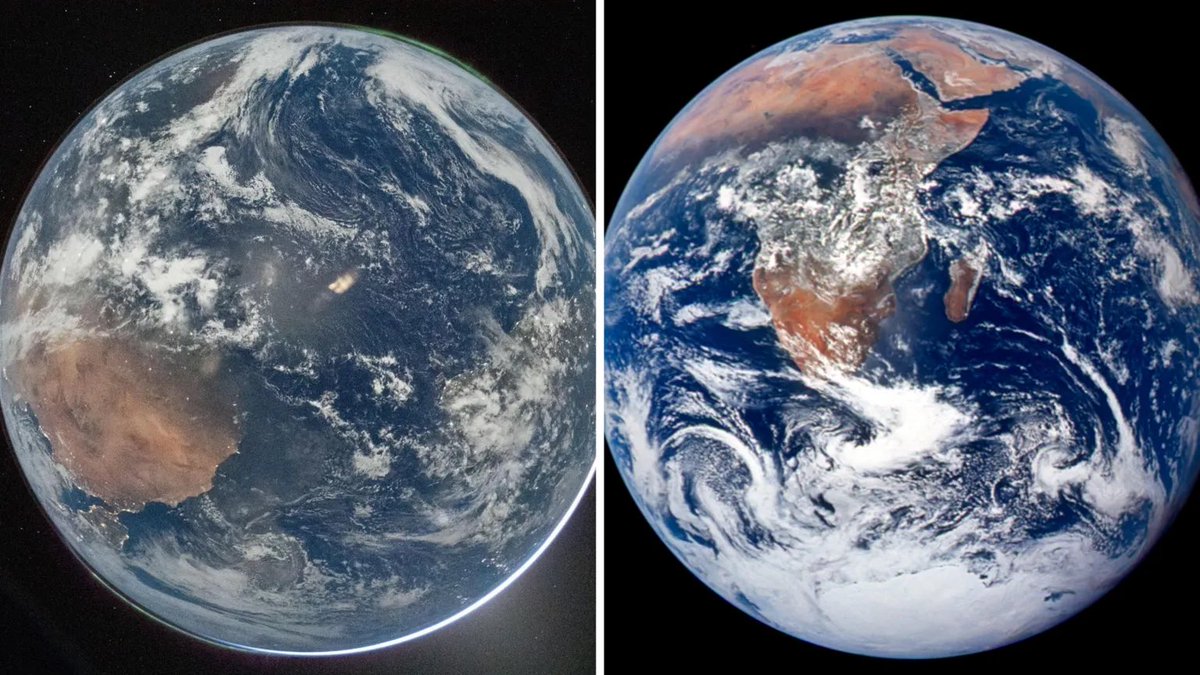
Ahora sí hablemos en serio de la foto. Este es un trino para interesados en fotografía, astrofotografía y el que quiera ¿Por qué esta foto es increíble? Algún conspiranóico, dándoselas de suspicaz, preguntó que por qué esta foto tomada por el comandante del Artemis II se veía más opaca que la foto tomada por la tripulación del Apolo 17 en 1972. Bueno. Acá viene lo emocionante. Esta fotografía hubiera sido imposible tomarla con una cámara análoga; y no cualquier cámara digital puede tomarla. El archivo original de esta foto está disponible para su descarga en la página de la NASA. En las propiedades del archivo se puede ver con qué cámara fue tomada y los ajustes de exposición que se usaron. Hasta el serial de la cámara. Esto, primero que todo, garantiza que la foto que estamos viendo no fue creada digitalmente, ni con IA, sino capturada por una cámara real por un humano. Sé que no es suficiente argumento para los conspiranóicos, pero ni modos. Esa que está ahí es la Tierra. Ahora sí lo interesante. ¿Por qué se ve como más opaca que la del 72? porque resulta que en la cara de la tierra que vemos en esa foto, está de noche; si hacen zoom pueden ver el brillo de la iluminación nocturna. Pero ¿cómo, si es de noche, puede verse como si fuera de día? Porque la foto se hizo con un altísimo ISO de 51200! El ISO es la sensibilidad del sensor a la luz. Con la mayoría de cámaras digitales, con ISOs de más de 6400, el ruido es tanto que la foto se ve prácticamente ilegible. Pero la cámara que tiene el comandante Reid Wiseman es una NIKON D5, que no es una cámara muy nueva; tiene 10 años de haber sido lanzada. Pero su sensor es reconocido por garantizar una calidad decente de imagen con ISOs altos. Y eso, para los que siempre preguntan cómo se hace una buena foto del cielo, es fundamental ¿Por qué? Pues para poder tomar fotos de los astros sin tener que bajar mucho la velocidad de exposición. Porque si bajas mucho la exposición apra que entre más luz, queda capturado el movimiento de los astros y de la rotación de la Tierra, cuando estás en la Tierra. Así que un iSO tan alto hizo posible que Wiserman pudiera disparar a una velocidad de 1/4 de segundo. Que es baja, pero no tanto. Es digamos, el límite para la astrofotografía. Por eso esta foto tiene ruido, porque de todas formas es un ISO altísimo.
Pero lo que más me emociona a mí, es que la tomó con un lente 14 -24mm F2.8. Es decir, en terminos coloquiales, que esta foto no tiene zoom. Para que lo dimensionen: cuando uno quiere tomar una foto de la Luna desde la Tierra que salga así de "cerca" tiene que usar un lente de unos 400mm de distancia focal. Wiserman usó un ¡gran angular de 22mm! Es decir que él estaba viendo la Tierra asi de grande frente a sus ojos. Porque la foto no fue recortada en edición y eso lo sabemos porque en las propiedades del archivo siempre aparece cuando una foto fue editada. El archivo está limpio, tiene la resolución original de la cámara. La tierra era inmensa frente a su mirada. Hermoso.
Pero para mí lo más mágico de esta foto, incluso más que las auroras boreales, es que se ve como la luz de sol, que está del otro lado de la tierra, ilumina nuestra atmosfera. Y eso es magia pura, porque esa atmosfera tiene una composición milimétricamente perfecta para permitir que la vida, tal y como la conocemos, sea posible. Esta foto, es un regalo precioso para la humanidad.
Les dejo al link para que descarguen la foto en alta resolución y el pantallazo de las propuedades del archivo.
At Artemis II’s top speed — about 25,000 miles per hour — a human crew would need more than 200,000 years to make a round‑trip to the nearest star.
That’s nonstop, no slowing down, just flying for longer than the entire history of our species. And that’s only to the closest star!
“Every doctrines… every hero and coward, every creator and destroyer of civilization… every king and peasant… every mother and father… every hopeful child… every saint and sinner in the history of our species lived there—on a mote of dust suspended in a sunbeam.” Carl Segan
Hello world! Flip the photo upside down to better orient. What we see in the left lower part is NW Africa and part of Spain! What a spectacular picture this is! https://t.co/PmVuXXBFKY
Look again at that dot. “That’s here. That’s home. That’s us.
On it everyone you love, everyone you know, everyone you ever heard of, every human being who ever was, lived out their lives.” Carl Segan