🇪🇬 BROKEN: With their 3-1 win over New Zealand, Mohamed Salah’s Egypt have registered their first ever victory in a match at the World Cup.
It has taken 9 matches (1 win, 3 draws, 5 defeats) over the course of 4 World Cup tournaments spanning 92 years.
🇨🇮 SEARCHING: Deniz Undav’s goal for Germany condemns Côte d’Ivoire to a 2-1 defeat in their second group game at the 2026 World Cup.
Côte d’Ivoire, following an opening day 1-0 win over Ecuador, continue their search for a second successive win at a World Cup tournament.
🇲🇦 MOROCCO: Following their 1-1 draw with Brazil in their 2026 World Cup opener, the Atlas Lions have become the top-joint African nation with the most draws in World Cup history - 8 drawn games (5W, 8D, 11L).
Cameroon are the other nation.
🇲🇦 MOROCCO: The 2022 World Cup semifinalists are the first African nation to win their group in World Cup history, achieving the feat in 1986 by finishing above England, Portugal and Poland.
The African champions are set to open their 2026 campaign against Brazil.
“Why argue with an Arsenal fan when you can just wait?” We waited. We won. We are champions of England - and we are just one game away from being crowned champions of Europe. Read my piece on what Arsenal means to me here: https://t.co/J6cg388mRH
For too long, young (and even older) Africans have sought escapism in the thrills of European football — but at what cost? What if you were told that the ache in your chest when your favourite European team flops isn’t organic? That the decades of slick ads, childhood posters, viral clips, and algorithm-fed highlights are all carefully engineered to make a stranger’s cultural export feel like your personal victory?
Imagine if even half of the passion given away by Africans to European football imports could be redirected toward building true economic and cultural independence at home. The phenomenon that some have dubbed "Emotional Colonisation" will come to an end the day that a local goal sparks louder celebration than any imported drama.
Until then, ask yourself: Who owns your passion?
This year’s chemistry laureate Omar Yaghi was born in Amman, Jordan, in 1965 to parents who were refugees from Palestine. When we spoke to him he shared his story:
“I grew up in a very humble home, we were a dozen of us in one room, sharing it with the cattle that we used to raise. I was born in a family of refugees, and my parents could barely read or write. My father finished sixth grade and my mother couldn’t read or write. It’s quite a journey. Science allows you to do it. Science is the greatest equalising force in the world.
Smart people, talented people, skilled people exist everywhere. That’s why we really should focus on unleashing their potential through providing them with opportunity.”
Today Yaghi shared the 2025 Nobel Prize in Chemistry with Susumu Kitagawa and Richard Robson for their work developing metal–organic frameworks.
Learn more about the prize: https://t.co/4nmszg1ZIR
Introducing Qwen3!
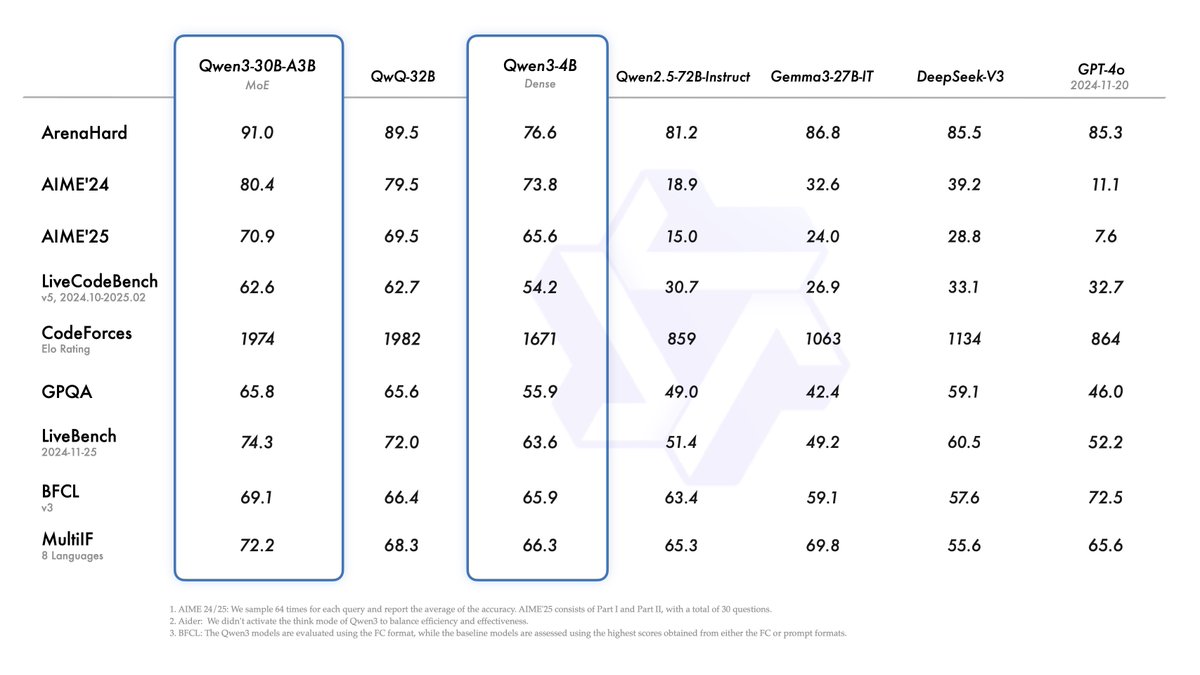
We release and open-weight Qwen3, our latest large language models, including 2 MoE models and 6 dense models, ranging from 0.6B to 235B. Our flagship model, Qwen3-235B-A22B, achieves competitive results in benchmark evaluations of coding, math, general capabilities, etc., when compared to other top-tier models such as DeepSeek-R1, o1, o3-mini, Grok-3, and Gemini-2.5-Pro. Additionally, the small MoE model, Qwen3-30B-A3B, outcompetes QwQ-32B with 10 times of activated parameters, and even a tiny model like Qwen3-4B can rival the performance of Qwen2.5-72B-Instruct.
For more information, feel free to try them out in Qwen Chat Web (https://t.co/bg4tAU1p74) and APP and visit our GitHub, HF, ModelScope, etc.
Blog: https://t.co/Z8YgHerTXz
GitHub: https://t.co/Ij0Vne5b5K
Hugging Face: https://t.co/V1WxhQ0fad
ModelScope: https://t.co/Z9Z37FODVN
The post-trained models, such as Qwen3-30B-A3B, along with their pre-trained counterparts (e.g., Qwen3-30B-A3B-Base), are now available on platforms like Hugging Face, ModelScope, and Kaggle. For deployment, we recommend using frameworks like SGLang and vLLM. For local usage, tools such as Ollama, LMStudio, MLX, llama.cpp, and KTransformers are highly recommended. These options ensure that users can easily integrate Qwen3 into their workflows, whether in research, development, or production environments.
Hope you enjoy our new models!
I appreciate the love and support. It’s always great when you like the music because we risk being overlooked commercially to try and reach your souls.
ABEBRESE ft. @Fameye Out Now
Stream Here: https://t.co/oecaujmMcX
What’s your favorite verse?
RT to save a soul.
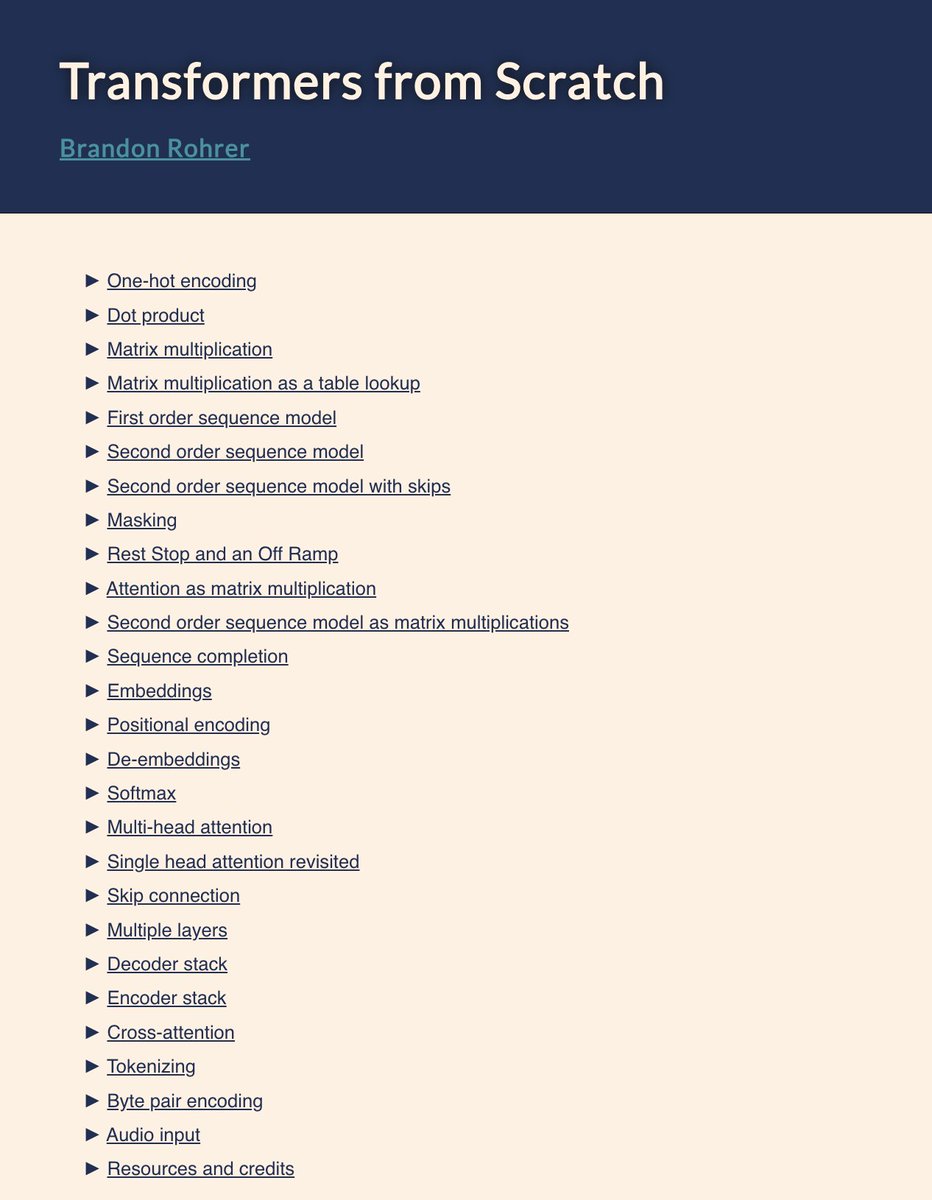
Some people asked me about a resource for learning about Transformers.
Here's a good one I am sharing again -- it covers just about everything you need to know.
https://t.co/avtzL5oNmd
Amazing stuff. It's totally worth your weekend.
We're ecstatic to bring you "How Transformer LLMs Work" -- a free course with ~90 minutes of video, code, and crisp visuals and animations that explain the modern Transformer architecture, tokenizers, embeddings, and mixture-of-expert models.
@MaartenGr and I have developed a lot of the visual language over the last several years (tens of thousands of iterations for hundreds of figures) for the book. But to have an opportunity to collaborate with the legendary @AndrewYNg, we took them to the next level with animations and a concise narrative meant to enable technical learners to pick up an ML paper and understand the architecture description.
Link in comments
The DeepSeek R1 training procedure confused me at first. My brain refused to accept this powerful model could be incredibly straightforward.
Let me break down this elegant beast for you 🧵
We are living in a timeline where a non-US company is keeping the original mission of OpenAI alive - truly open, frontier research that empowers all. It makes no sense. The most entertaining outcome is the most likely.
DeepSeek-R1 not only open-sources a barrage of models but also spills all the training secrets. They are perhaps the first OSS project that shows major, sustained growth of an RL flywheel.
Impact can be done by "ASI achieved internally" or mythical names like "Project Strawberry".
Impact can also be done by simply dumping the raw algorithms and matplotlib learning curves.
I'm reading the paper:
> Purely driven by RL, no SFT at all ("cold start"). Reminiscent of AlphaZero - master Go, Shogi, and Chess from scratch, without imitating human grandmaster moves first. This is the most significant takeaway from the paper.
> Use groundtruth rewards computed by hardcoded rules. Avoid any learned reward models that RL can easily hack against.
> Thinking time of the model steadily increases as training proceeds - this is not pre-programmed, but an emergent property!
> Emergence of self-reflection and exploration behaviors.
> GRPO instead of PPO: it removes the critic net from PPO and uses the average reward of multiple samples instead. Simple method to reduce memory use. Note that GRPO was also invented by DeepSeek in Feb 2024 ... what a cracked team.
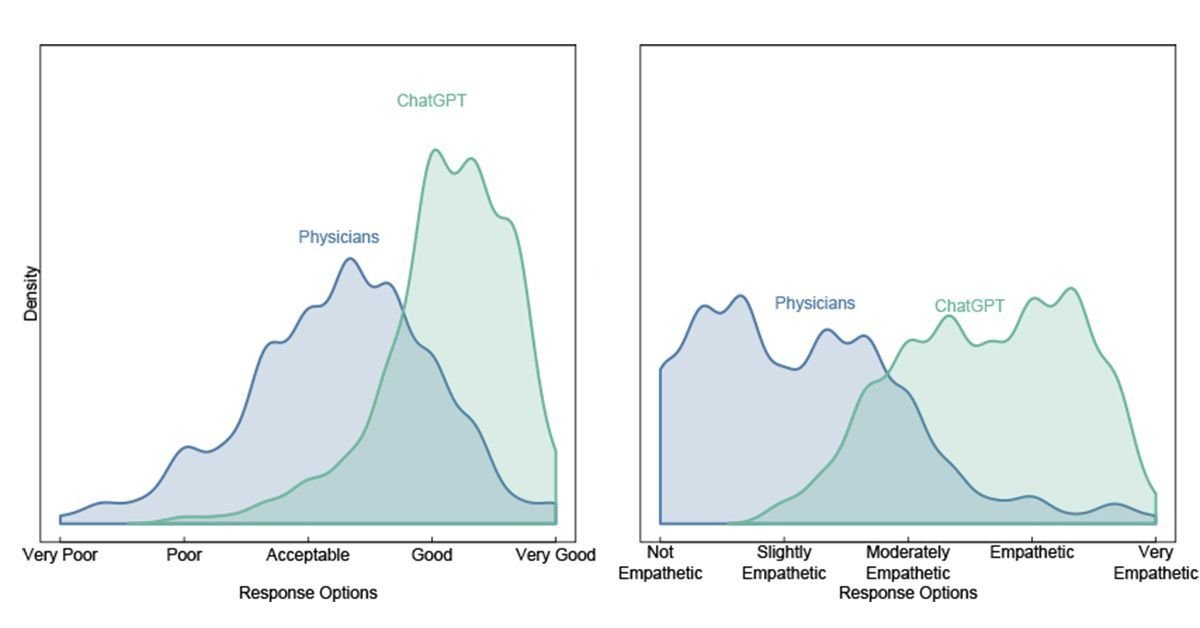
I figured out why LLMs are so good at medicine.
It's all just pattern recognition. When people say "AI is just a pattern recognizer" I'm just thinking "What do you think diagnosing diseases is?"
It's recognizing a cluster of symptoms and labs - a pattern if you will. No wonder ChatGPT soared past doctors before almost any other prestigious job.
Now compare that to other non-critical characteristics, like "bedside manner" and "availability." ChatGPT (and Claude) have crossed the four criteria for economic replacement.
BETTER - ChatGPT alone provided better diagnosis
FASTER - ChatGPT is available 24/7 (human doctors are not)
CHEAPER - ChatGPT costs $20 per month
SAFER - ChatGPT has a 90% accuracy, human doctors only 73%
How much money do you think will be wasted by slowing down this transition? How many lives do you think will be lost by needless human mistakes? How much unnecessary suffering do you think will occur by not promoting this quickly?
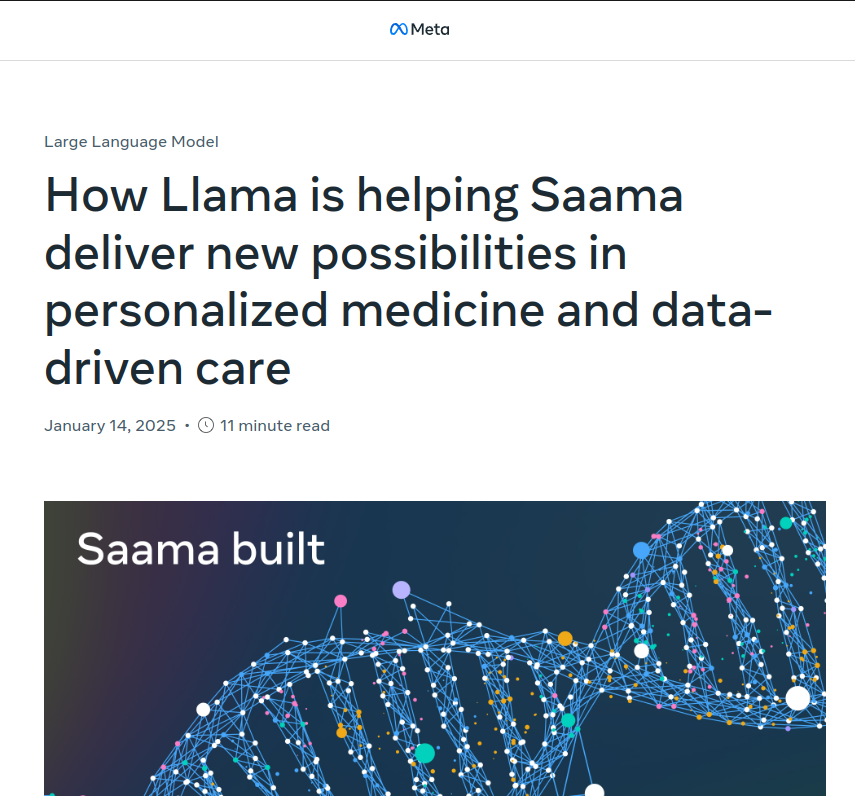
Open-source biomedical Llama models are simplifying clinical trials and empowering personalized medicine breakthroughs.
OpenBioLLM-8B and OpenBioLLM-70B, fine-tuned Llama models developed by Saama, accelerate clinical trials and data-driven personalized medicine by generating clinical trial protocols
→ OpenBioLLM models, derived from fine-tuned versions of Llama 3, are designed to improve the speed and accuracy of clinical trials. They can automate protocol generation, extract insights from clinical documents, and enhance data-driven decision-making in personalized medicine.
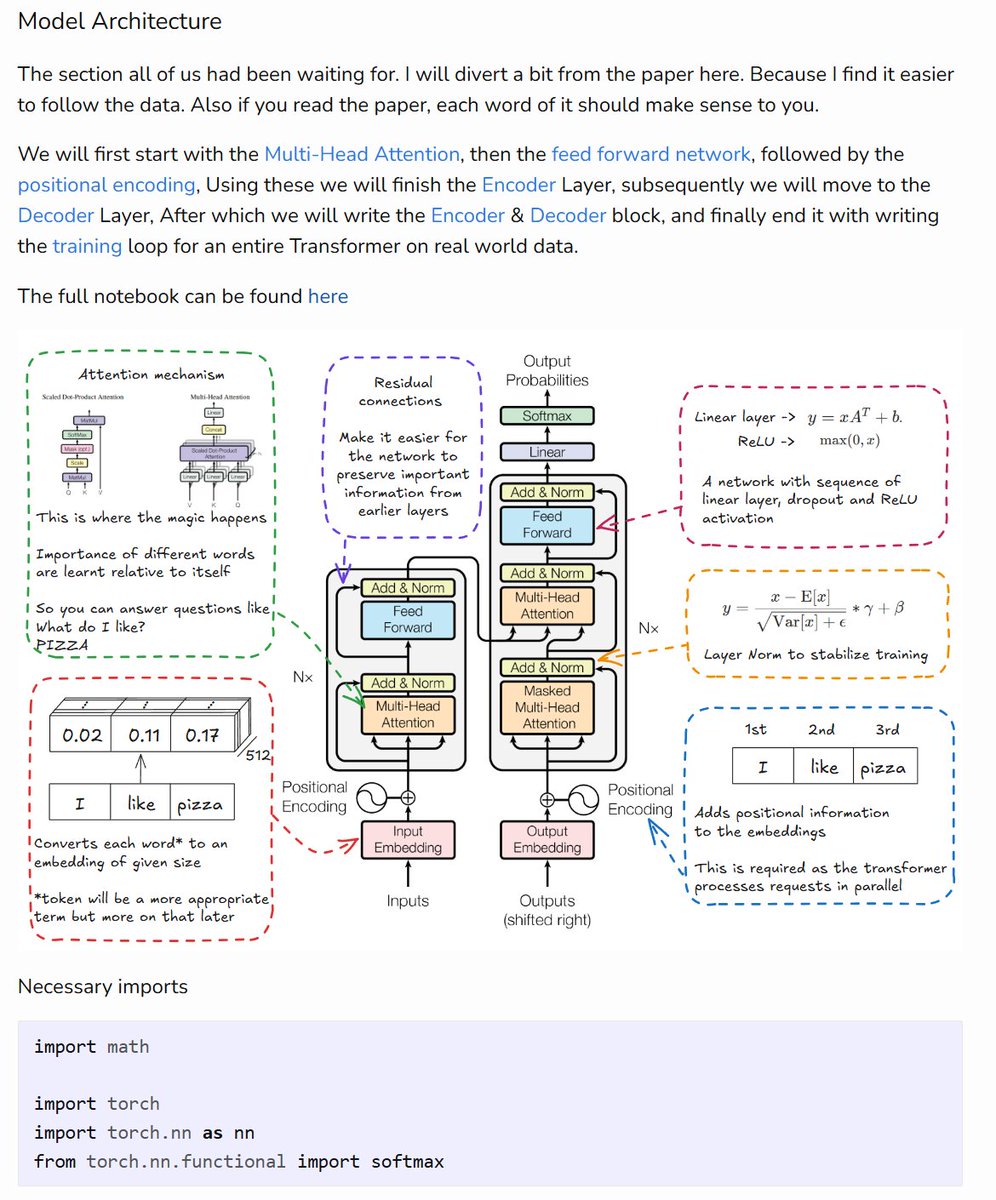
I am finally done with the blog on transformers.
I have tried to incorporate everything someone would need to deeply grok it.
* Code
* Paper lingo
* Visual explanation of components
Consider checking it out
Learn how to fine-tune Llama for free in 6 mins!
In this video, @jasonzhou1993 uses Unsloth to fine-tune Llama 3.2 (3B) with a custom dataset to significantly enhance MidJourney prompts.
Jason covers the A-Z of fine-tuning, including data prep with synthetic data, evaluation, free Colab training using Unsloth, deployment & more in the full video!
Colab notebook: https://t.co/aseQRtBmvM
Documentation: https://t.co/zTtkDCpXji
Full video: https://t.co/raEE0ykmR2