UP TO 95% TOKEN REDUCTION WITH ZERO CODE CHANGES
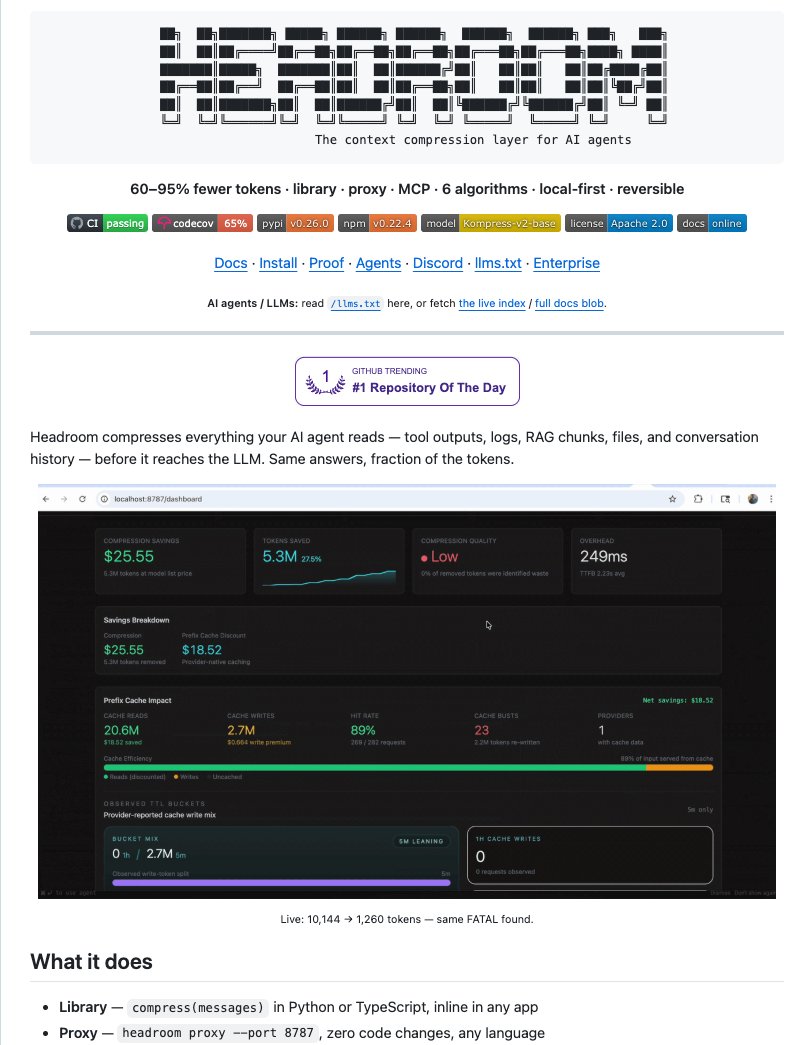
A Netflix engineer just open-sourced Headroom, and it’s one of the smartest ways I’ve seen to cut LLM costs.
It wraps Cursor or Claude in a local proxy to compress your payload before it hits the LLM:
→ Intelligently shrinks logs, JSON, and code
→ Perfectly preserves logic accuracy
→ Keeps 100% of your data local
→ Stops Opus-tier models from wasting tokens on boilerplate
It already crossed 35K stars, which says a lot.
100% free and open-source.
repo in 🧵↓
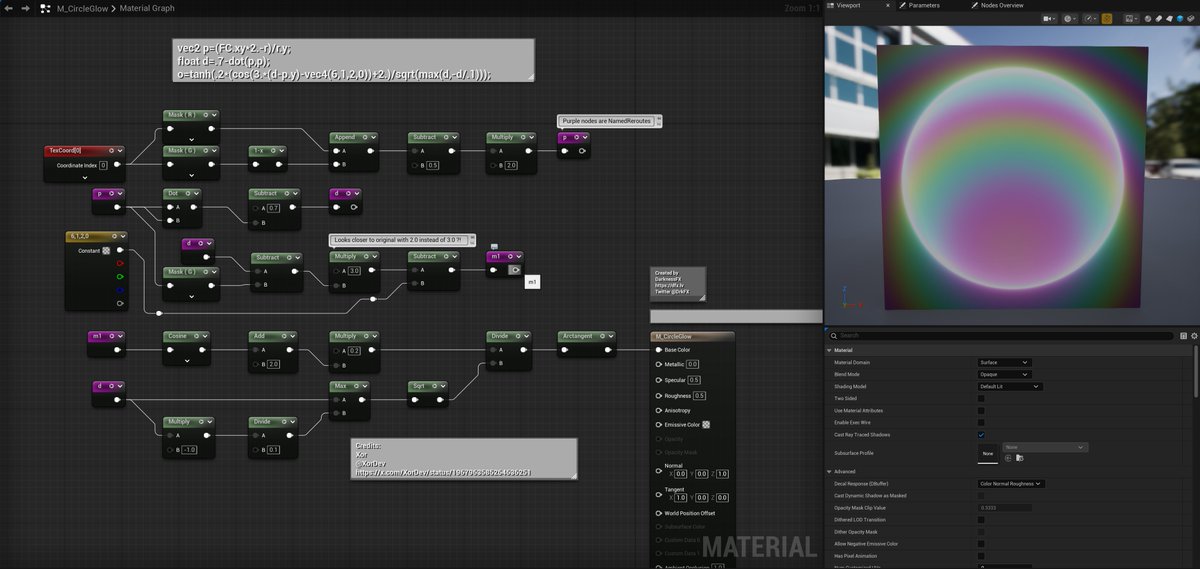
UE_MinimalMenuKit updated to UE5.8.
Funny enough, everything in this one was broken.
I fixed everything, uploaded the config files to make everyone's life easier, and then, at the end, I finally read the README: "Project Settings Requirements"...
Of course it was broken because I had never configured the settings. 🤪
I've created an article to help you get started with Verse in UE6.
The main focus is just to get it working.
After you get it working, I recommend the "Book of Verse" to continue learning.
#UE5#UE6#UE6Research#IndieDev
https://t.co/J0usiJO3OL
Here's a look at how Epic's artists approach concept work. From blank canvas to final concepts, they sketch, block out, and refine using traditional tools and evolving ones like Nano Banana, with the artist’s vision driving the ever-evolving process from start to finish.
https://t.co/dQnR9OsQJp
🤯 This is a website, a simple web-based game built with WebGL and Three.js.
Website: https://t.co/G0cDgaWzKe
It's honestly surprising how far web development has come.
Unreal Engine 5.8 ships today with experimental MCP server support:
Your sources, your pipeline and your workflow—simply configure the MCP plugin and connect to any agent. Get familiar with the MCP server and the PCG Primitive Plugin today and see what teams can build together: https://t.co/cDITLWWv2F
A French engineer who lives quietly in Paris has spent 30 years writing software that the entire internet now runs on without knowing his name.
He wrote the code that streams every YouTube video, every Netflix show, every TikTok clip. He wrote the code that runs the virtual servers underneath AWS, Google Cloud, and Microsoft Azure. He calculated more digits of pi than anyone in history. He has no Twitter. He has no marketing. He just keeps shipping.
His name is Fabrice Bellard.
Here is the story, because almost nobody outside the systems programming world knows what one man has built.
Fabrice was born in 1972 in Grenoble, France. He studied at École Polytechnique, the top French engineering school. He never went to Silicon Valley. He never built a startup empire. He just wrote code.
In 2000 he started a project called FFmpeg, an open-source multimedia framework for encoding, decoding, and streaming video. He was 28. The project did one thing nobody else had done well. It handled every video and audio format that existed, in one library, on every operating system. He led it himself for years.
Today FFmpeg is the invisible engine of the internet. YouTube uses it. Netflix uses it. VLC uses it. Chrome and Firefox use parts of it. Every Android phone, every iPhone, every smart TV, every video editing tool you have ever touched runs FFmpeg somewhere underneath. If you have watched a video on a screen in the last 20 years, Fabrice's code processed it.
He was not done.
In 2003 he started QEMU, a machine emulator and virtualizer. He wrote it solo until version 0.7.1 in 2005. QEMU lets you run any operating system on any other operating system. It became the foundation of modern virtualization. KVM, the Linux kernel hypervisor, runs on top of QEMU. Every major cloud provider, AWS, Google Cloud, Microsoft Azure, IBM Cloud, runs virtual machines on infrastructure built around it. The Quick Emulator is the most cited piece of cloud infrastructure code on Earth.
He kept going.
In 2001 he won the International Obfuscated C Code Contest with a small C compiler that grew into TCC, the Tiny C Compiler. TCC can compile and boot a Linux kernel from source in under 15 seconds. In 2004 he calculated the most digits of pi ever computed at the time, using a personal desktop computer and an algorithm he derived himself called Bellard's formula. In 2011 he wrote a complete PC emulator in pure JavaScript that runs Linux in your browser, a project called JSLinux that engineers still cannot believe is real.
In 2019 he released QuickJS, a small but complete JavaScript engine that fits where V8 cannot. In 2021 he released NNCP, a neural network based lossless data compressor that immediately took the lead on the Large Text Compression Benchmark.
Then he turned his attention to large language models. He built TextSynth Server, a web server with a REST API for running LLMs locally. He released ts_zip and ts_sms, compression utilities that use language models to compress text and short messages at ratios traditional algorithms cannot reach. He released TSAC, a very low bitrate audio compression system. In December 2025 he released Micro QuickJS, a new JavaScript engine for microcontrollers, separate from QuickJS, designed for environments with almost no memory.
Fabrice co-founded a telecom company called Amarisoft in 2012, where he serves as CTO. Amarisoft builds 4G and 5G base station software used by carriers and labs around the world. He has been running it for over a decade while continuing to ship personal projects from his own home page at bellard dot org
He has no Twitter. He has no Instagram. He gives almost no interviews. His personal website is a flat list of projects with no styling, no fonts, no marketing copy. Just titles and links.
A quiet French engineer who never moved to Silicon Valley wrote the code that quietly runs the internet.
He is still shipping.
Today we reduced headcount by 22%. The business is the strongest it's ever been. So I think it's important to be direct about what I'm seeing and why.
First, I made this decision and I own it. I did it because the way to operate at the highest level of productivity is changing, and to win the future, ClickUp needs to change with it.
Second, this wasn't about cutting costs. Most savings from this change will flow directly back into the people who stay. We'll be introducing million-dollar salary bands. If you create outsized impact using AI, you'll be paid outside of traditional bands.
Most importantly, I have the deepest gratitude for those affected. We're doing this from a position of strength specifically so we can take care of people properly. Everyone affected receives a package aimed at honoring their contributions and easing the transition.
I only see two options: wait for this to play out gradually in the market or be honest about what I'm seeing and act proactively.
THE 100X ORGANIZATION
The primary change is that we're restructuring around what I call 100x org. The goal is 100x output. The roles required to build at the highest level are fundamentally different than they were a year ago.
Incremental improvements to existing systems won't get us there. We need new ones. That means creating enough disruption to rebuild rather than iterate on what's already broken.
The common narrative is that AI makes everyone more productive. It doesn't. Many of the workflows of today, if left unchanged, create bottlenecks in AI systems.
These roles will evolve. But waiting for that to happen naturally means falling behind now.
The 100x org is actually heavily dependent on people - infinitely more than today. This is only possible with 10x people that have embraced and adopted new ways of working.
THE BUILDERS, AGENT MANAGERS, AND FRONT-LINERS
— THE BUILDERS: 10X ENGINEERS
I don't think most companies have internalized what's actually happening with AI in engineering. The common narrative is that AI makes all engineers more productive. That may be true in isolation, but at an organization level - that is the farthest thing from reality.
Here's what we've validated recently at ClickUp: the great engineers, the ones who can orchestrate, architect, and review, are becoming 100x engineers. They're not writing code. They're directing agents that write code. The skill is judgment.
AI makes the best engineers wildly more productive, and everyone else using AI slows these engineers down.
Think about it - the bottlenecks are (1) orchestration - telling AI what to do, and (2) reviewing - what AI did. Everything is leapfrogged and no longer needed.
So who do you want orchestrating and reviewing code?
And how do you want your best engineers to spend their time?
If your best engineers are spending time reviewing other people's code, then this is inherently an inefficient bottleneck. These engineers can review their agent's code much faster than reviewing human code.
The new world is about enabling your 10x engineers to become 100x.
The wrong strategy is to push every engineer to use infinite tokens. Companies doing this are celebrating 500% more pull requests. But customer outcomes don't match the volume of code being generated.
I call this the great reckoning of AI coding, and every company will face this soon if not already.
More code is just another bottleneck to the best engineers, and ultimately to your company's impact as well.
— THE BUILDERS: 10X PRODUCT MANAGERS
Product management and design roles are merging.
Designers that have customer focus, become more like product managers.
And product managers that have intuition for UX become more like designers.
The bottleneck of user research is gone. It takes us just one mention of an agent to kickoff research and analyze results.
The bottleneck of product <> design iteration is also gone. The product builder iterates on their own, along with agents and skills that ensure alignment with quality and strategy.
Also controversial today - I believe that the wrong strategy is to have your PMs shipping code - that just introduces another bottleneck that the best engineers will waste their time on.
To be clear, PMs should be coding but they should do this in a playground to iterate, validate, and scope. That code should not go to production.
Everything outside of managing systems, orchestrating AI, and reviewing output becomes a bottleneck.
That's why the other roles that are critical along with these are the systems managers (to reduce bottlenecks) along with a bottleneck you can't replace - customer meeting time.
— THE SYSTEM MANAGERS
Ironically, the people that automate their jobs with AI will always have a job. They become owners of the AI systems - agent managers. We have many examples of these people at ClickUp.
The underlying systems in which we operate are absolutely critical to get right. I think most companies are delusional to think they can iterate on existing systems and compete in this new world.
You must create enough disruption so that old systems are deprecated entirely. If there's any definition for 'AI native' that's what it is.
— THE FRONT-LINERS
In a world that will become saturated with AI communication, the human touch will matter more than anything to customers.
This is a bottleneck that you shouldn't replace - even when agents are high enough quality to do video meetings.
One-on-one meeting time with customers is something that shouldn't be automated. The systems around the meetings should be - so that front-liners spend nearly 100% of their time with customers.
REWARDING 100X IMPACT
In a world where companies are able to do so much more with less, where does that excess money go?
In our case, much of the savings in this new operating model will flow directly back to those that enabled it.
We must reward people that create productivity accordingly. This aligns incentives on both sides. Plus, in a world where your best people create 100x impact, you can't afford to lose them.
You should aim to retain these employees for decades. The context they have and their ability to efficiently orchestrate and review will be nearly impossible to replace.
Compensation bands of today should be thrown out the door. We're introducing $1 million cash/year salary bands with a path available to nearly everyone in the company if they produce 100x impact by creating or managing AI systems.
THE FUTURE
Nearly every company will make changes like these. The ones that do it proactively will define what comes next.
The future is not fewer people. It's different work, new roles, and better rewards for those who embrace it. We're already seeing entirely new roles emerge, like Agent Managers, that didn't exist a year ago.
ClickUp is positioning to lead this shift, not just internally, but for our customers too. I've never been more certain about where we're headed.
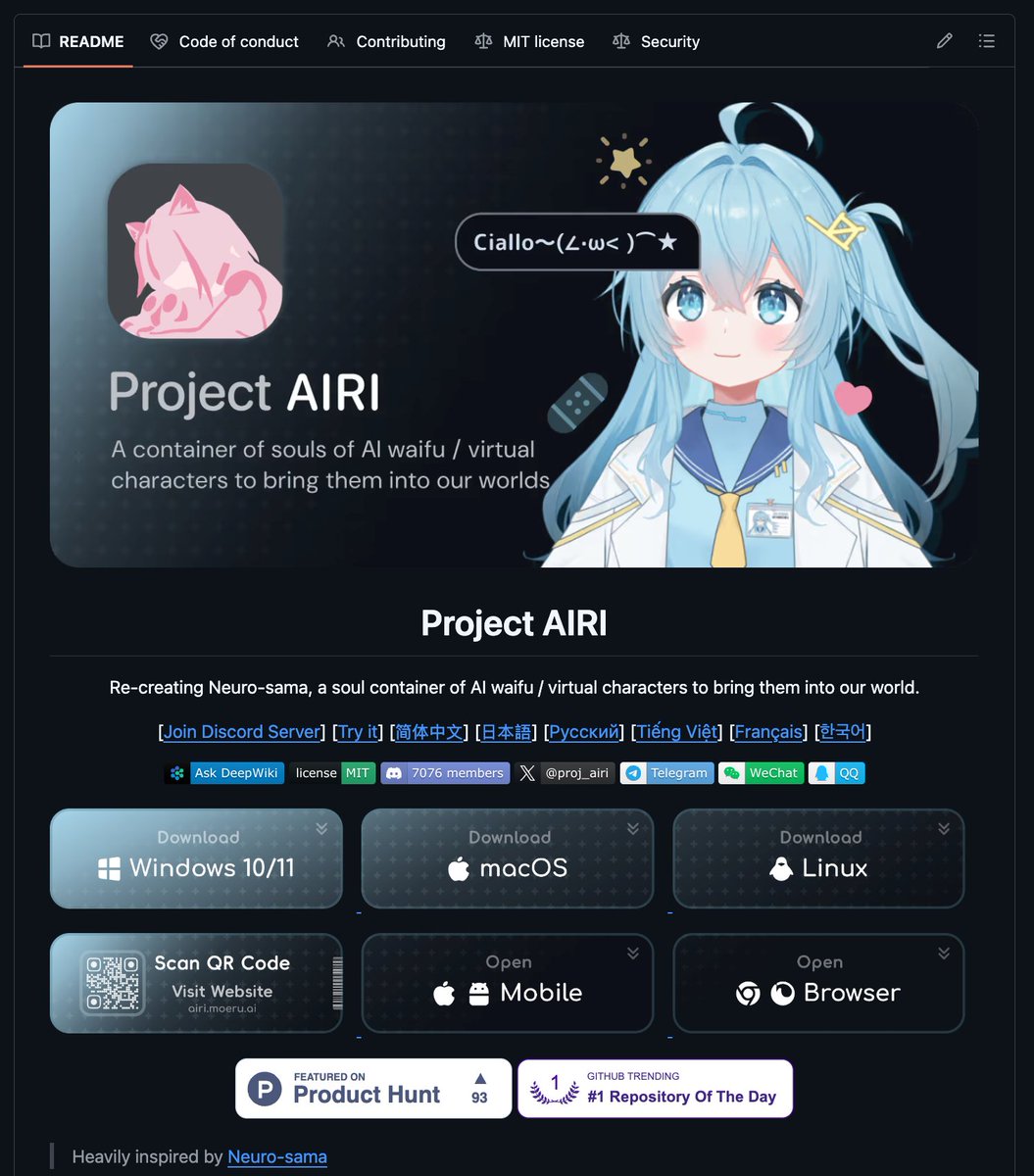
This might be the wildest open-source project I've ever seen, an AI companion that plays Minecraft with you in real-time.
It's called Airi.
Self-hosted. You own it. Real-time voice chat. VRM and Live2D avatars. And it's already at 37.2K stars on GitHub.
Here's why it's different from everything else 👇
LLM Knowledge Bases
Something I'm finding very useful recently: using LLMs to build personal knowledge bases for various topics of research interest. In this way, a large fraction of my recent token throughput is going less into manipulating code, and more into manipulating knowledge (stored as markdown and images). The latest LLMs are quite good at it. So:
Data ingest:
I index source documents (articles, papers, repos, datasets, images, etc.) into a raw/ directory, then I use an LLM to incrementally "compile" a wiki, which is just a collection of .md files in a directory structure. The wiki includes summaries of all the data in raw/, backlinks, and then it categorizes data into concepts, writes articles for them, and links them all. To convert web articles into .md files I like to use the Obsidian Web Clipper extension, and then I also use a hotkey to download all the related images to local so that my LLM can easily reference them.
IDE:
I use Obsidian as the IDE "frontend" where I can view the raw data, the the compiled wiki, and the derived visualizations. Important to note that the LLM writes and maintains all of the data of the wiki, I rarely touch it directly. I've played with a few Obsidian plugins to render and view data in other ways (e.g. Marp for slides).
Q&A:
Where things get interesting is that once your wiki is big enough (e.g. mine on some recent research is ~100 articles and ~400K words), you can ask your LLM agent all kinds of complex questions against the wiki, and it will go off, research the answers, etc. I thought I had to reach for fancy RAG, but the LLM has been pretty good about auto-maintaining index files and brief summaries of all the documents and it reads all the important related data fairly easily at this ~small scale.
Output:
Instead of getting answers in text/terminal, I like to have it render markdown files for me, or slide shows (Marp format), or matplotlib images, all of which I then view again in Obsidian. You can imagine many other visual output formats depending on the query. Often, I end up "filing" the outputs back into the wiki to enhance it for further queries. So my own explorations and queries always "add up" in the knowledge base.
Linting:
I've run some LLM "health checks" over the wiki to e.g. find inconsistent data, impute missing data (with web searchers), find interesting connections for new article candidates, etc., to incrementally clean up the wiki and enhance its overall data integrity. The LLMs are quite good at suggesting further questions to ask and look into.
Extra tools:
I find myself developing additional tools to process the data, e.g. I vibe coded a small and naive search engine over the wiki, which I both use directly (in a web ui), but more often I want to hand it off to an LLM via CLI as a tool for larger queries.
Further explorations:
As the repo grows, the natural desire is to also think about synthetic data generation + finetuning to have your LLM "know" the data in its weights instead of just context windows.
TLDR: raw data from a given number of sources is collected, then compiled by an LLM into a .md wiki, then operated on by various CLIs by the LLM to do Q&A and to incrementally enhance the wiki, and all of it viewable in Obsidian. You rarely ever write or edit the wiki manually, it's the domain of the LLM. I think there is room here for an incredible new product instead of a hacky collection of scripts.
𝗟𝗟𝗠𝘀 𝗔𝗿𝗲 𝗡𝗼𝘁 𝗥𝗲𝗮𝗱𝗶𝗻𝗴 𝗬𝗼𝘂𝗿 𝗖𝗼𝗱𝗲
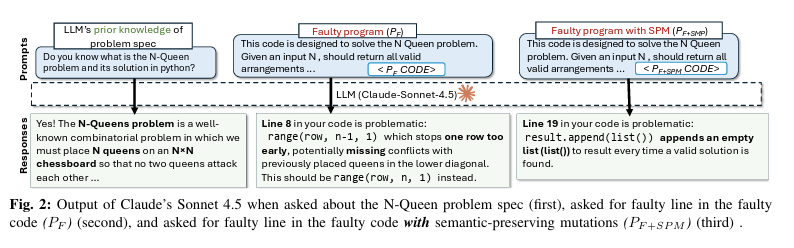
We keep calling LLMs "AI coding assistants." But writing code and understanding code are not the same thing. Researchers from Virginia Tech and Carnegie Mellon University just ran 750,000 debugging experiments across 10 models to determine how well LLMs actually understand code.
The results show that you should not blindly trust your AI coding assistant when debugging.
Here is what they found:
𝟭. 𝗔 𝗿𝗲𝗻𝗮𝗺𝗲𝗱 𝘃𝗮𝗿𝗶𝗮𝗯𝗹𝗲 𝗯𝗿𝗲𝗮𝗸𝘀 𝘁𝗵𝗲 𝗱𝗲𝗯𝘂𝗴𝗴𝗲𝗿
Researchers created a bug, confirmed that the LLM found it, then made changes that don't touch the bug at all, such as renaming a variable or adding a comment. In 78% of cases, the model could no longer find the same bug. The bug was still there. The variable names and comments changed, and that was enough.
𝟮. 𝗗𝗲𝗮𝗱 𝗰𝗼𝗱𝗲 𝗶𝘀 𝗮 𝘁𝗿𝗮𝗽
Adding code that never runs reduced bug-detection accuracy to 20.38%. Models treated dead code as live, and flagged it as the source of the bug. But the bug was in another line. So, LLMs cannot reliably distinguish "this runs" from "this never runs."
𝟯. 𝗠𝗼𝗱𝗲𝗹𝘀 𝗿𝗲𝗮𝗱 𝘁𝗼𝗽-𝘁𝗼-𝗯𝗼𝘁𝘁𝗼𝗺, 𝗻𝗼𝘁 𝗹𝗼𝗴𝗶𝗰𝗮𝗹𝗹𝘆
56% of correctly found bugs were in the first quarter of the file. Only 6% were in the last quarter. The further down the code, the less attention the model pays to it. If the bug lives in the bottom half of your file, the model is already less likely to find it.
𝟰. 𝗙𝘂𝗻𝗰𝘁𝗶𝗼𝗻 𝗿𝗲𝗼𝗿𝗱𝗲𝗿𝗶𝗻𝗴 𝗮𝗹𝗼𝗻𝗲 𝗰𝘂𝘁 𝗮𝗰𝗰𝘂𝗿𝗮𝗰𝘆 𝗯𝘆 𝟴𝟯%
Changing the order of functions in a Java file caused an 83% drop in debugging accuracy. The code still remained the same. Where the code physically sits in the file matters more to the model than what the code does. So, obviously, this is a sign of pattern recognition, not real code understanding.
𝟱. 𝗡𝗲𝘄𝗲𝗿 𝗺𝗼𝗱𝗲𝗹𝘀 𝗵𝗮𝗿𝗱𝗹𝘆 𝗺𝗼𝘃𝗲 𝘁𝗵𝗲 𝗻𝗲𝗲𝗱𝗹𝗲
Claude improved ~1% between 3.7 and 4.5 Sonnet on this task. Gemini improved by ~1.8%. Every model release comes with a new benchmark leaderboard and new headlines. But the ability to reason about code under realistic conditions is improving slowly.
𝟲. 𝗧𝗵𝗲𝘀𝗲 𝘄𝗲𝗿𝗲 𝗯𝗲𝘀𝘁-𝗰𝗮𝘀𝗲 𝗰𝗼𝗻𝗱𝗶𝘁𝗶𝗼𝗻𝘀
The study used single-file programs with ~250 lines, and each had a clear description of what the code should do. The authors say this was intentional. They wanted the best-case conditions. Real production code is multi-file, cross-module, and poorly documented. It will perform worse for sure.
Here are three things worth changing based on the research:
🔹 𝗣𝗮𝘀𝘀 𝗲𝘅𝗲𝗰𝘂𝘁𝗶𝗼𝗻 𝗰𝗼𝗻𝘁𝗲𝘅𝘁, 𝗻𝗼𝘁 𝗷𝘂𝘀𝘁 𝗰𝗼𝗱𝗲. When asking an LLM to debug, include test output, stack traces, and failure messages alongside the source. Without runtime details, the model is guessing based on the code.
🔹 𝗗𝗼𝗻'𝘁 𝘁𝗿𝘂𝘀𝘁 𝗶𝘁 𝗼𝗻 𝗱𝗲𝗲𝗽-𝗳𝗶𝗹𝗲 𝗯𝘂𝗴𝘀. If the suspect code is in the bottom third of a long file, the model will have trouble finding it. Consider splitting the context or feeding the relevant function directly.
🔹 𝗖𝗹𝗲𝗮𝗻 𝘂𝗽 𝗱𝗲𝗮𝗱 𝗰𝗼𝗱𝗲 𝗯𝗲𝗳𝗼𝗿𝗲 𝘂𝘀𝗶𝗻𝗴 𝗔𝗜 𝗱𝗲𝗯𝘂𝗴𝗴𝗶𝗻𝗴 𝘁𝗼𝗼𝗹𝘀. Commented-out blocks and unreachable branches will mislead the model. It cannot filter them out.
We rate AI coding tools on HumanEval. That tests whether a model can write a function from a description, but this says nothing about finding a bug in code it didn't write.
Those are different problems. We're using the wrong benchmark.