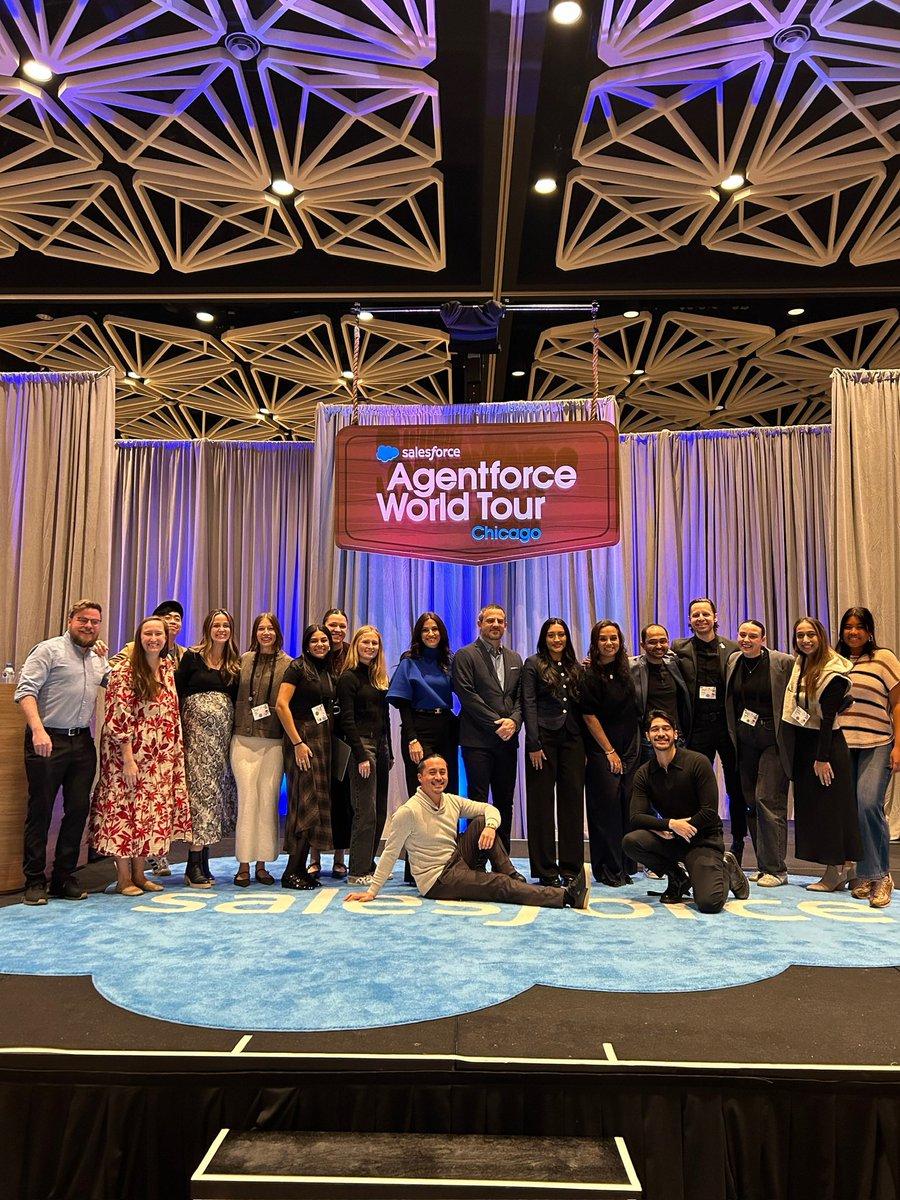
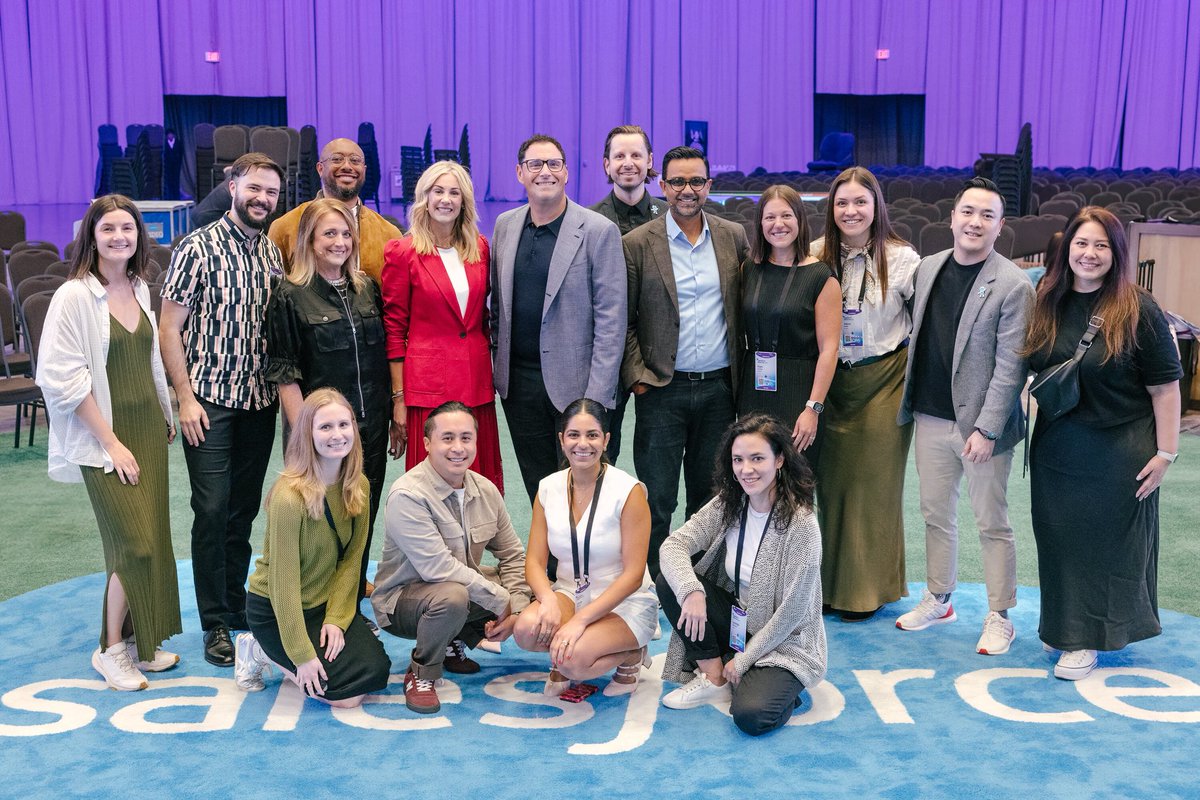
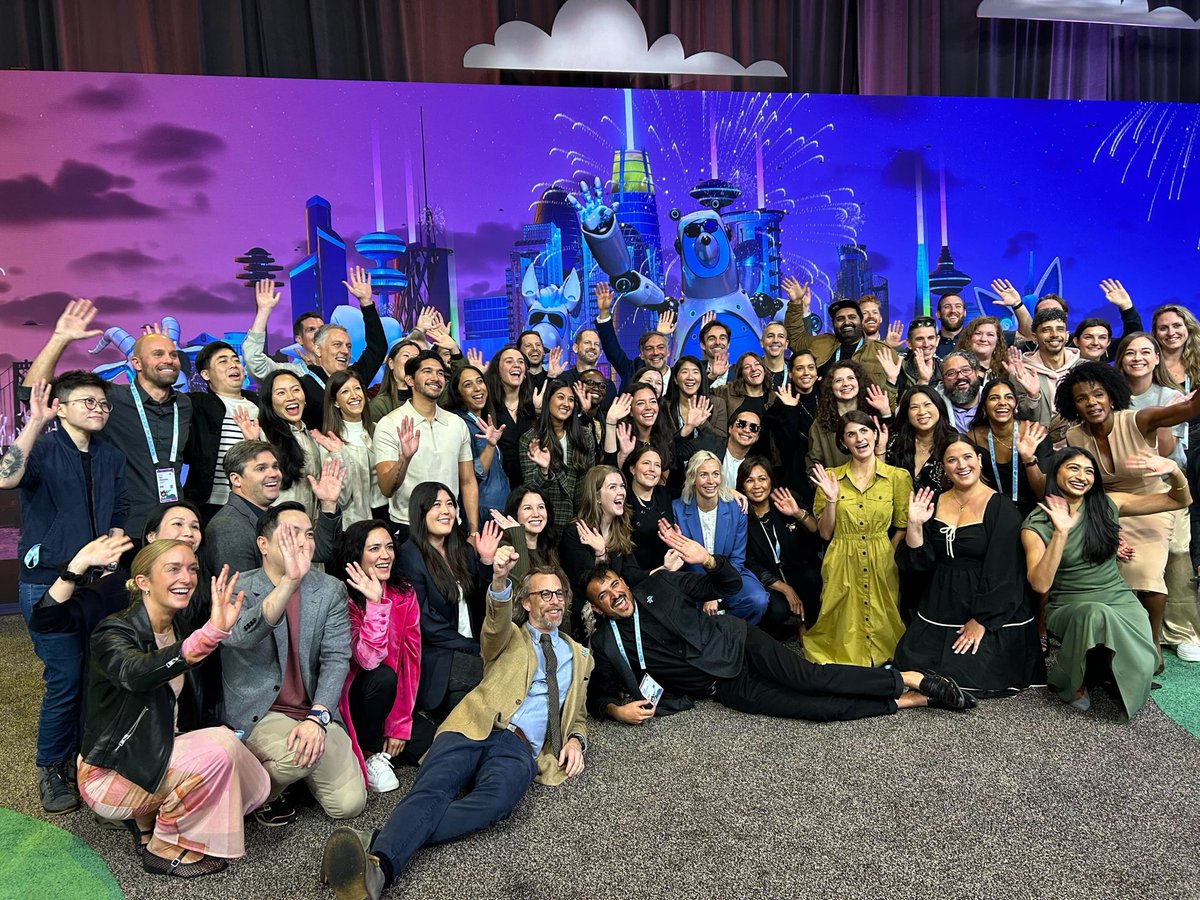
It’s easy to see the #Dreamforce stages, keynotes, and stories that inspire millions around the world. But behind every moment is our Company Messaging Team — the people who shape how #Salesforce shows up, what we say, and how it all connects. You’re the best in the biz. 🚀 #DF25
Upload a process diagram.
Turn it into an automated workflow in minutes.
All with Agentforce Operations.
Because your best people hate busywork. And agents love it.
Salesforce is introducing Agentforce Operations extending AI agents from front-office experiences into the processes and systems that run the business — enabling end-to-end agentic execution across the back office.
https://t.co/UGSBv58su0
We just closed FY26, the biggest year in Salesforce history, and favor FY27 Guidance ! 🚀
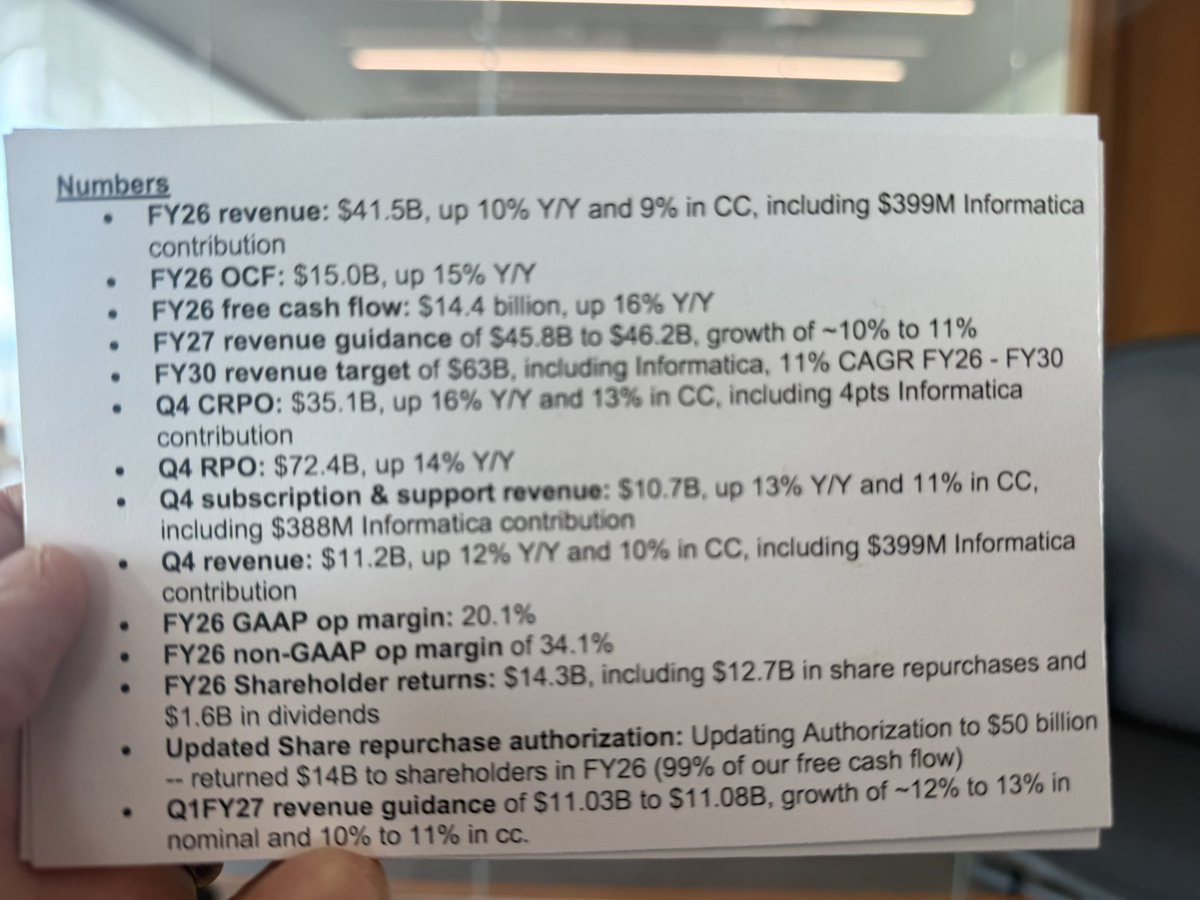
FY27 Guidance: $46.2B revenue, 34.3% Non-GAAP Operating Margin, 20.9% GAAP Operating Margin
- $41.5B revenue (+10% Y/Y) - 34.1% Non-GAAP (+110 bps y/y) & 20.1% GAAP operating margin
- $15B Operating cash flow (+15% y/y)
- $72.4B Total RPO (+14% y/y)
Here's the thing: every AI agent needs somewhere to land. The data, business rules, and a conversational layer for humans & agents.
That place is Salesforce. No one is delivering more agents for the enterprise than us.
Let me tell you what's happening 🧵
Check out the full results: https://t.co/Nbofi6JUos
P.S. This isn’t my first SaaSpocalypse
AI is projected to contribute over $4T to global GDP, but there's a catch. The speed and complexity of LLMs puts vulnerable members of society at risk.
At #WEF26, Salesforce Chair and CEO Marc Benioff discussed social responsibility in the era of AI:
Q2 Results and FY26 Guidance
Salesforce Growth:
FY26 $41.3B (guidance)
FY25 $37.9B
FY24 $34.9B
FY23 $31.4B
FY22 $26.5B
Salesforce Operating Cash Flow:
FY26 $15B (guidance)
FY25 $13.1B
FY24 $10.2B
FY23 $7.1B
FY22 $6.0B
Salesforce Margin:
FY26 34.1% (guidance)
FY25 33%
FY24 30.5%
FY23 22.5%
FY22 18.7%
Salesforce Q2 Results
$10.2B Revenue +10% Y/Y
34.3% Non Gaap Operating Margin
$0.7B Operating Cash Flow
$29.4B in cRPO, +11% Y/Y
Over $1.2B Data Cloud & AI ARR, +120% Y/Y
Since October, closed 12,500 Agentforce deals, including 6,000 paid
Over 40% of Data Cloud and Agentforce Q2 bookings came from existing customer expansion
In Q2, closed over 60 deals greater than $1 million that include both Data Cloud and AI
Service and Platform were in all Q2 Top 10 Deals
On https://t.co/a4KZ6q28Or, Agentforce has handled over 1.4 million requests
https://t.co/u81T1YyKzM, Inc. - Salesforce Investor Relations (https://t.co/gKvwqo3ks9)
Salesforce Growth:
FY26 $40.9B (guidance)
FY25 $37.9B
FY24 $34.9B
FY23 $31.4B
FY22 $26.5B
Salesforce Operating Cash Flow:
FY26 $14.5B (guidance)
FY25 $13.1B
FY24 $10.2B
FY23 $7.1B
FY22 $6.0B
Salesforce Margin:
FY26 34% (guidance)
FY25 33%
FY24 30.5%
FY23 22.5%
FY22 18.7%
FY25 Agentforce & Data Cloud
• $900M Data Cloud & AI ARR, up 120% Y/Y
• Since October, closed 5,000 Agentforce deals, including more than 3,000 paid
• Data Cloud surpassed 50 trillion records, 100% Y/Y
• Nearly 50% Fortune 100 are now AI & Data Cloud customers, all of our top 10 wins in Q4 included Data & AI
• On https://t.co/a4KZ6q28Or, Agentforce has handled 380,000 conversations, achieving an 84%
resolution rate, with only 2% of requests requiring human escalation
https://t.co/qUsE9HPP4H
Salesforce is on an unstoppable growth journey, skyrocketing from $4.1B in FY14 to an expected $38.0B in FY25! 🚀 With margins set to nearly double from 16.8% in FY20 to 32.8% in FY25 and operating cash flow surging to a projected $12.8B, the future is bright. But the real game-changer? #Agentforce! Powered by cutting-edge AI, Agentforce is transforming how we drive efficiency, growth, and unparalleled customer success. This is just the beginning of a new era in sales and engagement. Don’t miss out—watch me on @YahooFinance and @BrianSozzi tonight! https://t.co/KIfJpf1idK
One of the biggest questions in AI right now, especially in talking with investors, is where it will have the most amount of impact across the enterprise software landscape. It's critical to first start with what AI is good at and why it is so important. AI --at least in its forms for the foreseeable future-- has the ability to provide a reasoning engine for working on information (text, audio, video, or images, etc.) in service of bringing automation to small or large bodies of non-deterministic work. Critically, however, it's useful to separate which areas of software will have the most amount of potential upside from AI, and which areas will AI be mostly just a nice-to-have improvement.
When AI is used to automate a small area of work, like we saw in a mad rush right after the launch of ChatGPT (let's say helping a user navigate software via a prompt interface vs. a GUI), we can imagine that this level of automation has a fairly incremental amount of value. Customers likely won't pay extra for this value proposition, and we likely wouldn't see much lift in customer demand for that particular area of service. Conversely, if we could instead automate an entire type of work in a piece of software that otherwise might take hours of high-priced labor to accomplish, we can see this as being fairly valuable. Even better, is if this is the type of work that happens frequently and has no particular upper-limit to the amount of time that could be spent on the activity.
As such, we can imagine at least 3 major axes (and there are definitely more) that will determine the vast majority of value that will be generated with AI:
1. What is the level of automation being applied to the work? The smallest area of work would essentially be an autocomplete in a text field or a chatbot, and the largest area of work would be an AI Agent that automates an entire process or does a substantial amount of research and work to return information back to the user. Both ends of this spectrum can certainly be valuable, but largely depending on how the AI is leveraged and what types of ROI you can generate with the automation itself.
2. What is the "cost" of the work that's being automated? Every task in the economy has a different level of cost associated with it, either because the task itself is very time-consuming or because the level of specialization to complete the task is very high, and thus labor tends to be more expensive. Whether it's writing software code, generating text for a blog post, reviewing a contract, or providing synthesis of equity research, each of these tasks are valued differently. Fairly intuitively, the more that AI is applied to otherwise expensive activities and tasks, the more valuable it is.
3. What is the volume or frequency of the work that's being automated? If it's something that is done somewhat infrequently, like changing the settings of an application via a chatbot, then obviously AI is going to offer a limited amount of value. If, instead, the AI is being applied to a process that is executed hundreds or thousands of times a day in an organization, like QA testing software or routing invoices, then the value is much more meaningful.
The pinnacle, of course, would be to go after software categories where the activity is high value, high volume, and offers the opportunity for a substantial amount of automation. Conversely, the worst spot to be would be relatively low cost activity, that is infrequent, and just experiencing the AI through a basic chatbot. But there can of course be different optimizations available: for instance, bringing heavy automation to a high volume low cost activity could be just as valuable as bringing a medium amount of automation to a medium volume, high cost activity.
What is clear is that while not all AI opportunities will be the same, and we're only in the earliest stages figuring out which ones will bring the greatest amount of upside, the potential is insane.