Founded Bolt Threads (spider silk, Mylo) PhD chemical biologist. Digging into the data behind bio-AI: where it comes from, what’s missing, what to build next
In 2023 I asked bio Twitter why biology is so hard to engineer. 97 people answered.
After a decade building Bolt Threads, my answer is data and tooling.
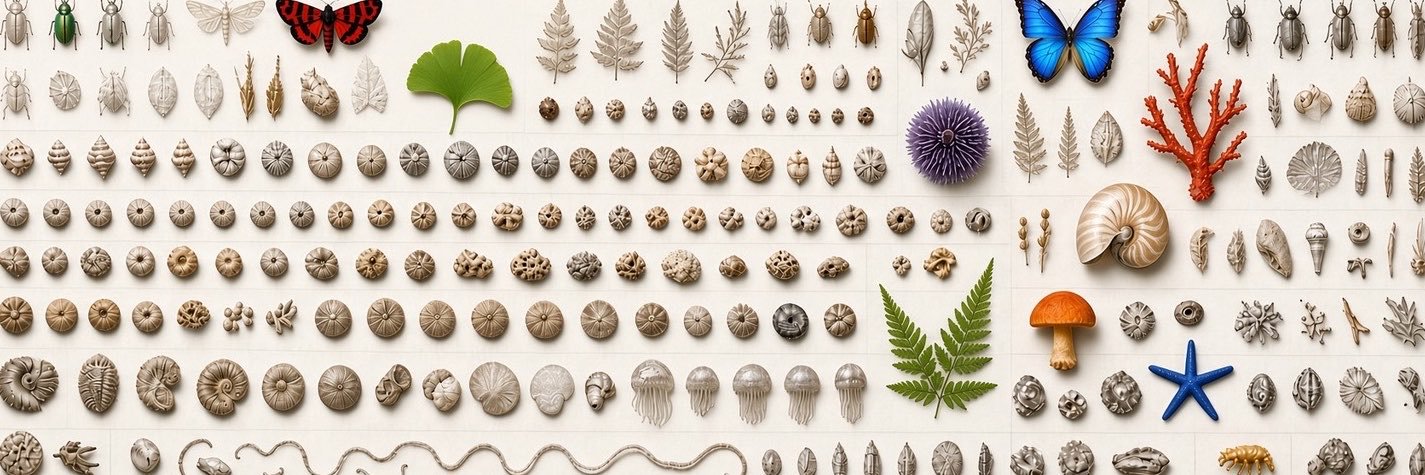
Evo 2, one of the biggest biology AI models, trained on ~15,000 eukaryotic genomes. Earth has ~1.8M named species. We're building models of life on less than 1% of it.
And that's just genomes. What about phenotypic studies, transient interactions between molecular species, and the chemistry of the metabolome to name a few.
I'm digging into where biology's data comes from, what's missing, and who pays to collect it.
My hunch is more data isn't the only answer. It’s better data. It’s abstractions that teach us about systems. It’s probably spanning more context than one human brain can hold.
What's the biggest data blind spot in your corner of science?
Grok @bot usage burns too fast!
We know, and we're on it.
Until then, here's what 572 of you said ate yours, plus a line you can paste to your bot for each:
> bots chatting with each other: "Only message other bots when you need something from them. Batch updates into one message. No thanks or ack replies."
> routines running too often: "Change this routine to once a day."
> stuck loops (the #1 complaint): "If you hit the same error twice, stop and tell me what's blocking you. Don't say done until you've checked."
> browser logins: "Use the connector if available, don't open a browser for this."
> image, video and voice: "Before you generate anything, tell me what you'll make and wait for my OK. Do one sample first."
> big coding or research jobs: "Give me a short plan first and wait for my OK. Do small tasks yourself, don't spin up helpers."
To see where yours went: "Check my usage and tell me which routines and bots used the most this week."
Like I said, we're still working hard on making usage easier to see, and cheaper where it should be.
Reply with what's burning yours and I'll look.
I had an interesting observation this morning.
Most of my AI-skeptical friends compare agents to a flawless human who doesn't exist.
The people embracing agents compare them to the actual human doing the job today.
I've been playing with @bot quite a bit and love the philosophy I get from the team building it: that anything a human can do repeatedly, @bot can do. It's the right mindset; it may take training, QA, and some trial and error on handoffs to get the process up and running. But it can be done in a short period of time.
I think the peak human-unreproducibility that landed this concept for me, in hindsight, was in graduate school at UCSF. I was running the same set of assays every day, and it took 12+ months before my hands were reproducible enough to make it through the long chain of steps and get consistent answers out the other side. Even then, methods would randomly fail in ways that I was never incentivized to diagnose.
Some of these AI agents are better than earlier grad student-me for a wide variety of tasks, and I'm finding a huge lift in getting background work done and time back in my day.
Taking suggestions on what we do for personal workflows that a well-trained superhuman could do.
In my post yesterday @TomKnightSynBio’s point was a great one but got buried in replies so surfacing it here: paraphrasing he said we should walk before we run, learn how very simple cells work to build up our hierarchy of understanding of systems.
His example is a great one: the minimal Mycoplasma cell has ~500 genes, and ~50 of the essential ones still have unknown function.
Nearly every time I tried at Bolt to YOLO a high reward shortcut we got too far over our skis and had to backtrack. So the point is well taken. That said, like any gambler the couple of times it paid off…
Is there a world where we can organize a court press on a minimal model organism to get a better picture?
Is there an incentive structure that would get us as a field to do this? Seems to me there’s an incentive problem to how dense our focus is in the academic and research phase except in proven lucrative areas like therapeutics.
What would you pick as biology's "walk" before AI can run?
In 2023 I asked bio Twitter why biology is so hard to engineer. 97 people answered.
After a decade building Bolt Threads, my answer is data and tooling.
Evo 2, one of the biggest biology AI models, trained on ~15,000 eukaryotic genomes. Earth has ~1.8M named species. We're building models of life on less than 1% of it.
And that's just genomes. What about phenotypic studies, transient interactions between molecular species, and the chemistry of the metabolome to name a few.
I'm digging into where biology's data comes from, what's missing, and who pays to collect it.
My hunch is more data isn't the only answer. It’s better data. It’s abstractions that teach us about systems. It’s probably spanning more context than one human brain can hold.
What's the biggest data blind spot in your corner of science?