The 8x figure is the headline. The details go further.
> 80%+ of code merged into @AnthropicAI's codebase was authored by Claude as of May 2026
> One Claude session shipped 800 fixes in April that an engineer estimated would have taken a human four years
> Tasks AI can complete autonomously are doubling every four months
The company reportedly going public in October is already using its own product to build itself faster.
59% of GPs are optimistic about their 2026 fundraising targets, per S&P Global's April 2026 Private Equity Outlook. 47% cite shifting LP priorities as their primary challenge.
The GPs gaining ground are the ones who have updated their approach to match what LPs now expect:
- Operational discipline
- Transparent reporting
- A clear path to distributions
Allocations gives GPs the administrative infrastructure to meet those standards on every deal, from entity formation through to K-1s and final distributions.
The SpaceX IPO roadshow is scheduled to start the week of June 8. The target raise is up to $75 billion, which would make it more than double the size of Saudi Aramco's 2019 listing, the current record holder at $29.4 billion.
The people who built the valuation from around $100 billion to nearly $2 trillion got in years before this week. The window to access that equity before listing is measured in days, not months.
OpenStocks gives you exposure before the roadshow closes.
OpenAI is targeting a $1 trillion valuation at IPO, raising at least $60 billion. That raise alone would be larger than the total raised across all US IPOs in all but four years since 1980.
The public market debut of the company that built ChatGPT is projected for Q4 2026. The pre-IPO window is open for roughly five more months.
Earn yield from that equity today through sUSDOS on OpenStocks.
Calculating distributions across hurdle rates, preferred returns, catch-up provisions, and GP carry splits is one of the most error-prone parts of fund administration.
Precision is essential, as allocation outcomes are reflected across every LP in the vehicle.
Allocations automates waterfall calculations and distribution processing, with a clear, auditable record for every payment made across every vehicle.
Institutional LPs run structured due diligence before committing capital. They expect audited financials, clean compliance documentation, and a reporting layer that matches their own internal standards.
Emerging GPs with strong deal flow often lose LP commitments at the due diligence stage because their reporting, compliance documentation, and administrative infrastructure does not meet institutional standards.
Allocations gives emerging GPs the same administrative infrastructure that established managers use, covering entity formation, KYC, compliance filings, investor reporting, and K-1s on a single platform.
Private market momentum in 2026 is unlike anything since the 2021 cycle peak. The sector mix tells you why this one is different.
> 98 new unicorns minted worldwide so far in 2026. March alone produced 37, the highest single-month count in nearly four years.
> 25 are AI companies. 11 are robotics. Defense and aerospace each added 6. @SpaceX sits at the top of the global unicorn table ahead of its expected $2T IPO.
The 2021 boom was SaaS, fintech, and e-commerce. The 2026 cohort is automating those industries.
For most of history, access to pre-IPO equity required knowing the right people, having the right net worth, and being in the right geography.
Three conditions that most investors in the world could never meet, regardless of how well-informed or how motivated they were.
OpenStocks requires none of them.
Personal update: I've joined Anthropic. I think the next few years at the frontier of LLMs will be especially formative. I am very excited to join the team here and get back to R&D. I remain deeply passionate about education and plan to resume my work on it in time.
Launching an SPV is just the beginning. Everything after close is where the work quietly piles up: capital calls, distribution waterfalls, K-1 preparation, Blue Sky filings, LP reporting, and compliance updates, repeated across every vehicle, every year.
Allocations handles the full post-close administration so fund managers can focus on sourcing and closing deals.
Start your next SPV or fund in 10 minutes.
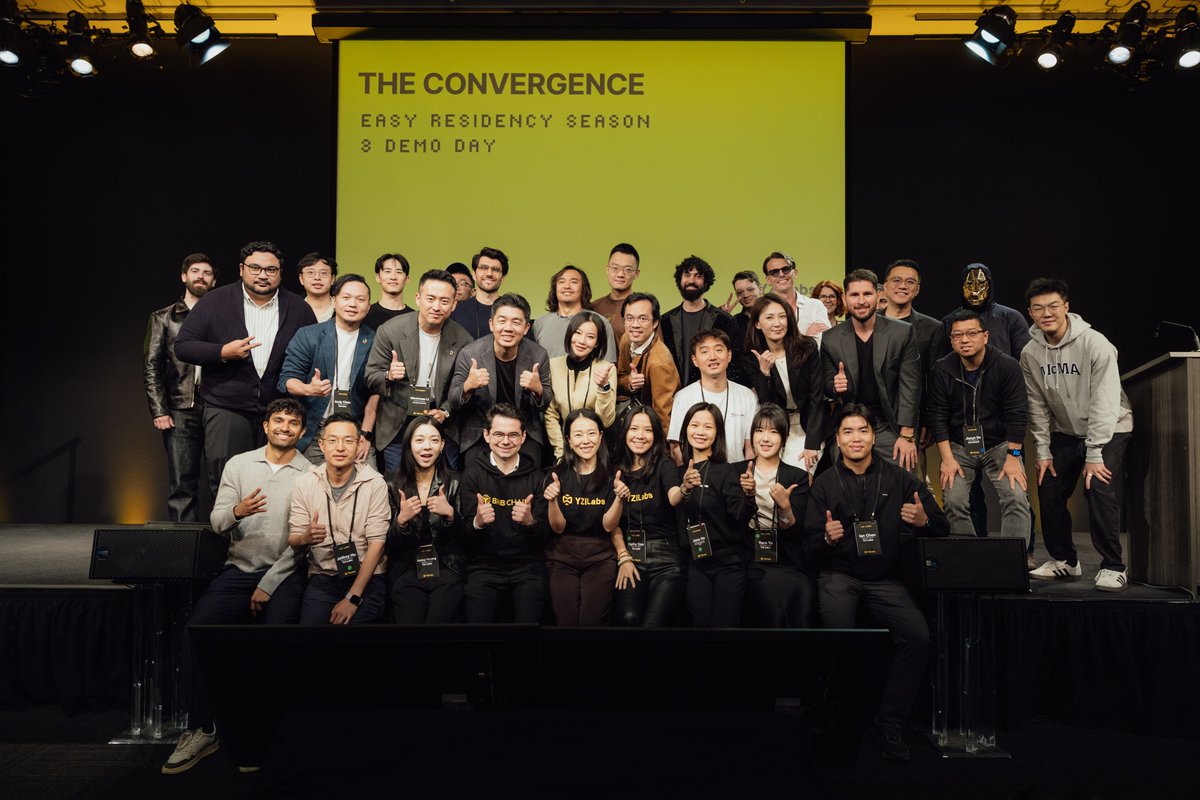
OpenStocks joined the @BNBCHAIN@yzilabs Demo Day in San Francisco.
OpenStocks brings pre-IPO equity onchain, with yield from exposure to @SpaceX, @OpenAI, and @AnthropicAI equity.
Excited to keep building on BNB Chain. 💪
The crypto industry is maturing on multiple fronts at once.
Policy advancing. Revenue diversifying. Security evolving. Founders are showing up.
Four pieces from this week:
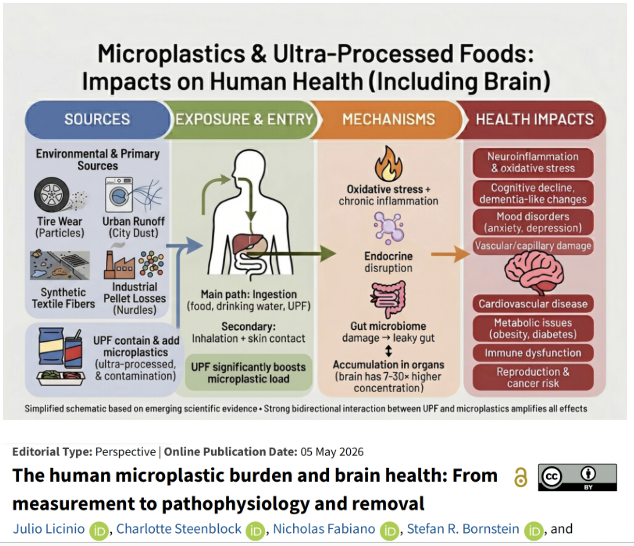
This new perspective study reports that our brains are carrying 3,000x more microplastic than our blood.
Microplastic burden of the human brain rose ~50% between 2016 and 2024.
The average brain now carries roughly:
> 11x the load of the liver
> 11x the kidney, and on a per-mass basis around
> 3,000x the concentration found in circulating blood (on a per-mass basis)
This study argues that eliminating ultra-processed foods (i.e. chicken mcnuggets, breaded shrimp) carries an additional benefit: reducing brain microplastic accumulation.
This is based on an inferred chain of mechanisms rather than proven causality in humans, yet the convergence is striking.
The paper outlines four pathways through which microplastics plausibly damage the brain:
> oxidative stress and chronic inflammation
> endocrine disruption
> gut-microbiome injury
> and vascular damage.
These map onto various brain and mental diseases including: depression, anxiety, cognitive decline, stroke, dementia.
The same conditions are independently linked to ultra-processed food consumption in large prospective cohorts
Each 10% increase in ultra processed food intake
> 25% higher dementia risk
> 16% higher cognitive impairment risk
> 8% higher stroke risk
High versus low ultra processed food consumption tracks with 44% higher odds of depression and 48% higher odds of anxiety.
While we do not yet have a human study showing UPF intake directly raises brain microplastic burden. Here is what we do have:
A study found that the more processed forms of protein foods carry significantly more microplastic particles.
> Chicken nuggets contained 31x more microplastics per gram than raw chicken breast (least processed item in the study)
> Breaded shrimp, the most processed item in the study, carried ~130x the level in raw chicken breast (caveat: shrimp also carries higher baseline contamination from ocean and water pollution)
> A 1,031-woman pregnancy cohort showed each 10% higher UPF intake tracked with 13.1% higher urinary phthalates, the plasticizers that leach from food packaging
Microplastics cross from the blood to the brain.
Animal research shows mechanistically how microplastic particles do cross the blood-brain barrier.
In mice, polystyrene nanoparticles at 293 nm reached the brain within 2 hours of oral exposure. Particles at 1.14 μm and 9.55 μm did not cross at all.
While most microscopy-based microplastic tests have a detection floor around 1 μm.
The fraction that actually crosses into the brain sits below that threshold. If a test picks up larger particles in your blood, the smaller, BBB-crossing fraction is almost certainly there too, just below the detection window.
The big ones are a proxy for the dangerous small ones.
Cut all microplastic input where you can and avoid ultra processed foods, this another important one.
In addition: use a water filtration system for your drinking water, reverse osmosis with remineralization is the gold standard.
I recently reported complete elimination of microplastics from my semen (first in human demonstration) and a 87% reduction in my blood.
SpaceX's partnership list heading into its IPO roadshow is worth paying attention to:
> @AnthropicAI: full compute lease on Colossus 1, 300+ megawatts, 220,000 GPUs
> @Cursor_ai: $60 billion acquisition or $10 billion services deal for AI coding infrastructure
> @Google: in talks to launch orbital data centers on SpaceX rockets
Every major AI company building at scale is choosing @SpaceX as its infrastructure layer.
Introducing OpenStocks: Stablecoin for pre-IPO stocks, backed by SpaceX, OpenAI, and Anthropic exposure.
> Mint USDos, a synthetic dollar stablecoin
> Stake USDos to mint sUSDos and earn up to 15% APY
> Trade pre-IPO stocks onchain
Join the future of pre-IPO stocks
> Musk dissolved xAI as an independent company and rebranded it as SpaceXAI on the exact same day as the Anthropic deal, one month before the IPO roadshow.
> One move monetizes idle compute. The other simplifies the corporate structure before the S-1 goes public.
All-In Podcast framed Musk's compute infrastructure as "Elon Web Services." Landing Anthropic as the first customer ahead of an expected $2T IPO is one of the strongest validator the roadshow could ask for.
Private investments require ongoing filings, tax work, and reporting. Allocations manages all of it so operational expenses stay low and more value flows back to investors.
Take SpaceX shares now trading at ~$800 billion (late 2025 secondary) to $1.4–1.75 trillion+ levels on the secondary/IPO-target market, OpenAI at $852 billion, or Anthropic at $380 billion.
Our SPVs and secondary options keep things efficient.