📢6 days remain!!
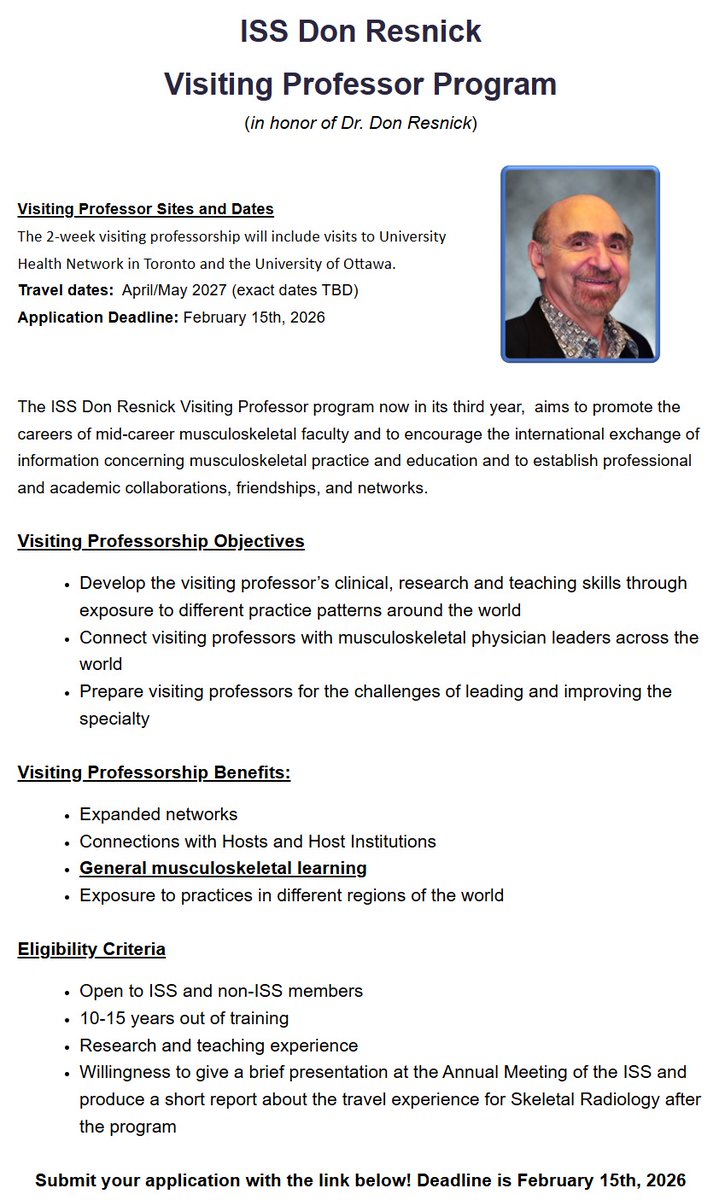
Those interested in applying for the ISS Don Resnick
Visiting Professor Program are encouraged to submit their application materials right away!
More information in the image below.
Application link: https://t.co/Cugg71pkAS
#MSKRad#VisitingProfessorship
Why is scaphoid imaging so challenging? This latest review outlines fracture interpretation, post-fracture complications, and key imaging & treatment updates for radiologists. https://t.co/4u1h9811UZ @dyannotdiane@uOttawaRad@KawanRakhra
Pearl :
A widened scapholunate (SL) gap in kids is usually normal.
Adult cutoff (<3 mm) doesn’t apply until ~16–17 yrs.
Pitfall ⚠️:
Don’t overcall SL dissociation in children; it’s exceptionally rare.
Skeleton failure points in trauma differ by age:
•3–10 yrs: buckle/greenstick → physeal → complete fx → carpal fx → intrinsic ligaments (rare)
•>10 yrs: distal radius (physeal/complete) → scaphoid → intrinsic carpal ligaments (SL/LT/TFCC).
Wisdom ✨:
Children’s bones tell their own story, fragile in some places and resilient in others.
Kids are not small adults.
Age-adjusted norms and failure patterns matter.
—Pearls, pitfalls, and wisdom from today’s reporting list.
30 days remain until the start of #ISS2025!
Will we see you in beautiful #Lisbon#Portugal this year? It's not too late to register!
More information and registration links: https://t.co/NGujeStzJO
As local host, I’m proud to welcome the ISS annual meeting to Lisbon — a global gathering of leading musculoskeletal radiologists, pathologists, and orthopedic surgeons.
Don’t miss it 👇 — this September, in our beautiful, sunny Lisbon!
Want to receive the event zoom links and the 7 day links to view the recordings? Sign up at https://t.co/LekMb73c5e
For charitable donations: https://t.co/zLtigHznAI…
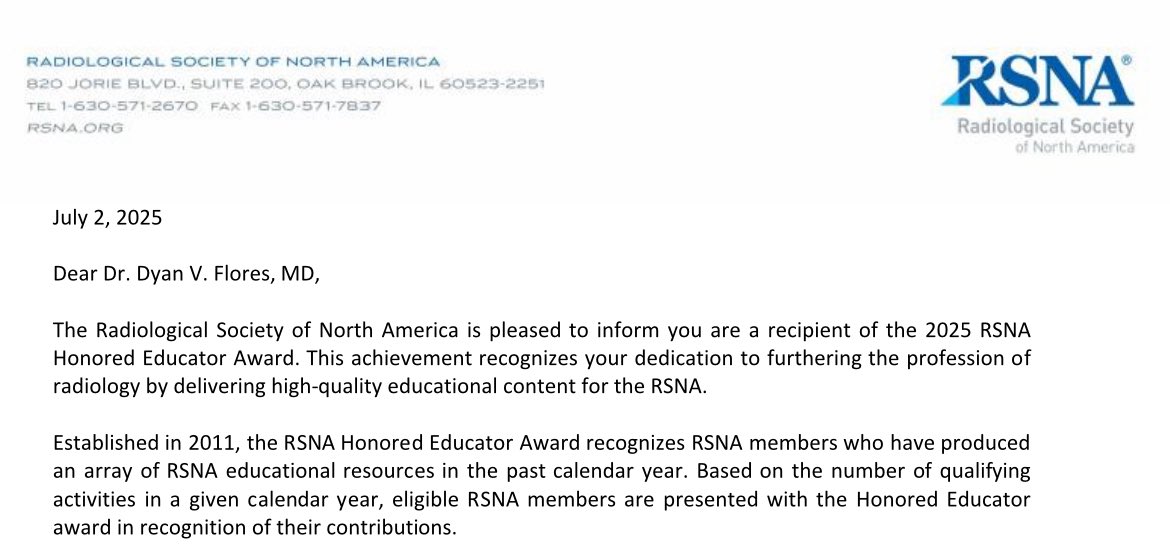
Thank you RSNA for this and generally just giving me my biggest career breaks ❤️ throwback to my first meeting, my wide-eyed glee and my unnecessarily thick-rimmed glasses
Big news! 📢 All 5 RSNA journals saw an increase in their 2024 Impact Factors and are ranked in the top quartile in Radiology, Nuclear Medicine, and Medical Imaging. A huge congratulations to our editors, reviewers, and staff who made this achievement possible!
RadioGraphics’ impact factor rose to 5.5 in 2024!
Many thanks to our incredible authors, reviewers, and editors for their ongoing commitment to making RadioGraphics a cornerstone of medical imaging education.
So proud to be a part of this team!
@RadioGraphics@cookyscan1