PM @MarkJCarney “sovereign wealth fund” will cost taxpayers $750 million/year in debt interest charges, according to @FinanceCanada figures. Estimate follows criticism that $25 billion ‘Canada Strong Fund’ was no savings when financed with borrowed money.
https://t.co/pGkE9F98vh
@FPChampagne #cdnpoli
This @HedgieMarkets post illustrates where the infinity scalable asset-light technology model meets the physical realities of an asset-heavy business that faces an upward sloping supply curve.
We have long argued that AI compute is just another bit-atom commodity (like crypto) that uses a lot natural resources to create a valuable (unlike crypto) virtual asset.
On the bit side, Big Tech is a price-maker with fat margins. On the atom side, a price-taker.
Big Tech grew up in bits — search, social, e-commerce, office software: asset-light, infinitely scalable, natural monopolies. Build once, serve billions, watch costs fall every year. So they assume AI is the same game and will spend whatever it takes to own the market.
But inference is also atoms, i.e. land, critical minerals and electrons, which are mostly molecules. In the commodity world, competition drives price to marginal cost: P = MC, which is upward sloping as volume rises. The better the models get, the faster they compete their own margins down to the physical floor which rises with volume.
You can already see it. Microsoft just cancelled Claude Code because the cost to run it exceeded the value it returned — demand retreating the moment price met real cost. The irony: the customer pulling back was itself a hyperscaler. In April, Uber confirmed once again that AI compute demand is price elastic.
Bottom line: they assumed AI costs would keep falling like they always did on the bit side; however, on the atom side, there is a hard floor that likely rises in the short run.
I am not denying that the margins are still fat. But it’s not the same model. These guys are running towards obsolescing their own pricing power. Why did Rockefeller stop at the gas station and not vertically integrate into cars?
A VERY IMPORTANT READ!
Jeff Currie @CommodMkt was formerly the Global Head of Commodities Research at @GoldmanSachs.
He is one of the world’s smartest commodity market strategists. He outlines why the crowded investment into AI has created the most asymmetric trade of our modern era… and why the smart money is investing in the physical assets AI requires to operate.
You can’t print molecules…
Jeff is also on the board of @abaxx_tech , @IPulseGroup and @bluesparkenergy some of the most important and disruptive technology companies.
This will be a bigger energy story than oil this decade. Iran is a disruption but electricity is structurally scarce across the west.
JPMorgan is stepping up its warnings on risks associated with America’s ailing grid, as bottlenecks caused by aging infrastructure, changing sources of energy and accelerating demand growth push up power prices. In March, the bank said poorly maintained grid infrastructure now poses a national security risk for the world’s largest economy.
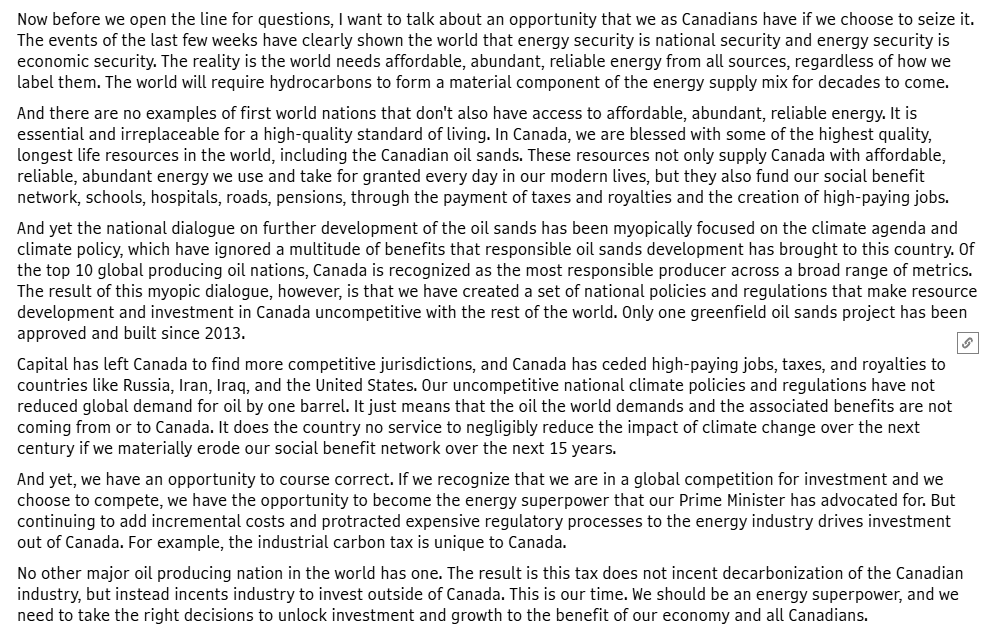
Jon McKenzie, CEO of Cenovus, came out swinging on their Q1 conference call today. Great to see CEO's becoming more vocal about our squandered opportunity! To summarize: no other oil producing country is doing this to themselves...time for Canada to wake up!
Assets under management in mining exchange-traded funds more than doubled to $87.4 billion by March 31, from $37 billion a year earlier.
Oil & gas and agriculture have also attracted significant inflows, marking one of the sharpest rotations toward hard assets in history.
The cost of saying no:
➡️Northern Gateway capacity 525kb/(bitumen 400kbd, diluent 125kb/d)
➡️400kb/d at CAD $125 at tidewater x the Strait closed for 60 days = $3billion in lost revenues
➡️ government royalties and taxes ~33% = $1 billion
➡️ $1 billion = 10,000 nurses or 29 new schools
*That’s what we have given up from not having Northern Gateway, just since the Strait of Hormuz was closed*
H/T @B_A_Remillard
To my undrafted players looking to make the team and stick around…
Here’s my best advice on work & study habits when I think back on my career:
WATCHING FILM:
Don’t just watch film in meetings after practice. Try to review your practice reps during the window before meetings start —that way you can have a conversation with your coach when your plays come up. Next, I’d watch EVERY snap on your own time once you get back to your hotel room. Take notes and be hard on yourself. Then, at the end of the day, review it all again before bed so that way you will have seen & visualized each snap at least 3 or 4 more times outside of practice. The key here is taking that feeling of urgency in your brain, where you’re trying to remember everything, and turning it into active processing
(IF YOU’RE A DEFENSIVE GUY —you should actually breakdown what the offense is doing because they will run the same shit the next day. And I’m sure it’s the same, offensively.)
STUDYING THE PLAYBOOK:
Don’t try to learn the install in real time —you’ll be behind & cramming shit in your brain all day. Understand which install is being taught next —then study, take notes, and anticipate questions or gaps the night before. Make sure to review those notes in the AM before everything starts. That way you’re prepared and ready to have questions versus preparing & faking it during the meeting.
STRENGTH & CONDITIONING:
Show up early to warm up before the warm up. Don’t follow the veterans (they’re playing a different game than you). What you should do is seek out the good ones that have been on the team for a minute —the ones you notice having a full routine throughout the day. Those are the ones you want to surround yourself with. Another move —> ask the strength coach who the best workers on the team are. Find them and follow their lead.
UNIT/POSITION MEETINGS:
Don’t be a know-it-all and answer every question like you’re trying to be the team’s valedictorian. Find a potential problem with what is being taught and ask a good question. It shows that you not only understand the install, but that you are someone who thinks about “level 2” details.
SPECIAL TEAMS!!!!!
This is honestly where you make the team. Get to know the Special Teams Coordinator because he will ultimately be the final boss. What not to do —don’t think your play as an offensive or defensive player will be enough. It won’t be unless you’re a Day 1 starter. Something that was taught to me —don’t be one of those groupies and immediately ask questions following a meeting. Instead, find him in his office during “off hours”, ask him to pull up a rep that you have a question on, and allow him to teach you what he wants. Then you’ll be talking ball, watching film, and having your own personal meeting.
(Another sleeper play is to always be talking to the Assistant Sp. Teams Coach.)
And my last piece of advice —be consistent, man. Pull the fucking trigger and pour everything you have into this opportunity because it might be your only one.
“You owe the process everything, and it owes you nothing in return”
Go be great 🐺🐺
Went down the rabbit hole on this. There are bacteria in your gut right now with tiny electric motors built into them. Each motor is 45 nanometers wide, about 2,000 times thinner than a human hair. It spins faster than a Formula 1 engine. After 50 years, scientists just cracked how it works.
The motor spins a corkscrew-shaped tail so the bacterium can swim. At that tiny scale, water feels as thick as tar. Moving anywhere takes serious power. A single E. coli cell (the kind in your gut) spins its motor at 18,000 RPM. That beats modern Formula 1 engines, which redline around 15,000. Some bacteria in the ocean run theirs at 42,000 RPM, nearly triple.
And the motor barely wastes any energy as heat. Your car engine loses most of its fuel to heat. This thing loses almost none.
Inside the motor, 5 proteins form a ring wrapped around 2 proteins in the middle. Five can't split evenly into 2. The resulting lopsidedness is what makes the whole thing work. Protons, which are tiny charged particles, get pulled from outside the cell through the motor. Each one grabs a center protein, then lets go. In letting go, it tugs the outer ring a fraction of a turn. Another proton does the same thing on the other side. Then another. It's like two feet alternating on bicycle pedals. Over 2,000 times per second.
Switching directions is a whole other trick. When the bacterium senses food running out, it tags a small messenger protein with a phosphorus atom. That tagged messenger floats over and touches one protein on the outer ring. The touched protein flips into a new shape. That flip triggers the next protein, and the next, and the next, around the whole ring, like dominos falling. The ring reshapes in milliseconds. Rotation reverses. The bacterium turns and swims somewhere else.
Mike Manson, a biophysicist at Texas A&M, has been studying this one motor since the 1970s. For five decades, most of its parts stayed a mystery. Starting in 2020, a new wave of imaging let scientists see the individual pieces. The last pieces clicked into place in a March 2026 paper from Aravinthan Samuel's lab at Harvard. Manson told Quanta Magazine his lifelong quest was fulfilled.
A billion years of evolution built the most efficient rotary motor on the planet. Trillions of them are spinning inside you right now.
“People are losing faith that the Liberal government will actually fix any of the structural problems they created in the last 10 years”...
“Start building, or better yet just get out of the way of industry. We need to see clear and concise direction from the feds.”
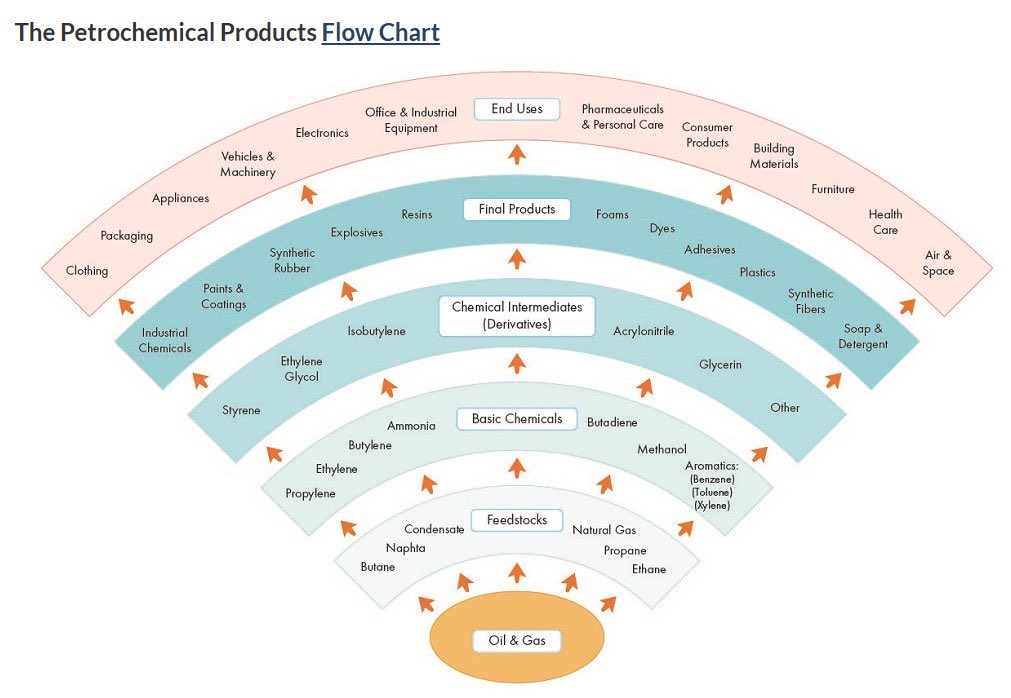
Some of you still seem to think oil is only used for gasoline for light duty vehicles, because that’s the only time you’ve physically encountered it.
Expensive and scarce oil is an omnicrisis for the global economy. It cannot be replaced by electrons from solar panels.
A gold bull market top comes when:
— Your taxi driver owns $GDX
— CNBC runs a daily gold segment
— Junior miners are dinner party conversation
— Every fund manager is overweight miners
— The XAU is on the front page of the FT
Today a bloodbath in the sector made almost no mainstream news.
We are early. Act accordingly. This is a great r/r entry.