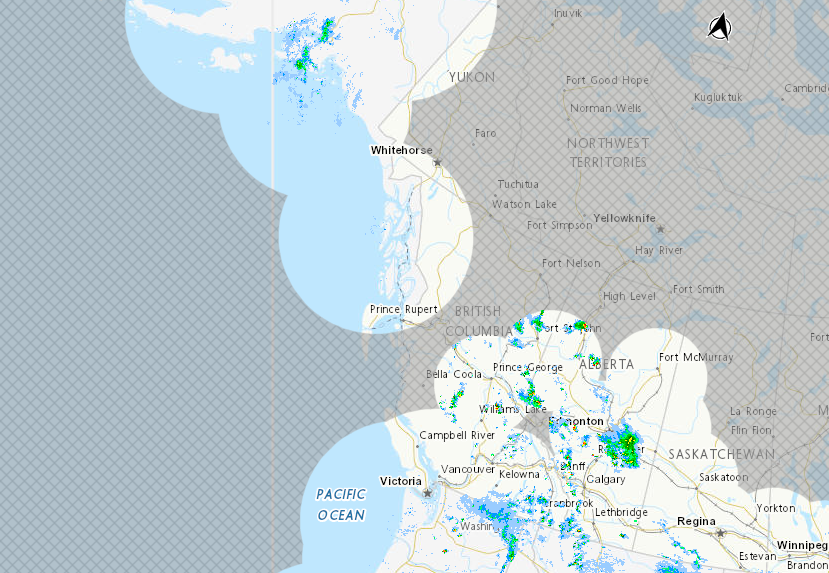
Severe weather in Northern B.C. and Yukon possible this week. And the risk is amplified when there is no weather radar in the region.
It is critical that 🇨🇦 expand radar coverage as climate change increases severe wx in the North.
The Ministry of Housing proposed adding a max indoor temp "of not more than 26°C" to the BC building code.
But CC isn't included in the proposal: "designers are permitted to use historical climate data." I.e. a 26°C design will be more like 30°C.
https://t.co/L4E65ZAEHf
🇨🇦 "has committed $1.6 billion over several years to new or expanded programs.... this only keeps federal adaptation funding at current levels because other programs are ending.
The pressure is on to invest more in adaptation as the impacts of climate change get worse. The sooner governments across 🇨🇦 start implementing the new National Adaptation Strategy, the sooner it will pay off, saving lives and livelihoods. Our take on what’s next 👇 #cdnpoli
https://t.co/Li5WnGDSI4
🌡️will increase in the coming years & 🇨🇦 will see more 🔥
Policy is needed to close the gap between these worlds. Here’s an example of a live policy issue:
https://t.co/L4E65ZAEHf
Policies must change to better protect people against climate change.
The #NAS takes some important steps, but all orders of government will need to do a lot more to protect people & communities.
We looked at the health costs of the June 4 to 8 wildfires. We linked changes in air quality in Ontario to health outcomes. Costs were an estimated $1.28 billion in one province alone, over a single week.
@sstiebert https://t.co/XJwYETWRd9 @ClimateInstit
https://t.co/mnpUi91SsF
1/ In 2021, wildfires in the country’s managed forest areas produced 293 Mt of GHG's. During the same period, forests only removed 540,000 tons. The resulting 292 Mt are equivalent to 40% of Canada’s GHG emissions from every other source that year. https://t.co/Dvtz257AOg
"There was talk that we didn't see this coming this year. Well, you shouldn't think in those terms," Gray said. "This could happen any year — and worse." https://t.co/1kEyBSePdW
🔴 STORY: BC's River Forecast Centre has issued an alarming & bleak drought prediction
We are in an 'outlier' season: In many places the snow is gone a month earlier than normal. And it's been so hot and dry, it's hard to predict what will happen next.
https://t.co/5gdtp8SaI3
Register now for our roundtable discussion showcasing #Indigenous-led research and policy responding to climate change, featuring the authors of 3 new case studies in our Indigenous Perspectives series.June 15, 10-11:30 am PST #indigenousResearch@yourcier
https://t.co/tlqcXy3hRk
Important piece! 👇
"federal per capita investment in adaptation in the U.S. is roughly 3-4x that of Canada. As lopsided as this may sound, there is another wrinkle. Canada is warming at 3x the rate of the U.S."
@ClimateProofCA@CAPE_ACME
https://t.co/YFT1UiTQYK
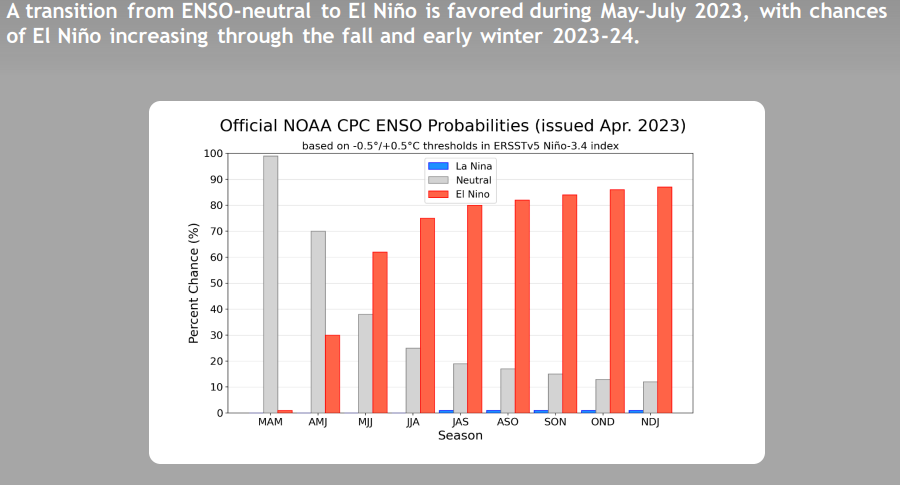
"El Niño summer doesn’t necessarily mean that B.C. will see a disasters like the 2021 heat dome, but it does mean that governments should prepare now for the possibility..."
https://t.co/eQC7rgUbp1
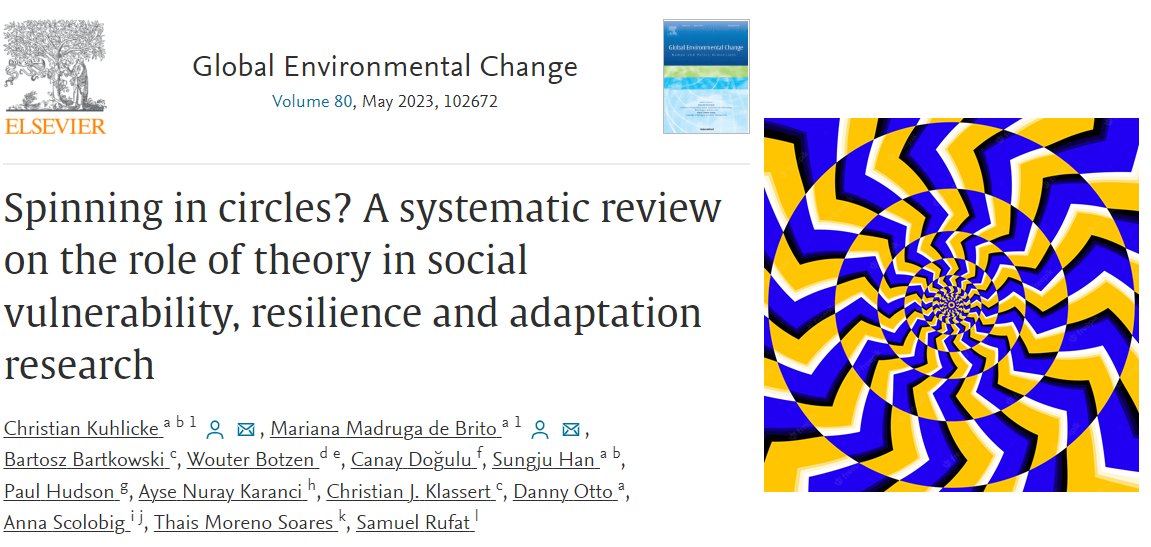
After examining 2700 studies on vulnerability, resilience, and adaptation, we found that 90% do not explicitly articulate their theoretical foundations.
We seem to spin in circles by conducting analyses with incommensurable and inconsistent findings
1/5🧵 https://t.co/p025y0G8A6