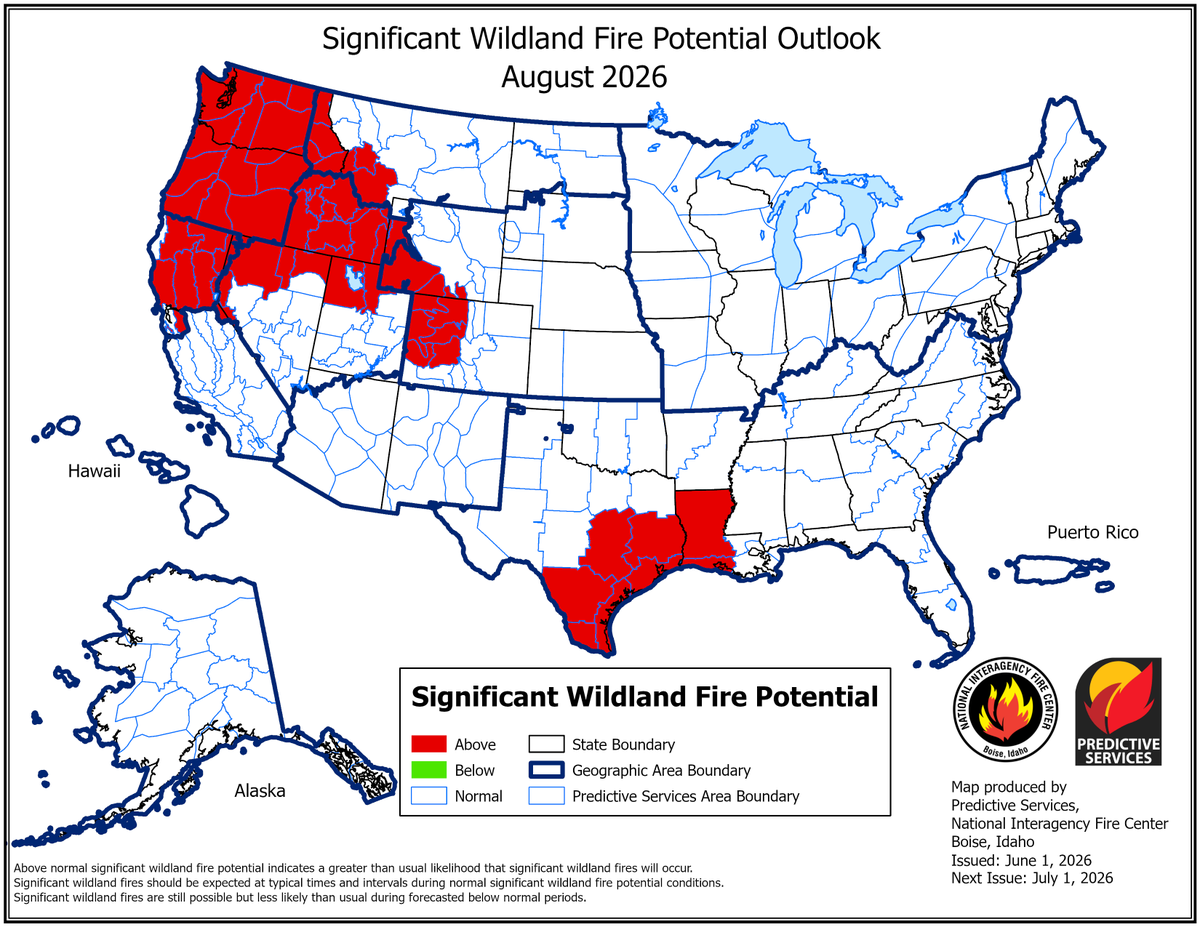
The National Significant Wildland Fire Potential Outlook was released today, June 1, by Predictive Services, providing a look ahead at expected fire potential from June through September.
🔥Read the full outlook: https://t.co/81gZvf5RrT
“Cultural burns are about more than fire. They’re about living with the land.” 🔥
In our newest blog, Dr. Amy Cardinal Christianson breaks down the important distinctions between cultural burns, prescribed fires, and prescribed fires with cultural objectives — and explains why understanding those differences matters for Indigenous sovereignty, stewardship, and the future of fire management in Canada. Read here: https://t.co/E42feza7vM
“Our results suggest that when fewer resources are available to agencies like the Forest Service, more of the economic burden of wildfires falls on the public.” https://t.co/CawMsCsB7t
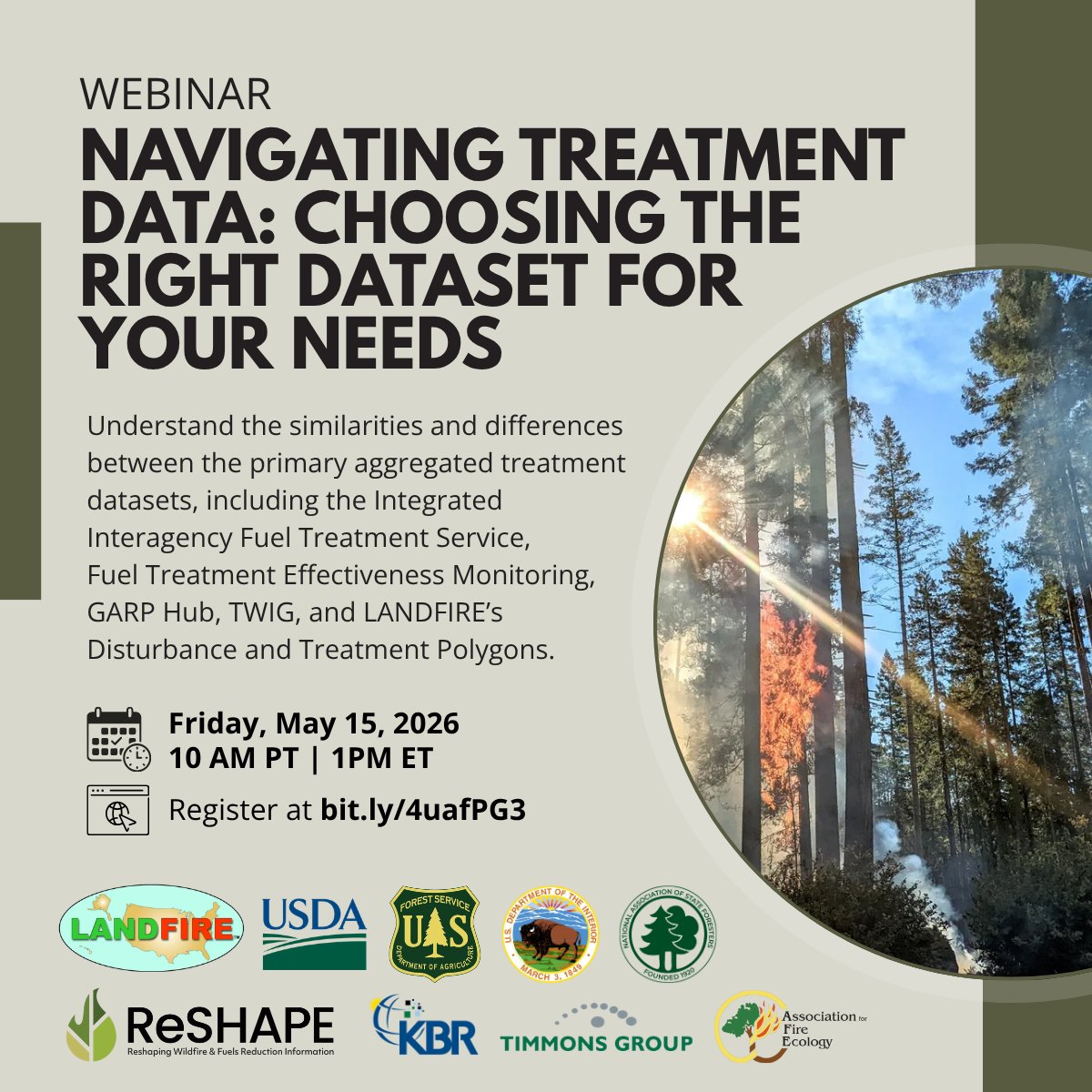
Happening THIS FRIDAY! Learn more about the primary aggregated fuel treatment datasets and ask experts questions 🔥Make sure to check out the primer fact sheet and register here: https://t.co/V1UWJXS4VD
10 years after Fort McMurray: are we better prepared?
Wildfires now affect millions, from evacuations to smoke-filled cities. Indigenous knowledge offers a way forward: stewardship, prevention, and working with fire.
Indigenous Fire Guardians + local Indigenous firefighters = both proven solutions for reducing wildfire risk.
The solutions exist. It’s time to scale them. 🔥
https://t.co/nTW6bG9s8L
I was honoured to carry the words of His Majesty King Charles III on Artemis II. His reflections on science, responsibility, and what we hold sacred stayed close, all the way around the Moon and back to Earth. @RoyalFamily
The second half of this year will almost certainly see the start of an El Niño phase that could lead to extreme heat across much of the globe, and James Hansen expects that to make this year surpass 2024 as the hottest on record https://t.co/l1AnE4NEOk
Here’s a myth we need to leave behind. Indigenous fire knowledge wasn’t lost. Actually, Indigenous Nations across the country are leading cultural fire initiatives — restoring ecosystems, reducing wildfire risk, and passing knowledge to the next generation.
Read more about it here: https://t.co/S43FZ4Zstn
Sigh... You almost never see 50-60% chances on this map in the PNW. These above average temps spike highest this upcoming Sunday/Monday. But the heat doesn't turn off for us. It looks to mostly continue for the next 3-4 weeks in the PNW/BC. Very little in the way of rainfall as May looks to be an abnormally dry month. Setting the stage for a nightmare in the Summer months... We are talking major water shortages and extreme forest fire dangers. And these will start in late May for most of us... #bcstorm
A significant heatwave is expected in the PNW, particularly in British Columbia. Saturday, Sunday and Monday should be the hottest days.
We should have 30°C in Metro Vancouver [not in Vancouver itself, of course] and 35°C is not out of the question in Lytton or Ashcroft. #BCstorm
Ben’s post is about El Niño, but what smacks you in the face is the remarkable increase in overall ocean temps since the 80s. It’s not coincidence, it’s climate change.
This is a conversation we need to be having.
Indigenous communities make up 42% of wildfire evacuations in Canada — and are often displaced longer, with fewer culturally appropriate supports.
In this clip, Dr. Amy Cardinal Christianson explains why current approaches aren’t working — and what needs to change.
Fifteen weeks into 2026, and wildfires have burned more than twice as much land (4.71 million acres) than the second-worst season at this point in the year (2.31 million acres in 2016).









![ThierryGooseBC's tweet photo. A significant heatwave is expected in the PNW, particularly in British Columbia. Saturday, Sunday and Monday should be the hottest days.
We should have 30°C in Metro Vancouver [not in Vancouver itself, of course] and 35°C is not out of the question in Lytton or Ashcroft. #BCstorm https://t.co/ss1VkB6KcC](https://pbs.twimg.com/media/HHFL_VEagAAUZ5_.jpg)