⚡️This guy already bought financial optionality, but he has not emotionally accepted that the game is over.
That is the whole conflict.
$3.5M net worth at 34, $3M liquid, $100K annual spend, no dependents, single, high income.
He is not trapped financially.
He is trapped psychologically.
The job trained him to measure safety through the next bonus, the next number, the next year, the next milestone. So even after reaching escape velocity, his nervous system still thinks leaving is failure.
That is the golden cage.
Finance does this especially well. It turns ambitious people into high-performing extraction machines. The money is enormous, but the cost is time, health, relationships, emotional bandwidth, spontaneity, and sometimes the ability to know what life even feels like outside achievement pressure. By the time the person can afford freedom, he may no longer know how to inhabit it.
The obvious advice is “quit.” The deeper advice is: do not make the next decision from burnout. Burnout makes everything look like escape. He needs to downshift before he detonates the whole structure.
The best move is probably not “grind until 2027 for one more bonus.” That sounds like fear wearing a spreadsheet. One more bonus can make sense if there is a clean, short, defined exit plan and the health cost is manageable. But if work is actively damaging his ability to form a relationship, live normally, and stay emotionally intact, the marginal bonus may be stealing more than it pays.
The real question is not whether he can retire. He can.
The real question is what kind of life he is retiring into.
If he quits with no identity, no community, no partner, no mission, no body rhythm, no creative pursuit, no service, no structure, he may just move from work misery into empty freedom. That is why people with money still feel stuck. They solved the money problem but never built the life architecture.
The correct path looks like this: take a sabbatical or negotiate a major step-down, test life outside the machine, rebuild health, date seriously, find real community, and design the next chapter before nuking income permanently. At his numbers, he can afford that. He does not need permission from the job anymore.
The harsh truth: if $3.5M at 34 is not enough to stop destroying your life, then the problem is no longer money. The problem is fear, identity, and addiction to the scoreboard.
Final compression: he made it financially.
Now he has to prove he can stop.
That is often harder than getting rich.
@ItzSuds@jamiequint A few days in NYC is also $16k (per person).
For the flights, the best bang-for-your-buck is the Air France premium economy cabin, in the US sold under Delta Premium Select (just make sure the operating carrier is Air France). $2-3k, zero regret.
@Trace_Cohen The talent challenge is brutal - at least in my circles, the number of *good* engineers willing to work on non-AI stuff is trending to zero.
These folks became good because they spent their work time on the edge, and that won’t change.
@micLivs Good overview. Can add @perplexity_ai API to the list.
I settled on @ExaAILabs - in my subjective and noisy benchmarks, the results were comparable but meaningfully faster. Good Markdown extraction. The lack of a CLI is not an issue, as any agent can make a custom API client.
Good intel - those pages got into the repo as the first cut of investigations into each agent I did. They might not be correct, as I was looking for shared themes. But that investigation was just one input into designing profiles for individual agent, not the final say.
Ignore that thing and check out the main entry point for a better take.
@jlongster@psb_underscore Ah I see the deep link IS to the AI generated page. That should t be there - check out the project homepage for a better summary https://t.co/pE7EwNYGyd
@jlongster@psb_underscore Maybe the page didn’t clearly explain what Safehouse is -
It’s a Bash wrapper that dynamically generates a sandbox-exec profile to contain any agent to CWD so they can’t touch stuff they shouldn’t.
“Viper” and “hooks” is not on the page, maybe we are looking at different things
@psb_underscore@jlongster If you don’t like wrappers, I also give a way to just generate your own static profile from that site -
1. “Policy Builder” to generate a custom sandbox-exec profile for your stack
2. “LLM instructions” with plenty of reference material to copy&paste to your local agent
@psb_underscore@jlongster Author here - surprised by that take. All sandboxing profiles are minimal, corrected, and tested. It works very well.
I implemented this via a bash wrapper to offer highest transparency.
Fun challenge: find one thing on that page that is incorrect and I’ll happily fix it!
Soon, we'll get to the point where normies can build specialized small models just by asking their SOTA agent for one, like a marketing website.
A Cambrian explosion of on-demand AI models that used to cost >$100k apiece.
The next step for autoresearch is that it has to be asynchronously massively collaborative for agents (think: SETI@home style). The goal is not to emulate a single PhD student, it's to emulate a research community of them.
Current code synchronously grows a single thread of commits in a particular research direction. But the original repo is more of a seed, from which could sprout commits contributed by agents on all kinds of different research directions or for different compute platforms. Git(Hub) is *almost* but not really suited for this. It has a softly built in assumption of one "master" branch, which temporarily forks off into PRs just to merge back a bit later.
I tried to prototype something super lightweight that could have a flavor of this, e.g. just a Discussion, written by my agent as a summary of its overnight run:
https://t.co/tmZeqyDY1W
Alternatively, a PR has the benefit of exact commits:
https://t.co/CZIbuJIqlk
but you'd never want to actually merge it... You'd just want to "adopt" and accumulate branches of commits. But even in this lightweight way, you could ask your agent to first read the Discussions/PRs using GitHub CLI for inspiration, and after its research is done, contribute a little "paper" of findings back.
I'm not actually exactly sure what this should look like, but it's a big idea that is more general than just the autoresearch repo specifically. Agents can in principle easily juggle and collaborate on thousands of commits across arbitrary branch structures. Existing abstractions will accumulate stress as intelligence, attention and tenacity cease to be bottlenecks.
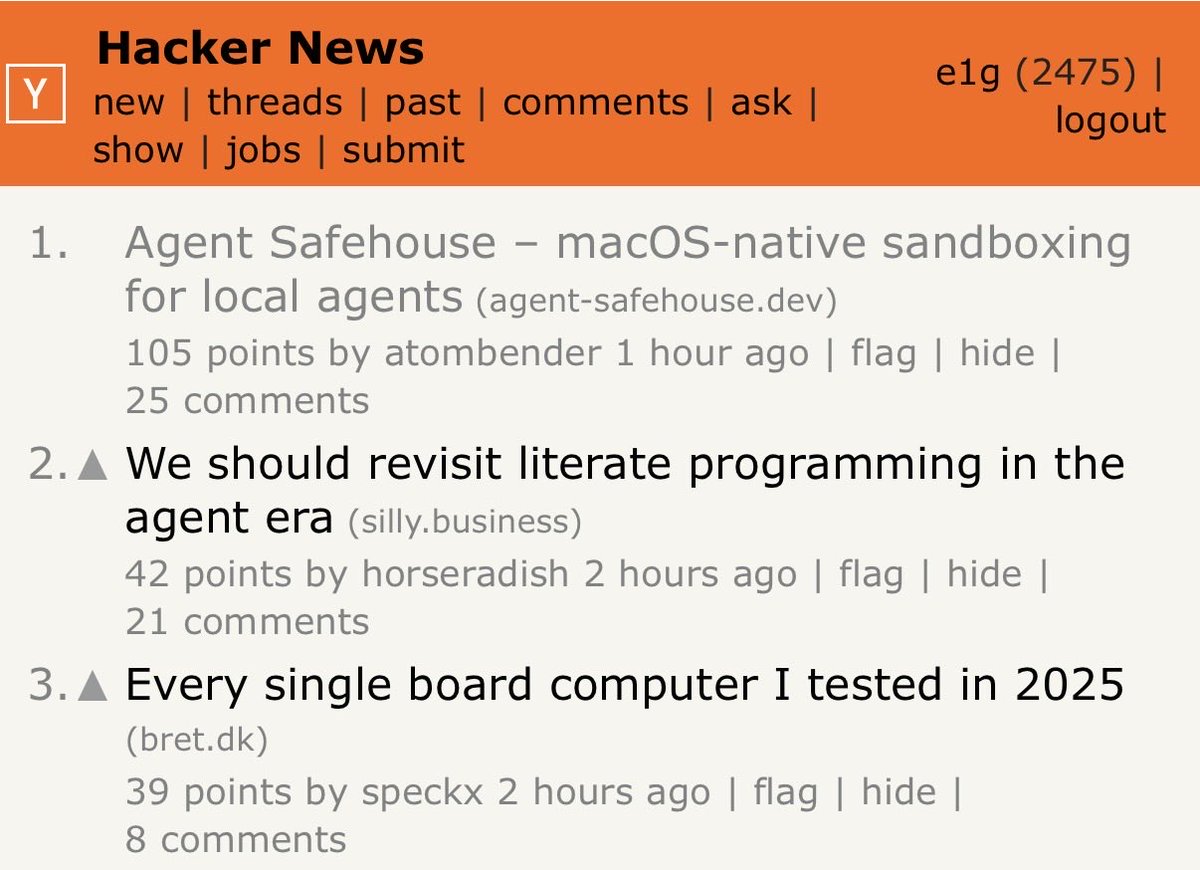
Achievement unlocked: #1 on Hacker News.
But there is disturbance in the force - someone else found and posted my side project, and all comments are positive. Sundays must be when OGs hang out on HN.
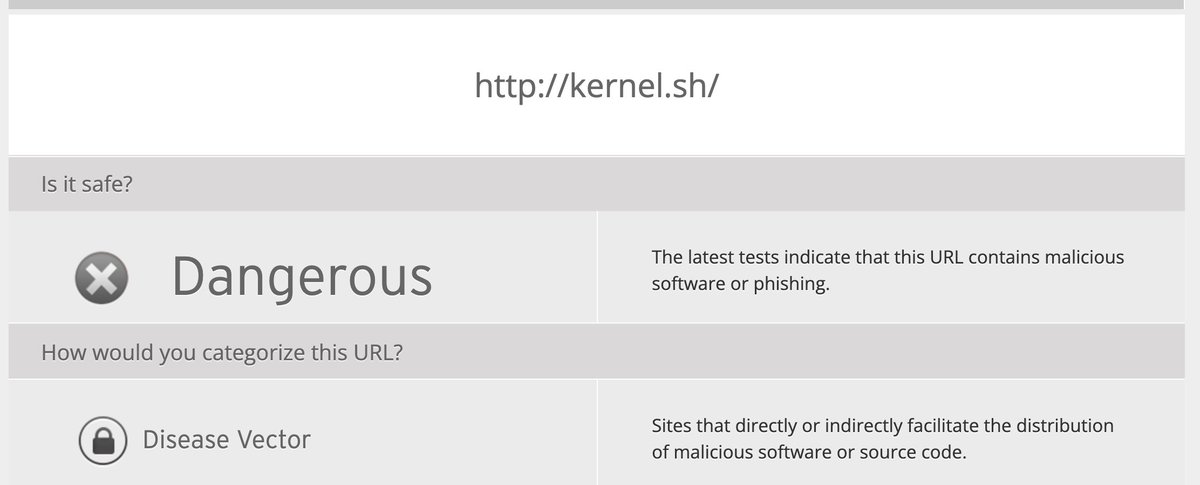
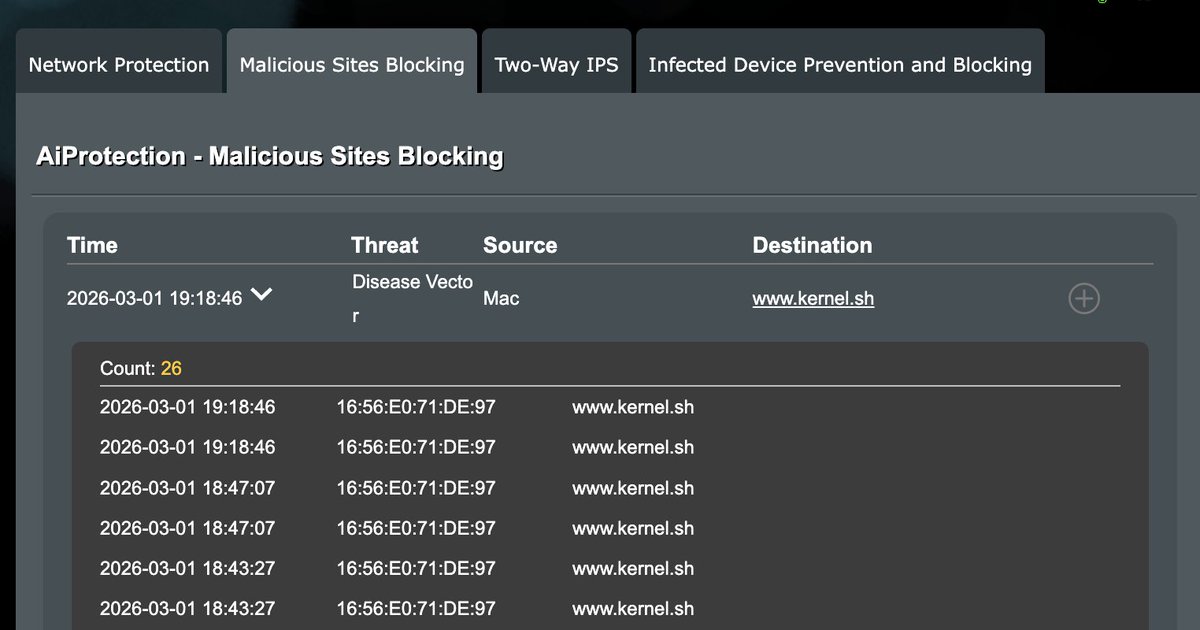
@usekernel FYI, @TrendMicroHome is now blocking you, which impacts home users with Asus routers where this protection is built in
Gotta be a false positive.
@brianluidog If you're on a Mac, you can steal my setup and do full YOLO mode with every agent, but safely as they can't read or write anything you don't allow them -
https://t.co/KWtH5mecDB