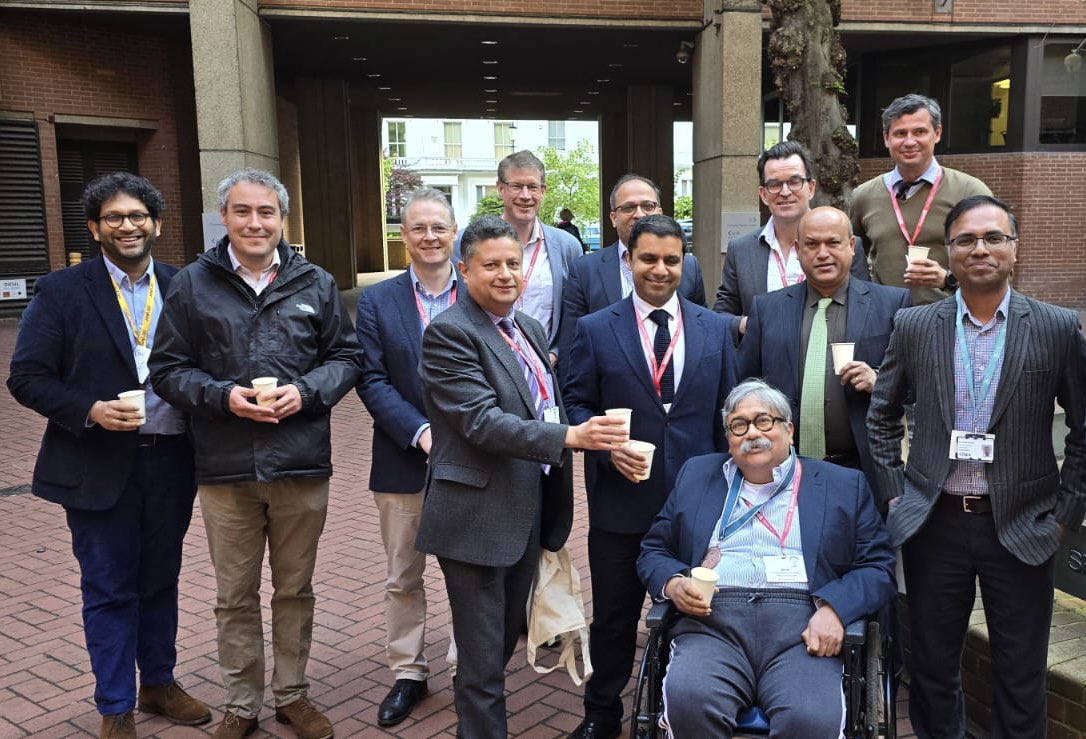
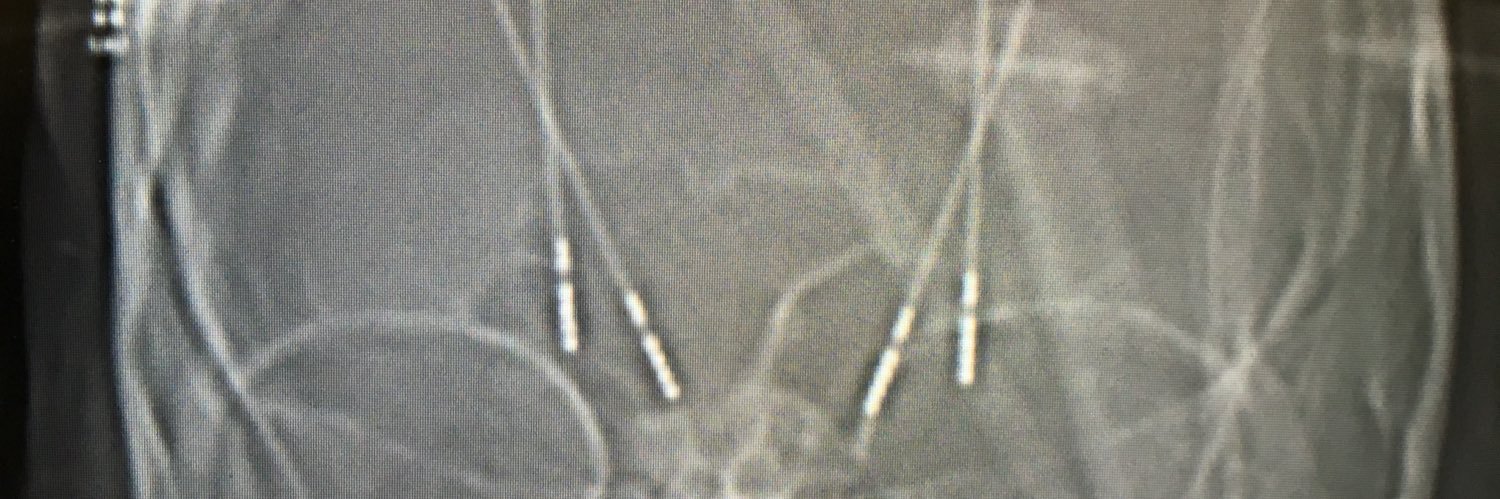
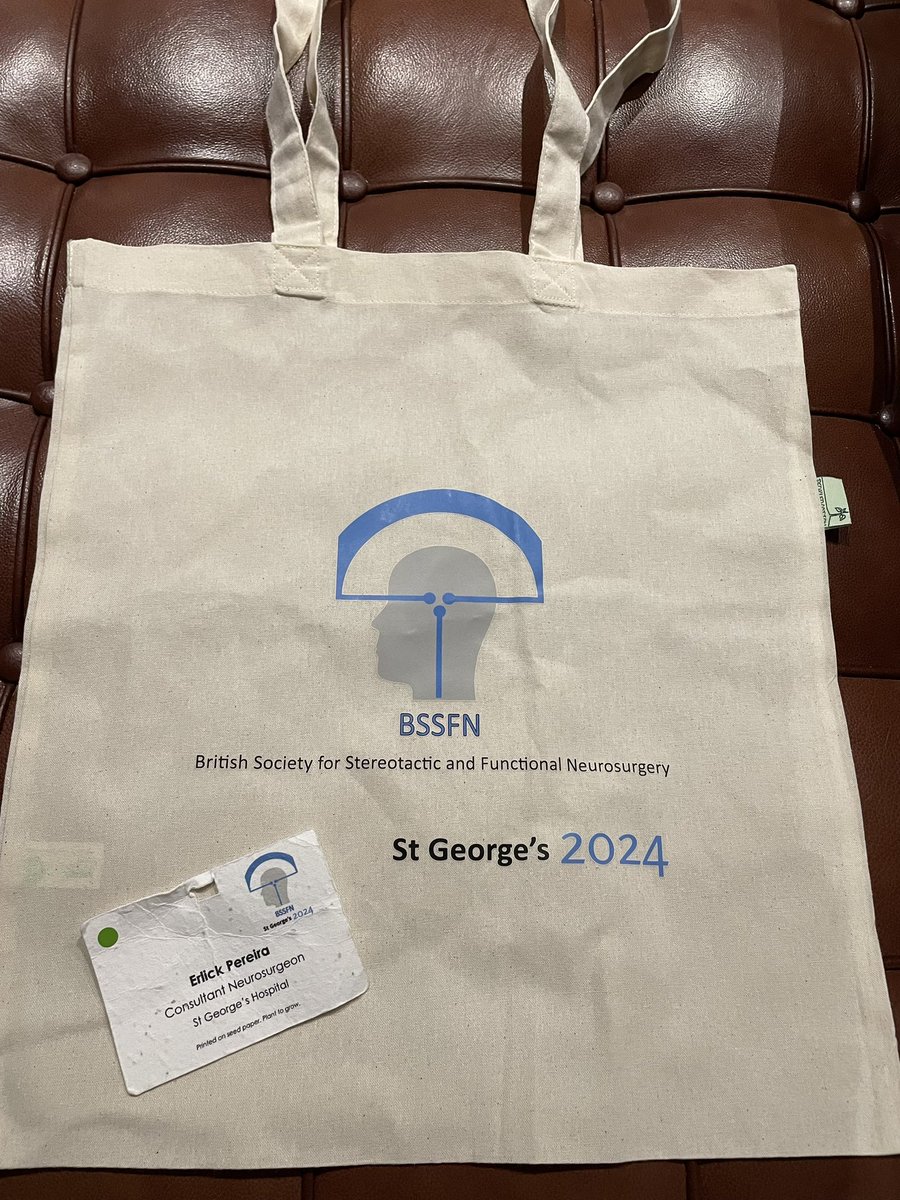
A heartwarming British Society of Stereotactic and Functional Neurosurgery 2024 meeting. The legendary Prof Tipu Aziz receives the BSSFN’s inaugural Tipu Z Aziz medal for lifetime achievement and celebrates with his past trainees. #DBS@The_SBNS@e1v1m1@stimbrains
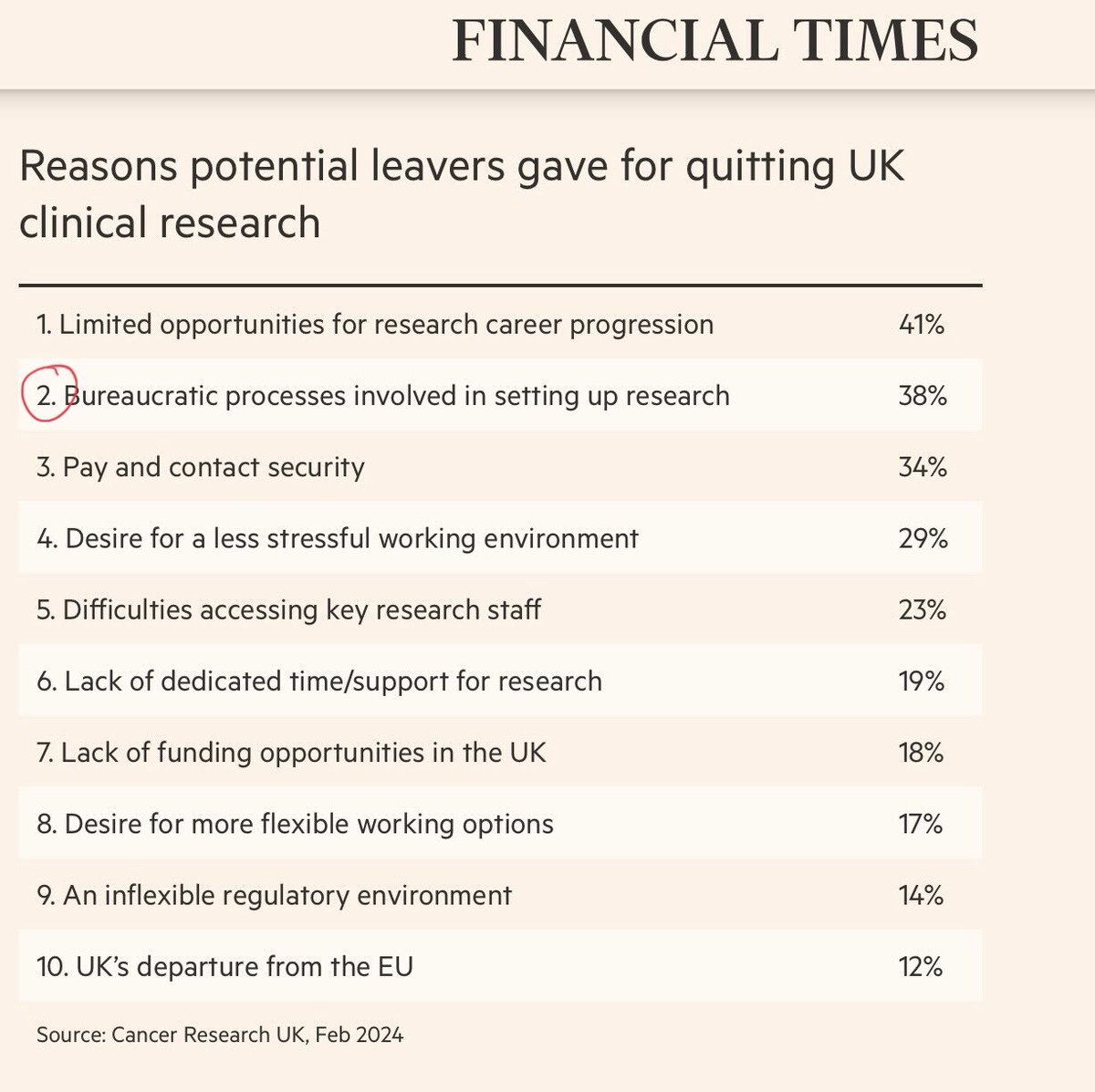
Thank goodness people are waking up to the fact that there is a crisis for clinical research in the UK @FT
High on the list are the bureaucratic processes that have become such an obstacle to getting things done
Why academia is sleepwalking into self-destruction. My editorial @Brain1878 If you agree with the sentiments please RT. It's important for all our sakes to stop the madness
https://t.co/5S5rL8Yda1
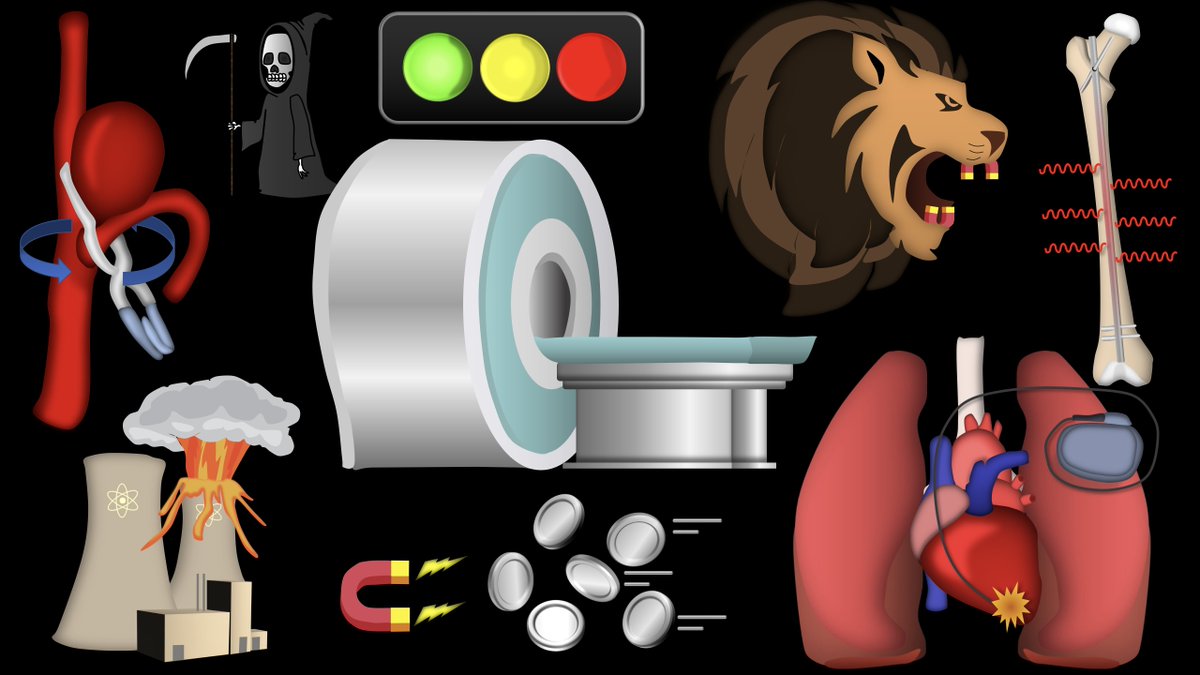
1/Nothing strikes fear into a radiologist's heart like the question,“Is it safe to do an MRI on this pt w/an implanted device?”
Do questions about pacemakers & MRIs suddenly send your heart racing?
Never fear again! Here’s a thread on how to navigate implanted devices & MRI!
This time three years ago I was coming around in ICU in the London Clinic under the superb care of @eacp who gave me with dbs brain surgery a new lease of life. I’ll be forever grateful
£91,317 a year for an 'Assistant Director of Equality, Diversity & Inclusion' in the NHS.
This amount of money, for this type of job, is honestly outrageous.
Every penny spent on these roles, and the vast associated cost, should be directed into pockets of frontline staff.
They say three’s a crowd!
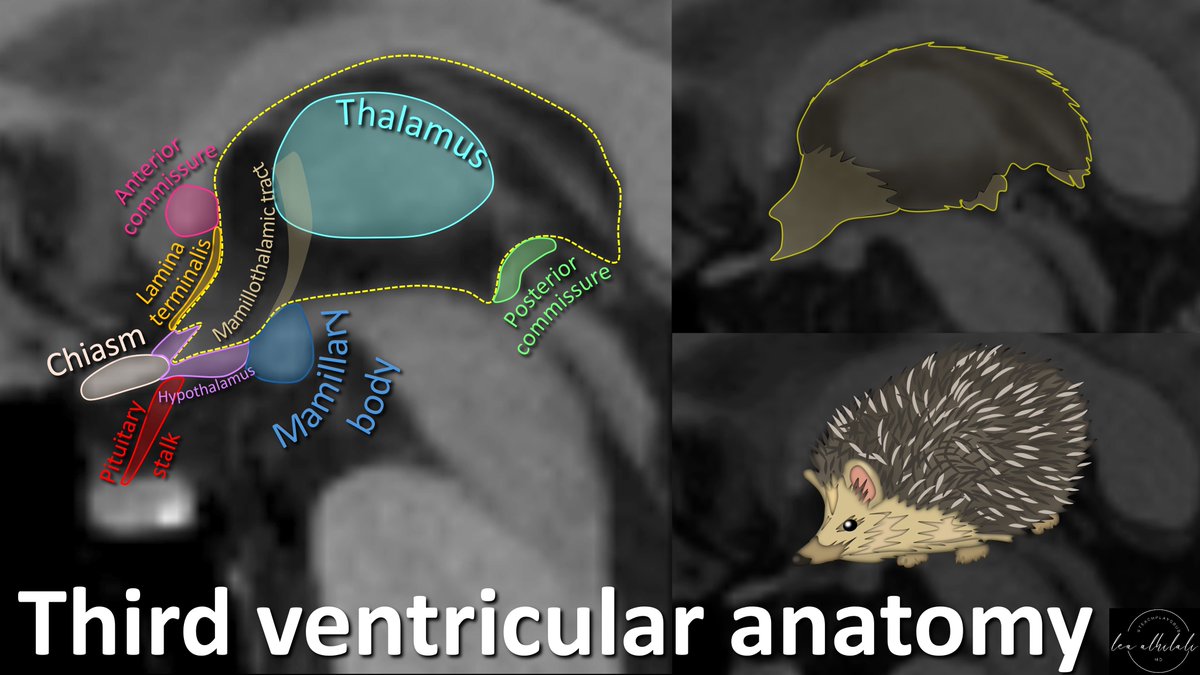
Anatomy at the 3rd ventricle is crowded by important structures!
How can YOU remember anatomy in this region?
3rd ventricle looks like a hedgehog.
And that hedgehog can keep you from hedging about anatomy here! Here's how it can help you remember:
Here are the important structure you need to know & how the hedgehog can help keep them straight:
➡️Anterior commissure is between the eyes (anterior = eyes)
➡️Posterior commissure is between the legs (posterior = legs)
➡️Hedgehog’s snout open onto the hypothalamus (snout = mouth & hypothalamus controls eating!)
➡️Mamillary bodies are near where the mammary glands would be in the hedgehog
➡️Lamina terminalis is along the nose—and where does your face TERMINATE? At the nose
Now you know the hedgehog of the third ventricle & how to remember anatomy in this region.
It’s as easy as one, two, three!
In this classic model on basal ganglia in PD, lack of dopamine via neuronal cell loss in the SNc leads to an excess of activity in the STN. This overstimulates the GPi/SNr and leads to a reduction of cortical neuronal activation required for movement. https://t.co/tVoKL8NAcT
⚡ Wondering how to refer a patient for deep brain stimulation (#DBS)? Our Physician Locator tool is your go-to solution. Find suitable DBS experts effortlessly & ensure your patient receives the care they need. https://t.co/SIZZLJpOtp #BSCEMEA#ParkinsonsAwarenessMonth
Rodeo stars find purpose in navigating primal forces. And none of them ever went harder than J.B. Mauney.
But after one disastrous event in Idaho last year, Mauney had a tough decision to face: keep riding bulls while risking his life or retire from the sport he loved. https://t.co/9ClP7R3nSz
@The_SBNS@e1v1m1
am hosting the British Society Stereotactic Functional Neurosurgery annual meeting at Kensington Town Hall 23 24 May, programme here.
https://t.co/JRmFa8CHqF
My spinal injury inspires my art. What inspires you?
A lot of my anatomical paintings are based on my love for Leonardo da Vinci’s anatomical drawings from over 500 years ago!
Can you spot my neck, spine and skull?
@andreashorn_@leaddbs Similar clinical outcomes to @EMiddlebrooksMD paper from CT alone without post-op imaging just published across the Atlantic…
https://t.co/3jy5d328t9
@MasudHusain@wi_john@charlot_summers@acmedsci Such pseudowork has enjoyed a metaphorical life on anabolic steroids since it got into medical schools around 2003 & then spread/proliferated to all corners of the NHS
Impossible to imagine a life without statutory/mandatory training or revalidation
How did we do without it?
1/Correlate clinically!
It’s harder than you think in THALAMUS—where its size is small & but the clinical symptoms are large.
Here’s a thread to help you remember the main thalamic syndromes & their locations!