por un momento pensé que lo lograbamos, que Argentina no podía caer, tantas 🇦🇷🇦🇷🇦🇷🇦🇷🇦🇷🇦🇷🇦🇷🇦🇷🇦🇷🇦🇷 gente sana, libre y en paz, quedará como una memoria en algunos libros de historia, lo que pudimos ser 😞😞😞😞
lloro por ti Argentina 😢😢😢😢
In 1937, a 21-year-old MIT student sat in a quiet library, mapping abstract philosophical logic onto electrical circuits to pass the time.
By the time he finished his thesis, the young man had mathematically proven that mechanical telephone switches could perform complex calculations. Instead of just routing phone calls, they were destined to become thinking machines.
He had just discovered the mathematical trigger for digital computing.
But when he published his work, the leading engineers of the industrial world paid little attention, viewing his mathematics as a mere academic parlor trick.
His name was Claude Shannon.
It would take years for the industrial establishment to fully realize he was right and adopt the binary logic that now powers every computer, smartphone, and network on Earth.
His breakthrough against traditional engineering is the ultimate lesson in what happens when rigid practices clash with unexpected philosophical reality.
In the early 20th century, engineers believed they understood circuit design. They knew that as telephone networks grew, they needed more physical wires and relays. But traditional engineering offered no universal science; it was a manual process of brute-force trial and error.
The systems would grow into a chaotic, tangled mess of blueprints and copper lines.
The entire industrial establishment agreed: every circuit, no matter how complex, had to be wired by manual experimentation. It was a tedious, costly formula.
But in that library, Shannon realized the establishment had left a massive variable out of their equations: 19th-century symbolic philosophy.
Shannon recalculated the engineering, factoring in what happens when you treat an electrical switch using the laws of Boolean algebra.
What he found shattered the industrial consensus.
He proved that an electrical switch has only two possible states: it is either closed and letting power through, or open and blocking the current. This was mathematically identical to True (1) and False (0).
The circuit could evaluate logical statements. There was no limit to what it could compute. It could automate human thought, transforming physical electricity into digital logic.
When Shannon presented this concept, mainstream electrical engineers were skeptical. They couldn't accept that an abstract philosophical concept could solve real-world hardware bottlenecks.
Shannon was initially ignored. The establishment stuck to their traditional wiring methods.
Instead of fighting a rigid, closed system, Shannon quietly expanded his work into Information Theory, proving that all data could be compressed into a universal currency called the "bit." Decades later, when the global tech revolution exploded, the world realized the 21-year-old student had been right all along.
The philosophical blueprint Shannon left behind is a vital truth for navigating complex problems and institutional pushback:
Comforting traditions will always be more popular than disruptive innovations. Trust the system's underlying logic anyway.
Most of us approach our careers and projects seeking the validation of current experts or established guidelines. When we propose a radical new idea or try to change a broken system, and the authorities tell us we are wrong, our instinct is to assume our logic is flawed. We abandon our data to fit the consensus.
But Shannon’s legacy proves that traditional industry consensus is not the same thing as truth.
Gatekeepers are human; they protect their own methods, their own training, and their own comfort.
What is a bottleneck, a project, or a direction you’ve abandoned just because an expert or a boss told you it wouldn't work? What happens if you stop looking for their permission and trust the structural logic of your own work?
A court in Germany has ruled that Google is responsible for false information generated by its AI Overviews feature.
The case involved two publishers wrongly linked to scams and suspicious business activities, even though those claims were not found in the sources used by the AI.
Google argued that users know AI can make mistakes and should double-check important information.
The court disagreed, saying that if an AI system gives an answer, the company behind it must take responsibility when that answer is false.
Voyager 1 is 24 billion kilometers from Earth.
It communicates with us using a 23-watt transmitter.
Less than a refrigerator light bulb.
The signal takes 22 hours to reach us, traveling at the speed of light.
By the time it arrives, it's 20 billion times weaker than the power of a digital watch battery.
NASA's Deep Space Network picks it up using 70-meter dish antennas cooled to near absolute zero to reduce electronic noise.
The engineering required to hear a 23-watt signal from 24 billion km away is arguably more impressive than the spacecraft itself.
Launched 1977.
Still transmitting.
Still being heard.
We built something that works perfectly, 47 years later, in conditions no one has ever tested in.
That's what engineering for the long term looks like.
The Iranian navy, which has been destroyed eight times, has apparently closed the Strait of Hormuz again, because the United States, for the seventh time, won the war that wasn’t a war, so now the United States has to open the Strait of Hormuz that was already open before the not-war began.
The not-war began because Iran had uranium that was totally, completely, beautifully obliterated, so they can’t build the nuclear bomb they weren’t building, which is why the United States had to start the not-war it definitely didn’t start.
Now the United States, which has nuclear weapons, is threatening to use nuclear weapons to stop Iran from getting nuclear weapons, because nuclear weapons are far too dangerous for countries with nuclear weapons to allow other countries to have.
If the United States saw the United States doing what the United States does in other countries, the United States would invade the United States to liberate the United States from the tyranny of the United States.
Breaking News from @TheAthletic: Polish qualifier Maja Chwalinska shocked Diana Shnaider of Russia, becoming the lowest-ranked player to reach the French Open final in at least 40 years. https://t.co/g4VPPWjPEA
Germany is the world’s greatest builder of industrial champions.
Germany alone accounts for roughly 46% of the world’s hidden champions — more than any other country.
Highly specialised, mostly mid-sized firms that rank among the top 3 globally in their niche markets or #1 in Europe.
These are not famous consumer brands. They are the companies producing the machines, components, tools, industrial systems and precision technologies behind global supply chains.
Even after the 2022 energy crisis and years of industrial pressure, Germany’s current-account surplus was still around 4.5% of GDP in 2025 — roughly €203 billion — the largest in the world after China.
This is why Germany became Europe’s strongest export economy: not only because of giants like BMW, Siemens or Volkswagen, but because thousands of specialised German firms became global leaders in extremely specific industrial markets.
UNDERWATER DATA CENTERS
China has achieved what it calls the world’s first fully operational, commercially running underwater AI data center off the coast of Shanghai.
The facility, developed in partnership with HiCloud Technology (also referred to as Hailanyun), features nearly 2,000 servers housed in sealed, submarine-grade capsules submerged in the ocean.
By leveraging the natural cooling power of seawater, it dramatically reduces energy demands cutting cooling costs by up to 90% compared to traditional land-based data centers. The entire system is powered by nearby offshore wind farms, making it highly renewable and energy-efficient.
The $226 million project was officially launched in June 2025, with construction completed later that year and full commercial operations beginning in recent weeks. It supports high-performance AI workloads, including GPU clusters from partners like China Telecom.
For context, the U.S. explored similar concepts through Microsoft’s Project Natick but quietly shelved the initiative in 2024 after successful trials, opting not to pursue large-scale commercial deployment.
This development highlights China’s aggressive push to address the massive energy and cooling challenges of scaling AI infrastructure.
This is an interesting engineering achievement in the AI infrastructure race, though scaling, maintenance, and long-term reliability in a marine environment will be key factors to watch.
🚨If you live in Europe, paying for anything in cash above €10,000 becomes illegal from 10 July 2027, and anything over €3,000 will mean handing over your ID before the payment goes through.....
This is one EU law covering all 27 countries at once. Your government can set the limit lower than €10,000, but never higher, and several already have
France and Spain cap business cash payments at €1,000. Italy sits at €5,000. Greece at just €500. The rule only lets those numbers fall further over time, never rise
They say this is about catching criminals. But cash is still how most of Europe actually pays day to day. It's 63% of payments in Germany, 54% in Austria, 75% in Greece. Austria and Ireland have no cash limit at all today. From 2027 they will
The same year this limit lands, the European Central Bank begins a year-long test of the digital euro
A digital currency like this could come with limits on how much you hold, and digital money tried elsewhere has been built to expire or restrict how it gets spent
But cash, the one form of money that leaves no record and answers to nobody, may not stay open for much longer
Follow me to stay informed
Análisis rápido del resultado electoral en Colombia:
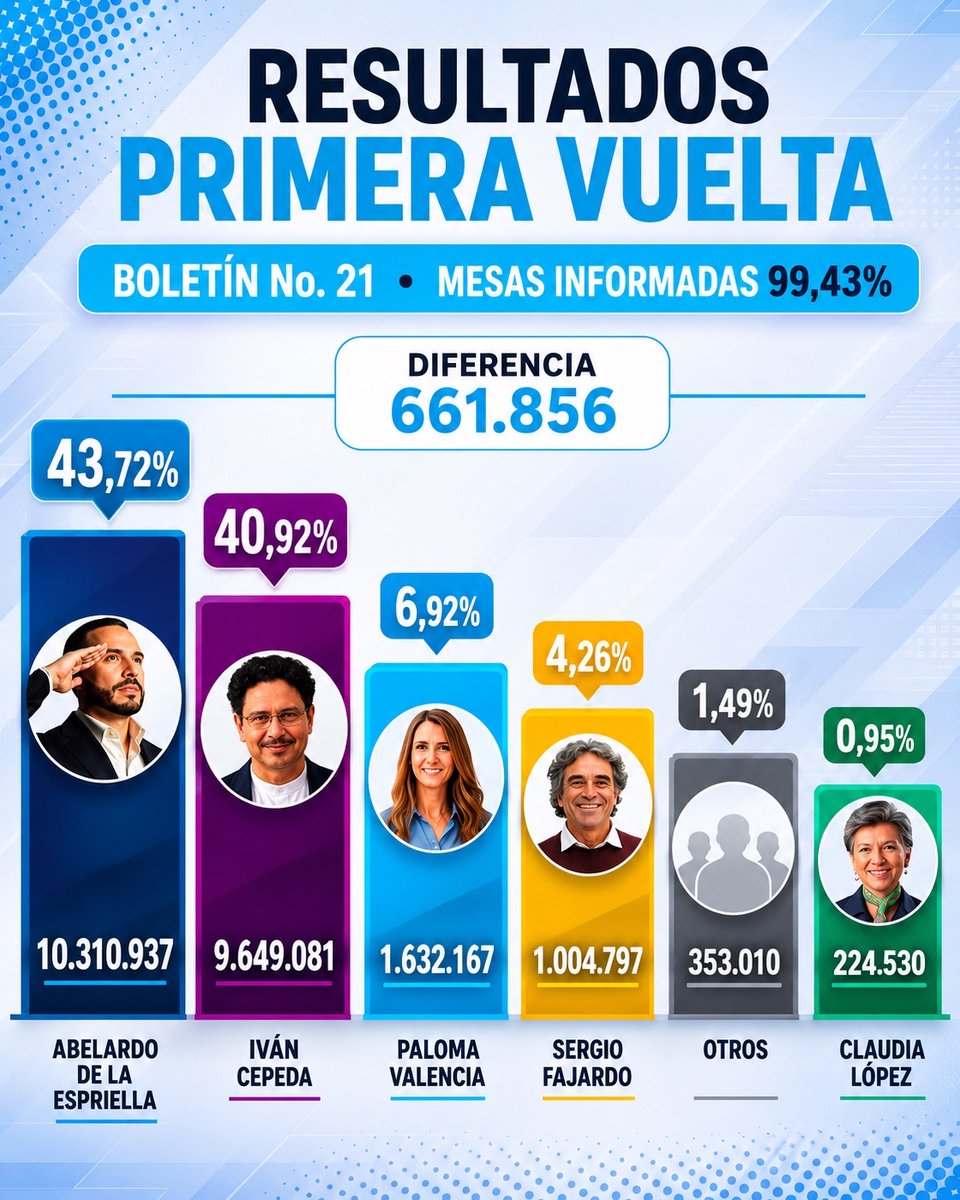
La participación en la primera vuelta fue del 57,80% bastante alta e indica el nivel de polarización. No obstante, el escenario político colombiano no es el mas predecible. De hecho, la mayor parte de las encuestadoras daba por ganador a Cepeda y incluso alguna de ellas en primera vuelta.
La lógica indica que De la Espriella se va a llevar gran parte del 6,92% de Paloma Valencia y el 4,25% de Sergio Fajardo, capitalizando el enojo del electorado con el petrismo y la sensación de inseguidad, corrupción y la hiperideologízación de su administración. Con la suma del tercero y el cuarto, se supone que aseguraría su triunfo.
Sin embargo hay que señalar que Cepeda podría beneficiarse del voto moderado que no está de acuerdo con el giro tan pronunciado hacia la derecha que propone De la Espriella o convocar a militantes oficialistas que no votaron en la primera vuelta.
El otro factor a tener en cuenta es que las elecciones legislativas de marzo dejaron un Congreso muy fragmentado en donde el Pacto Histórico, la coalición petrista, tiene presencia en ambas cámaras (25 de 108 en el Senado y 27 de 183 en la de Representantes) pero que su número es insuficiente para presentar una oposición legislativa sólida.
El problema para De la Espriella es que carece de un bloque propio (solo cuenta con los 3 senadores y los 6 representantes de sus aliados de Salvación Nacional) y en caso de ganar depende de los pactos que pudiera cerrar con otras fuerzas de centro y derecha para saber hasta donde podrá aplicar las medidas radicales que propone.
Es el caso de una política de mano dura inspirada en el modelo de Bukele, reformas pro mercado y desmantelar las reformas instaladas por Petro. En perspectiva, tiene mas posibilidades de armar una coalición mas sólida que el petrismo aunque deberá estar dispuesto a compartir el poder con otros partidos.
La política colombiana es tan transaccional como las del resto de la región y ahora podría abrirse una negociación hasta las elecciones del 21 para cerrar pactos a cambio de concesiones de diversa naturaleza.
De la Espriella tiene la mano mas favorable, pero Cepeda conserva el armado gubernamental y con Petro convencido que corre un riesgo existencial, no hay que perder de vista una posible injerencia en el segundo tramo electoral.
Tampoco el factor de la polarización y que una segunda vuelta que no sea tan tranquila, porque la distancia entre las propuestas es cada vez mas grande. No hace falta explicar lo que no puedo decir con palabras directas.
La distancia de 2,82 puntos es demasiado estrecha como para alentar escenarios definitivos. En tres elecciones anteriores desde 1991 hubo sorpresas como la de Pastrana con Samper en 1998 y Zuluaga con Santos en 2014. De nuevo, Colombia tiene un sistema político diseñado para poner a prueba a los adivinos. El desafío para De la Espriella, si quiere asegurarse desbancar al petrismo, es continuar trabajando sin importar el resultado.
Es por eso que se sugiere cautela porque recién comienza el proceso para designar al presidente que asumirá en la Casa Nariño en julio y, al mismo tiempo y en un riel diferente, como se repartirá el poder en Colombia.
🇨🇴 | COLOMBIA: UN DIAGNÓSTICO SIN FILTROS
La derecha no tuvo una victoria expansiva, sino una operación de rescate exitosa. El electorado conservador operó bajo pánico. Al ver que Paloma Valencia no despegaba y que Cepeda consolidaba su 40%, aplicaron el bypass esperable: abandonar las formas moderadas del Centro Democrático y refugiarse en la estridencia de De la Espriella para asegurar el paso a segunda vuelta.
La buena noticia para Cepeda fue que De la Espriella gastó sus reservas de voto útil en primera vuelta. Su 43.7% no es su rampa de lanzamiento, es prácticamente el techo: no la suma matemática con el residuo de Paloma Valencia (50.64%) les daría la presidencia sobre el papel.
Por todo esto, la misión del progresismo en estas tres semanas no es solo crecer, también es romper esa suma. En pocas palabras, para ganar la presidencia, la campaña de Iván @EstamosConIvan debe ejecutar tres giros tácticos inmediatos y de alto impacto electoral:
1. Despetrizar la campaña sin perder el suelo
El voto duro está seguro y el 40.9% demostró que la base resistió el desgaste natural del gobierno actual, pero para ganar el centro urbano, la campaña no puede ser un plebiscito sobre la gestión de Gustavo Petro. Si la discusión se ancla en el pasado cuando lo urgente es alumbrar el futuro, la derrota está cantada.
Sin rodeos, Cepeda debe marcar sutilmente su propia impronta. Él es un hombre de la academia, de los derechos humanos y de las formas legislativas. Debe explotar ese contraste. Frente al histrionismo y la estridencia de un abogado penalista como De la Espriella, Cepeda debe proyectar la imagen del estadista sereno. El encuadre debe pasar de "Cambio vs. Continuidad" a "Madurez Constitucional vs. Salto al Vacío".
2. Disputar el voto de Paloma Valencia
Asumir que el 6.92% de Valencia se va en automático con De la Espriella es un error diagnóstico y estratégico. Ese porcentaje es heterogéneo: no está compuesto solo por uribistas radicales; ahí está atrapado el voto de Oviedo en Bogotá, de técnicos, de jóvenes de clase media, e institucionalistas que detestan las formas y el personalismo del populismo de derecha.
Y será clave tender puentes programáticos urgentes con los sectores moderados de esa coalición. No buscando el aval de nadie, sino hablándole directamente a su votante y en su lenguaje sobre estabilidad económica, respeto a la propiedad y seguridad jurídica (su agenda).
Si Cepeda logra que un % de ese bloque se abstenga o vote en blanco por asco a las formas de De la Espriella, puede quebrarle la columna vertebral a la derecha.
3. La cacería del Votante Incógnito (El factor 1.5 millones)
Igual que en 2022, la presidencia no se definirá por cómo se repartan los restos de Fajardo o Valencia, sino por movilizar a la gente que esta vez se quedó en su casa (alrededor del 47%).
Si en la segunda vuelta sube 2-3% por la inyección de adrenalina que genera el desenlace definitivo, el progresismo debe recordar algo sumamente importante: gana cuando la periferia, las capitales intermedias y la juventud se movilizan en masa y es a estos sectores a los que debería activar.
No intentando convencerlos de que Cepeda es el mesías, sino haciéndoles ver que De la Espriella en la Casa de Nariño y en este momento del mundo es un riesgo real para sus libertades civiles y la estabilidad del país.
La clave es que el miedo justificado al radicalismo de derecha resulte más movilizador que el miedo narrativo y clásico al progresismo.
En conclusión, De la Espriella es un candidato hiperideologizado y nítido. Eso lo hace fuerte para agrupar, pero extremadamente vulnerable para expandirse.
Si Cepeda permite que las elecciones se reduzcan al debate "Izquierda-Derecha", la matemática lo condena. Pero si convierte la elección en un examen de cordura democrática y estabilidad institucional, Iván Cepeda será muy posiblemente elegido presidente de Colombia el 21 de junio.
Vanuit het perspectief van Abelardo De La Espriella zijn er minstens vijf redenen waarom Petro en zijn politieke project een gevaar vormen voor de individuele vrijheid van Colombianen:
1. De gedeeltelijke nationalisatie van pensioenen
De La Espriella beschouwt de pensioenhervorming als een van de ernstigste aanvallen op eigendomsrechten in de recente Colombiaanse geschiedenis. Volgens hem heeft de staat zichzelf het recht gegeven om controle te verkrijgen over pensioenstromen van miljoenen Colombianen die bewust voor private fondsen hadden gekozen. Hij heeft dit herhaaldelijk omschreven als een vorm van economische onteigening vermomd als sociale rechtvaardigheid.
2. De ontmanteling van het bestaande zorgstelsel
Volgens De La Espriella probeert Petro een systeem dat miljoenen Colombianen toegang tot zorg heeft gegeven te vervangen door een bureaucratisch model dat afhankelijk wordt van politieke besluitvorming. Hij waarschuwt dat Colombia daarmee dezelfde fouten dreigt te maken als andere Latijns-Amerikaanse landen waar de staat steeds meer controle over de gezondheidszorg kreeg.
3. De aanval op de olie en gas industrie
De La Espriella stelt dat Petro ideologie boven economische realiteit plaatst door nieuwe exploratiecontracten te blokkeren. Volgens hem ondermijnt dit de belangrijkste bron van exportinkomsten van Colombia, schaadt het investeringen en verzwakt het de economische onafhankelijkheid van het land.
4. De permanente confrontatie met onafhankelijke instellingen
Volgens De La Espriella reageert Petro steeds opnieuw met aanvallen op rechtbanken, het Congres en andere instellingen wanneer zij zijn plannen blokkeren. Voor hem is dit een klassiek kenmerk van leiders die moeite hebben met constitutionele beperkingen op hun macht.
5. De ideologische nabijheid tot het chavisme
De La Espriella wijst voortdurend op Petro’s historische sympathie voor figuren als Hugo Chávez en de nauwe banden van delen van de Colombiaanse linkerzijde met het regime van Nicolás Maduro. Volgens hem laat Venezuela zien hoe pensioenen, gezondheidszorg, bedrijven en instellingen stap voor stap onder politieke controle kunnen worden gebracht totdat de burger steeds afhankelijker wordt van de totalitaire staat.
De kern van De La Espriella’s kritiek is niet dat Petro morgen een dictatuur zal uitroepen. Zijn argument is dat elke stap voor stap uitbreiding van staatscontrole over pensioenen, gezondheidszorg, energie en economie de macht van de burger verkleint en de macht van politici vergroot. Vanuit zijn perspectief is dat precies het pad dat landen als Venezuela eerder hebben gevolgd. De permanente erosie van de rechtstaat.
Voor de meeste Nederlanders is Colombia vooral het land van koffie, cocaïne, guerrilla’s en de Netflix-serie Narcos.
Dat beeld klopt al lang niet meer, maar het helpt wel om te begrijpen waarom de presidentsverkiezingen van dit jaar zo belangrijk zijn.
Colombia was tientallen jaren een van de trouwste bondgenoten van de Verenigde Staten in Latijns-Amerika. Economisch relatief stabiel, politiek overwegend centrumrechts en voortdurend in gevecht met guerrillabewegingen en drugskartels.
Daar kwam in 2022 een einde aan met de verkiezing van Gustavo Petro.
Voor het eerst kreeg Colombia een president uit de radicaal-linkse en harde totalitaire traditie. Voor zijn aanhangers was dat een “democratische” correctie op een politieke elite die decennialang de macht had gedeeld. Voor zijn tegenstanders was het een sprong in het onbekende.
Vier jaar later kan Petro zich niet opnieuw kandidaat stellen. De Colombiaanse grondwet verbiedt gelukkig een opeenvolgende tweede termijn.
Toch draait de verkiezing vrijwel volledig om hem.
In de ene hoek staat Iván Cepeda, senator en een van de bekendste figuren van de Colombiaanse extreme en totalitaire linkerzijde. Zijn verkiezing zou in binnen- en buitenland worden gezien als een bevestiging van de koers die Petro heeft ingezet.
Tegenover hem staat Abelardo de la Espriella.
Hij werd bekend als strafadvocaat in een reeks spraakmakende zaken en bouwde daarna een sterk publiek profiel op als criticus van Petro. Opvallend detail: Abelardo de la Espriella verdedigde ooit Alex Saab, de zakenman die door Washington wordt beschouwd als een sleutelfiguur in het criminele financiële netwerk van Maduro (met ook Zapetero in Spanje). De la Espriella wijst erop dat een advocaat zijn cliënt niet is. Politiek blijft het echter een lastig hoofdstuk in zijn verhaal.
Zijn campagne draait om veiligheid, economische groei en het herstel van vertrouwen bij investeerders.
Juist daardoor is hij lastig te vergelijken met andere internationale politici.
Sommigen noemen hem de Colombiaanse Milei.
Dat klopt maar gedeeltelijk. Milei voert een ideologische strijd tegen de schaal en omvang van de criminele staat. De la Espriella heeft het veel minder over economische theorie en veel meer over veiligheid en bestuur.
Anderen vergelijken hem met de Salvadoraanse president Bukele.
Ook dat is maar deels juist. De la Espriella spreekt net als Bukele veel over criminaliteit en orde, maar komt uit de juridische wereld en presenteert zich nadrukkelijk als verdediger van de rechtsstaat, maar wel met harde hand en 10 Salvadoraanse stijl mega gevangenissen.
De verkiezing van 21 juni 2026 gaat daarom uiteindelijk over één vraag.
Vinden Colombianen dat het waanzinnige experiment van Petro moet worden voortgezet?
Of vinden zij dat het tijd is voor een duidelijke koerswijziging?
Dat is de keuze waar ruim vijftig miljoen Colombianen de komende weken voor staan. Ze kunnen kiezen tussen de totalitaire chaos van links, of terug naar meer pragmatisme met iemand zonder een overduidelijke ideologie en plannen.
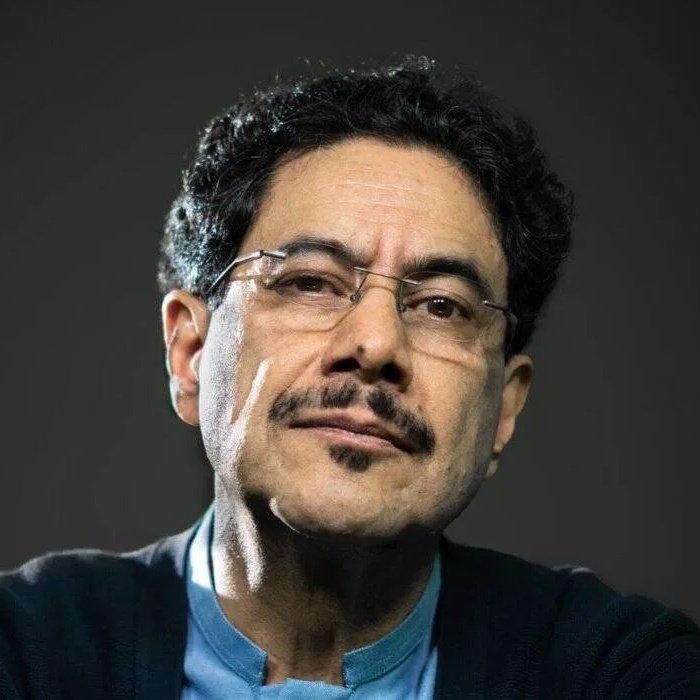
Totalitair links (met bril) valt zo wie zo al af.
Parece que en la primera vuelta colombiana ganó la ultraderecha antidemocrática. En cambio, la izquierda democrática que apoya a las dictaduras cubana y venezolana no reconoce los resultados de los comicios que ellos mismos han organizado. Por lo menos, así dicen los medios argentinos. Misterio…
"Para liquidar a los pueblos se empieza por privarlos de la memoria. Destruyen tus libros, tu cultura, tu historia. Y alguien más escribe otros libros, les da otra cultura, inventa otra historia; después de eso, la gente comienza a olvidar lentamente lo que son y lo que fueron. Y el mundo que te rodea se olvida aún más rápido".
Milán Kundera
🚨 ÚLTIMA HORA: Microsoft acaba de cancelar sus licencias de Claude Code.
El motivo: la factura. Incluso Microsoft, con sus miles de millones invertidos en IA, no pudo absorber los costos de facturación por token.
Uber quemó el 100% de su presupuesto de IA 2026 en 4 meses. Los precios del software IA americano subieron entre un 20 y un 37%. GitHub abandona los planes fijos y pasa a cobrar por uso.
La era de los precios baratos terminó. Las empresas que construyeron sus flujos de trabajo enteros asumiendo que la IA seguiría abaratándose acaban de despertar con una realidad brutal: los números ya no cuadran.
O las empresas reducen su uso. O los labs absorben las pérdidas. En ambos casos, alguien tiene que pagar la cuenta antes de las IPOs.