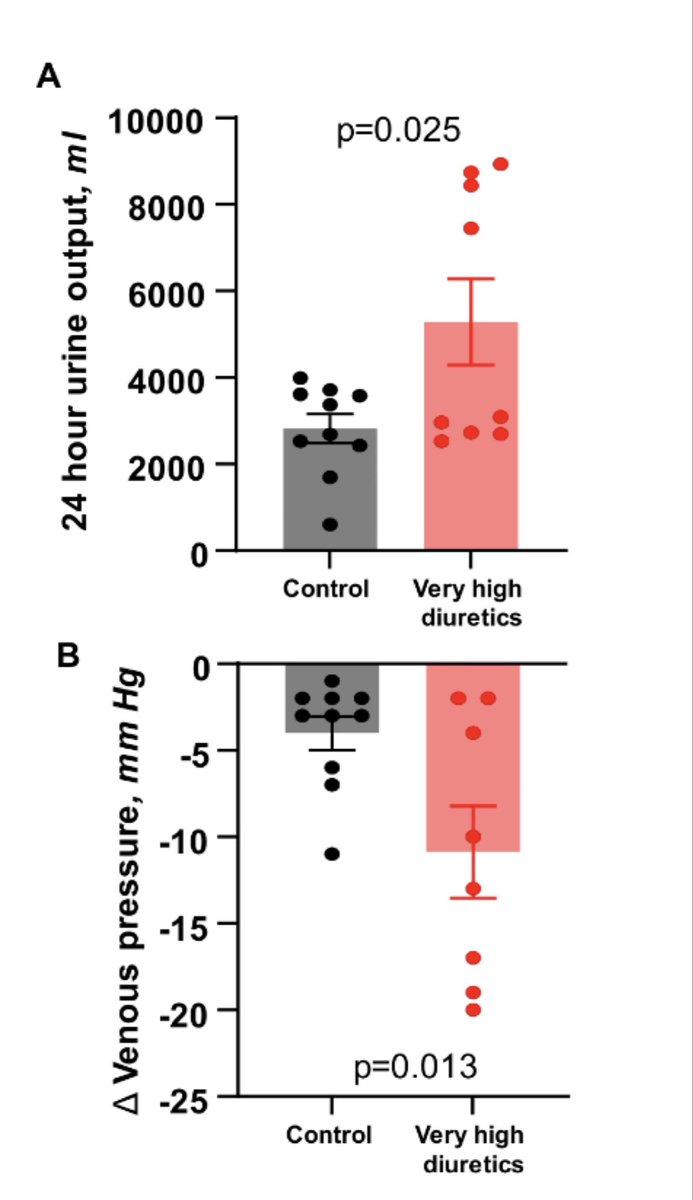
A common Q in acute HF is what dose of diuretic to start with. In this pilot RCT we tested a simpler strategy of just giving 1 gram of lasix over 24 hrs to everyone even if diuretic naive. We saw more urine, lower venous pressure and no drop in CO or gfr
https://t.co/VOQsCdytkS
Proud of our new article!
Don’t let therapeutic inertia steal time from our patients.
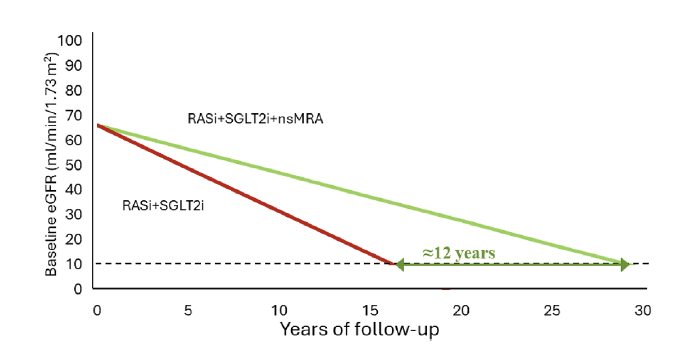
Early detection of albuminuria and fast triple therapy (RASi + SGLT2i + Finerenone) can delay kidney failure by up to a decade.
👉https://t.co/Y5gGGiQMMO
🙂
@SENefrologia@ERAkidney@ASNKidney
Al hombre mexicano verdaderamente no le educan para enamorarse.
Así que cuando lo hace desinteresada y totalmente, lo hace una vez. Lo hace contra su voluntad y muy posiblemente lo hace torpemente.
Pero es un sentimiento que le sobrepasa, le aniquila y que nunca se repite.
Implantación de catéter peritoneal autoposicionable mediante técnica percutánea POR EL NEFRÓLOGO.
Vídeo que detalla la técnica paso a paso. Os invito a verlo https://t.co/reTT9wVVtI @sengndi@SENefrologia@nefroaldia
Just read it! And have some thoughts..
First: Wow! Echo at 0, 48 ad 72 hrs in 140 patients with HRS is fantastic work!
The main finding is both E' septal and septal E/E' predicted absence of response to Terlipressin.
RELEVANT: sPAP and CVP were not predictors, this suggests it is NOT congestion but intrinsic load-independent LV disfunction which was the predictor!
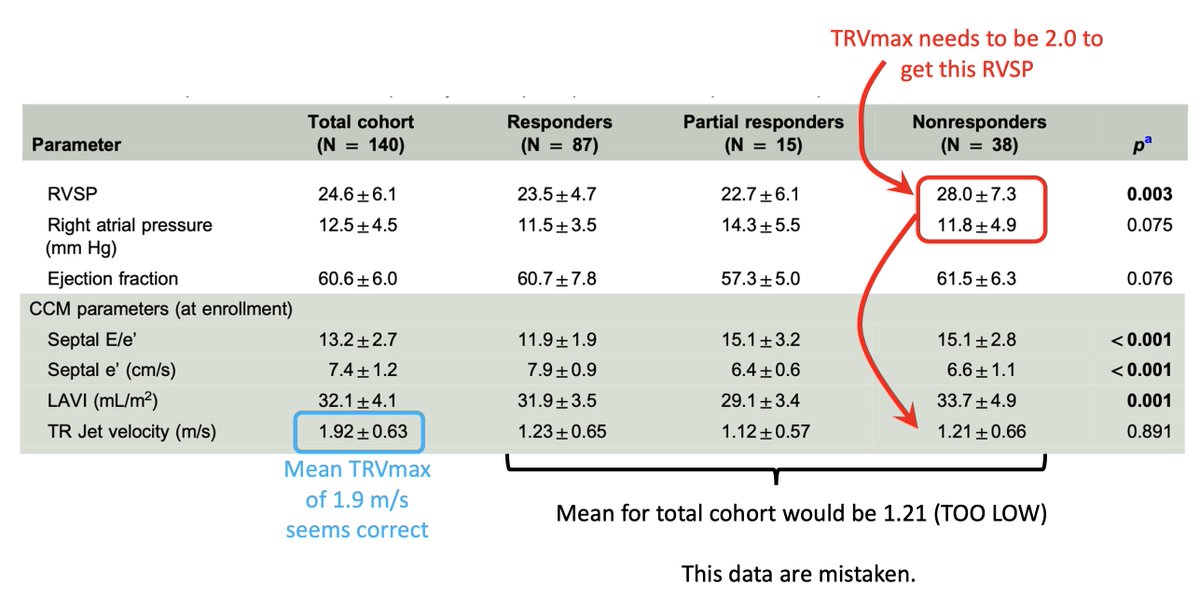
**There is an annoying error in table 1👇. TR velocities are way to low. Likely a mistake when generating the table and hopefully not in the analysis. So I will assume it doesn't change the main findings.
🔷Mean E' septal was 8 for responders and 6.6 for non responders.
🔷Mean septal E/E' was 11.9 for responders and 15.1 for non responders.
🚨 This means mean E velocity was 94 cm/s for responders and 99 cm/s for not responders. So the difference in E/E' was really mediated by septal E'!
This agrees with what I mentioned above. The predictor of terlipressin non-response is not load dependent but rather a marker of intrinsic LV dysfunction! (explaining also why RVSP and CVP were not predictive, as these are load dependent variables).
Giving Terli to hearts with such severe diastolic disfunction will raise afterload beyond tolerated. This explains the decrease in CO from 48 hrs (time of terli initiation) to 72 hrs (which also predicted non response to terli). 🚨This decrease in CO was mediated by a slight reduction in stroke volume but ALSO heart rate!
Interestingly, LVEF was not a predictor likely given the fact that al patients had high EF around 60%.
So this papers IMO establishes E' as an important POCUS parameter to monitor prior to begining Terlipressin.
_____________________________
With all this in mind: How would I manage a patient with HRS-AKI and a very low E' septal?
1⃣Evaluate renal congestion using renal doppler: If severe --> Remove volume rather than terlipressin (either high dose IV diuretics or Ultrafiltration)
2⃣ If a vasopressor is needed I would go for norepinephrine as it will also give chronotropic and inotropic support. Also, NE causes more pulmonary vasoconstriction than Terlipressin potentially preventing the develompent of pulmonary edema
Just some random thoughts, but certainly POCUS in HRS is very exciting field! 😃