A new #SSTV broadcast from the 🇷🇺 🛰️ UmKA-1 (RS40S) on 437.625 MHz, in Robot 36 mode has been announced.
- Tx start: Nov 25, 02:25 UTC
- TX end: Nov 26, ~06:50 UTC
Four segments of an image, coloured by children, will be transmitted.
Source: https://t.co/gv0LJBTMvd
Tycho's Supernova: Death of a Star.
In November 1572, a brilliant new light appeared in the constellation Cassiopeia, catching the attention of Danish astronomer Tycho Brahe and other skywatchers.
🔭 More than 6,000 exoplanets have been discovered, but how many more are hiding in data we've already collected?
Join SETI Institute Davie Postdoctoral Fellow Dr. Isabel Angelo for “Needles Hiding in a Cosmic Haystack,” a free virtual talk exploring how astronomers use machine learning to revisit telescope archives and uncover planets, stars, and potentially even signs of life beyond Earth.
📅 Wednesday, November 25
🕤 9:30 am PST
💻 Virtual | Free | Registration required
The presentation includes a live Q&A, so bring your questions!
🔗 Register: https://t.co/5QdOXJDZSV
#Exoplanets #Astronomy #MachineLearning #SETIInstitute #Astrobiology
🐋 What happens when humpback whales make sounds powerful enough to shake a lighthouse?
Researchers studying humpback whale communication have identified a deep, low-frequency sound called a “thrum” that can travel remarkable distances. That discovery inspired a fascinating question: Could whale exhalations also produce electromagnetic signatures we've never thought to look for?
In this #SETILive clip, discover how an unusual whale sound inspired a SETI Institute-funded experiment��and what it could teach us about recognizing unfamiliar signals from intelligence beyond Earth.
🎧 Listen to the full conversation on the SETI Live podcast: https://t.co/tPFbnpftoe
#SETI #HumpbackWhales #Astrobiology #WhaleCommunication
A home away from home 🌕
We're building a Moon Base, where astronauts will live, work, and explore the lunar surface.
Learn how @NASAMoonBase will be built and how it'll prepare us for future missions: https://t.co/MQ9you9cFg
@ESA_Euclid acaba de batir su propio récord.
El detective del #DarkUniverse ha descubierto el cuásar más distante hasta la fecha: un núcleo galáctico observado tan solo 630 millones de años después del Big Bang.
Apodado Dún Aonghasa, el objeto es el punto rojo situado en el centro de esta imagen. 👇
El mundo no va a esperar a Europa.
Tenemos el talento. Tenemos la tecnología. La cuestión es si estamos preparados para dar forma al futuro.
El 15 de diciembre, Europa tiene que tomar una decisión sobre su futuro en la exploración. Es el momento de tomar una decisión ambiciosa y mirar hacia el futuro.
🛰 TI3GB on RS-44
⏰ 2026-11-24 from 17:43Z to 18:04Z
🗺 EJ89/EJ89
📻 145.960↑ SSB
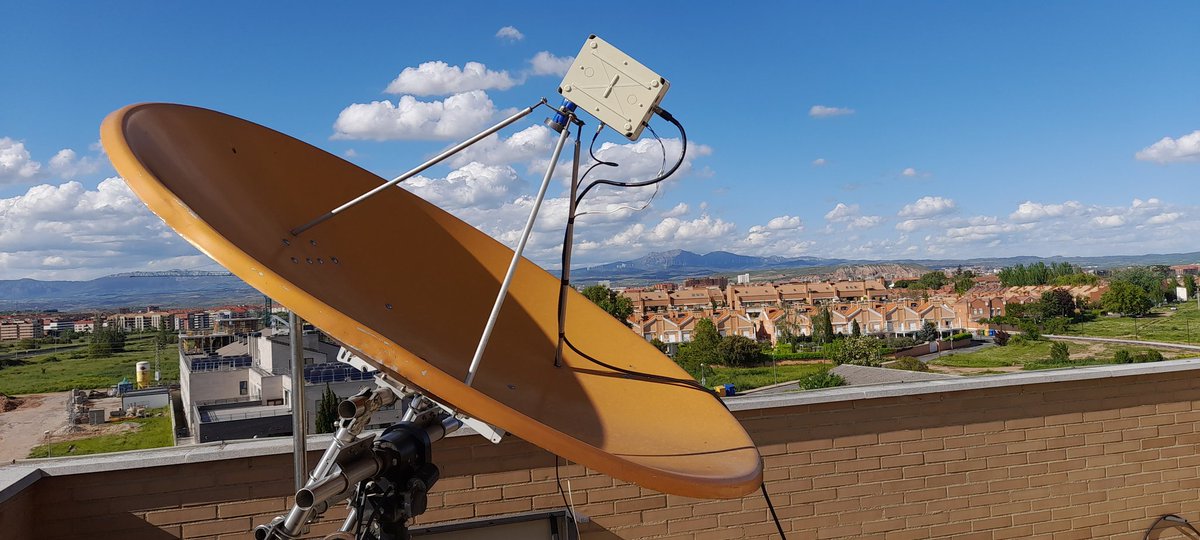
📢 Stationary uplink-testing antenna- looking for new grids!
👀 https://t.co/F8kLOSH8kY
Space Chat: Wick High School, Wick UK - ISS View!
ISS Crew Member Joshua Kutryk, KJ5BFU, conducts an amateur radio STEM contact with the students of Wick HS in Scotland. This unique view is of his side of that contact, originally conducted on October 8, 2026.
Space Chat: Wick High School, Reino Unido - ¡Vista desde la ISS!
El tripulante de la ISS Joshua Kutryk, KJ5BFU, realiza un contacto STEM de radioafición con alumnos de Wick HS en Escocia. Vista única desde su lado del contacto, celebrado el 8 de octubre de 2026.
Newly updated: our Hera Media Kit is a guide to the technology behind ESA's first asteroid mission and the science of planetary defence - Hera's images of the 1st asteroid transformed by human action unveiled Wednesday! https://t.co/3tkSEtwtEb
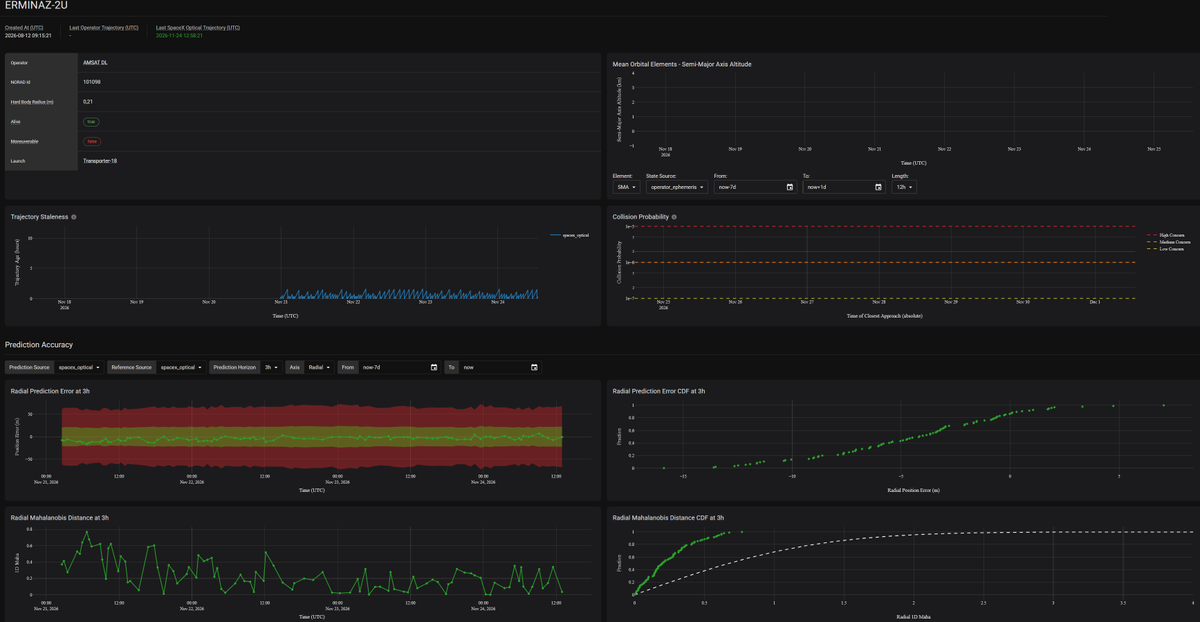
This is impressive: @SpaceX Stargaze has successfully optically detected and is tracking our ERMINAZ-2U PocketQube in orbit!🛰️✨ERMINAZ-2U is only ~5 × 5 × 5 cm and weighs about 250 g. Detecting and tracking something this small is quite an achievement. Stargaze is SpaceX’s new Space Situational Awareness system, using observations from nearly 30,000 star trackers across its @Starlink satellite fleet to detect objects in orbit and generate near-real-time orbit estimates.🚀🔭