JP Morgan just released their Q3 Guide to the Markets.
It's over 71 pages of institutional-grade research with hundreds of charts and data points.
I just went through the entire document and compiled the 16 most important charts: 🧵👇
WARNING: Longer post (but worth reading or bookmarking for later).
Your life has seasons.
Each one is unique. Characterized by its own distinct desires, struggles, opportunities, and identity.
But one reflection I've had recently is just how easy it is to completely disassociate with the present season.
To give all your time and energy toward a longing for some nostalgic memory of a prior season or an anticipation for some beautiful state of a future season.
You look back at the past and all you see is sunshine. Because it all worked out. You forget (or glaze over) the struggle you endured. You're here today. You made it. You're alive. You're doing fine.
You look forward at the future and dream on what could be. You'll have so much more. More freedom. More purpose. More health. More deep connection. More everything.
The past is beautiful and the future feels limitless. So, logically, you slowly start to treat everything about the present as the bridge. A dash connecting your past and your future. A gap to be crossed as quickly as possible.
Everything you do today is in anticipation of some eventual end state.
I'm doing this now, so that I can have that later.
Unfortunately, the danger of that dissociation with the present is significant. You may spend your entire life living for a future that has a decidedly mirage-like property. You inch closer, but when it's right in front of you, it disappears and reappears on the horizon.
You may spend your entire life skipping through the present, deferring your presence, your joy, and your very humanity to a future that never comes.
In a classic French fable, a young boy is gifted with a magic ball of golden thread. He's told that if he simply pulls on the thread, time will leap forward. The catch, of course, is that once it's pulled, it can never be put back.
The young boy takes advantage of the newfound powers. Each time he's faced with a boring day at school, a frustrating set of chores, or a scolding from his parents, he pulls the thread, skipping through to the good parts.
As an adult, he continues, leaping through mundane struggles in his marriage, the friction of having a newborn, and the boredom at work. He finds himself pulling on the thread more and more, avoiding even the most minor inconveniences of his life.
But when he wakes up one day and sees an old man looking back at him in the mirror, he's filled with regret. He realizes in that moment that as he chose to skip through the boredom, struggles, and friction, so too did he miss the real texture of being alive.
How often do we all do the same? How easily do we default into this disassociation? Disconnecting from the present in anticipation of some future.
A mentor recently asked me this:
"Where are you going and why are you in such a rush?"
It hit me hard.
And to be honest, I haven't stopped replaying those words since he said them.
Why are you in such a rush?
The world wants you to rush into everything. Rushed decisions. Rushed conversations. Rushed relationships. Rushed timelines.
In doing so, you slowly relinquish your agency. You give up your claim on your own life. Surrender authorship to a pen that was never even yours.
In a world that wants you to rush, the ultimate act of rebellion is presence.
Be in the season you're in. Don't romanticize the past, don't fantasize the future. Be here. Be now. Be in this. All of its texture, depth, and struggle. All of its joy, tension, and pain. Sit with the uncertainty. Become friends with it. Fall in love with it.
Because every single thing you do today is something your younger self dreamed of and something your older self will wish they could go back and do.
The good old days are happening, right now.
And the next time you find yourself skipping through the present, remember these words:
Where are you going and why are you in such a rush?
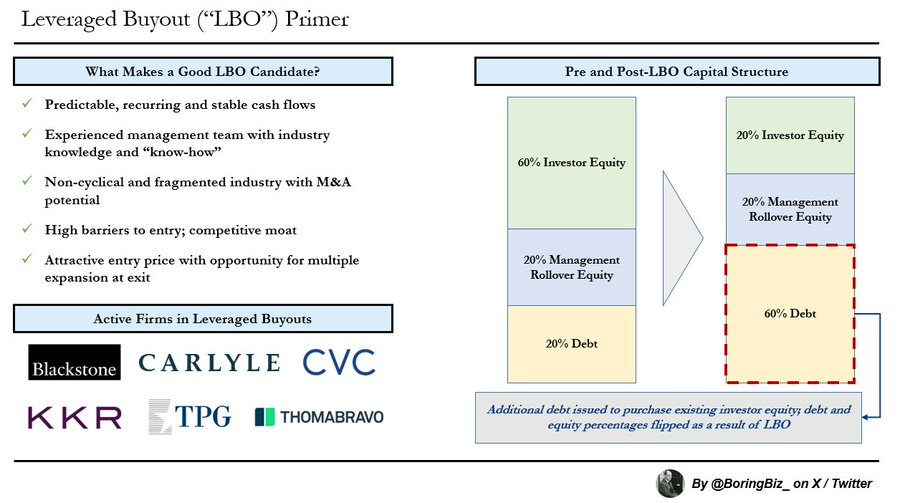
A country with fewer people than NYC built the greatest serial acquirer ecosystem on the planet.
Sweden's serial acquirers returned 40x over 20 years.
They buy small, profitable, family-owned businesses and hold them forever.
"The most successful hedge fund in history never had a losing year. In 34 attempts."
MIT just dropped Jim Simon's full 52-minute career lecture. free.
He never took a finance class. He hired mathematicians and physicists instead. The result? 100B+ dollars in profits.
here's what they cover:
• how to detect market regimes before they shift
• why 200+ factors beat every fundamental analyst
• the Kelly criterion that survived every drawdown
most people are still guessing - while quants with pipelines print money.
Watch this now. Then read the full 5-layer system below.
SpaceX is filing for an IPO at $2T. Anthropic and a dozen AI companies are right behind it.
Thomas Laffont at Coatue explains why this is not 1999. The "10x Paradox": models get 10x better, prices drop 10x, demand explodes 100x.
33-min and you'll understand the power law that determines who wins in AI
bookmark - it's the most important investment framework for the next 3 years
the anthropic claude for finance lecture is the best free hour in quant AI right now.
bookmark & watch today. It's the most valuable 1 hour in quant AI right now. Then read article below.
need a researcher? hire one for $90K
need an editor? hire one for $85K
need a PM? hire one for $110K
need an analyst? hire one for $120K
need a recruiter? hire one for $95K
need an ops lead? hire one for $100K
need a fractional CFO? hire one for $180K
total: $780,000 a year.
OR
drop 7 markdown files in one folder
Claude runs all 7 jobs on demand
total cost: $20/month
most founders are one bad hire away from running out of money.
most operators are one folder away from never needing the hire.
the article has all 7 files. copy them. paste them. ship.
the team is the folder.
ANTHROPIC JUST RELEASED THE OFFICIAL PLAYBOOK FOR BUILDING A COMPANY WITH CLAUDE CODE.
CEO: 1 human. Employees: AI agents. Operations: fully automatic.
The zero-headcount company is no longer a joke.
This is one of the best primers that exist on the data center and AI industry right now
If you want to better understand the unit economics of each layer in the AI stack, I highly recommend you give this a listen
Chase Lochmiller, CEO and Co Founder of Crusoe, breaks down the inputs and outputs of data centers at a granular level
Shoutout to @apoorv03 for hosting yet another fantastic class
One of the most substantive classes with @ChaseLochmiller at Stanford. We went deep on economics of the datacenter:
- Where is the ~$650B of AI infra capex actually going this year?
- Who's capturing the margin, who's getting squeezed?
- How the bottleneck has moved from GPUs to power, and where it goes next
- The economics of neoclouds
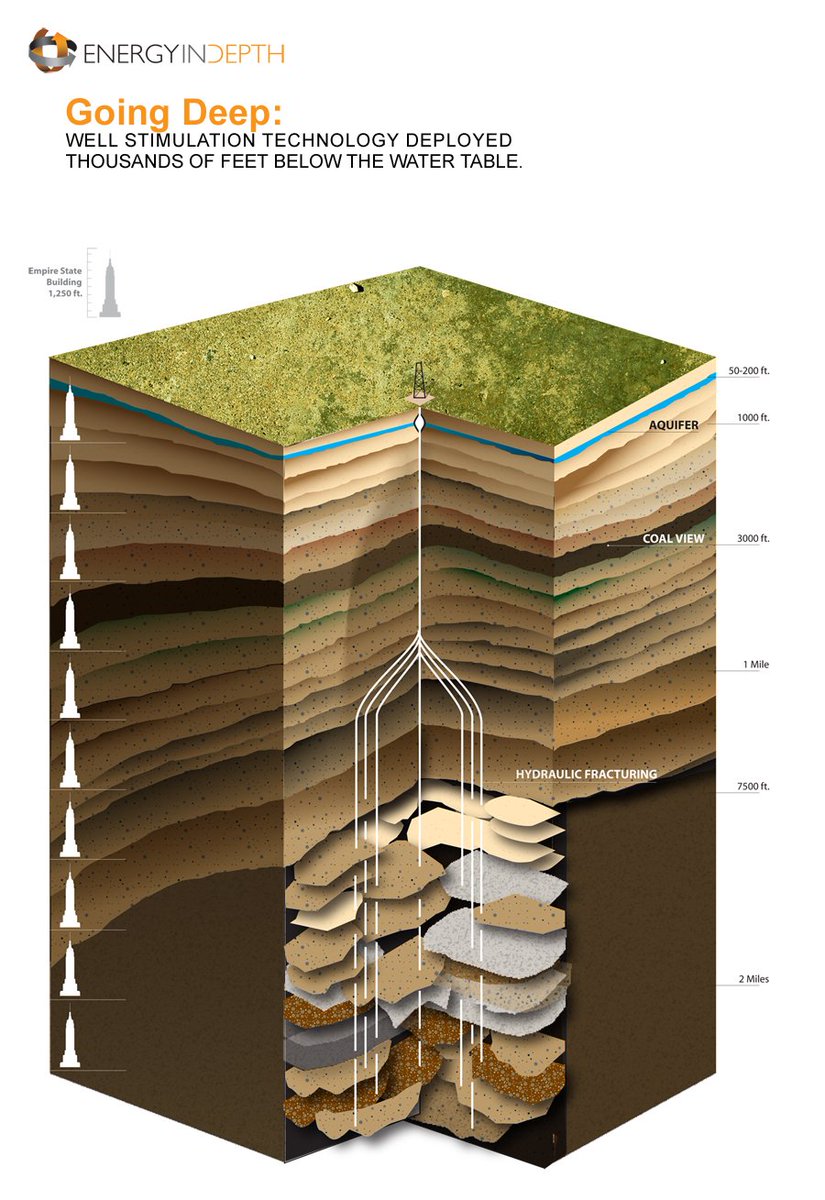
Con todo lo que se ha declarado acerca del #fracking en MX, y ese "veto" que puso @lopezobrador_ creo que vale mucho la pena hacer un hilo acerca de esta técnica, tan utilizada en EUA y Argentina.
Primero, vamos a ver ¿QUÉ ES REALMENTE EL #FRACKING?
Abro hilo...
🚨OpenAI was founded in 2015 as a nonprofit.
Mission: "Benefit all of humanity."
Sam Altman told Bloomberg in 2023: "I have no equity. I have enough money."
Then Bloomberg reported OpenAI discussed giving him a 7% stake, worth $10 billion+.
The board tried to stop him. He overthrew the board in 5 days.
Ilya quit. Mira quit. Schulman quit.
The nonprofit that built GPT with tax-exempt donations is now an $852 billion for-profit corporation.
The charity gets 26%. Investors get the rest.
Here's every document: