@OCLC@btwashburn@btwashburn is the gentle giant of so many RLG and @OCLC projects that a tweet can't list them all. I call out especially his work on Missing Materials https://t.co/ck5XvsQqbR which was a project that I had the pleasure to be part of. Thank you, Bruce!
“When libraries closed their doors abruptly, they immediately opened their digital communications, collaborations, and creative activity to reach their public in ways as novel as the virus that forced them into it.” https://t.co/Sev50rPN5Z
This is the message. Academic libs have been building up a parallel digital services, content, and infrastructure for two decades. We are not moving online from in-person. We are online. We're just suspending in-person for now.
We've got this. Indiv+cooperatively. #CovidLibrary
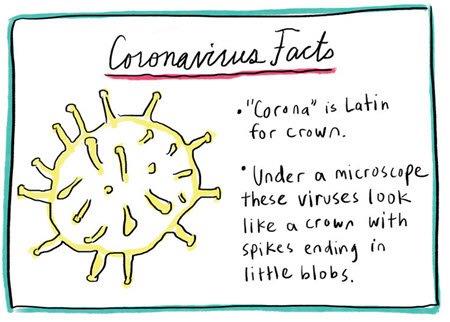
As COVID-19 increasingly impacts communities, here is a collection of resources on how libraries are supporting information needs and making decisions about policies and services. https://t.co/7wA0LkNgGk (Photo: Malaka Gharib/ NPR https://t.co/ZPrNfDoaCH) #libs4health
Ann E. Todd, child actress (nearly 40 films) and accomplished librarian (Music Library Assoc lifetime achievement citation) died on 7 Feb. Farewell, gentle lady. https://t.co/fFtYWrKFY6
Why America isn’t equipped for the new rules of war / @janinedigi | @techreview https://t.co/Sgut1mYM3C “...Russia, China, Iran … [are] fighting these things called shadow wars, and they’re very effective,” says an ex-paratrooper and academic.
Why the U.S. Sent Librarians Undercover to Gather Intelligence During World War II / Kathy Peiss | @TIME https://t.co/KzbYpmOwqH #librarians "...the ordinary activities of librarianship—acquisition, cataloguing, and reproduction—became fraught with mystery ."
Time for the Human Screenome Project / @byronreeves Thomas Robinson & Nilam Ram | @nature https://t.co/fcJ0KzLfkQ To understand how people use digital media, researchers need to move beyond screen time and capture everything we do and see on our screens. #screenomics
It’s Not What Libraries Hold; It’s Who Libraries Serve - Seeking a User-Centered Future for Academic Libraries / @Litslibrarian (@OhioLINK) @rschon (@IthakaSR) - new (January 2020) whitepaper from OhioLink https://t.co/eTcIv7LGGU ht @ConstanceM
The library is a smart city's 'hub for digital intelligence' / @CailinCrowe | @smartcitiesdive https://t.co/Ma2XOuRoJF "As one of the most trusted spaces and sources...libraries are playing an increasingly important role in smart city initiatives." ht @lorcanD
Eleven tips for working with large data sets: Big data are difficult to handle. These tips and tricks can smooth the way / @AnnaNowo | @nature
https://t.co/nyVtdwA1t1 ht @strnr
I've successfully taken metadata from three museum collections and federated them, using Dublin Core as my schema (that each DC element is optional & repeatable makes DC a total winner for me) and OpenRefine - what else - as my interim data wrangler. Project Achievement Unlocked.
Russia plans to replace “unreliable” Wikipedia with its own version / @techreview https://t.co/hNdKUvnfLE "The announcement can be seen as part of a wider push by the Russian government to exert more control over what its citizens see and do online."
Open Access pilot for Latin American monographs / @jstor https://t.co/gtdzt5tjMA "A partnership ... is working toward introducing a sustainable Open Access model for monographs to be developed and supported by the library community."
Building the library of the future: Leveraging OCLC research models / @cmkeithw https://t.co/JuhO8J0hcF [keynote address to the OCLC Library Futures Conference, - Oct 2019] the future for academic libraries is to be woven more deeply into the scholarly process.
For China to realise its research and innovation potential the government may have to place greater trust in the academic community / @XueyingHan & Applebaum | @LSEImpactBlog https://t.co/FbBwGGtN9T
Publication is not enough, to generate impact you need to campaign / @TobyABGreen | @LSEImpactBlog https://t.co/EszhTEoEY1 "Being able to demonstrate the impacts of research outside of academia has become a standard requirement of a range of research funders."
Google wins landmark right to be forgotten case / @LeoKelion | @BBCWorld https://t.co/4a2SQFCGN6 Court agrees with Google that the domain Google must address under European law is Europe only.