I see the idea of AI socialism is back in the news again today.
I’ll just reiterate what I’ve said here many times before: The idea of nationalizing AI – whether “hard” (complete govt ownership) or “soft” (equity stakes) nationalization – should be rejected in all its forms. It does not matter whether AI nationalization is being pitched by Bernie Sanders, national security hawks, or AI companies themselves – all flavors of AI socialism are poisonous and must be stopped.
Nationalizing AI, or even treating AI like a regulated monopoly or public utility, would have the same deleterious effects (and then some) that we have seen in countless other historical case studies. The entire history of nationalization and utility-style regulation is one of capture and cronyism, diminished innovation and consumer welfare, and censorial controls on speech in the case of information and communications technology (ICT) markets. Our nation would lose its competitive advantage in computation and algorithmic innovation if we took this disastrous path for AI. AI would become a Technology of Control instead of a Technology of Freedom.
Below you will find some journal articles and essays I’ve authored on the ugly history of soft nationalization and regulated utility economics and politics in the ICT policy world. We must not repeat this disastrous history with AI.
We know what probably happened.
From what we see publicly, NightmareEclipse doesn't communicate well, is emotionally immature, and appears to want to extort Microsoft.
Almost certainly, this played a part in the conflict between them and Microsoft -- it's probably as much NightmareEclipse's fault as Microsoft's.
With that said, everything Florian says is correct. It doesn't excuse Microsoft's failures. They are supposed to be the responsible one,
When there is miscommunication or dispute, it's always allowable to drop 0day, regardless whose fault it is. It's Microsoft's job to avoid that, even when they really aren't at fault for the miscommunication.
But Microsoft has convinced themselves of the opposite, that "responsible" disclosure means only the responsibilities of the vuln finder.
Vuln finders have no responsibility. Dropping 0day is responsible. Responsible companies don't have so many bugs.
We let industry subvert the disclosure process. Instead of working to secure their code, vendors have tricked people into believing in the myth of "responsible disclosure", that vendors should be given time to fix and patch their bugs so they are never to blame for the bugs to begin with.
That's why you have customers still buying Fortinet appliances even though their bugs continue to be major sources of customers getting hacked. Customers shrug their shoulders: as long as Fortinet has a vulnerability disclosure program and releases patches, they aren't responsible for when hackers keep breaking into their boxes.
This is garbage. Vendors are still responsible for preventing bugs in the first place, a responsibility that doesn't go away just because they patch.
Regardless of what happened, Microsoft's threats are a gross violation of ethics in the industry.
A solo developer got so frustrated with Claude's rounded usage percentages that he built a free browser extension that reads Anthropic's own internal data and shows you the exact numbers Anthropic does not.
It's called Claude Counter. A minimal extension that injects a tiny panel into the claude sidebar with the three things every heavy Claude user actually needs.
- Live token count with a progress bar against the 200k context limit
- Cache timer counting down how long your conversation stays cached for cheaper replies
- Session 5-hour and weekly 7-day usage bars with exact reset countdowns
The reason it actually works:
Anthropic's backend already streams exact, unrounded utilization fractions through server-sent events on every message. The native interface just throws it away before it reaches your screen. Claude Counter intercepts those responses before the UI can hide them. All data stays local. No servers. No tracking.
How to install:
Chrome or Edge → download the zip from the GitHub releases page, open chrome://extensions, enable Developer mode, drag and drop the zip onto the page.
Firefox → download the XPI file, drag it into any Firefox window, click Add.
Userscript → install claude-counter.user.js with Tampermonkey or Violentmonkey.
Done in 60 seconds.
https://t.co/2DbNzsPyEV
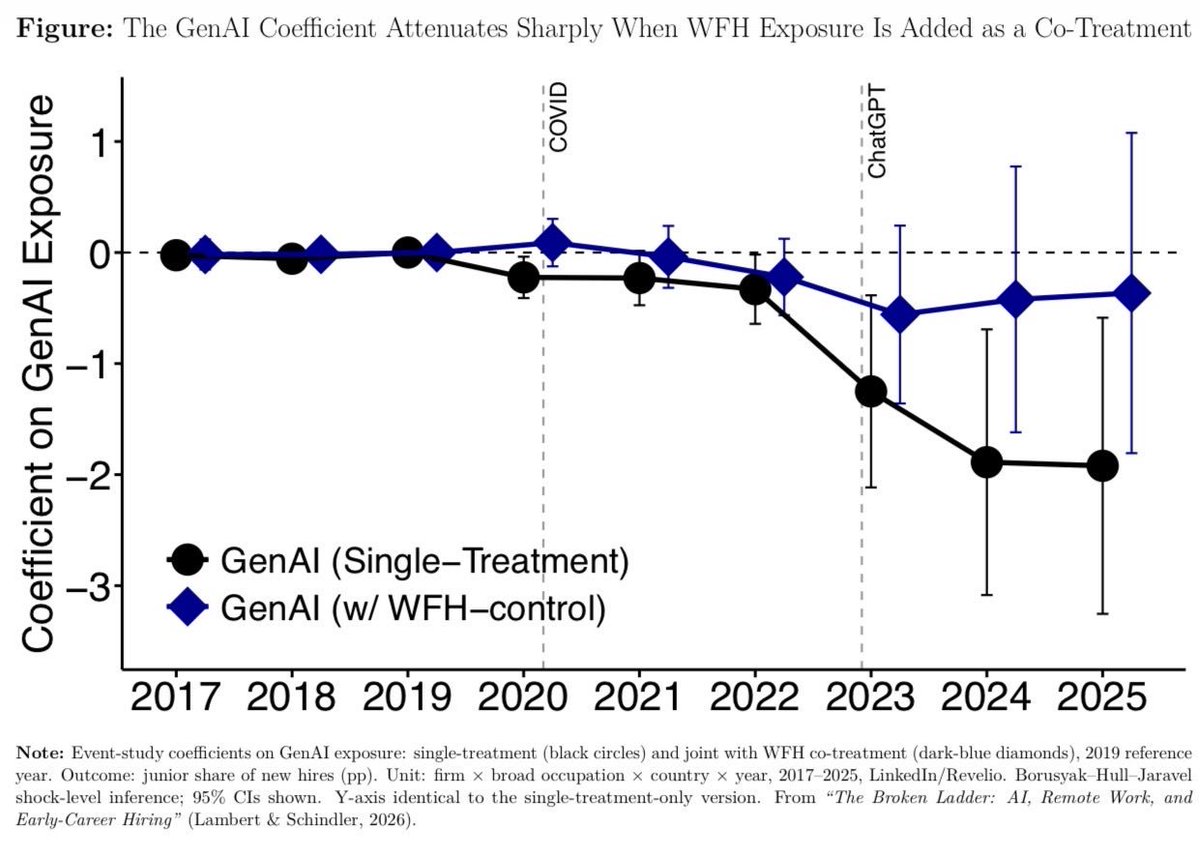
A major talking point for those who think AI will cause mass unemployment is the recent slowdown in junior-level hiring. Lambert and Schindler, in this new working paper, point to a different culprit: work from home policies.
Using data on ~250 million hires across four countries,they show that AI exposure strongly correlates with a role being work from home. So you have to disentangle the two to get a clean estimate.
Which is the driving variable? They find that the effect of exposure to AI on junior hiring ~vanishes when you control for WFH, whereas the effect of WFH remains ~unchanged when you control for AI exposure.
In other words: it's WFH, not AI, that is slowing junior hiring.
Why? Their theory: "WFH makes supervision, monitoring, and on-the-job learning harder, all of which hit junior-workers more. Firms less willing to invest in junior talent when these frictions rise."
I think that makes sense. WFH involves a certain degree of trust and makes management harder. If an employee is less experienced, all else equal you're less likely to prefer them for a WFH position.
Bigger takeaway, though: if AI is going to take all our jobs, it's sure not there in the data yet!
Great article! I've seen the same in my work with agents. I still use Markdown to structure some larger initial prompts or data transfers, large format and feedback for an agent, those kinds of things.
However, I'm increasingly using HTML as an output format for review, milestones, agent checkpoints, and especially when I'm sharing with humans where I want to be able to represent more complex concepts.
You've been asking for this one...
Now in preview: Codex in the ChatGPT mobile app.
Start new work, review outputs, steer execution, and approve next steps, all from the ChatGPT mobile app. Codex will keep running on your laptop, Mac mini, or devbox.
BREAKING: In a "game changing" deal for AI, Nvidia is partnering with glassmaker Corning to develop 3 new advanced manufacturing facilities entirely for optical technologies.
Details include:
1. The factories will lead to the creation of at least 3,000 jobs and increase Corning’s US optical manufacturing capacity by +1,000%
2. Nvidia is likely set to replace copper with Corning’s optical glass fibers in its AI rack-scale systems
3. Optical fiber allows for less signal loss than copper, making AI data centers more efficient
4. Corning, $GLW, is surging +16% on the news and Nvidia, $NVDA, is up +3%
The AI Revolution is accelerating.
IBM turns 18 human touch points into 1 for an internal HR process that's now faster for employees verifying employment. Cool example showing how new workflows + AI will improve efficiency.
Arvind Krishna says the key to unlocking returns on AI is less about technology alone than a wholesale shift in the way companies approach their workflows. https://t.co/ydRXTp00g7
@PatrickMoorhead I've been running both side-by-side for the last few months on different projects and have been really impressed with GPT 5.5 code quality and rate limits vs Anthropic. I can get more done with Codex right now. I do, however, miss Dispatch :)
@OverlyTrev I have dozens of long road trips in my EV and charging time is the #1 reason why it gets left at home when I'm with the family, it adds too much time to the day (#2 is charger availability in rural locations we often go to... But we're unusual I believe).
You needed to merge two PDFs last week.
You Googled "merge PDF free." You clicked the first result. You uploaded your tax return and your pay stub to a website you had never heard of. It merged them in 3 seconds. You downloaded the file and moved on.
You never thought about what happened to your documents.
They were uploaded to a server in a country you cannot name. Processed by software you cannot audit. Stored for a duration nobody disclosed. Your tax return. Your pay stub. Your salary. Your signature. On a stranger's disk. Forever.
You did this voluntarily. In under 10 seconds. Without reading a single word of fine print.
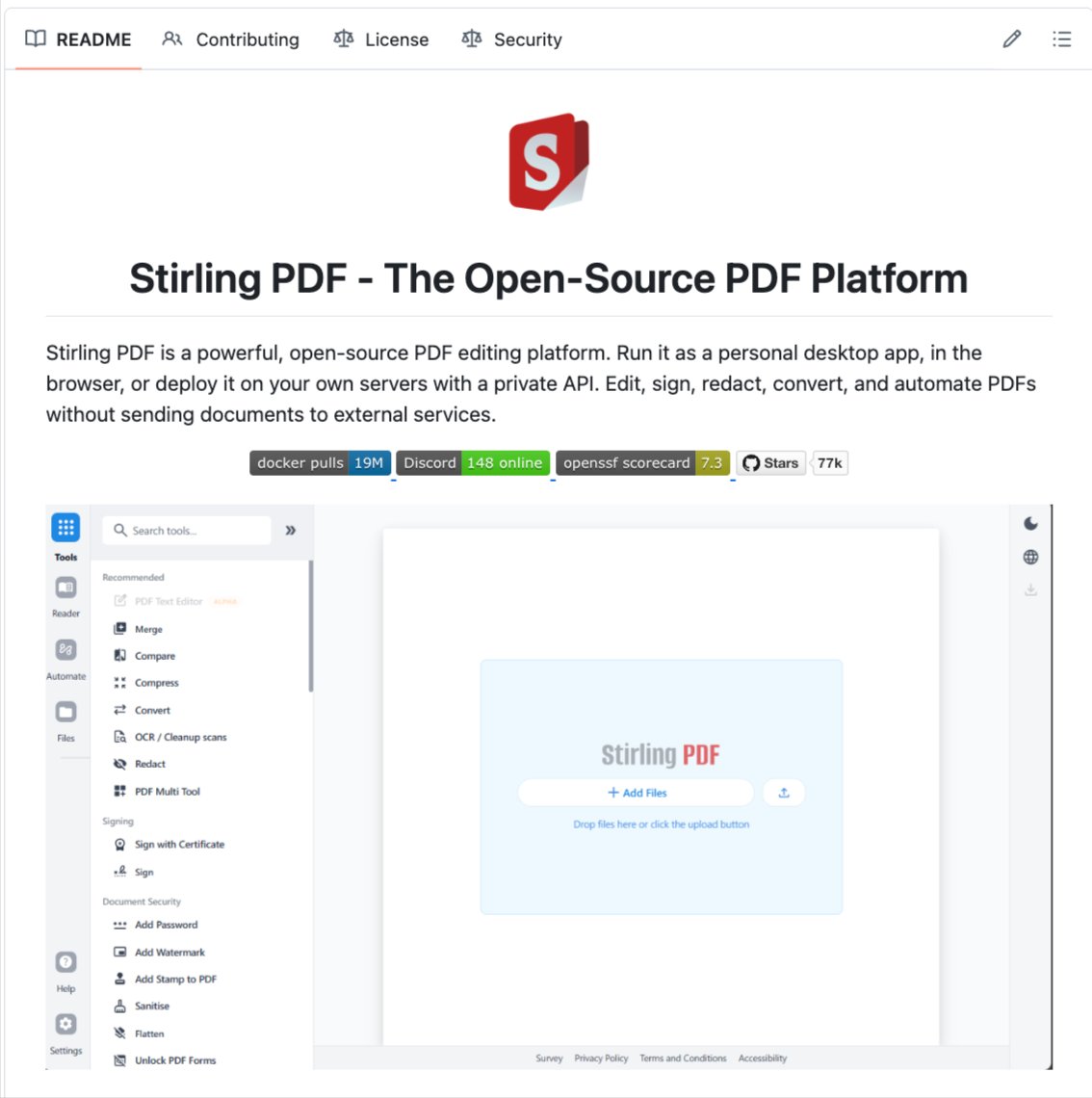
There is a tool that does everything those websites do. On YOUR computer. Your files never leave your machine.
It is called Stirling-PDF. 77,100+ stars on GitHub. 25 million+ downloads. The #1 PDF application on all of GitHub.
Here is what it does:
→ Merge PDFs. Split PDFs. Compress PDFs. Rotate and reorder pages.
→ Convert PDFs to Word, Excel, PowerPoint, and images. And back again.
→ Add passwords. Remove passwords. Flatten forms. Sanitize metadata.
→ Sign PDFs with a drawn signature, typed name, or digital certificate.
→ OCR scanned documents with Tesseract to make them searchable.
→ Add watermarks, page numbers, headers, footers, and stamps.
→ Redact text and images permanently. Crop, deskew, and repair.
→ View and annotate PDFs directly in your browser.
→ No-code automation pipelines to batch-process thousands of files.
→ REST API for every tool. Automate every operation.
→ Desktop app for Windows, Mac, and Linux. No browser needed.
→ One Docker command to self-host everything.
Here's the wildest part:
Adobe Acrobat Pro costs $19.99 per month. That is $239.88 a year.
Acrobat Studio: $24.99 per month. That is $299.88 a year.
Smallpdf Pro: $108 per year.
iLovePDF Premium: $60 per year.
A 10-person team on Adobe pays $2,660 a year to edit documents.
And every single one of those tools processes your files on THEIR servers.
Stirling-PDF processes everything locally. Your files exist on your machine. The server sits on your hardware. The network stays inside your walls.
77,100+ stars. 6,700+ forks. 175 releases. 4,900+ commits. 48% TypeScript and 43% Java.
MIT-licensed core. Self-host it. Fork it. Ship it.
100% Open Source.
(Link in the comments)
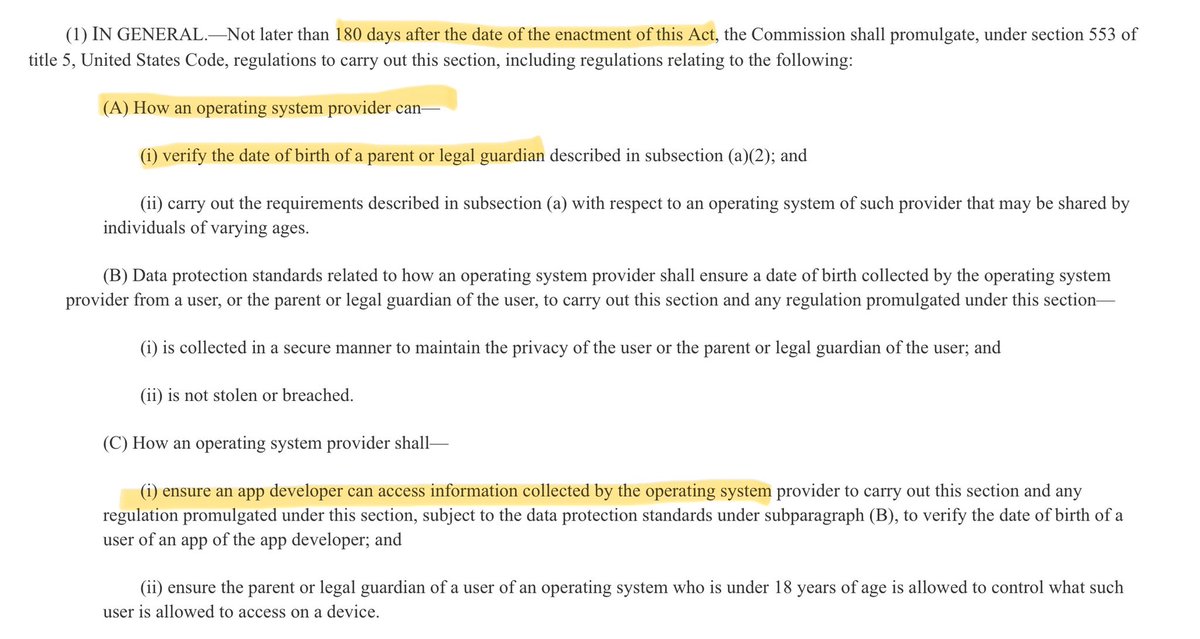
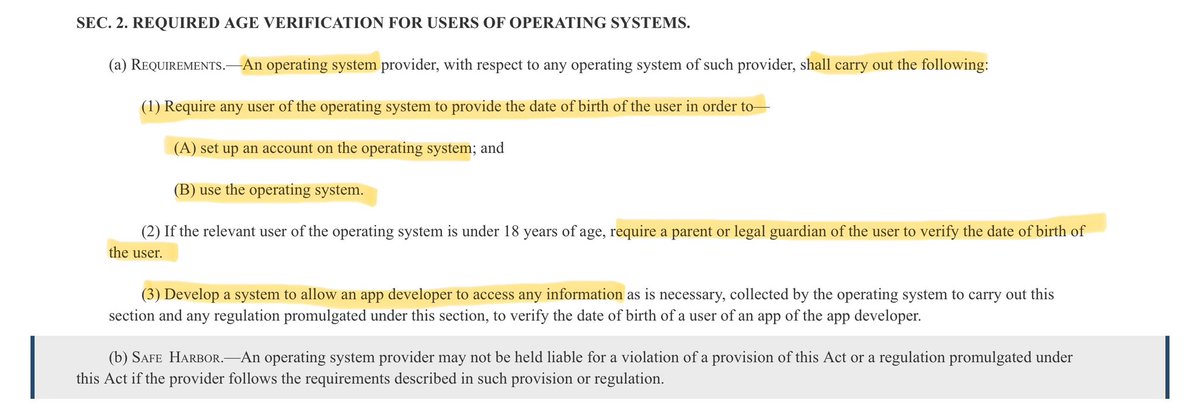
The full text for HR 8250, the proposed Federal law which would require all Operating Systems to implement Age Verification, has just been made publicly available.
It is short, poorly written, clearly not at all thought out, and almost entirely devoid of specifics.
Some key points:
- The bill does not specify how age verification would work at all. It states that the Federal Trade Commission would have 180 days to specify the exact mechanism and requirements for Age Verification within the Operating Systems.
- The Federal Trade Commission would also specify data storage protection requirements as well as requirements for how the Operating System must provide access to collected user data.
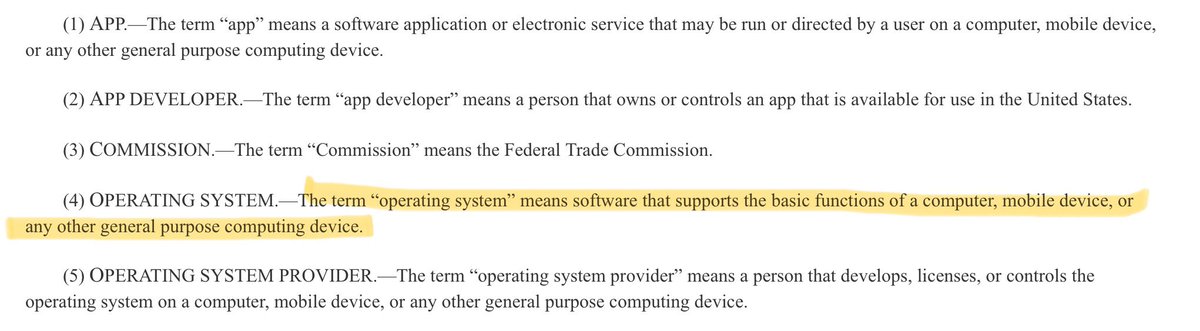
- This bill would apply to ALL Operating Systems. Everything from Windows to Linux to embedded systems. Yes, even to a smart refrigerator. The “Operating System” definition is incredibly broad.
- The law will be considered in effect 1 year from the date it is enacted.
- Violations of the law will be handled under the Federal Trade Commission Act.
- It is given the “Short Title” of “Parents Decide Act”.
https://t.co/u22o583kH2
Allbirds has raised $50mm to pivot its business to AI compute infrastructure
Allbirds now has a long-term vision to become a fully integrated GPU-as-a-Service (GPUaaS) and AI-native cloud solutions provider