A $100m global ecommerce brand rebranded and replatformed. By May, the number of keywords ranking in Google's top 3 had fallen 69% and estimated organic traffic was down 72%.
@audits was brought in to review the migration and help with the brand's longer-term ecommerce SEO strategy.
As part of the investigation, we connected the site to @Saliencecom to see what was happening when Googlebot and other crawlers visited.
A few things stood out:
- Googlebot was fetching robots.txt around 5x more often than on a sister site.
- Googlebot crawl activity had halved in a month, while the sister site was being crawled 6.6x as often.
- 16.6% of requests were being rate limited (429), including roughly 1 in 5 homepage requests from clients identifying as Googlebot.
- Some important pages were returning 404s, while paginated category URLs were switching between 200 and 404 responses.
- AI crawlers making 1.8x more requests than Googlebot.
The logs helped us identify the symptoms, but we needed Google Search Console and live header checks to understand what was causing them.
That uncovered two issues:
- An A/B test was assigning Googlebot to different variants across crawls.
- robots.txt and the sitemap were being served uncached from a legacy backend, which was also setting three session cookies on every request.
The recommendations were fairly straightforward: bypass the A/B test for crawlers and serve robots.txt and the sitemap from the edge cache.
Six weeks after the first fixes in late May, keywords ranking in the top 3 were up 182% on the May low and estimated organic traffic had doubled. The biggest jump came in August, about 11 weeks after the fixes.
Since the May low, according to Ahrefs US data:
- Keywords ranking in Google's top 3 are up 28x.
- Keywords ranking in Google's top 10 are up 52x.
- Estimated organic traffic is up 9x.
Anyone who's worked on recovering a failed migration will know how long it can take Google to catch up, particularly when the problems have been around for months.
For me, the most useful part of combining Salience's server log data with Search Console was having enough evidence to explain what was happening, justify the recommendations and get the client's development resources allocated to fixing them.
That can often be the hardest part.
We've since built checks for all issues discovered into Salience and tested them against the site's logs.
A lot of what we build comes from real SEO projects like this, with the aim of making this level of analysis and monitoring accessible to everyone.
A reminder of just how badly an ecommerce replatforming can go wrong.
In 2021, Adorn Cosmetics was celebrating its move to Adobe Commerce. Five years later, 7NEWS is reporting on the serious fallout the founder says followed.
The founder, Briony Kennedy, has publicly raised concerns about Adobe and the agency involved in recommending and implementing the move. She's now reportedly pursuing legal action over what happened.
I've had a quick look at the current website and spotted some fairly obvious issues from a search / SEO perspective. But without knowing what was scoped, implemented or changed over the years, it would be unfair to comment on who did what or where things went wrong.
It's a reminder of just how much is at stake when replatforming or rebranding a business. Technical SEO, conversion, customer experience and the wider commercial impact all need careful consideration.
I'd argue it's even harder today than it was five years ago. We're no longer just working around Google's crawling and indexing timeframes. We've now got LLMs, AI crawlers and agentic search to accommodate as well.
Every migration carries risks, regardless of the platform. But there are also significant opportunities when it's planned and executed properly.
Replatforming woes don't get much worse than this.
A reported $6m cosmetics business collapses following a failed website migration.
A pretty grim reminder that a website migration isn't just a technical project. The entire business can be on the line.
OpenAI’s new ‘Claim your business’ tool is being positioned as a way for businesses to understand their visibility in ChatGPT.
My suspicion is that this has very little to do with helping webmasters and considerably more to do with building an advertising platform.
That trillion-dollar valuation isn’t going to justify itself.
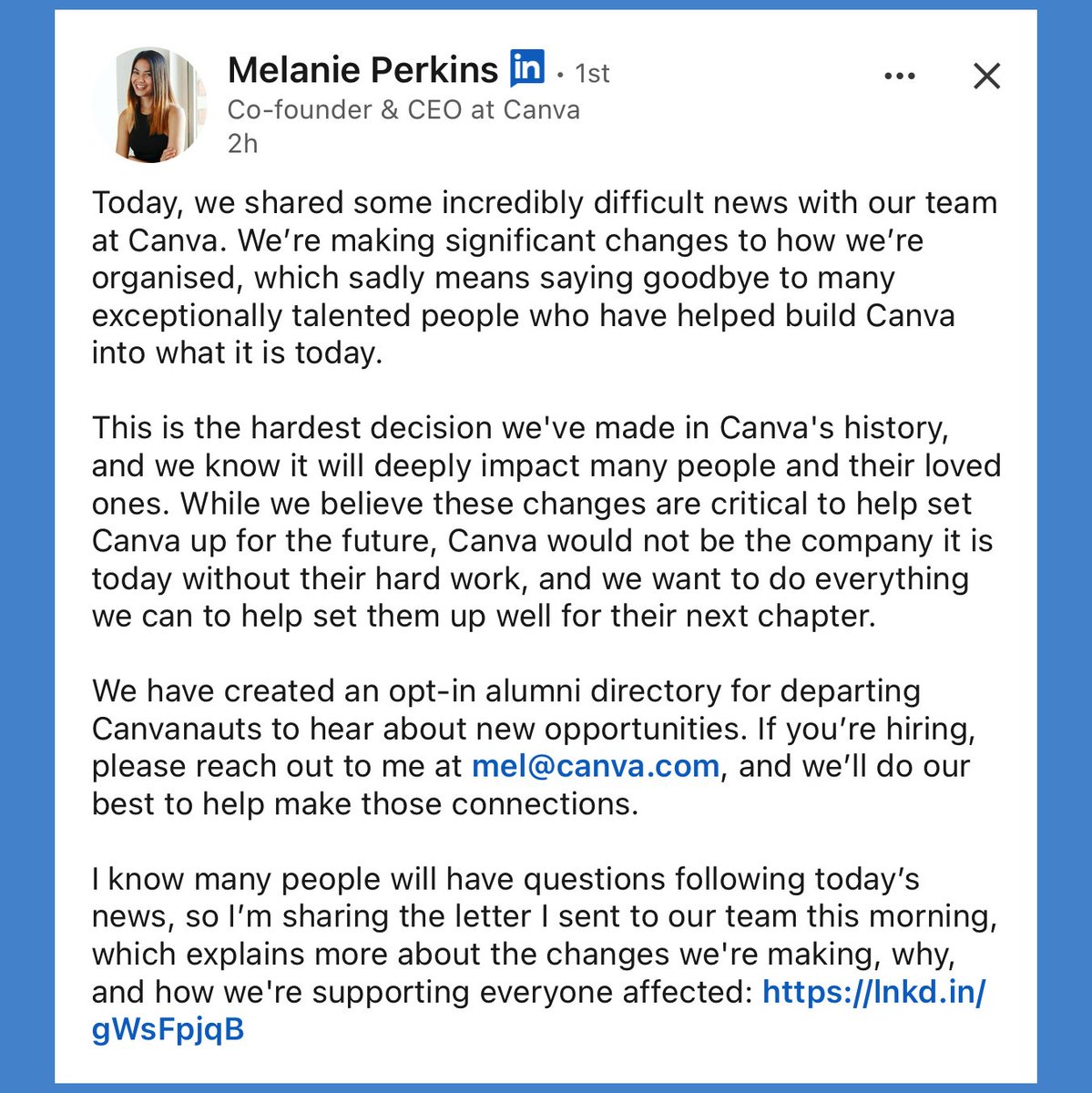
Canva has announced a major restructure affecting 1,271 employees, or 22% of its workforce.
For millions of retailers and ecommerce businesses, Canva is an essential tool for product imagery, social media and advertising.
A major moment for an Australian tech success story.
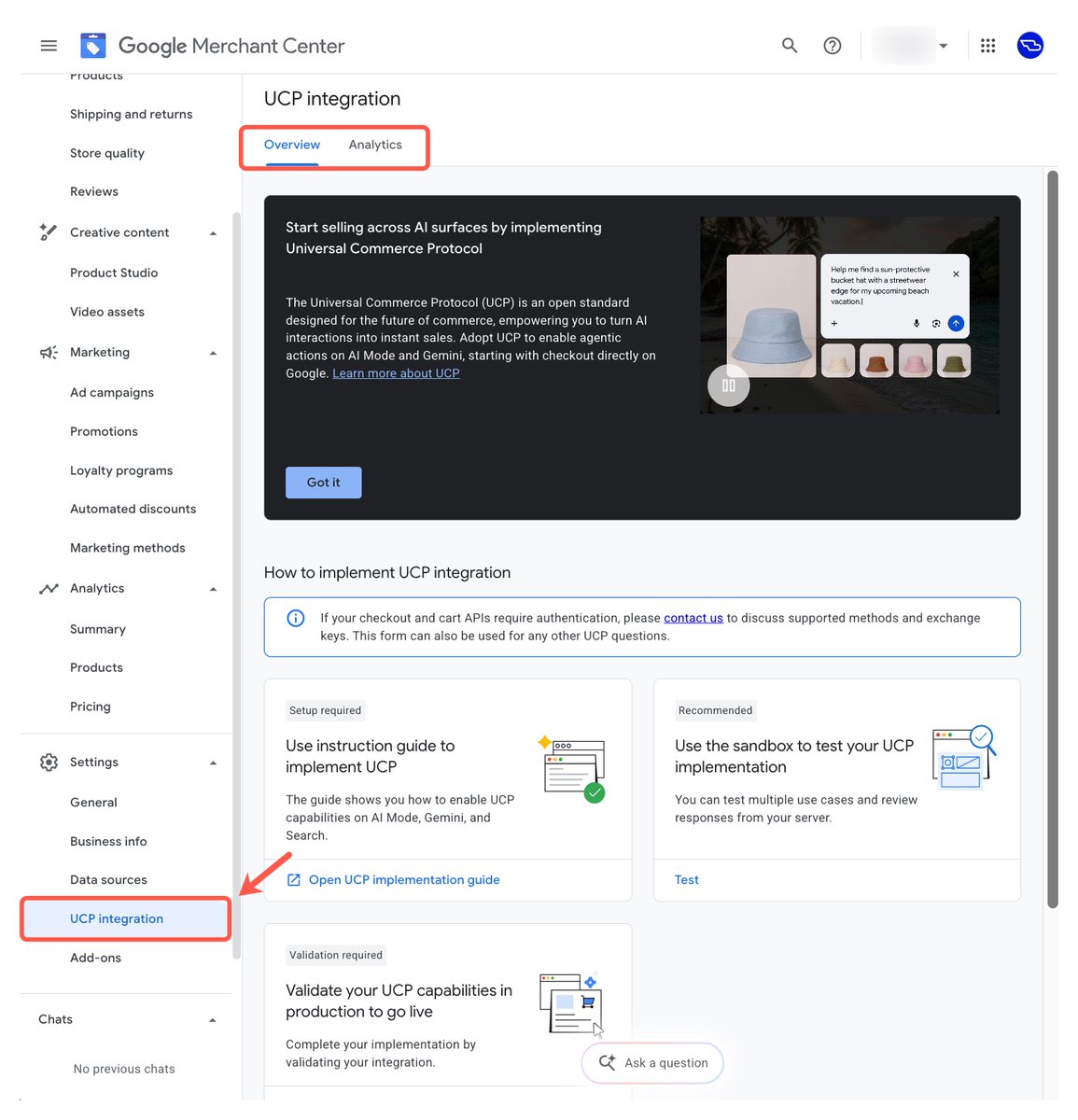
It’s live. The UCP integration hub just appeared in a client’s Merchant Center, and there’s a tab Google left out of the announcement.
Quick context: UCP (Universal Commerce Protocol) is Google’s new open standard for agentic commerce. It lets shoppers check out on free listings directly inside AI Mode and Gemini.
Google’s help doc covers onboarding: implement UCP, test in the sandbox, validate, go live.
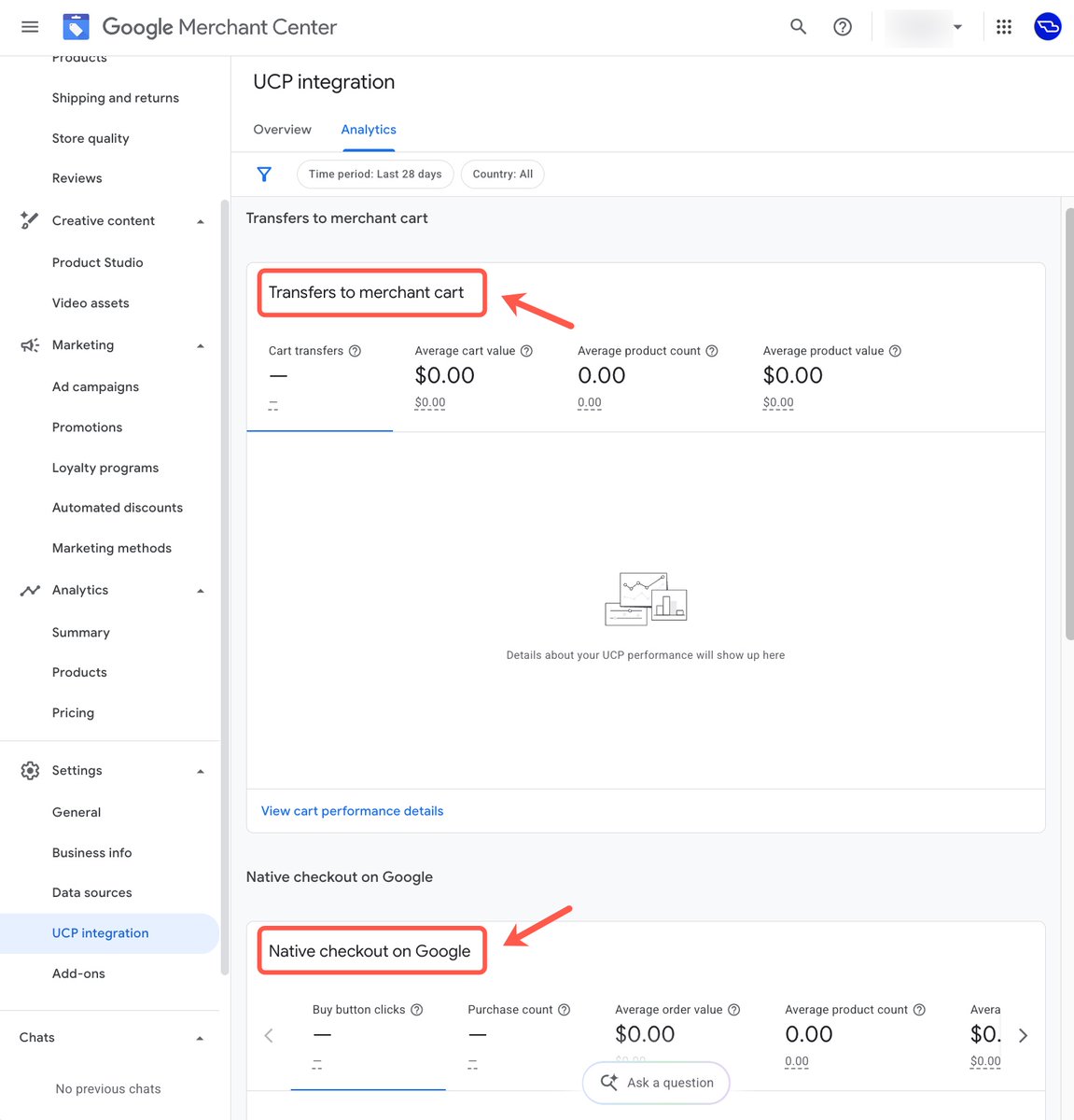
What it doesn’t cover is the Analytics tab that is now showing for a client of mine.
Here’s what it tracks:
🛒 Transfers to merchant cart
The shopper builds a cart on Google, then gets handed off to your site to finish checkout.
→ Cart transfers
→ Average cart value
→ Average product count
→ Average product value
⚡ Native checkout on Google
The purchase is completed entirely on Google. The shopper never visits your site (but is credited to the organic shopping channel).
→ Buy button clicks
→ Purchase count
→ Average order value
→ Average product count
→ Average product value
🔗 Account linking
This tracks shoppers linking their account with your store, so things like loyalty and saved details can carry across into the AI experience.
Why this matters:
For the first time, you can measure agentic commerce as a separate channel. You’ll see how many sales start in AI Mode or Gemini, and whether they finish on Google or on your site.
If AI checkout takes off, “native checkout vs cart transfer” is going to be a big debate. Your share of conversions happening off-site is a metric that I will be curious to track for my clients that have opted in.
Rollout notes:
• Rolling out gradually in the US (it is showing for a US client of mine)
• Australia and Canada are expected next year
• Technical UCP implementation is required before onboarding
Shopify reportedly paid $99 million for https://t.co/63Gq6rZ3Zk, potentially making it the most expensive publicly disclosed all-cash domain sale in history.
Via @GeorgeKirikos
https://t.co/gLXhhff9gM
🚨 Now hiring: Client Success Manager (Remote)
Bask Health is looking for an experienced Client Success Manager to help DTC telehealth brands grow.
You'll work across customer onboarding, ecommerce, AI-powered workflows and account growth.
🔗 https://t.co/T6FpqCZqq1
Agency spotlight: Converted 🇬🇧
A UK-based performance marketing agency helping eCommerce brands attract more customers and convert more visitors.
Specialising in CRO, PPC, SEO, paid social and web design, with a focus on data, and measurable growth. https://t.co/RdpUZRfsX9
ANNOUNCEMENT: We’re hiring a Head of Content!
This person will lead us to success in @ecommcowboy’s efforts across X, LinkedIn, YouTube, and more.
You’ll work closely with me + @colindougherty.
With mentorship to maximize your success — we want an intelligent, hungry person (i.e. dawg) to take this role.
Over the next few years, become the top 0.1% in how to win on social and learn everything we know about DTC along the way.
When you leave, you’ll have world-beating abilities.
Why this role is a dream job:
- Become an expert in internet entrepreneurship and social (spending lots of time w/ me) along the way.
- Work from anywhere; remote is fine.
- Small team, you’ll be exposed to everything.
- Work in LIVE media: every day is gameday.
- Meet the best and brightest in consumer.
- Clear, defined mission.
This is NOT an editor or low-level job. You’re gathering data, defining strategy, and making it happen from conception to publishing.
–
This is the most critical role we’ll hire for this year! Below is a video of why this is the most important post I’ll make all year, and in the comments is a full job description.
–
To apply: DM @chrislukehall and record a 1-minute video introducing yourself. Explain why you’re a good fit.
PS - retweets/replies/bookmarks to this are much appreciated so we get the word out!
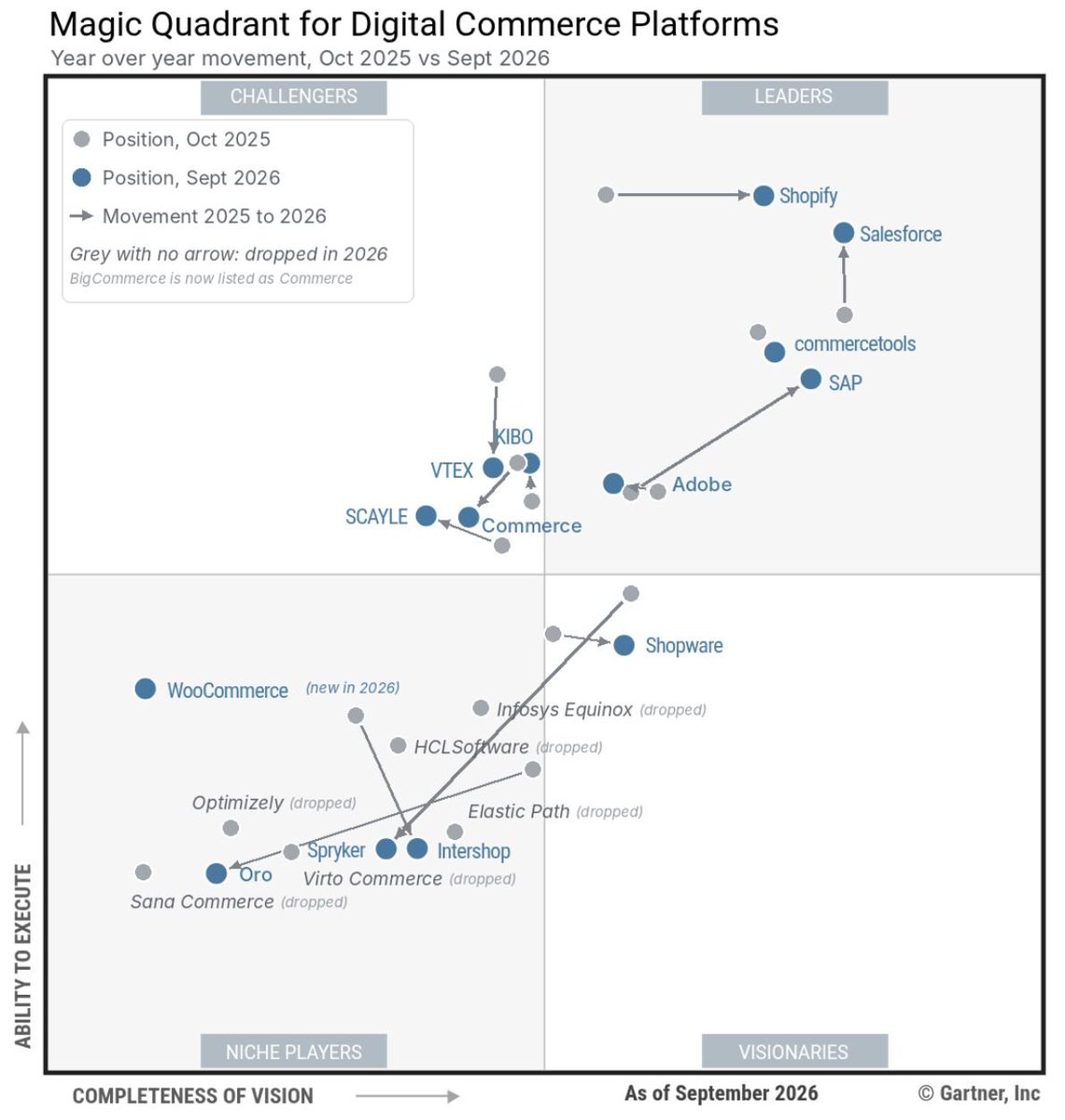
The 2026 Gartner Magic Quadrant for Digital Commerce feels like it's evaluating yesterday's market.
Barely a mention of AI, despite commerce rapidly moving beyond traditional websites.
Shopify, commercetools and Salesforce look well positioned. The rest?
Just launched a free ecommerce RFP generator.
Whether you're replatforming, choosing an ecommerce platform or hiring an agency, it helps you build a structured brief, supplier questions and comparison sheets.
No sign-up required.
https://t.co/ULCTzyhmch
Salience is now live: connect your website for free and start measuring first-party data that most teams never see, let alone act on.
Your server and CDN logs show what is actually reaching your site, what gets requested, how often crawlers return, what your infrastructure serves them and where things go wrong.
Built alongside my co-founders @ndredding and @channel5 , Salience is designed to make that raw log data genuinely useful and actionable in real time.
That includes seeing how search engines and AI crawlers such as ChatGPT and Claude interact with your site: which pages they visit, how frequently they return, what they request and whether they encounter errors.
We originally built it off the back of problems we were solving for clients, particularly around crawling, indexing, and AI visibility across products, collections and editorial content, and large marketplace listing websites while giving teams access to a layer of insight they’d rarely had before.
It’s designed for a broad range of sites, from Shopify and BigCommerce stores through to publishers, marketplaces and larger businesses running custom technology stacks.
It’s also useful beyond #SEO and search, with insights for development, content and security teams, whether you’re in-house, an agency or a consultant.
We’ve already had some great feedback from beta users, so thank you to everyone who has tested it so far.
We’d love more of it: what’s useful, what’s missing and what could be better.
There’s a working demo to explore, or you can connect a production site for free and see what your own data tells you.
Please share it with anyone on your team who might find it useful.
Visit: https://t.co/0YhHLhSzzb for more detail.
New on ecommerceguide: B2BKing by @1B2bking
B2B and wholesale for WooCommerce: group pricing, hidden guest prices, quotes, bulk ordering and invoice payment.
Settings are exposed over MCP, so Claude Code, Codex or Cursor can configure the store.
https://t.co/BFBp7pTsP3
🫡