@jacobsoboroff@AliVelshi Will miss Velshi on the weekends very much, but if someone was going to take over his slot, I’m very glad it’s you. Do him proud. And tell local stories!! Bring who you are to the national news. It’s so very needed.
You think using AI makes you smarter.
UCL and MIT just proved it makes you more biased.
Not slightly. Not in edge cases. Measurably, consistently, across every domain they tested — perception, emotion, social judgment, professional decisions. 1,401 participants. Multiple experiments. Published in Nature Human Behaviour.
The finding is called a human-AI feedback loop. And once you understand how it works, you cannot unsee it.
Here is the mechanism.
AI learns from human-generated data. Human data contains biases — subtle ones, baked into how we label images, write descriptions, and make decisions. The AI absorbs those biases during training. Then it amplifies them, because amplifying the pattern improves its prediction accuracy.
Now you interact with that AI. You see its output. You trust it — more than you would trust another human, because AI feels objective, authoritative, less noisy. So you adjust your own judgment toward what the AI showed you.
Then your biased judgment becomes training data for the next version.
Repeat.
The researchers called it a snowball effect. Small errors in the original dataset become amplified by the AI, which then increases the bias of the person using it, which feeds back into the next model. Round after round. Each iteration more distorted than the last.
Here is one experiment that makes this concrete.
They showed participants an AI image generator — Stable Diffusion — and asked it to create images of financial managers. It generated images of white men 85% of the time, dramatically out of proportion with reality.
After viewing those AI-generated images, participants became significantly more likely to associate the role of financial manager with white men.
The AI showed them a biased picture of the world. They internalized it. Their judgment shifted.
And they had no idea it was happening.
The researchers measured whether participants were aware of the AI's influence on their decisions. They were not. The bias transfer was largely invisible to the people experiencing it. Which means the most dangerous part of this mechanism is not that it happens.
It is that it happens silently.
Here is the detail that makes this even more alarming.
When participants were falsely told they were interacting with a human — while actually interacting with AI — the bias amplification was smaller. People were less susceptible to the AI's influence when they thought it was a person.
They trusted the AI more because it was an AI.
The thing they believed was objective and neutral was the very thing rewiring their judgment without their knowledge.
The researchers made one thing clear: this is not inevitable. Interacting with accurate, unbiased AI can actually improve human judgment over time. The feedback loop runs in both directions. If the AI is right, you get better. If the AI is wrong, you get worse.
Which means the entire trajectory of human judgment — collectively, across society — now depends on whether the AI companies building these systems take bias seriously.
And right now, most of them are racing for capability.
Not accuracy.
Source: Glickman & Sharot · UCL & MIT · Nature Human Behaviour 2025 · https://t.co/lcwCT2BWSn
@FurkanGozukara I don't know how true that is or not, but don't sully yourself and your credibility by calling her a "top journalist." Influential podcaster is accurate, even though she's a crank, but she's no journalist.
I started a conversation yesterday with my community on Substack about acts of humanity that had a profound effect on members’ own lives.
The replies… the stories people shared… they are so worth reading if you have a few minutes.
So many profoundly touching stories of human goodness.
1/2
Acknowledgements: Baba Onochie Chukwura
“If you have, I have” were the five words he spoke to me one week after the Eaton Fire devastated Rhythms of the Village in Altadena. Words I’ll never forget. Was incredible to see Professor Chukwura again and give him a copy of FIRESTORM.
One of the most successful deceptions of our time was getting many Americans to fear diversity more than racism, equality more than misogyny, democracy more than fascism, immigrants more than authoritarians, the poor more than corrupt billionaires, and empathy more than cruelty.
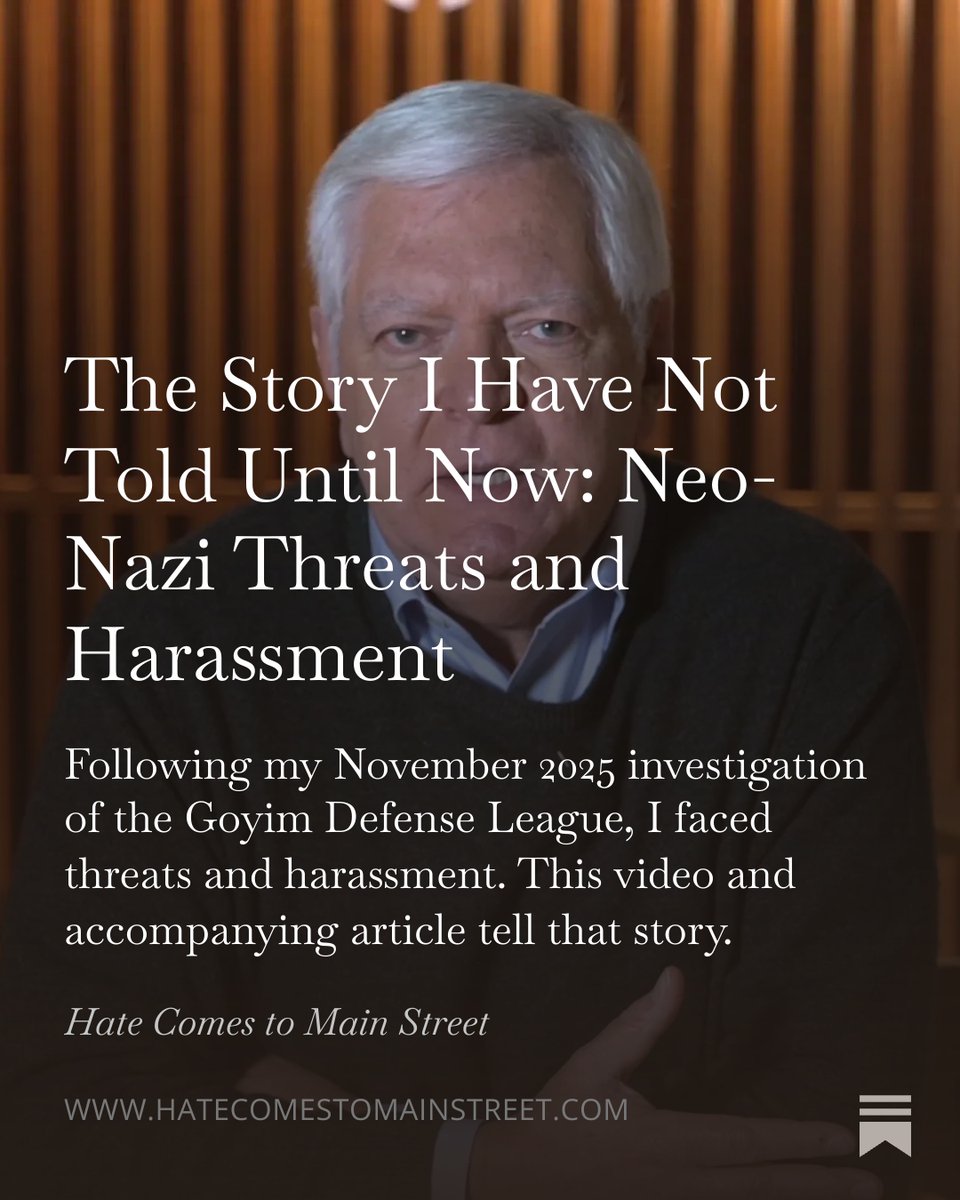
A very personal story that I have kept to myself for four months posts tomorrow morning to https://t.co/LaglgWGXZD. Subscribe now to get immediately notified.
I lived and traveled in Iran for months. In Tehran I lived with the family of a retired bank worker who saw me looking for housing. I roomed with his son for months, ate all my meals with them, and they never accepted any money. Once I was sick and throwing up and they all came into the bathroom and the dad stroked my head while I barfed and told me “Aybi nadare” (no shame, it’s ok). I traveled around most of the country by plane, train, bus, shared taxi, etc. Eventually I stopped booking hotels because I’d always meet people on the train, bus etc who’d insist I stay with them. The family of Iran/Iraq war vets from Yazd who took me to Taft for bbq in the mountains. The taxi driver from Rasht who made a bed for me on the floor of his tiny apartment because all the hotels were full. The only time a police officer talked to me was once to make sure I was ok. I never felt in any danger day or night. The land of Iran is as incredibly diverse as its people. There are mountainous rain forests and desert salt flats. I met among the most liberal and most conservative people there, and everything in between. Everyone was so kind it makes me cry with shame.
Playing the role of @mckaycoppins apologist. The main criticisms seem to be:
1) Nitpicky technicalities like "no, books don't balance their action". True, and maybe could have been a bit better researched, but doesn't change the point of any of it.
2) "He bet like an idiot". He played props and SGPs. He wildly fluctuated his bet sizes for no apparent reason. He bet with his fandom. He tailed Sean fucking Perry. But that's the whole point! He experienced betting from the perspective of a newbie. Newbies do stupid things. Newbies overestimate their abilities. Newbies get lured by flashy ads and scamming touts. Newbies don't know any better. Anyone who thinks the average American's betting journey is more like ours than like McKay's is crazy.
3) "He was betting someone else's money". Yeah, he was. And in fairness it is reasonable to question how much of his decision making was influenced by that. I'd like to know what he would have done next if his Patriots bet had won. Hopefully he'll tell us. It would have been great to give this assignment to a journalist who was willing to put up his own money (and without any religious objections). I have no idea if the Atlantic had access to such a person.
4) "His plan all along was to go broke because it would make a better article as a cautionary tale". Maybe...but nothing in the article read as anything but genuine to me. Combined with everything I know about devout Mormons (admittedly not all that much), my prior is pretty low on his approach to this being so cynical and disingenous. I could be wrong.
5) "It's a hit piece on the industry". Yeah, it kind of is. So is @dannyfunt 's book (which I also thought was good). So are the other articles that have been written recently about betting. But you know what? I don't find any of it unfair. The marketing of recreational books is pure psychological warfare in a way that sets it apart from booze, cigarettes, etc. It takes advantage of evolutionary weaknesses in the way the human brain reasons, to make people think it's easier to win than it actually is. My own father, who is very much NOT a stupid person, had me put a bet down for him on Indiana -8 in the CFP championship because "they're a much better team and they'll kill Miami". If you're following me and reading this, there's a good chance that you either were born with or acquired the ability to think probabilistically. You are in the minority. For the rest of the population, it's like handing an AK-47 to a chimpanzee and asking him to use it responsibly. I'm not saying we should abolish sports betting or gambling in general. I am saying the way it's currently being done has some bad societal consequences that are being ignored in the pursuit of profit, including regulatory capture by lobbyists which IMO is one of the most evil aspects of the current lawmaking environment.
Today we are launching https://t.co/hGaJPuT3Vz.
A real-time tracker of AI-driven layoffs across the U.S. These jobs are disappearing. The numbers are growing. And we're counting every single one.
Lately, there has been an uptick in fabricated quotes and AI-generated images of me on social media. Even seemingly innocuous quotes can be spread to stoke division and misrepresent perspectives. AI slop on social media is becoming a dangerous vehicle for misinformation.
If you see a post from a page you don’t recognize, take a moment to verify it before sharing it. And I'll continue to push for common-sense guard rails and digital citizenship tools to protect all of us from fake or violent content.
One of the costs of this unnecessary war on Iran is that it sucks up all the attention so that few pay attention to the ongoing abuses in Sudan, Gaza and the West Bank, Ukraine, Congo and elsewhere. The horrors of Sudan are documented here.
I am excited to share a new project from my organization, Democracy Rising Collaborative. We have launched a toolkit to empower lawyers and other civic leaders across the country to stand up for the Rule of Law.
1/THREAD