On April 1, 1999, Mark Cuban sold a streaming company called Broadcast .com to Yahoo for $5.7 billion. He became a paper billionaire overnight.
Yahoo had paid him in stock, not cash.
He spent the next 6 months trying to figure out how to keep it.
Cuban owned about a third of Broadcast .com going in, which left him holding 14.6 million Yahoo shares worth roughly $1.4 billion at the time. By law, he couldn't touch any of it. The deal came with a standard 6-month lockup that prohibited him from selling or hedging a single share. He had to sit and watch.
What he watched was a tech market getting more disconnected from reality by the week. Companies like Pets .com and Webvan were burning through investor money with no path to profit and trading at valuations that didn't make sense to anyone who looked twice. Cuban looked twice. He decided the crash, when it came, was going to take everything down with it. Including Yahoo. Including him.
So he started planning.
The moment his 6-month lockup ended, Cuban put on a financial structure that's now famous in trading circles. A zero-cost collar.
A collar works like this. You sell call options on your stock, which gives someone else the right to buy your shares from you at a fixed higher price. That caps your upside. You use the cash from selling those calls to buy put options, which give you the right to sell your shares at a fixed lower price. That gives you a hard floor under the downside. The two trades balance each other out so the whole package costs almost nothing to put on, hence the name.
Effectively, Cuban locked in something close to his $1.4 billion. If Yahoo's stock went down, his puts paid out. If it went up, he'd hit the cap and be cashed out at the higher price.
Yahoo's stock kept rising at first. It hit his cap. He got cashed out, in cash, at the high level he'd set. Real dollars, not paper.
A few months later, in March 2000, the dot-com bubble burst.
Yahoo's stock fell from a peak of roughly $237 a share to about $13 over the next 2 years. Almost every other dot-com paper billionaire watched their fortune disintegrate. Many of them had not hedged because they didn't think the prices would fall, or because they thought hedging was a sign of weakness, or because they were emotionally attached to the company they'd just sold.
Cuban kept his $1.4 billion. He once called the trade "one of the top 10 trades of all time on Wall Street."
People remember the sale. They don't remember the collar.
The headline was the $5.7 billion sale to Yahoo. The thing that actually mattered, the move that decided whether Cuban kept his fortune or watched it disintegrate like everyone else's, was a piece of derivative paperwork most people couldn't even read.
Plenty of founders sell at the top. What separated Cuban is that he understood selling was only half the trade. What you do with the money in the moments right after the windfall matters more than the windfall itself.
Cuban put it more simply.
"The whole market cratered and I was protected."
Her creativity is truly unmatched
The way she turned a simple idea into something so beautiful and inspiring is honestly amazing 😍👏
Talent like this deserves all the love and appreciation ❤️
Photographer Phil Thurston shot a wave.
Slowed it down until those few seconds became 40.
Turns out the ocean is doing something extraordinary every single moment.
We're just moving too fast to notice.
Patrick Winston taught engineering at MIT for 50 years.
This is his last lecture.
He died 5 months after recording it.
It was his final gift to the world.
1000s of the greatest minds passed through his classroom and went on to engineer the world.
He has some wisdom…
KRA's new tax invoice system exposes compliance hidden costs undefined/news/2022-07-24-kras-new-tax-invoice-system-exposes-compliance-hidden-costs via @thestarkenya
Not sure what you mean by the article is 'written by The Star'. I'm the one who wrote that article. Amend.
🚨In 1990s, Stanford researcher Dr. Robert Sapolsky discovered something that should have broken the internet by now.
He was studying dopamine pathways in primates and found that the brain doesn't just adapt to repeated stimulation. It actively fights back.
When you flood dopamine receptors consistently, the brain deploys what neuroscientists call "opponent processes." For every artificial high you create, your nervous system generates an equal and opposite neurochemical low. Not eventually. Immediately. The system is designed to maintain balance, so it starts producing compounds that directly counteract dopamine while you're still experiencing the dopamine hit.
This means every notification, every scroll, every digital reward doesn't just give you a high followed by a return to baseline. It gives you a high followed by a crash below baseline. You end up in neurochemical debt.
Tech companies never publicized this research. They probably never read it. They were too busy discovering that variable ratio reinforcement schedules could keep users engaged for hours. They built addictive systems by accident, then refined them into addiction machines once they realized what they'd stumbled onto.
Your phone delivers an average of 80 dopamine hits per day. Your ancestors got maybe 5. Each hit triggers opponent processes that create a corresponding low. By the end of a typical day of normal phone usage, your baseline dopamine is running in negative territory. You feel flat, restless, vaguely unsatisfied, and hungry for stimulation because your brain chemistry is literally below zero.
You think you're bored. You're chemically depressed by artificial highs.
The opponent process theory explains why nothing feels interesting anymore. Your brain isn't broken. It's precisely calibrated to maintain neurochemical balance, and you keep throwing that balance off with artificial intensity. Every Instagram hit requires an equal Instagram crash. Every TikTok high gets paid for with a TikTok low. Every notification rush gets balanced with notification emptiness.
Your reward system is running a neurochemical deficit that grows larger every day.
Sapolsky's research revealed something even more disturbing: opponent processes don't just create temporary lows. They become permanent changes to your baseline dopamine production. Chronic overstimulation doesn't just make you tolerant to digital rewards. It makes you insensitive to natural rewards.
The sunset that would have captivated your great-grandfather becomes invisible to you not because sunsets got worse, but because your dopamine system needs intensity levels that sunsets can't provide. A good conversation becomes boring not because conversations got less interesting, but because your brain requires the rapid-fire stimulation of social media to register engagement.
You've accidentally trained your reward system to ignore everything that isn't artificially amplified.
This connects to research from Dr. Anna Lembke at Stanford, who found that people who undergo complete digital fasting for just 30 days show measurable increases in dopamine receptor density. Their brains literally regrow sensitivity to natural rewards. Food tastes better. Music sounds more complex. Social interactions become genuinely engaging again.
But there's a catch that nobody talks about: the first two weeks of dopamine detox feel like clinical depression. Your brain has been chemically dependent on artificial stimulation for years. Removing that stimulation creates actual withdrawal symptoms. Restlessness, anxiety, inability to focus, emotional flatness, and desperate cravings for digital input.
Most people interpret these symptoms as evidence that they need their phones. Actually, they're evidence that they've been neurochemically dependent on their phones without realizing it.
The withdrawal period isn't a bug. It's proof the reset is working.
What happens after week three is remarkable. Colors become more vivid. Conversations become genuinely absorbing. Simple pleasures like hot coffee or cool air become satisfying in ways you forgot were possible. Your brain rediscovers that reality contains enough complexity and beauty to hold your attention without artificial amplification.
You don't need more interesting content. You need more sensitive reward systems.
The solution isn't better apps or more engaging entertainment. The solution is restoring your brain's factory settings for what constitutes a worthwhile experience.
Sapolsky's opponent process research suggests this can happen faster than anyone expected. Every day you don't artificially spike your dopamine, your baseline moves a little higher. Every natural reward you pay attention to rebuilds receptor density. Every moment of boredom you endure without reaching for stimulation strengthens your capacity for sustained focus.
Ancient humans lived in a world that provided exactly the right amount of stimulation to keep their reward systems healthy. Enough challenge to stay engaged, enough calm to stay balanced, enough novelty to stay curious, enough routine to stay stable.
We built a world that provides 10 times too much stimulation and wonder why nothing feels rewarding anymore.
Your brain is not the problem. Your environment is the problem.
Change the environment, and the brain heals itself automatically.
In 2014, Travis Greene wrote Made a Way not from victory, but from fear, uncertainty, and silence.
His wife was 21 weeks pregnant when her water broke. Doctors gave their unborn son, David, almost no chance to survive. For two months, it was bed rest, tension, and waiting… caught between hope and heartbreak.
But Travis didn’t wait for the miracle to worship.
He wrote in past tense: “You made a way.”
Not “You will”… but “You made.”
That is faith speaking ahead of manifestation.
“Standing here, not knowing how we’ll get through this test…” — that was real. No answers. No visible way.
“But holding onto faith, You know best…” — that was trust. What shocks man never shocks God.
“And when it looks as if we can’t win… You step in.” — that was surrender. Where human strength ends, God begins.
“When our backs were against the wall and it looked as if it was over… You made a way.”
That is the language of the impossible.
And then the testimony: “My son is breathing. My son is living.”
When doctors said NO, God said YES.
When it looked finished, Heaven whispered: “Not yet.”
“Not yet” means God is not done. “Not yet” means the story is still unfolding.
Their son was born at 28 weeks… alive.
That is why this song carries weight. It is not theory, it is tested faith.
Maybe you are in your own “21 weeks” moment — fragile, uncertain, afraid.
Hear this: You may not see the way, but that does not mean there isn’t one.
2 Kings 3:17 — “You shall not see wind, neither shall you see rain; yet the valley shall be filled with water.”
Don’t know how… but God will do it.
#Faith #MadeAWay #TravisGreene #TrustGod #Worship
At 40, Franz Kafka (1883-1924), who never married and had no children, walked through the park in Berlin when he met a girl who was crying because she had lost her favourite doll. She and Kafka searched for the doll unsuccessfully. Kafka told her to meet him there the next day and they would come back to look for her.
The next day, when they had not yet found the doll, Kafka gave the girl a letter “written” by the doll saying “please don’t cry. I took a trip to see the world. I will write to you about my adventures.”
Thus began a story which continued until the end of Kafka’s life.
During their meetings, Kafka read the letters of the doll carefully written with adventures and conversations that the girl found adorable.
Finally, Kafka brought back the doll (he bought one) that had returned. “It doesn’t look like my doll at all,“ said the girl.
Kafka handed her another letter in which the doll wrote: "my travels have changed me.” the little girl hugged the new doll and brought her happy home.
A year later Kafka died. Many years later, the now-adult girl found a letter inside the doll. In the tiny letter signed by Kafka it was written:
“Everything you love will probably be lost, but in the end, love will return in another way.”
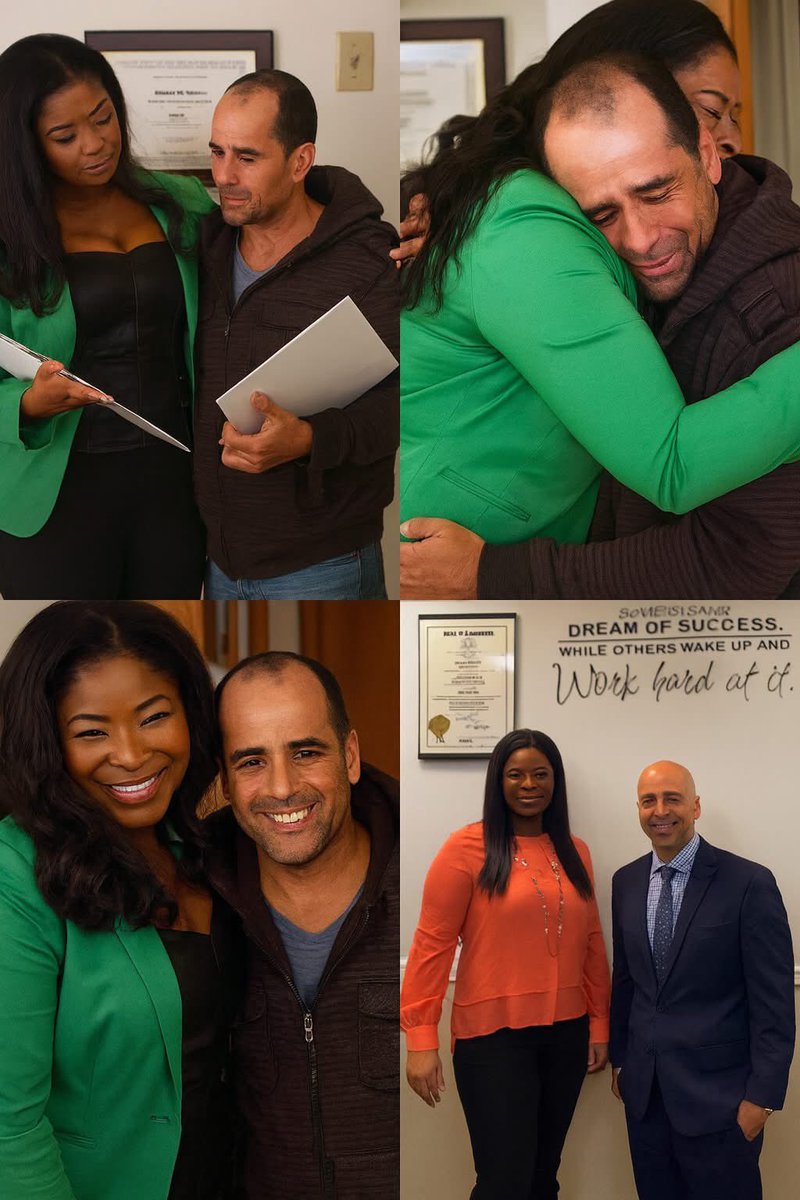
In 2017, a homeless man wandering the streets of the United States stumbled upon a $10,000 check. Instead of keeping it, he decided to return it to its rightful owner. The check had a phone number written on it, so he used a phone booth to call. To his surprise, the check belonged to a prominent businesswoman. He informed her about the check and arranged for her to retrieve it. When they met, she was deeply moved by his honesty upon learning he was homeless. To show her gratitude, she bought him an apartment and enrolled him in a real estate school. After he graduated, she offered him a position as the administrator of one of her foundations.
Miringa, a Kenyan boy creating a ‘People’s IEBC’ to prevent any form of rigging, has come up with a way for Kenyans to beat the government at its own game if it tries to switch off the internet!
This woman just beat cancer.
Her car reads: “Last chemo. I’ve beaten cancer. Honk.”
As people pass by, they cheer, honk, and celebrate with her…this made me 🥹🥹🥹
This is humanity at its best.