Most domestic recycling efforts are empirically retarded, counterproductive, and require you don't value your time. Their real function is to fill the God-shaped hole, sized for penance, prayer, and sacrifice, in people's souls. https://t.co/T77DAx1eve
Czesław Miłosz – How Brilliant People Surrender to a Lie.
The most precise book ever written about how intelligent people surrender to a lie was written by a man who had served one himself – and then stopped.
Czesław Miłosz. Poet. Nobel Prize, 1980. After the war he served communist Poland as a diplomat in Washington and Paris. In 1951 he defected. Two years later he published The Captive Mind.
1. His question was not why ordinary people submitted. Fear explains that. His question was why the brilliant ones did – the writers, the professors, the poets. Often before anyone forced them. Often with enthusiasm.
2. The first answer was a pill. Miłosz took the image from a Polish novel written before the war. An army from the East is about to conquer Europe, and people start taking a little pill. It makes them stop resisting. The fear goes away because the judgment goes away: they no longer see the conquerors as conquerors, and when the army arrives, they welcome it. Miłosz watched his friends take the same pill – the communist doctrine. It explained everything, so they no longer had to look. It promised that history was on its side, so surrender felt like wisdom. It filled the emptiness modern man felt when the old faith died – with a lie. That is what the pill does: it lets you live inside the lie without feeling it.
3. The second answer was the double life. Miłosz called it Ketman, after an old Persian practice: keep your true beliefs hidden, show only obedience. Outside, you say what is required. Inside, you think what you like. Done long enough, it stops feeling like lying. It becomes a way of life – even a private pride: I play their game, but I know better. The professional who serves the regime so he can keep working. The patriot who collaborates "to save what can be saved." The skeptic who believes nothing and recites everything. Everybody knew. Everybody performed. That is how a lie survives with almost no believers.
4. He drew four portraits of writer friends – the moralist, the disappointed lover, the slave of history, the troubadour – and showed each of them surrendering for a different reason. The lesson is uncomfortable: there is no single type of collaborator. The system has a door for every temperament.
5. The West didn’t want to hear it. Miłosz saw that people who had never lived through war, occupation and terror could not imagine how quickly their own convictions might collapse. In Paris, the intellectuals treated him as the problem, not the regime. Pablo Neruda attacked him as a deserter.
6. Then came 1980. The Nobel Prize. And the same year, in Gdańsk, the workers of Solidarity carved his verses into the monument to their fallen comrades. The nation he had left put his words in stone.
7. The pill is still on sale. Only now it is swallowed for status rather than out of fear – and nobody needs a secret police, at least officially. Ketman is everywhere: the employee nodding through the diversity training, the academic signing the letter he doesn’t believe, the journalist who knows and doesn’t write. Read Miłosz today and you will recognize your office.
He showed that a mind is not captured by force. It is captured by fear, ambition and the hunger to belong. And it is freed the same way it was captured: one person at a time – the moment he stops pretending.
Friends, many attempts have been made to ground our equality and rights in something other than God. But not only do such attempts leave us unable to speak coherently about equality and rights; they also undermine and threaten them.
If you doubt me, look at what happened with the atheistic totalitarian regimes of the last century.
The only way we can truly speak of equality and rights is by appealing, as Jefferson did, to the creator. As Blessed Fulton Sheen put it memorably: The Declaration of Independence is “also a Declaration of Dependence” upon God.
Palmer Luckey reveals the startup he'd build today: oxytocin doping to end divorce
"I would try to end the tragedy of divorce with oxytocin doping for marriage counseling."
"We understand mammal pair bonding pretty well. There's a lot of people who want to stay together. Most of the people who don't want to stay together should stay together, especially for their kids."
"And we can, if people think SSRIs are fine, which they're not, but if they were, then oxytocin doping to stay together is definitely fine."
"It's the mammal pair bonding chemical. There's things you can do to increase the uptake, and it's very well understood. Also, totally unregulated, which is great. Unregulated spaces are a lot easier to do. You can go buy a kilogram of oxytocin on Sigma Aldrich Chemical Supply right now, and if you do that, maybe you won't die alone."
"It's pure biology. It's used for women who don't bond with their kids, and now for women who don't bond with their husbands. It's also used for kids with various neurological issues, some kids with autism who struggle with pair bonding."
"The cool thing is it's a self-reinforcing loop. We understand that very well. Unlike most drugs, it doesn't form a chemical dependency. It actually unburdens you from a chemical dependency."
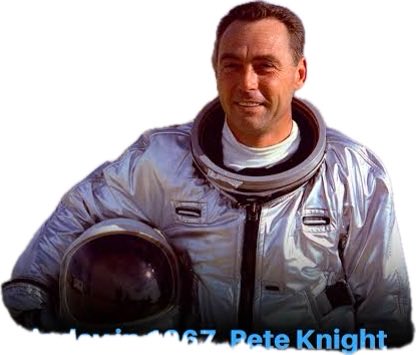
On 3 October 1967, a B-52 bomber took off over the Mojave Desert carrying a small black rocket plane under its wing. Inside it sat Air Force Major Pete Knight.
The plane was the X-15, built to fly faster than any aircraft before it. At those speeds the air itself becomes hot enough to destroy a plane, so engineers had covered this one in a special coating designed to burn away in flight instead of the metal. It would not be enough.
Near Mud Lake, Nevada, the B-52 released him. Knight fired the rocket engine.
The X-15 accelerated through Mach 1, 2, 3, 4, 5, 6. At engine burnout, Knight was flying 4,520 mph, Mach 6.7, at 102,100 feet. A mile and a quarter every second. No pilot had ever flown an airplane that fast. No pilot has since.
The speed came at a price. Under the belly, the superheated air passed 2,800 degrees Fahrenheit, far more than the coating could take. The heat burned past it, into the plane itself. It melted a test engine clean off the aircraft. It burned holes in the tail fin. It damaged wiring and pressure lines. Passing Mach 5.5, a high-temperature warning lit up in the cockpit, and Knight brought the damaged plane home to Edwards Air Force Base.
Still in his pressure suit, he walked around the X-15 and saw what the flight had done. The damage stunned NASA's engineers. The plane was repaired, but it never flew again.
12 men flew the X-15. 1 of them was Neil Armstrong. None of them, and nobody since in any airplane, flew faster than Pete Knight did 59 years ago today. President Johnson handed him the Harmon Trophy. The program just called him Speedy Pete.
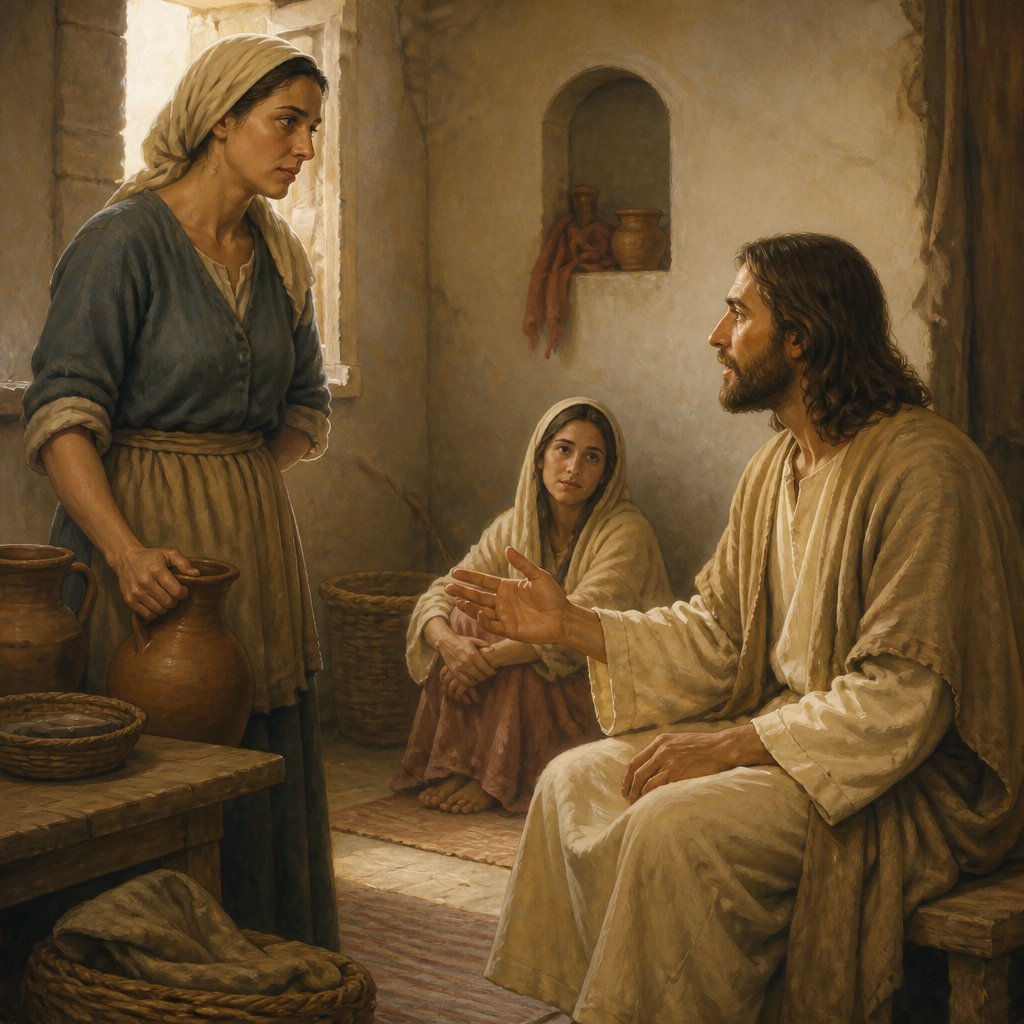
“Martha, Martha, you are anxious and worried about many things.
There is need of only one thing.
Mary has chosen the better part
and it will not be taken from her."
Luke 10, 41-42
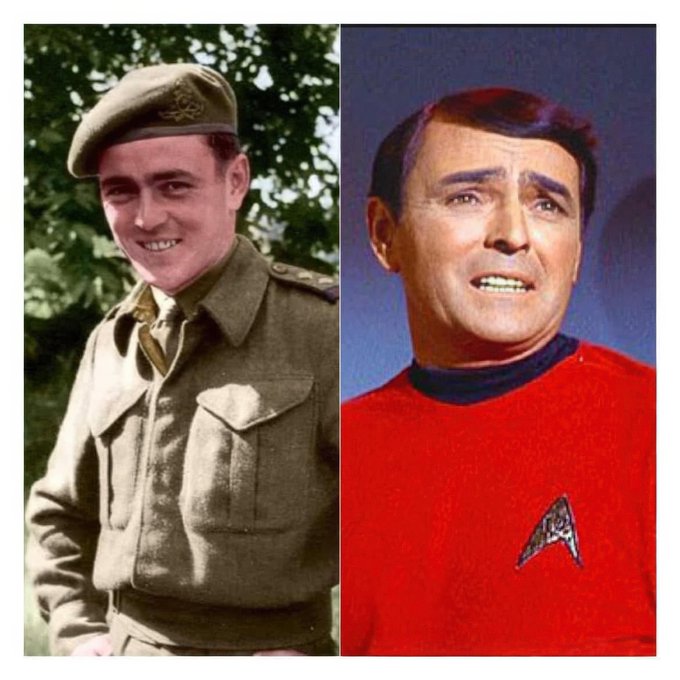
🇨🇦 Before he became the man who could save the USS Enterprise, James Doohan survived Juno Beach—and six bullets.
The last one should have killed him.
On June 6, 1944, 24-year-old Lieutenant Doohan landed in Normandy with the 13th Field Regiment, Royal Canadian Artillery. Under fire, he advanced inland in support of the Royal Winnipeg Rifles, crossed mined ground, and killed two German snipers.
He survived the Germans.
Then, late that night, a nervous Canadian sentry mistook him for the enemy and opened fire with a Bren gun.
Four bullets struck Doohan’s leg. A fifth tore through his right middle finger. The sixth hit him in the chest—directly over his heart.
A silver cigarette case given to him by his brother stopped it!
Doohan lost the finger but survived. After recovering, he remained in uniform and trained as an artillery observation pilot.
Twenty-two years later, he became Montgomery “Scotty” Scott, chief engineer of the USS Enterprise. On screen, he carefully concealed his missing finger—and millions of viewers never knew that the man keeping the starship alive had nearly died on D-Day.
Before he wore the uniform of Starfleet, James Doohan wore Canadian khaki.
And that was no television story.
We post a story like this every single day. Most people never see them. Follow so you don’t miss the next one.
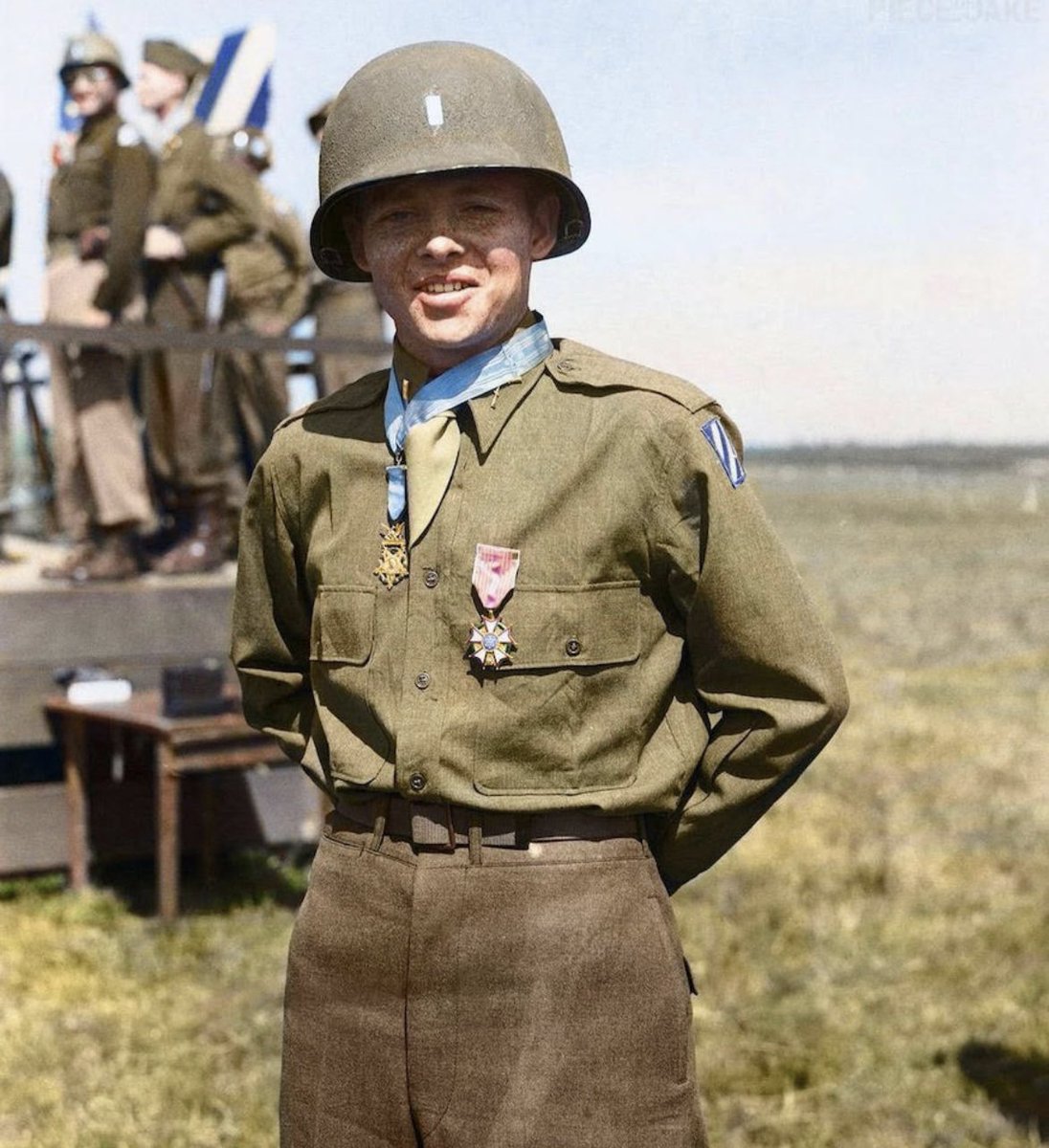
Standing just 5'5" tall and weighing only 112 pounds, Audie Murphy was often told he was too small to join the U.S. Army. But he decided to enlist anyway — and became one of the most heroic American soldiers of World War II
When confronted by over 200 Nazi soldiers in France, Murphy protected his much smaller group of 40 men by ordering them to run for cover. Then, he fearlessly climbed atop a burning tank destroyer and used its machine gun to face down the advancing Germans. Murphy's fellow soldiers watched in awe, and one private later wrote, "I expected to see the whole damn tank destroyer blow up under him any minute." But by the time the smoke had cleared, Murphy had singlehandedly killed or wounded 50 enemy troops. And that was just one act of bravery from Murphy — who would later receive 33 medals and awards for his valor during the war
OCTOBER 7, 2023: SHE KNEW SHE WAS GOING TO DIE.
Libi Cohen-Meguri, a 22-year-old infantry officer, went to the Nova music festival.
She was shot while fleeing the party. At 8:11 a.m., she called her parents and said:
“I’ve been shot in the stomach, I’ve been shot in the arm, I’m losing blood. I’m going to die.”
Calmly, quietly, she understood; these were the last minutes of her life.
She asked her parents to call Tomer, her twin brother, and Maya, her little sister, and said:
“I’m going to die. I just want you to listen to me.
I love you, Yariv. You’re the best father I could have asked for.
Mom, stop screaming. Just listen to me. You are the best mother we could have ever had. Don’t forget to be a good mother to Tomer and Maya after I die.
Tomer, how lucky we were to live this life together. I love you.
My Maya, never forget—you are the treasure of my life.”
When she finished speaking, her parents told her to get out of the car, lie down on the road, and pretend to be dead.
With her last bit of strength, she got out of the car and laid down on the road.
“Mom, they’re coming to shoot me again,” Libi said after lying down.
While her mother listened on the phone, shouts in Arabic could be heard, and then a barrage of gunfire.
It didn’t stop.
It kept going, until the call was disconnected.
And that’s how Libi died—with demonic beasts from the pit of hell standing over her and emptying a full magazine into her body.
Libi died with LOVE on her lips: love for life, love for her family, and love for her people.
Her memory will forever be a blessing.
NEVER FORGET.
NEVER FORGIVE.
NEVER AGAIN IS NOW.
Israel is hunting down every single Palestinian and Hamas terrorist who participated in the October 7th Massacre—to kill them all.
They’re living on “borrowed time,” Prime Minister Benjamin Netanyahu said.
Sooner or later, every one of these monsters will be found and eliminated.
Woman who used to live in Iran under Sharia Law explains what it’s like
- When she turned 9 she was told she’s ready to be a mother
- In elementary school, during religious studies they tell little girls that if their hair is is out they're gonna be hanged from the strings of their hair and burn in hell
- They also told little girls in elementary school that if they speak to other boys, they're gonna be hanged from their tongues and burn in hell
- She says people are essentially starved during Ramadan because they aren’t allowed to eat, even pregnant women
“I was arrested twice by the morality police before the age of 16 for wearing open-toed sandals and painted toenails and having a quarter of my arm out. They took me to the station and I had to sign a bunch of paperwork and basically just saying that if this happens again, the consequences are going to be a lot worse.”
She says if you are 9 years old and a man is sexually attracted to you that’s your fault
She says she would be executed for making this video
My perspective on this is simple, Islam is a cancer to the world and it’s spreading. Democrats and liberals have completely allied themselves with Muslims and THIS is how America is going to be unless we stop the Democrat Party
Islam is a death cult who conquered and demand submission. It’s the most extreme oppressive government imaginable masquerading as a religion
DO NOT VOTE DEMOCRAT
You don't have to commit your entire life to optimism, just try it on for a week. Start thinking "what if it all worked out?" and "what a time to be alive!". Then compare your state of mind to the week before filled with pessimism and doomer nonsense.
In fifty years, history books will say Elon Musk won a war almost nobody knew we were losing.
(maybe except for a few guys in Poland)
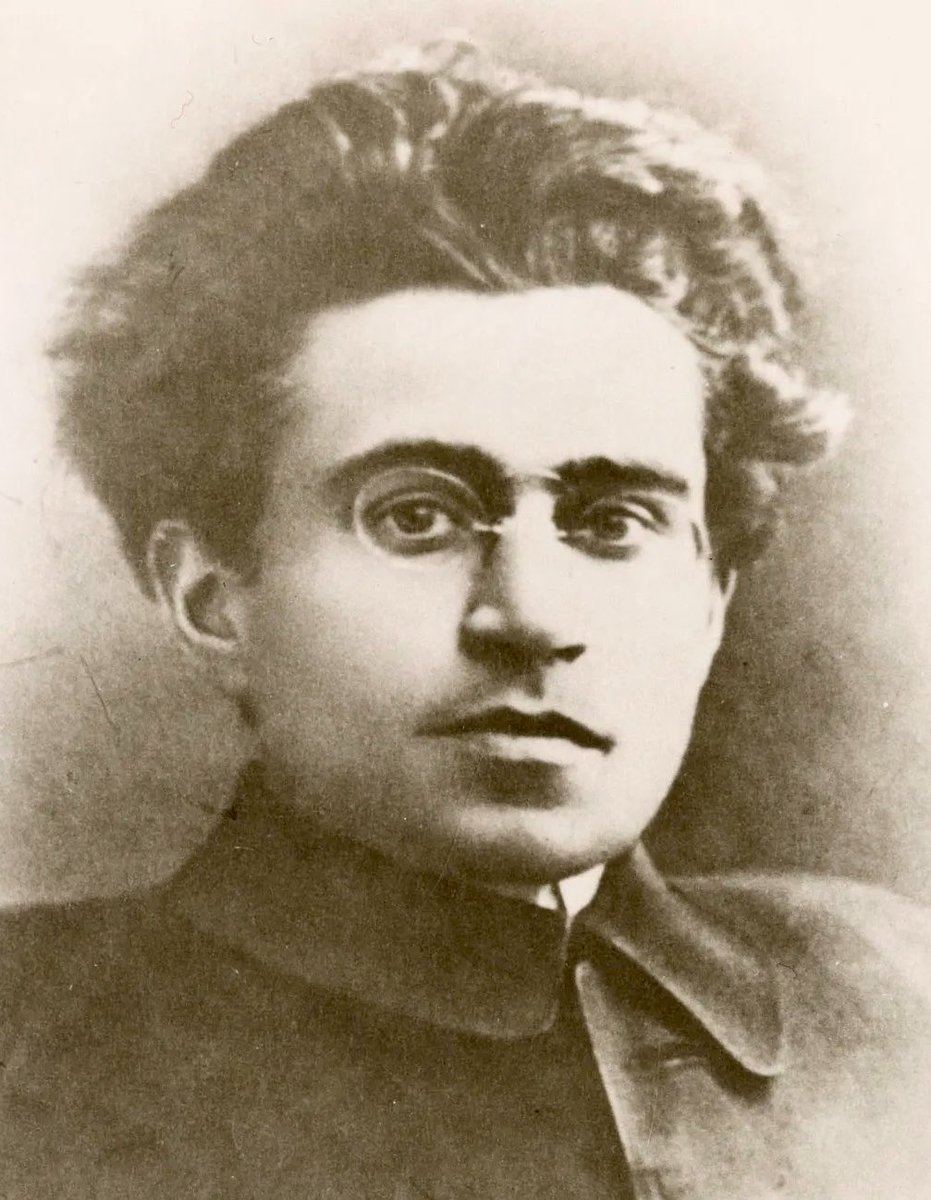
It began a hundred years ago, in an Italian prison cell. In 1926 Mussolini jailed a 35-year-old Sardinian intellectual. The prosecutor reportedly said: "We must stop this brain from working for twenty years." His name was Antonio Gramsci. The brain never stopped.
His question: why did the communist revolution win in Russia and fail everywhere in the West? His answer: in the West, power doesn’t rest only on the police and the army. It rests on culture – on what people find normal and obvious. So don’t storm the palace first. Take the schools, the universities, the newspapers, the theaters, the publishers, the courts. When the culture turns, politics follows. Forty years later, Rudi Dutschke gave it a name: the long march through the institutions.
It explains a puzzle we lived with for decades: why almost every actor, singer, journalist and teacher seems to think the same way – even in countries that keep voting the other way. We were told that educated people are simply on the left. The real answer is simpler.
Whoever controls the grant, the job, the review, the prize and the invitation to the studio controls what becomes "culture." That is one half of the machine.
The other half is exclusion. The one who doesn’t fit doesn’t get the grant, the job, the review, the prize or the invitation. And if he breaks through anyway, he is cancelled.
Money builds the chorus. Exclusion removes the dissenting voices. What remains looks like consensus. It is casting.
The same machine ran on a global scale – through NGOs, "independent" media and "civil society" programs, much of it paid for with Western money.
Then, in early 2025, someone did what nobody had dared. Elon and DOGE opened the books of USAID – untouchable since 1961, tens of billions of dollars a year. Most programs were cut; the agency was folded into the State Department. The tap was turned off. Latin America has been turning right, country after country, ever since. And on Sunday, in Brazil – with Jair Bolsonaro barred from running and sentenced to 27 years – his son Flávio came first in the first round, narrowly ahead of Lula. When the money stops, the chorus loses its microphones.
The last fortress is Europe. Brussels funds its own networks of NGOs, with an opacity even its own auditors have flagged. Add the big foundations, and the supranational bodies that make rules without ever facing a voter. It is starting to crack.
Gramsci was right about one thing: culture comes before politics. He forgot that it works both ways. When an artificial culture loses its drip, what is real underneath comes back up.
It took one man rich enough to depend on no one, crazy enough to try, and free enough to take the hatred that followed. Thank you, Elon. 🙏
But the rest belongs to the people. They can see it now – who was paid to applaud, and who was punished for not applauding. And they have had enough. The chorus is thinning. The excluded are being heard. And everyone who kept quiet is discovering they were never alone – they were the majority all along.
That is how a fortress falls. Not from the outside. From the moment the people inside stop pretending.
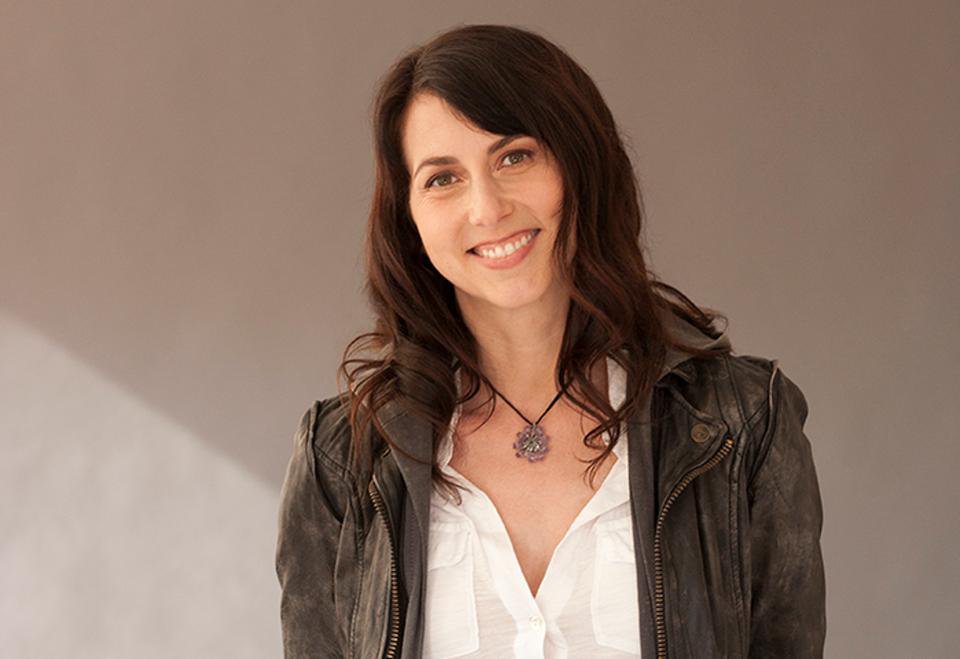
MacKenzie Tuttle (now known as MacKenzie Scott) went from helping start Amazon in a garage to becoming one of history's most generous and quiet philanthropists.
MacKenzie Tuttle was sitting at a desk at D.E. Shaw in New York when she first met Jeff Bezos. She was twenty-two years old, had just graduated from Princeton, and needed to pay off her debts.
"I was looking for a job to pay the bills while writing my novel," she later recalled about that period in her life.
She was an English literature major, but she was good with numbers, so the hedge fund hired her. When Jeff came up with the wild idea to sell books on the internet, MacKenzie did not hesitate to join him.
In 1994, they packed up their car and drove across the country to a small rented house in the Seattle area. They set up spray-painted wooden doors as makeshift desks in a damp garage.
"We worked until our arms standardly ached packing those boxes," she said in an interview years later.
She served as Amazon's first accountant, wrote its original business plans, handled customer support, and packed shipping boxes on her knees on the cold concrete floor.
In its first year, the scrappy startup made $511,000.
As Amazon grew into an e-commerce giant, MacKenzie stepped back to raise their four children and pursue her passion for writing. She wrote two acclaimed novels, winning an American Book Award in 2006.
For decades, the public saw her simply as the quiet wife standing beside a billionaire tech mogul, but she knew the exact sweat and sleepless nights that had built the company. Her journey was never as smooth as it looked from the outside.
During her high school years at Hotchkiss, her family went bankrupt.
At Princeton, she was so broke that a roommate loaned her $1,000 to keep her enrolled, and a kind dentist treated her for free after noticing she used denture glue to hold a broken tooth together.
She never forgot how it felt to have nothing, and she never forgot the strangers who helped her survive those lean years.
When the couple divorced in 2019, MacKenzie Scott walked away with a four percent stake in Amazon, worth roughly $36 billion.
Rather than holding onto the fortune, she signed the Giving Pledge just months later.
"I have a disproportionate amount of money to share," she wrote in a simple open letter.
She launched Yield Giving, a philanthropic organization that gave massive cash grants to charities with no strings attached.
The initial phone calls to non-profit directors were almost surreal.
"Is this a joke?" one food bank director asked after hearing that a team was transferring tens of millions of dollars to their bank account overnight.
"We couldn't believe anyone would trust us this much without mountains of paperwork," another charity leader said through tears.
She focused on grassroots causes: tribal colleges, women's health clinics, prison reform programs, and neighborhood food pantries.
By 2025, she had given away more than $26 billion to over 2,700 organizations, completely transforming the world of charitable giving.
She started in a garage with no money, built something massive, and then gave it back to the people who needed it most.
Her name might not be on the front of any corporate headquarters, but her impact is etched into millions of human lives.
#archaeohistories
Mary appears to people. Jesus almost never does.
That’s what makes today so important.
Lourdes. Fatima. Guadalupe. Mary comes again and again, always pointing us to her Son.
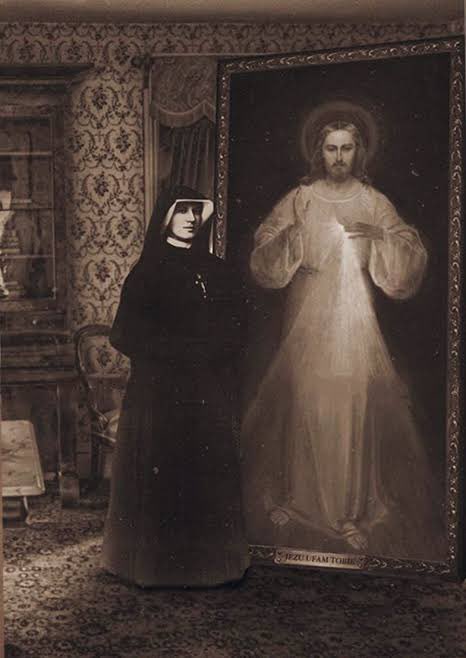
But in 1931, in a small convent in Poland, Jesus came Himself.
He appeared to a sister named Faustina.
A poor farm girl with little formal education. A woman given ordinary work in the kitchen and at the convent gate.
And He gave her a mission:
Tell the world about My mercy.
Not someday. Now.
He asked for an image bearing five words: Jesus, I trust in You.
He gave her the Chaplet of Divine Mercy, the Hour of Mercy at 3 o’clock, and a feast on the Sunday after Easter.
Faustina died on this day in 1938. She was 33.
Then the devotion faced a painful setback. Rome restricted it in 1959, and those restrictions were not lifted until 1978. A young bishop from Kraków named Karol Wojtyła helped advance her cause. He later became Pope John Paul II, canonized Faustina, and established Divine Mercy Sunday for the whole Church.
The message she was given is still before us:
Jesus is rich in mercy. Trust Him.
Before leaving the door of your house, make the Sign of the cross, and say:
"I renounce you satan, your works and your service, and I am in Christ".
Never leave the house without these words. These will be for you a rod, a weapon an irresistible tower. Not only will people not be able to harm you, but not even the devil...
St. John Chrysostom
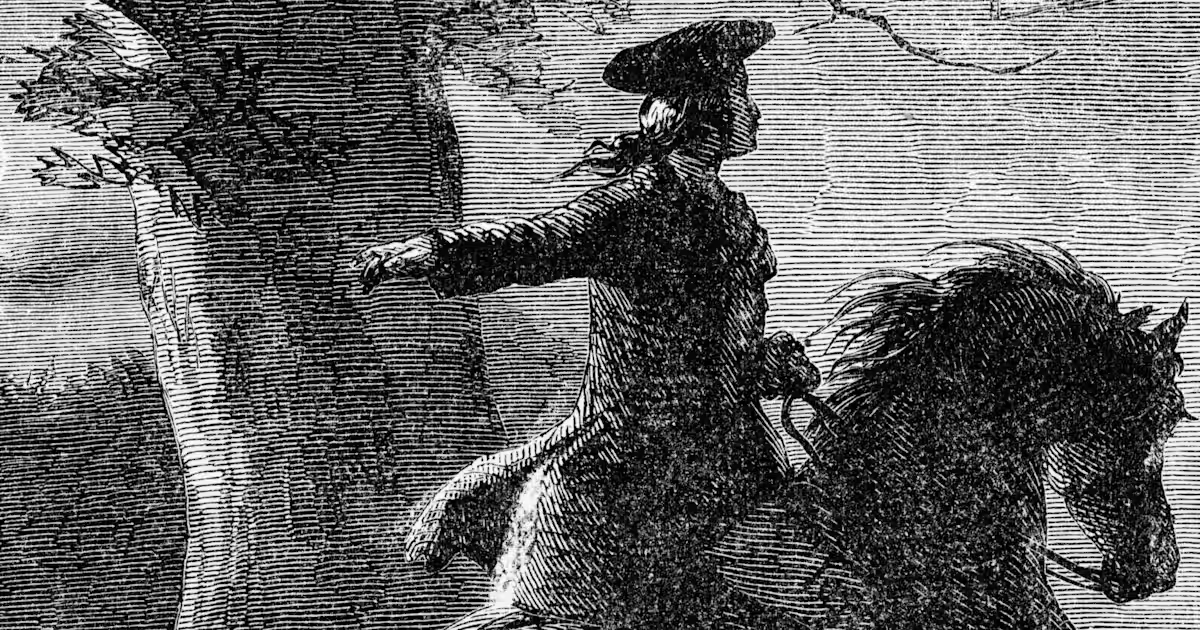
Everyone knows Paul Revere's ride. Almost nobody knows Jack Jouett's. His was longer, harder, and he saved Thomas Jefferson.
June 1781. The war had come to Virginia hard. Cornwallis was tearing through the state, and Virginia's government, including Gov. Thomas Jefferson, had fled Richmond and moved to Charlottesville. Cornwallis saw a chance to end the rebellion in Virginia in one night. He sent Lt. Col. Banastre Tarleton, the most feared cavalry officer in America, with about 250 horsemen to ride to Charlottesville and capture the governor and the whole legislature in their beds.
On the night of June 3, Tarleton's column passed the Cuckoo Tavern in Louisa County. Sitting there was a 26 year old militia captain named Jack Jouett. He was about 6'4", rode a fast horse, and knew the country better than anyone. He watched the green-coated dragoons go by and figured out where they were headed.
Tarleton had the main road. So Jouett took the back trails. Around 40 miles through the woods, in the dark, on paths so overgrown that branches tore up his face. Accounts say he carried those scars the rest of his life.
He beat Tarleton by hours. Tarleton helped him without knowing it, stopping along the way to burn wagons and grab a few prominent men from their homes.
Around dawn on June 4, Jouett rode up the mountain to Monticello and woke Thomas Jefferson. Jefferson, cool as ever, reportedly offered him a glass of Madeira. Then he got his family out, gathered up papers, and stayed longer than he should have. He rode off into the woods just before the British got to his door.
Jouett didn't stop at Monticello. He rode down into Charlottesville and warned the legislators, many of them staying at the Swan Tavern, which belonged to his own father. They scrambled out of town and fled over the mountains to Staunton. Tarleton arrived to find most of the government gone. He caught only seven legislators. One of them was Daniel Boone.
There's a story that Jouett, wearing a fancy scarlet coat and a plumed hat, helped one wounded general, Edward Stevens, get away by drawing the dragoons after himself while Stevens, dressed plain, slipped off on a slow horse. The British chased the man who looked important.
Think about what he stopped. If Tarleton had grabbed Jefferson and the Virginia legislature that morning, the author of the Declaration of Independence would have been a prisoner, maybe sent to England, and Virginia's government would have collapsed in the middle of the war.
Virginia's legislature voted him a sword and a pair of pistols as thanks. He moved west to Kentucky, helped push for Kentucky statehood, and served in its legislature. His son Matthew became one of the best portrait painters in early America.
Revere got the poem. Jouett got almost forgotten. He deserves better.
"We're about to see an absolute bloom in software development as the price of development plummets and everyone realizes how much automation we still have left to do in this world... Don't go down with the pencils. There's so much to build. We need you." https://t.co/HJbUwMiDEU