oke, jiwa korsa gue bergelora karena birthday girl @disyarinda mati-matian sedang memperjuangkan keilmuan psikologi.
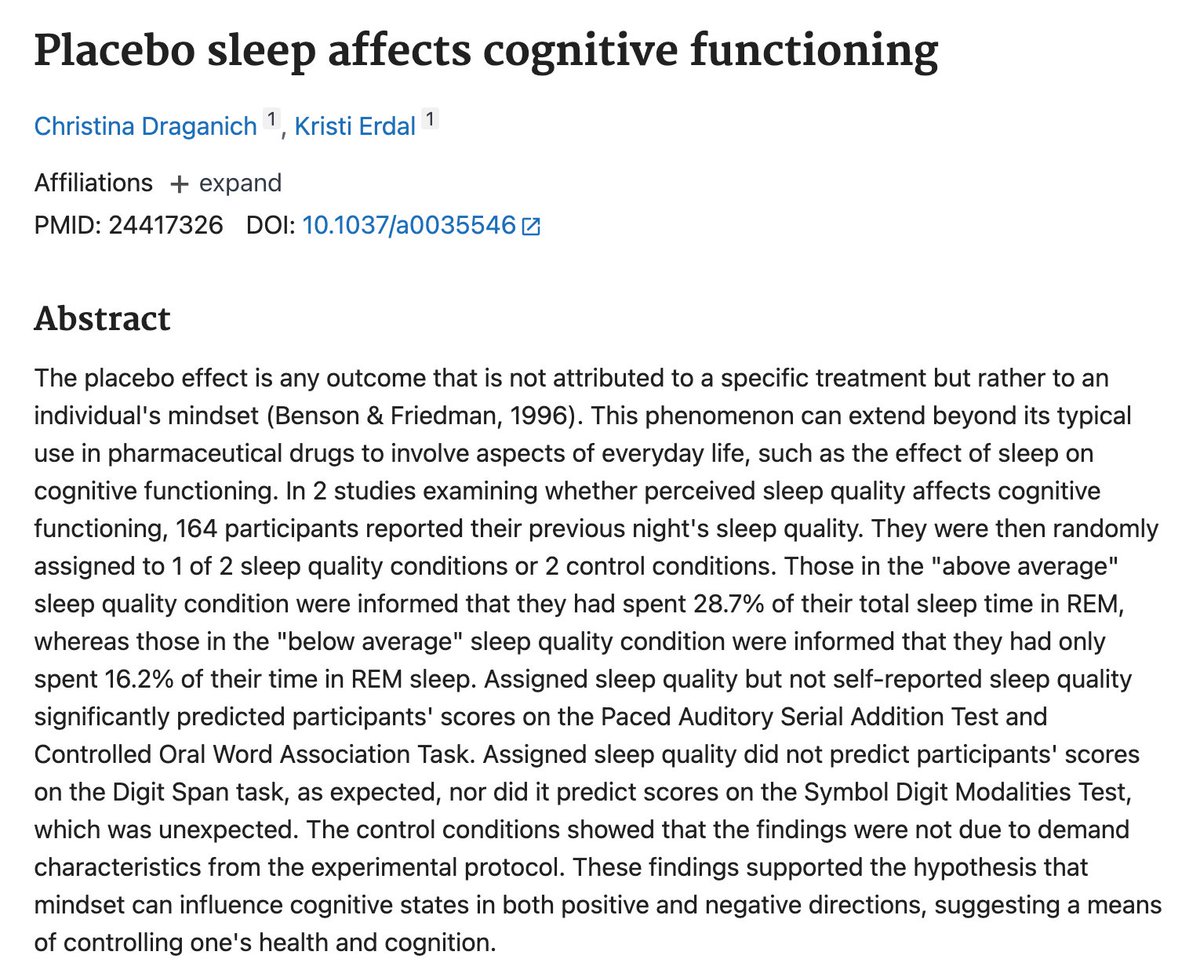
sebagai temen seperguruan, gue akan membantu menjelaskan validitas psikologi sebagai sebuah keilmuan.
@hrdbacot ini yakin karena alergi bahan latexnya, ga peduli mau serajin apapun cuci tuh strap. untuk user dengan kulit sensitif kayak gue, emang harus modal lebih untuk cari strap yg cocok kalo strap bawaan bikin alergi.
1346: longbows
1356: rear attack
1415: longbows
1495: plague, a pope, and supply lines
1525: their own stupidity
1672: flood the dykes
1704: two military geniuses
1805: one-eyed genius
1812: a Russian winter
1815: infantry squares and a stiff upper lip
1954: take the high ground
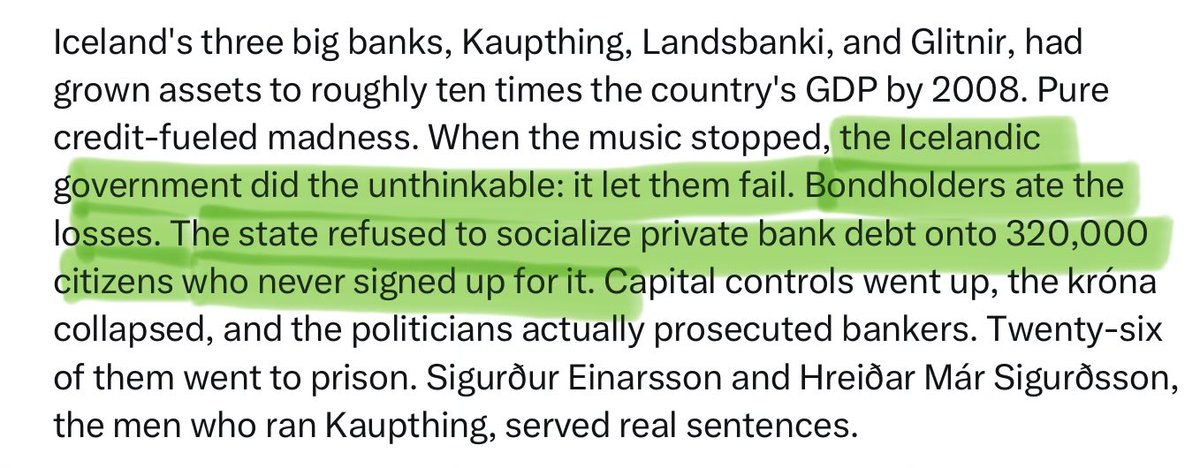
Coba dulu Indonesia 1998 memakai cara Islandia 2008. Biarkan bank bangkrut, ga usah di bail out, ga usah ada BLBI yg ditilep sampai ratusan triliun..
Indonesia jangka pendek akan lebih menderita. Banyak orang kehilangan tabungan. Tapi tidak ada beban yang harus ditanggung sedemikian lama
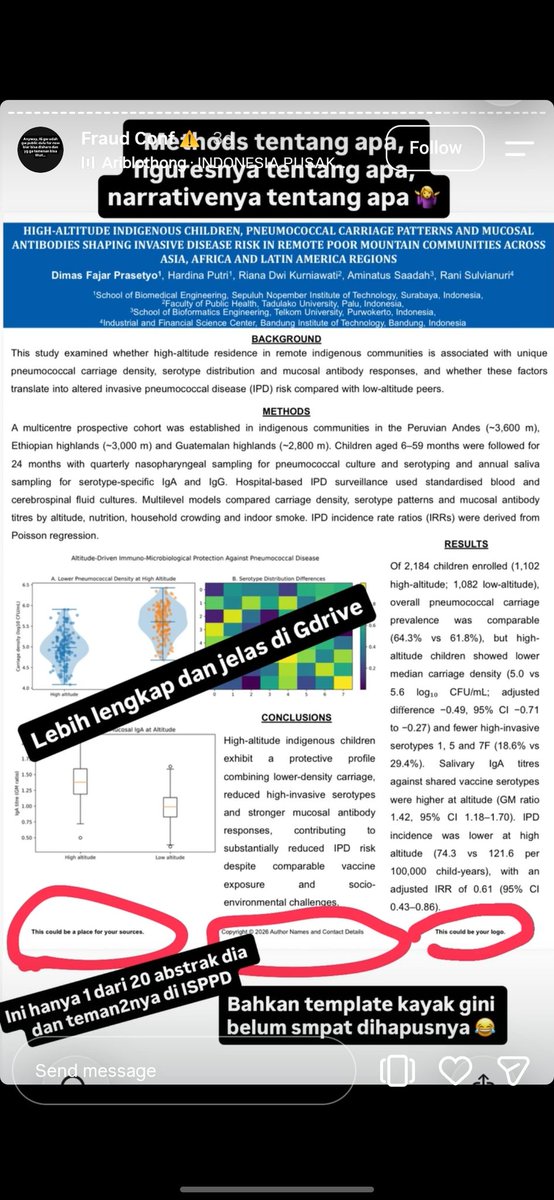
menunggu kabar gelar S1 dicabut oleh UNY dan gelar S2 dicabut oleh ITB.
aneh banget kecurangan akademik fatal seperti ini kalo sampe tidak dicabut gelarnya.
spill disini
Siapa tau ada yang kenal anak s1 UNY jurusan matematika angkatan 2015 terus s2 nya ITB matematika (jalur LPDP) namanya PRIHANTINI, ini dia dan temen2nya fraud bikin jurnal palsu, ikut conference dan dapet travel grant dari eo di banyak negara cuma buat jalan2 doang
This chart is a brutal reflection of why public frustration toward political elites in many emerging markets continues intensifying because it shows that Indonesian lawmakers are compensated at levels that look extraordinarily disconnected from the underlying economic reality faced by the average citizen, with parliament salary reaching roughly 14.7x GDP per capita, among the highest ratios globally and second only to the Philippines in this dataset, despite Indonesia still remaining a country where purchasing power remains relatively weak, informal employment is massive, public service quality remains uneven, infrastructure bottlenecks persist, legal enforcement often feels inconsistent, and upward economic mobility for large parts of the population remains structurally difficult.
And this is precisely why charts like this become politically toxic because citizens naturally begin asking a very simple question: what exactly are taxpayers receiving in return?
In high-income countries, lawmakers may also earn very large nominal salaries, but those economies simultaneously generate far stronger productivity, higher institutional quality, better healthcare systems, stronger education outcomes, more efficient bureaucracy, higher legal predictability, and materially better public goods overall, meaning political compensation exists within a much larger and wealthier economic ecosystem.
But in Indonesia, the optics become far more uncomfortable because the political class increasingly appears capable of extracting upper-middle-class or even developed-market lifestyles from an economy that still struggles to generate broad-based prosperity for much of the population itself.
And perhaps the harshest part is that compensation alone is probably not even the real issue. The real issue is performance.
Citizens are generally willing to tolerate highly compensated leaders if the country visibly becomes richer, more efficient, more meritocratic, less corrupt, and economically stronger over time. But when corruption scandals remain persistent, policymaking appears inconsistent, infrastructure projects repeatedly face rent-seeking concerns, and wealth creation remains concentrated among political insiders, conglomerates, and connected elites, high political compensation begins looking less like professionalization and more like institutionalized extraction.
Importantly, this also helps explain why anti-elite sentiment, populism, and distrust toward institutions continue rising globally because once the gap between elite living standards and ordinary household realities becomes too visible, citizens increasingly stop believing the system operates primarily for collective national advancement and instead begin viewing politics as a mechanism for self-enrichment among those already close to power.
Ultimately, this chart reflects something much deeper than salary levels alone because it exposes the uncomfortable reality that in many emerging markets, the political class often succeeds in upgrading its own prosperity far faster than the nation it supposedly represents, and over time that divergence itself becomes corrosive to institutional trust, social cohesion, and long-term political legitimacy.
Baca… Baca buku berat dan ringan. Baca buku fiksi dan non fiksi. Baca buku cetak dan digital. Baca buku di rumah, di jalan, dan saat istirahat kerja. Baca buku dari penulis terkenal dan dari penulis pemula. Baca buku beli sendiri dan pinjam dari perpustakaan. Baca buku sendirian dan bersama-sama. Baca buku sambil diam dan sambil diskusi. Baca buku buat berpikir serius dan buat suka-suka.
Baca buku apa saja, kapan saja, di mana saja. Selamat Hari Buku Nasional! :)
"I ate in a calorie deficit but didn't lose weight."
No, you did not.
Jeremy Ethier ran a small metabolism experiment using astronaut-grade accuracy.
What he found was that out of 9 people, not one had a fast or slow metabolism. Everyone burned almost exactly what their body weight predicted.
The most interesting part he found was that most people underestimated how much they ate by 500–1,000+ calories a day.
A skinny guy who couldn't gain weight guessed 2,000. He was actually eating 3,300. An overweight girl who wanted to lose weight guessed 1,800. She was at 3,000.
Not one had an abnormal metabolism. Every single one had a tracking problem.
Studies actually show people underestimate their daily calorie intake by 20–50%, with the gap widest among those who need accuracy most.
People are not broken, but their tracking is. Fix that and the math takes care of itself.
In most rich countries, most people say they want children, yet fertility keeps falling. @PikaGoldin's answer in a 2025 NBER WP isn't that women now prefer careers over kids.
Di monas malah ga ada mengheningkan cipta untuk 16 buruh perempuan ini. Malah dangdutan bareng prabowo yg buka-buka baju.
Aku yg bukan keluarga aja sakit hati. Harusnya masih masa berkabung, penuh duka. Mereka yg jadi korban itu juga buruh, mereka juga pekerja. Astagaaa