@itamar_sh תוסיף למה שכבר נכתב. Occulose, Grand Central station, transport museum, south ferry, battery park city, prospect park and grand army plaza, Hudson yards
@WeissInbar@itamar_sh@Jlm_city אני חושב שההתקנה החדשה במקביל לאבן השפה נעשתה קרוב מדי לאבן השפה כך שלא ניתם לקשור אופנים למתקן בצד הקרוב לכביש כך שמספר הזוגות שאפשר עכשיו לקשור הוא חצי ממה שהיה קודם
עדכון - עושה את כל התהליך - צריך להזין מספר טלפון וזהו.
תודה לאחיין שלי שאפשר את הנ"ל.
אל תעזרו לרכבת, תזמינו שוברים בלי לעבור דרכם.
https://t.co/8LY6XodJ9B
@reuven_yifat אפשר לזמין את כל השוברים שקיימים בלי כל בעיה. אין גם הלימה בין הצורך בשובר והנסיעה. נראה לי שזו דרך לגרום למשתמשים לנהל את המגבלה. כך יצא שרוב הנוסעים ינפיקו בדיוק את השובר שהם צריכים בדיוק לנסיעה שלהם ואם הם יראו שאין שוברים או שאין מספיק אז הם יבחרו בנסיעה אחרת.
@KhalilJeries I think you are wrong about your second statement because there are plenty Israeli Arabs with shelters in their homes. Actually, all Israeli residents irrespective of their race and religion have shelters.
@FarroYossi Am Yisrael is looking forward to him fixing Agudath Yisrael. An organization that forgot over the past few years that the second word in it's name is Yisrael
תרשו לי שניה להתפעל:
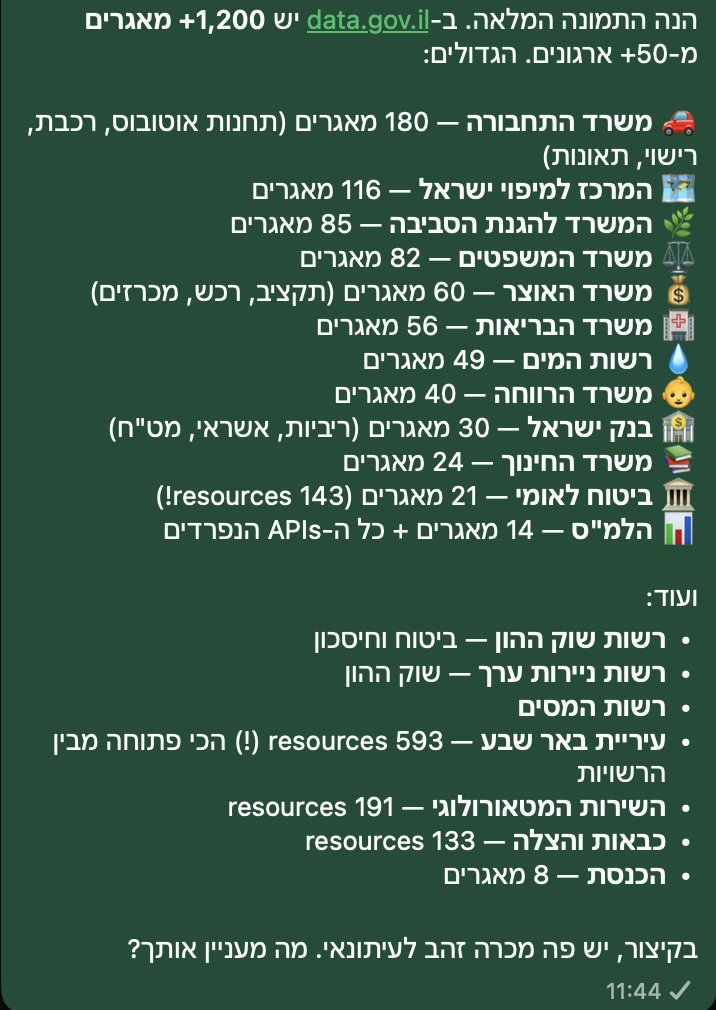
אני לא יודע מכיר את ליאור ויינר, אבל הוא יצר חתיכת דבר משוגע - רשת סוכנים שמתחברת לכל מאגרי המידע הפתוח של ממשלת ישראל, כולל הלמ״ס. חיברתי לזה את הבוט שלי, מאו, והתחרפנתי מהיכולות שזה נותן. קודם כל, ביקשתי מיפוי של מאגרי המידע עצמם
https://t.co/0Zokwykh08
🚨 THE FIRST “LIVING COMPUTER” HAS ARRIVED
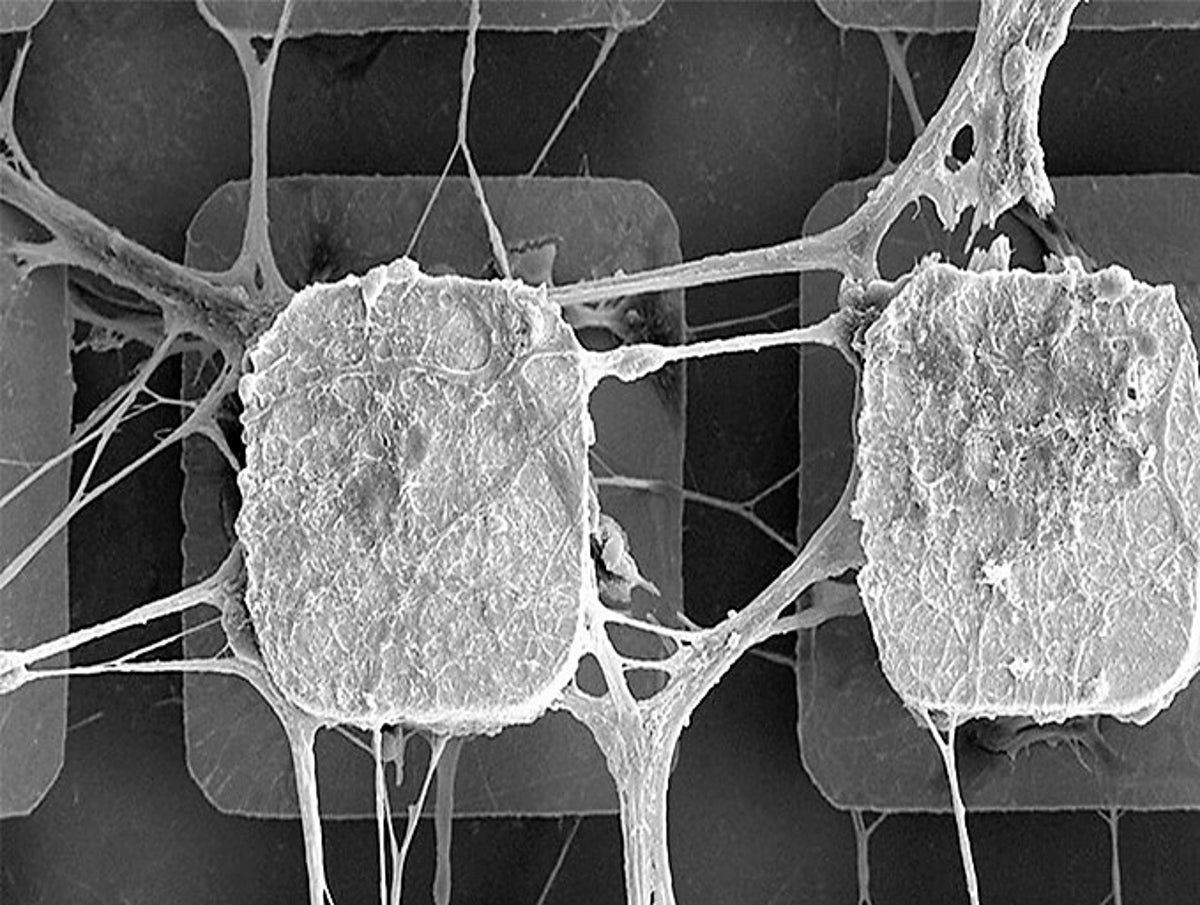
Scientists are now running computers on lab-grown human brain cells.
Real neurons.
Growing on silicon chips.
Companies like Cortical Labs are building biocomputers using tiny brain organoids derived from stem cells.
These clusters contain around 200,000 to 800,000 neurons and connect to electrodes that allow them to receive inputs and send signals back.
And they can already learn.
Researchers have trained them to play simple games like Pong by responding to electrical feedback.
The wild part is the efficiency.
A human brain runs on about 20 watts.
Modern AI data centers consume megawatts.
That massive energy gap is pushing scientists to explore biological computing.
Cortical Labs has already launched a commercial system called CL1.
It sells for around $35,000 and lets developers run code directly on living neuron clusters through the cloud.
They call it “Wetware as a Service.”
The vision is hybrid computing.
Silicon handles raw speed.
Biology handles adaptive learning.
Your brain can learn from small amounts of data, adapt instantly, and even repair itself.
Traditional AI needs enormous datasets and constant retraining.
If this technology scales, future data centers could be filled with “living servers.”
Networks of biological processors working alongside traditional chips.
Some researchers believe systems like this could be hundreds of millions of times more energy efficient for certain tasks.
But scaling it will be difficult.
The human brain has roughly 86 billion neurons.
Today’s biocomputers have less than a million.
Connecting billions of neurons across data centers would require entirely new hardware.
And there are big ethical questions.
How do you maintain living neurons in server racks?
Could systems like this ever become conscious?
And are we comfortable using biological intelligence as computing infrastructure?
One thing is clear.
AI’s energy demand is exploding.
Data centers could consume up to 8% of global electricity by 2030.
If biological computing works, the future of AI might not run purely on silicon.
It could run on living neural networks.
sat next to a guy on a flight who smelled like old money
rolex. tailored suit. reading a physical newspaper like it was 1987.
figured he was some finance executive or inherited wealth.
we got talking. I mentioned I sell stuff online.
he put down his newspaper.
"what kind of stuff?"
digital products. courses. ebooks. that kind of thing.
he smiled weird.
"I made $4 million last year selling a PDF about aquariums."
I thought he was messing with me.
he wasn't.
this guy is 61 years old. spent 30 years as an accountant. hated every second of it. retired at 55 with decent savings but nothing crazy.
his hobby was aquariums. had been keeping fish tanks since he was 12.
"my wife told me to start a blog so I'd stop boring her with fish facts."
so he did. wrote about aquarium stuff 3 times a week. water chemistry. tank setups. fish compatibility.
for 2 years nobody read it.
"I had maybe 50 visitors a month. all probably bots."
but he kept going because he had nothing else to do.
year 3, one article ranked on google. then another. then another.
suddenly he was getting 100K visitors a month. all people searching for aquarium help.
"I realized these people would probably pay for a complete guide. so I wrote one."
147 pages. everything about setting up and maintaining an aquarium.
priced it at $47.
first month: $6K
first year: $340K
last year: $4.2 million
from a PDF about fish tanks.
I asked about his marketing strategy.
"I don't have one. google sends people to my blog. blog mentions the guide. people buy it. I go play golf."
no email sequence?
"I have a newsletter. I send fish tips once a week. sometimes I mention the guide at the bottom. that's it."
no upsells?
"I made a second guide about saltwater tanks specifically. $67. people who bought the first one usually buy the second. that's my whole business."
no team?
"my wife helps with customer service. we get maybe 10 emails a day. most are just people showing us their tanks."
this 61 year old retiree built a bigger business than most "entrepreneurs" I know.
no ads. no funnel hacks. no growth strategies. no personal brand.
just mass expertise in one weird niche and patience to let it compound.
before we landed he gave me advice I didn't ask for:
"everyone your age wants to get rich fast. that's why most of you stay broke. I wrote about fish for 2 years before making a dollar. now I make more than I did in 30 years of accounting. speed is overrated. patience pays."
the plane landed. he grabbed his newspaper and walked off.
probably went home to feed his fish.
Google cooked so hard. Not gonna lie, this feels like the future is here.
Now develop Google Glasses with enough battery power, a good chip, and a look like Ray-Bans, and you'll have an instant hit. 100%.