Excited that our study on a unified framework for joint-tissue transcriptome-wide association and MR analysis is now out @NatureGenet Huge thanks and congrats to postdoc @zdangm and colleagues at @VUMCgenetics @UpstateNews https://t.co/xhA79anwZ6
Our new work in @Cell_Metabolism by @ArtemAKhan describes three new SLC transporters, including SLC25A45, a mitochondrial transporter for methylated amino acids that is essential for carnitine synthesis and fasting adaptation. @RockefellerUniv https://t.co/TNMYHgSCLx
Excited to share our work on discovery of SLC25A45 as a mediator of mitochondrial methylated amino acid import and carnitine biosynthesis. @Cell_Metabolism@RockefellerUniv https://t.co/O2y3Wypr8M
It’s been a tough few weeks. My 10yo daughter was diagnosed with a very rare, aggressive cancer called interdigitating dendritic cell sarcoma (IDCS). I’m reaching out to identify clinicians/patients who have encountered pediatric IDCS, indeterminate dendritic cell histiocytosis or other (non-LCH) histiocytic sarcomas cases.
I'm trying to understand non-surgical chemo and targeted therapy options, new pathology markers to better diagnose subtypes/treatments, and any data on progression in pediatric patients. Please feel free to share – I’m trying to cast a wide net due to the rarity of this condition and how little is known.
People can contact me directly at my first name (as written in my profile) at https://t.co/ubo0zQRMn0.
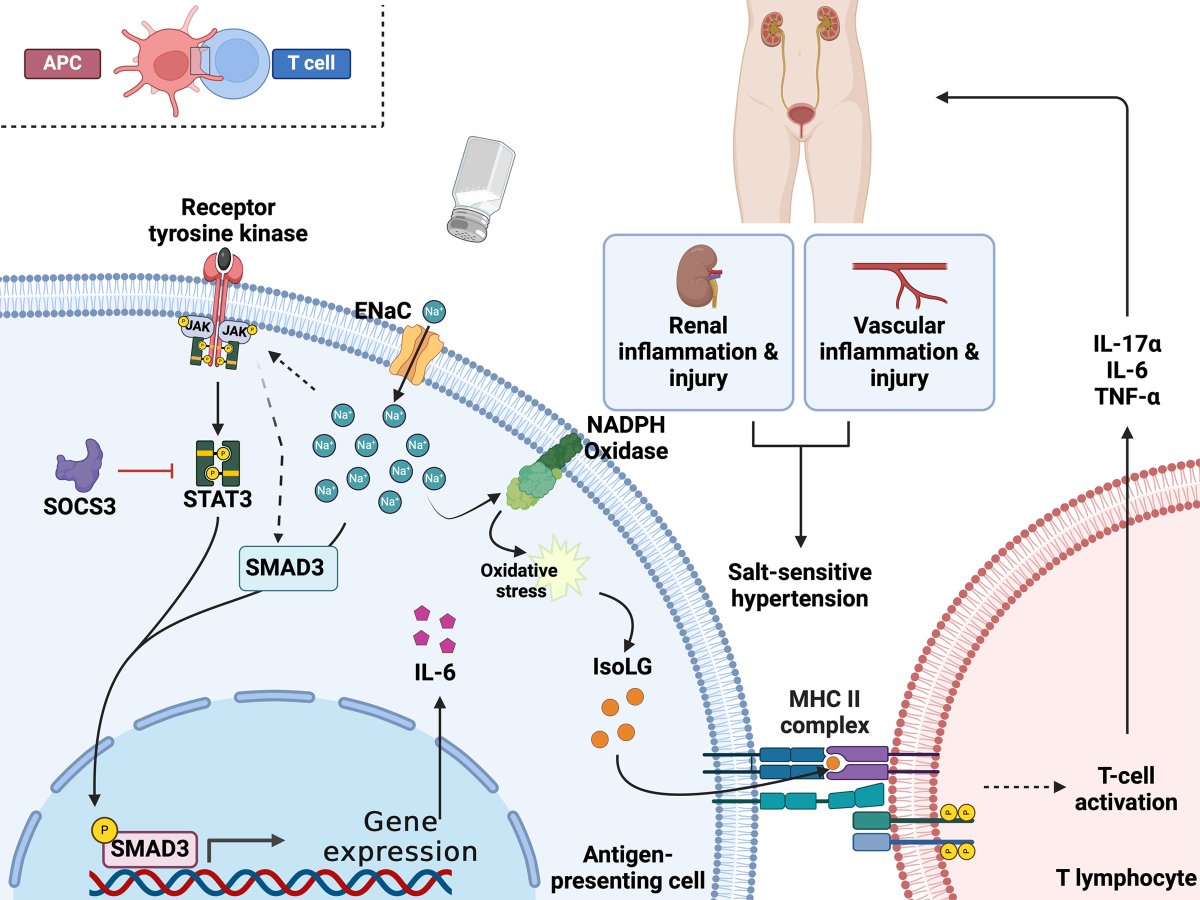
So excited to announce publication of our research paper "Myeloid-Specific JAK2 Contributes to Inflammation and Salt Sensitivity of Blood Pressure" in @CircRes@AHAScience @nih_nhlbi!
https://t.co/6CaZiUxrpq
Congrats @saleemMMH @ashleylpitzer @LErtuglu @DoctorAlbritton
1. The layman summary of our recent publication @CircRes 1. We study why some people's blood pressure goes up when they eat too much salt. We found that certain immune cells, called antigen-presenting cells (APCs), play an important role in this process.
https://t.co/2QoMnkwvMK
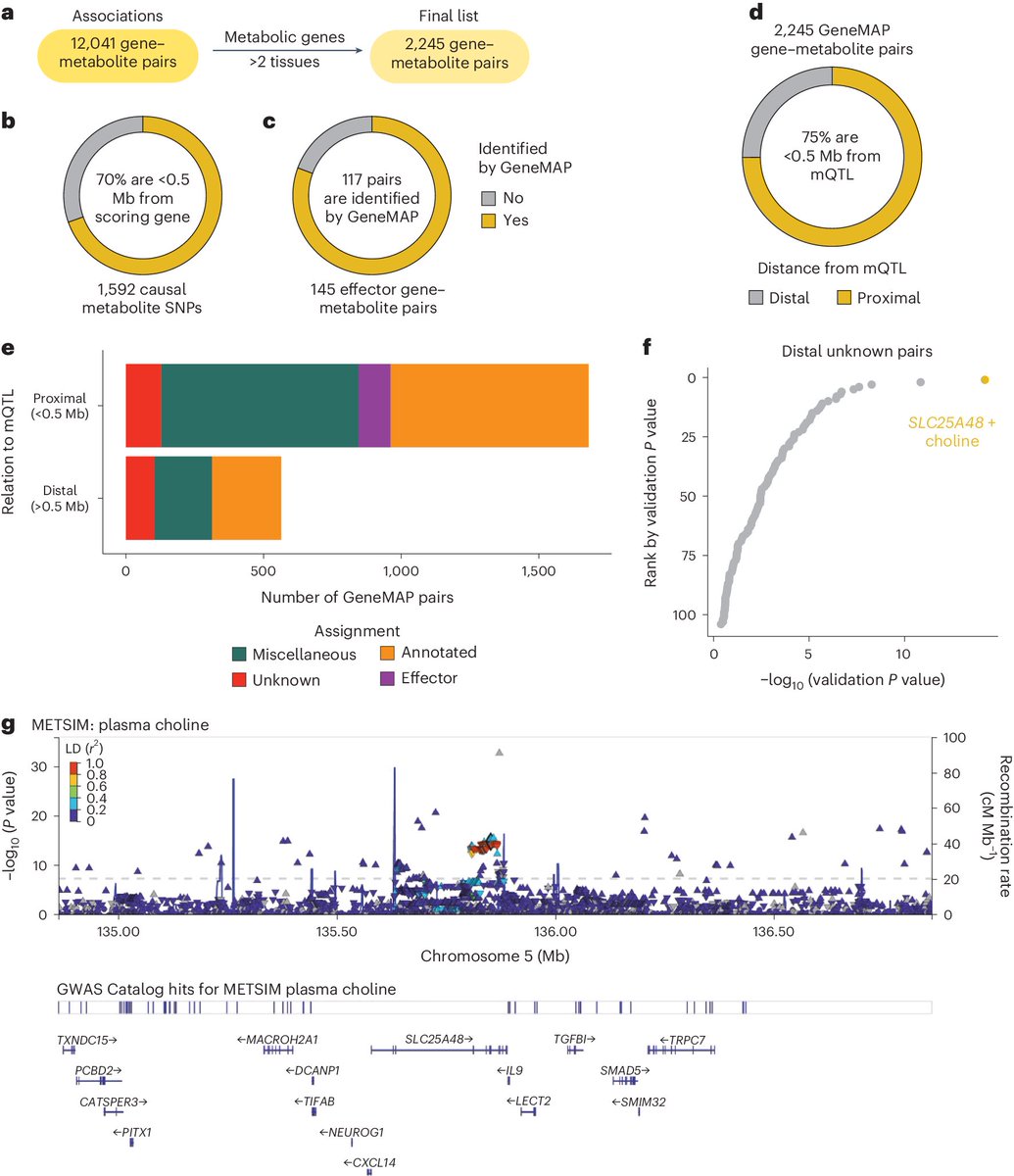
A study in @NatureGenet presents a multiomic GeneMAP platform for discovery of metabolic gene function and identifies SCL25A48 GENE as a mediator of mitochondrial choline import. https://t.co/SxulnBDkuo
Recently, at least three research groups independently discovered a mitochondrial membrane choline transporter protein, SLC25A48. Two of the discoveries were through GWAS of plasma and urine choline levels. A nice example of human genetics → new biology. I wrote a small blog post on this, with some similar past examples of GWAS→biology, for your Sunday read.
https://t.co/E0RnYXNn2W
New work from our lab’s genomics guru @ArtemAKhan with @egamazon. Artem generated a new platform for metabolic gene discovery and identified the mitochondrial choline transporter. @RockefellerUniv@NatureGenet https://t.co/WoeNLFmqJB
I am thrilled to share that our recent study on the development of a metabolic gene function discovery platform is now online on Nature Genetics. https://t.co/Ti3RDpMTSG.
I would like to thank @KivancBirsoy and @egamazon for their mentorship, all the coauthors for their valuable input as well as @RockefellerUniv and Boehringer-Ingelheim PhD Fonds for providing me with the funding and the resources.
A few thoughts on the recent set of papers torture testing genomic deep learning for predicting individual-level gene expression [ https://t.co/rRUBH7sW6m , https://t.co/ZLcoXGPbWD , https://t.co/Je9pFg4kX2 ]. First a brief summary 🧵:
https://t.co/yUKnoeeA4r
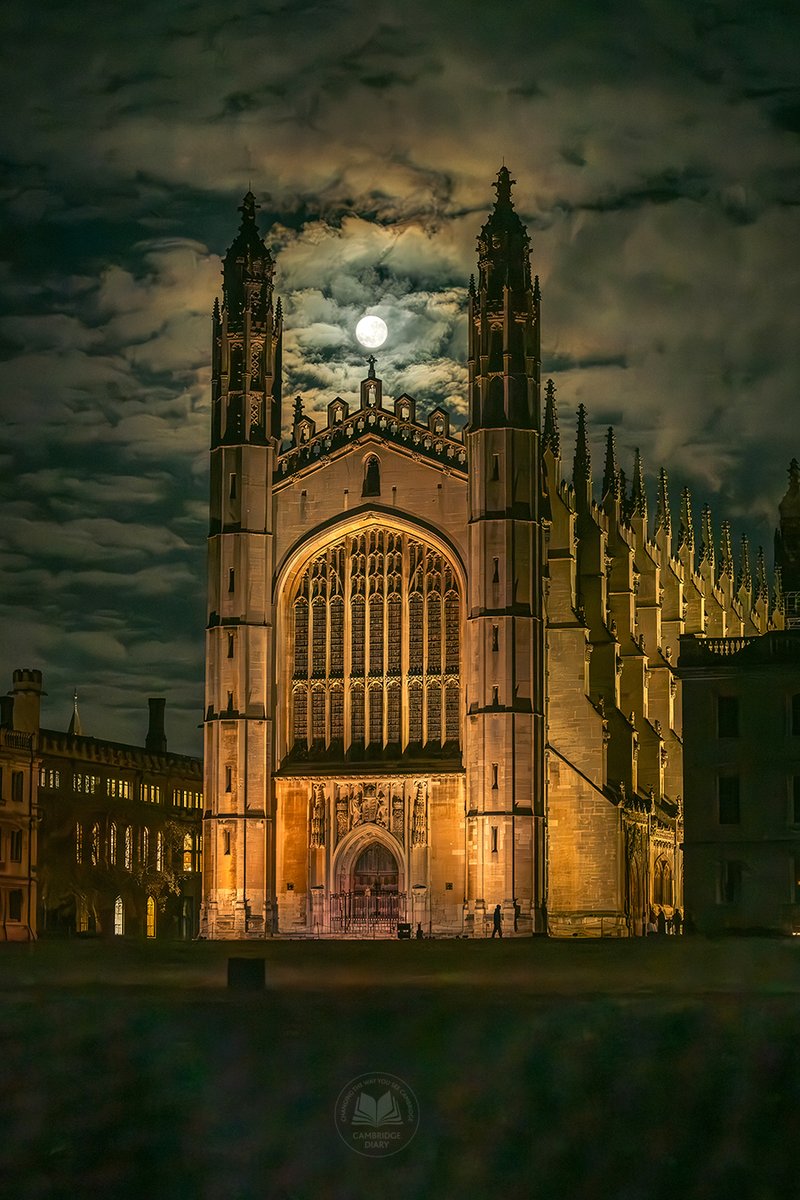
A picture of Cambridge every day since 2010. (No 5000) Tuesday 5th December 2023.
So here it is - my final picture of uninterrupted daily photographs of Cambridge - 5,000 consecutive posts over 13 years. I’m sure you’ll forgive the fact that it wasn’t taken today but a week ago today when the full moon eased itself between the turrets of an illuminated King’s College Chapel. I knew the moment I pressed the shutter that I wanted it to be the last photograph of my daily pictures not just because this frame is undoubtedly the most recognisable view in Cambridge but because for me the full moon symbolises a moment of release and completion and a time to sit in the fullness of life and feel grateful for my blessings. The full moon is also associated with madness, of which I must have had a portion to have stuck with this for so long!
I’d like to thank you all for your likes, comments and stories along the way - you have made A Cambridge Diary a heartwarming community and a place to share memories with Cambridge folk both from the town and the university. Most of all I’d like to thank everyone who has appeared in my pictures over the past thirteen years: the bikers, bowlers and buskers; the carpenters, choristers, clothiers and constables; the dancers, diners and dog-walkers; the entertainers and extras; the gardeners and graduates; the kayakers; the lecturers and lingerie models; the painters, parents, pensioners, porters, praelectors, proctors, professors and punters; the readers, revellers, rowers and runners; the scaffolders, scullers, singers, skateboarders, soldiers, stonemasons, strollers, students and swimmers; the tourists and touts; the walkers and workers. I’d also like to thank the cats, dogs, ducks, rabbits, squirrels and swans, and Queen Elizabeth I and His Holiness the Dalai Lama. To you all, my sincere thanks.
Whilst this is my final daily picture it doesn’t mean the end of A Cambridge Diary as I’ll still be posting my pictures from five and ten years ago and I’m sure there will be the occasional new picture popping up now and then - just not every day. Oh, and I still have to walk home don’t I?
Love to all
Martin
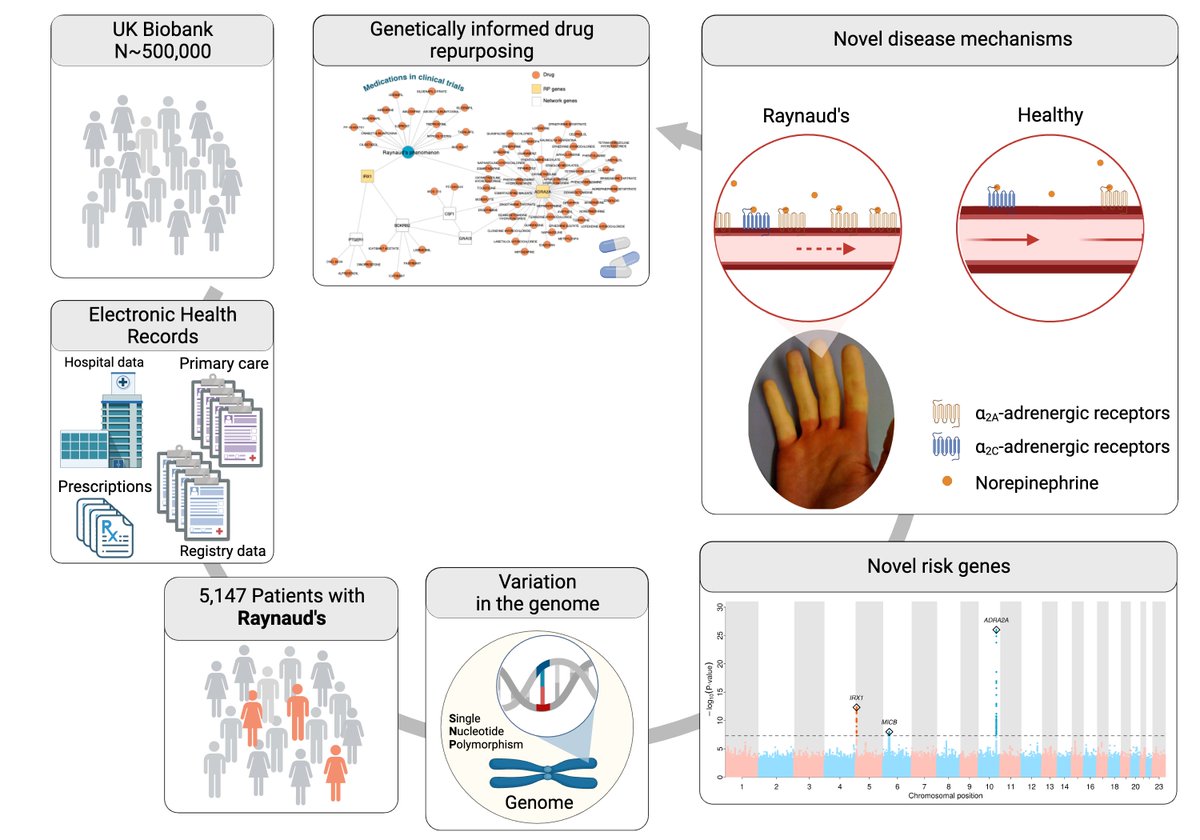
Combining health records from primary and secondary care we identified >5k cases @uk_biobank and identified 3 genomic risk loci 🧬
replicated findings in @EastLondonGenes and @VUMChealth
🚨Paper alert🚨
There are hundreds of disease that are common, but understudied. We linked electronic health records with #Genetics@uk_biobank and identified the first risk genes for #Raynauds phenomenon that causes painful vasospasms @WeAreSRUK
https://t.co/RDI7sr1yF5
It's always exciting and thrilling to read about the GWAS discoveries of low-hanging fruits. Recently, two research groups have gotten their hands on a GWAS signal near ADRA2A that turned out to be a strong genetic risk factor for Reynaud's phenomenon.
The first preprint by Hartmann et al. was posted first in Oct 2021: https://t.co/vWFM5FJLNh
The second preprint by Tervi and Ramste et al., posted just two days ago (which brought my attention to the earlier preprint): https://t.co/cJKA6PLjb9
Every time I come across such interesting discoveries, I am reminded of the fact that there are so many low-hanging fruits left untouched in the field. It's just a matter of someone realizing one day, "Hey, no one has GWASed this phenotype, let's run a GWAS and see what comes up", and hitting the jackpot.
As is always the case, multiple groups often land on such discoveries almost at the same time, but the chronological order of the publications rarely reflects the real order of the discoveries. Anyway, let us focus on the most interesting stuff--the discovery.
What is Reynaud's phenomenon?
It's a fascinating medical condition characterized by episodes of severe vasoconstriction in the fingers in response to triggers like cold exposure or stress that activates the sympathetic nervous system. It occurs both in males and females, but more commonly in young females.
The condition was named after Maurice Raynaud, a French doctor, who first documented the case in 1862 in his thesis.
“Under the influence of a very moderate cold . . . she sees her fingers become ex-sanguine, completely insensible, and of a whitish yellow color. This phenomenon happens often without reason, lasts a variable time, and terminates by a period of very painful reaction, during which the circulation is re-established little by little and recurs to the normal state.” (https://t.co/lnzEWB4OaM)
Initially described as Reynaud's disease, later the term was changed to Reynaud's phenomenon as it can happen idiopathically (Primary) and also, secondary to other systemic diseases like scleroderma.
The ADR2A locus discovery
Such an interesting medical condition has surprisingly never been the topic of interest for a GWAS study until last year (despite twin studies reporting a strong genetic aetiology), except few candidate gene studies which failed to look at this region.
Performing a GWAS in ~5k cases and >400k controls, Hartmann et al. identified three GWAS loci with the strongest signal near ADRA2A that codes for a subtype of alpha-2 adrenergic receptors one of the biological switches of the sympathetic nervous system. The researchers would have jumped in excitement to see this peak in the Manhattan plot.
Tervi and Ramste et al land on the same signal with much stronger evidence in their GWAS of a larger sample (~11.6k cases and >1M controls involving multiple cohorts. The impressive fact here is the locus is genome-wide-significant independently in all four cohorts. Such a strong signal!
The top variants in the locus are not within the ADR2A gene itself, but very close by and have a clear effect on ADR2A expression in the tibial artery. Both groups show clear colocalization with eQTL signals. Tervi and Ramste et al. went one step further and performed functional follow-up experiments proving that ADR2A is the causal gene at this locus.
GWAS recapitulating the role of alpha2 adrenergic receptors in Reynaud's
The most interesting part of this story for me is that the role of alpha2-adrenergic receptors in Reynaud's phenomenon has been well-recognized as early as the 1980s and the GWAS brings out this beautiful biology.
Here is an elegant 1988 paper that used alpha1 and alpha2 receptor-specific antagonists to show that cold-induced vasoconstriction in human fingers is caused by alpha2 subtypes but not alpha1.
Injecting the alpha-2 blocker (yohimbine) prevented vasoconstriction in the fingers of human volunteers exposed to cold but the alpha-1 blocker (prazosin) didn't. (https://t.co/gEYaHuoCpM)
Importantly, GWAS not only confirmed the major role of alpha-2 adrenergic receptors in Reynaud's phenomenon but also pinpointed the specific subtype: alpha2A (previously researchers focussed on alpha 2C).
Reynaud's phenomenon GWAS will clearly find the top place in the list of examples to showcase the power of GWAS in illuminating disease biology.
Some recent posts:
1. Discovery of extra-erythrocytic haemoglobin expression in cartilage in mice and humans (https://t.co/2vmCvvJDbI)
2. Genetics of East-Asians specific T2D risk gene--PAX4 (https://t.co/jQzZpAp1o4)
3. East-Asians-specific alcohol dependence protective variant and obesity (https://t.co/0BiqLOzVIS)
I always questioned when do you really **need** hypergraph GNNs?
For modelling biological interactions beyond pairs, such as gene expression: HYFA processes gene expression values for patients collected from multiple organs.
Paper: https://t.co/EcHQv7xsPJ