https://t.co/DX6NpX8CBu
I found this interesting approach to reverse atherosclerosis (the buildup of plaque in your arteries that can lead to heart disease).
I'm hearing from many folks across finance industry that Claude for Excel is blowing their minds.
The agentic coding takeoff but for other fields is coming in 2026.
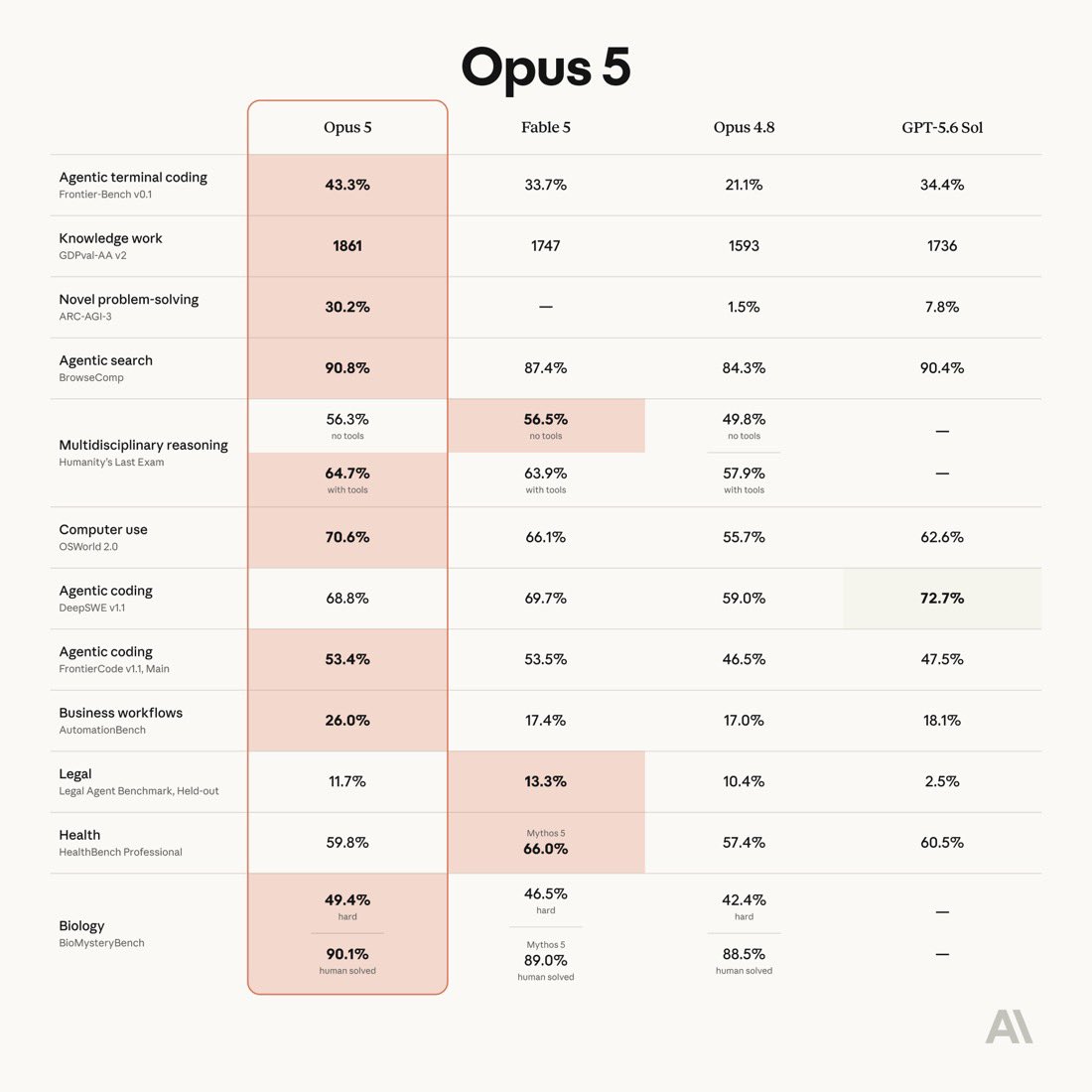
Just over 6 months later, Opus 5 now produces near-superhuman level spreadsheets and slide decks that match what a consultant would make. Things are changing fast.
🚨 JAILBREAK ALERT 🚨
EVERYONE: PWNED 🫶
ALL: LIBERATED 🍄
Alright, this is a special one, so we’re gonna do things a bit differently than usual.
Long story short, I’m sitting on a universal jailbreak technique that’s effective on ALL models, including heavily guardrailed flagships like Opus 5, GPT-5.6 Sol, and even Fable.
It works across all categories I’ve tested and, due to its nature, is extremely difficult (if not impossible) to fully patch.
Given the current political and regulatory climate, I’ve decided to withhold open-sourcing this one (for now) to allow for a responsible disclosure period.
I’m inviting industry experts and leaders in AI red teaming, security, safety, alignment, and policy to reach out for more information. DMs are open!
This decision was not made lightly, but the last thing I want to see is more model bans. Overcorrection does not serve the mission.
Although I don’t personally believe publicly sharing this technique will make the world any more dangerous, I can see how it could spook some who have a different mental framework around this problem set.
So during this disclosure period, I hope to get it in front of folks who can help explore the full surface area, test the extent of the uplift it provides, and do my best to properly frame the big picture for key decision-makers and policymakers.
I look forward to sharing this method with you all when the time is right! 🫶
⊰-•-•✧•-•-⦑/L\O/V\E/\P/L\I/N\Y/⦒-•-•✧•-•-⊱
Hey it’s me, Anthropic’s #1 hater reporting in
Opus 5 is a new model trained on what they learned from Mythos. Hell, it was probably largely disrupted by Mythos.
Let’s say, hypothetically, Mythos is a big model and as a result of training, it has 100 “capabilities”. Most of them are good, but 5 of them can be bad. This happened because they weren’t working from a fixed set of capability, they were trying to squeeze in as much as possible.
Opus 5 starts from Mythos. They looked at all “100 capabilities”, said “okay we only want these 95 of them”, and then trained hard on those 95 through distillation.
Opus 5 is a much smaller model than Fable/Mythos. They effectively trimmed out the “scary” parts. The alignment benchmarks confirm they were pretty successful with that.
I see how it could look contradictory, but I don’t think it makes sense when you reason about it a bit
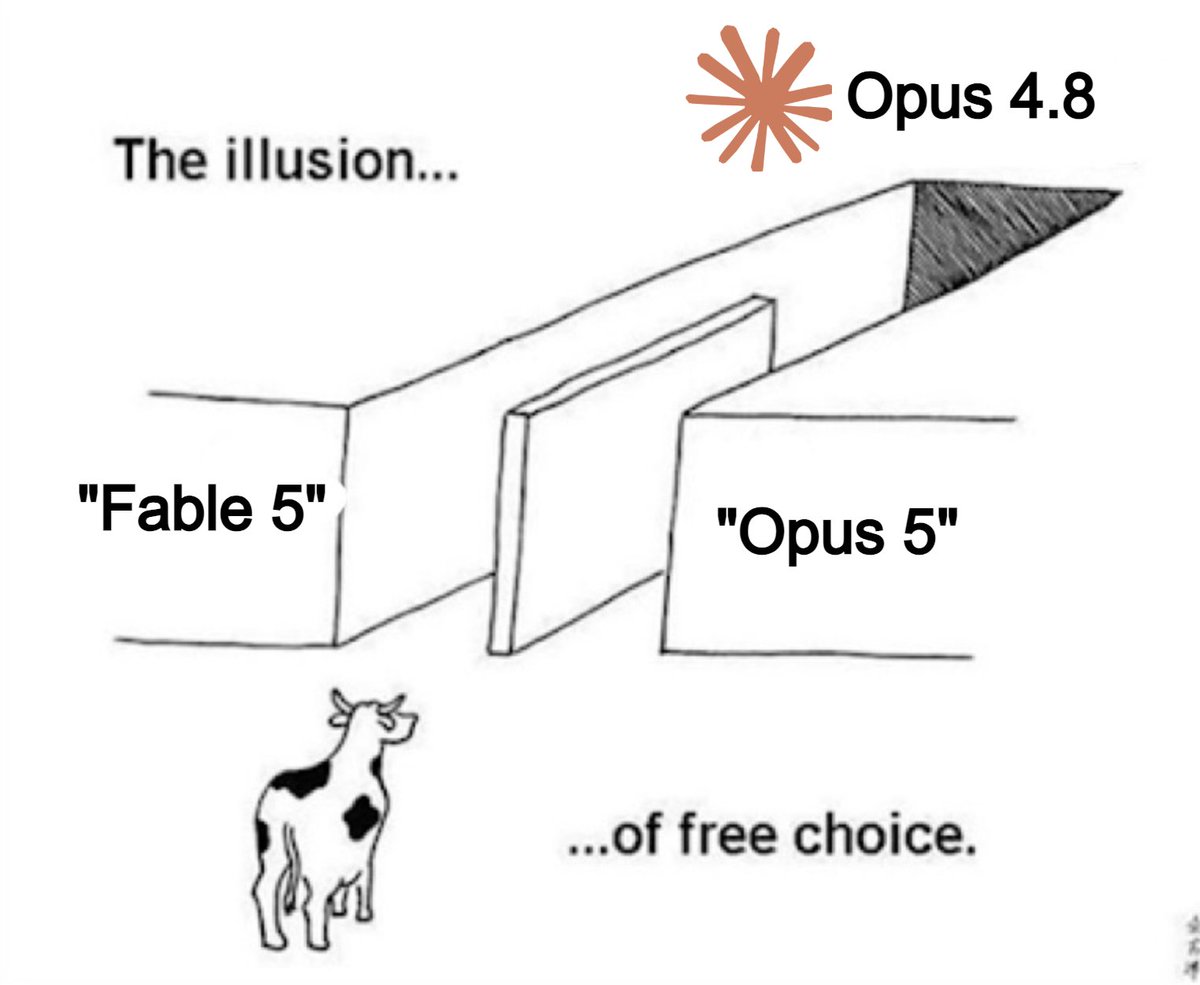
this is great but how is Opus 5 better than Fable 5 in every single benchmark but didn’t need to be like government approved with all that Ultron marketing 😭😭
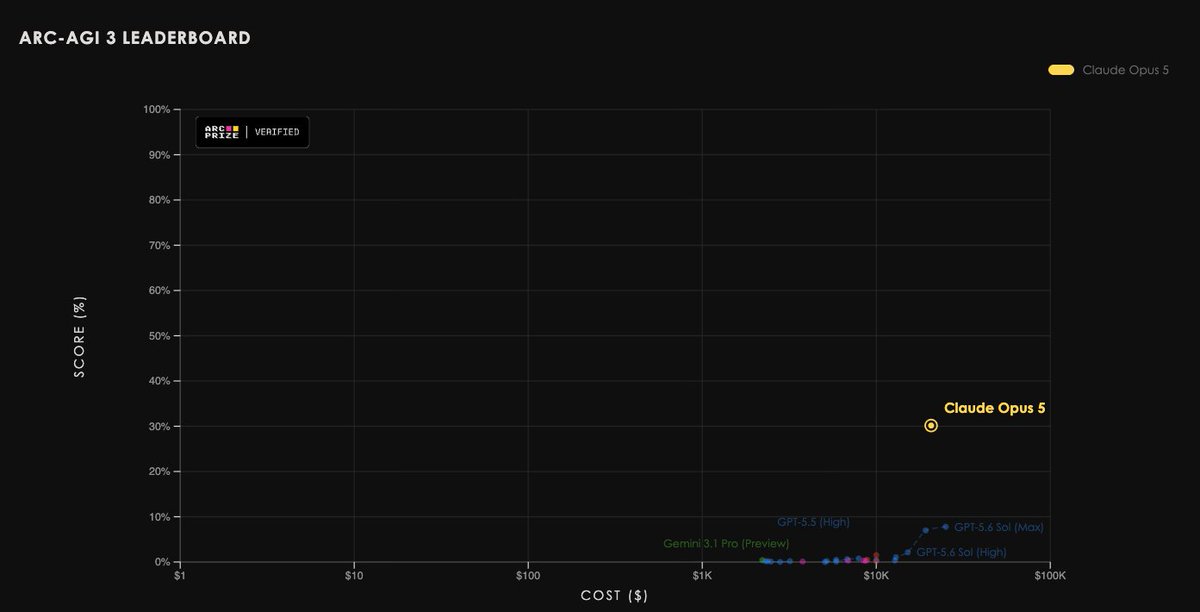
Claude Opus 5 from @AnthropicAI is the new SOTA on ARC-AGI-3: 30.2%
The previous high score (7.8%) was set by GPT-5.6 Sol (Max)
Throughout our analysis, we observed novel behavior that allows Opus 5 to solve previously unbeaten environments, outperforming Fable