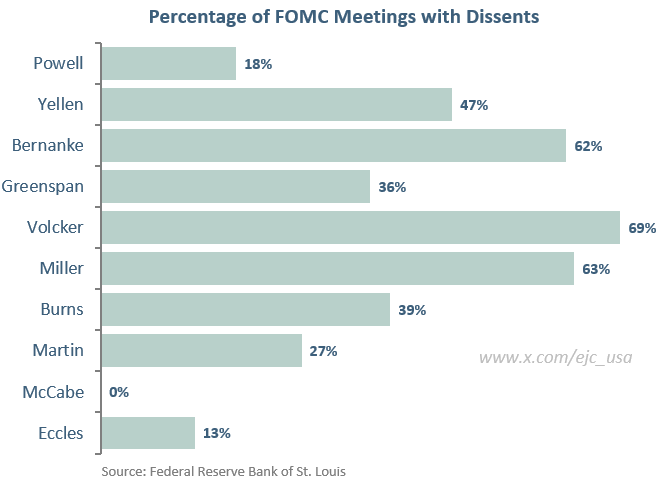
Since 1936, an average of 37% of FOMC meetings have included at least one dissenting vote. Currently, Chairman Powell has recorded the lowest percentage since McCabe’s term from 1948 to 1951.
Our expectation is for a higher share of FOMC dissents going forward.
I enjoyed the latest book by polymath Larry McDonald, @Convertbond, which provides a detailed review of the risks and opportunities in this new economic reality.
https://t.co/JxRi1yvcc8
The crisis of confidence unfolding in the banking system will tighten lending standards further. The price and availability of credit will become more costly. Recession probabilities will increase alongside fears of repeating the echo inflation waves of the 1970s and early 1980s.
Our analysis of the dozen US recessions since WW2 shows that real GDP declines by -2.2% on average. The severity of declines is the perspective that matters now.
Credit card balances up 15.2% to $986bln, the highest annual growth in 20 years. A record net 52.4mln credit inquiries last year, +46% higher than 2021. Credit card delinquencies have started to tick higher, albeit from extremely low levels.
https://t.co/J6xv459RsK
Bank C&I lending standards coincide with corporate spread changes and lead the default rate. Q4 levels have entered the zone of prior downturns.
https://t.co/sTMZPbKpuh
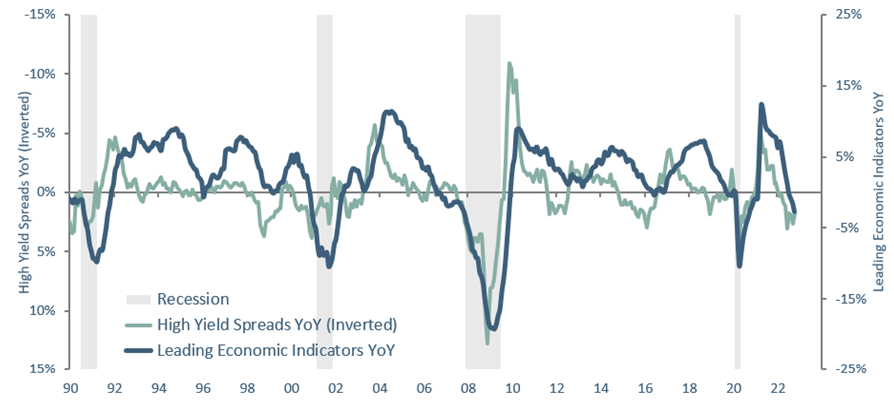
October recorded the eighth consecutive monthly decline for the Conference Board's composite index of leading economic indicators, which is rare to see outside of a recession. The Conference Board believes a recession is likely before year-end and continue through mid-2023.
With the Fed’s creditability on the line, our view is they are hell-bent on getting core PCE inflation back to 2% handle, even if it requires putting the economy into recession next year.
Powell “..if we were to over-tighten, we could then use our tools strongly to support the economy, whereas if we don't get inflation under control because we don't tighten enough, now we're in a situation where inflation will become entrenched and the costs will be much higher”
The Federal Reserve Bank of Cleveland’s Inflation Nowcasting model estimates a monthly gain of +0.28% in October and +0.41% in November in Core PCE.
https://t.co/eoFHpFoppX