Tenemos nuevo SMI, nueva deducción en el IRPF y llega uno de los ejercicios que más me gusta hacer: ¿cuánto dinero neto recibe un trabajador que gana 1.000 € brutos anuales por encima del SMI?
2026: de esos 1.000 €, conserva 246,5€ netos.
2027: de esos 1.000 €, conservará 204,2€ netos.
La presión marginal efectiva, incluyendo IRPF y cotizaciones sociales, pasa del 75,4% al 79,6%.
Evidentemente, ganar 1.000 € por encima del SMI en 2027 supone un salario nominal superior al de 2026, tanto en términos brutos como netos.
Pero el objetivo del ejercicio es visualizar la presión fiscal marginal sobre los salarios bajos y uno de los mecanismos que pueden contribuir a la denominada trampa de la pobreza.
Veremos con qué IPC acaba el año, pero no deflactar este año los tramos (y resto de componentes) del IRPF puede ser devastador para muchos salarios bajos cercanos al SMI (los más afectados, como ya explicamos antes de que pasaran... cosas)
Un debate apasionante entre los cuatro principales partidos para ver quién presume más de defender la subida generalizada de las actuales pensiones conforme al IPC.
@MrtnzAlvrz, el 30 de noviembre te puedes cambiar el nombre, porque habrá que seguir haciendo pedagogía.
Six Plants Grown From One Rule Each
Each plant is a single line of text rewritten over and over. Start from the axiom (F or X), replace every symbol by its rule at the same time, and repeat n times. Then a turtle reads the result: F means draw a step forward, + means turn left by the angle delta, - means turn right, [ saves the position and ] jumps back to it, so every bracket becomes a branch. X draws nothing; it only marks where new growth will appear.
a: n=5, delta=25.7, F, F to F[+F]F[-F]F
b: n=5, delta=20, F, F to F[+F]F[-F][F]
c: n=4, delta=22.5, F, F to FF-[-F+F+F]+[+F-F-F]
d: n=7, delta=20, X, X to F[+X]F[-X]+X, F to FF
e: n=7, delta=25.7, X, X to F[+X][-X]FX, F to FF
f: n=5, delta=22.5, X, X to F-[[X]+X]+F[+FX]-X, F to FF
These are the bracketed L-systems from Prusinkiewicz and Lindenmayer, The Algorithmic Beauty of Plants (figure 1.24). Watch each plant re-grow one rewriting step at a time.
The Non-Orientable Tonnetz: Queering Harmonic Topology - Music theory likes opposites: major and minor, up and down, consonant and dissonant. Put every two-note chord on a map and the opposites stop being opposite. On this map every pair of notes is one point
Classic: 3 green and 3 purple dots arranged as so.
Goal: Swap the placements of the colored dots.
Moves:
*Slide a green dot one space to right (if empty).
*Slide a purple dot one place lefty (if empty).
*Jump a green dot right over one purple dot to land in a empty space.
*Jump a purple dot left over one green dot to land in a empty space.
This puzzle can be solved.
Without solving: How many jumps will there be? How many slides will there be?
@omixam@uriondo@carlosblanco@Lurquizu De darle las llaves de la moto a los locos, los workaholics, los rebeldes, los que sacuden el árbol.
https://t.co/n9HMvUJaej
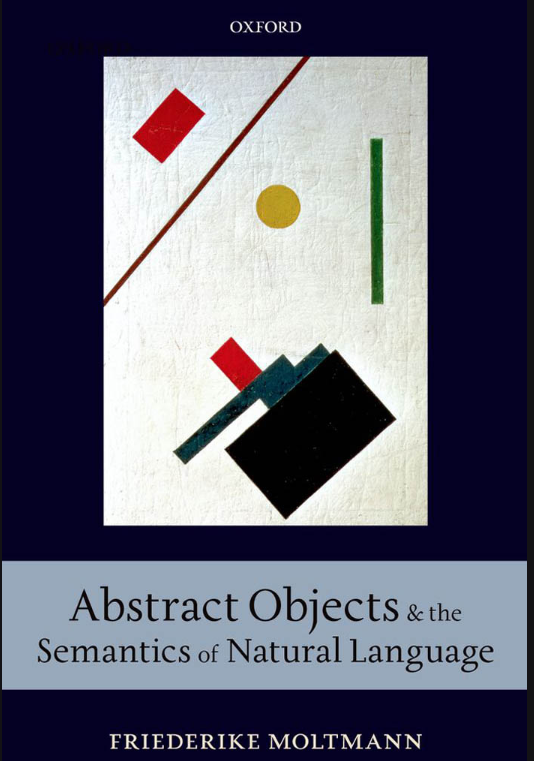
I haven't recommended anything on philosophy in a little while, therefore I'll have you check out 'Abstract Object and the Semantics of Natural Language' by Friederike Moltmann (Oxford University Press).
Outside of the aesthetically pleasing cover (a rarity for a technical book!), it's one of the most interesting take on philosophy and semantics that I've read in recent memories.
This book is a technically demanding affair, I must say, but a very rewarding read as well.
If you're into linguistics and philosophy, just like me, get this one.
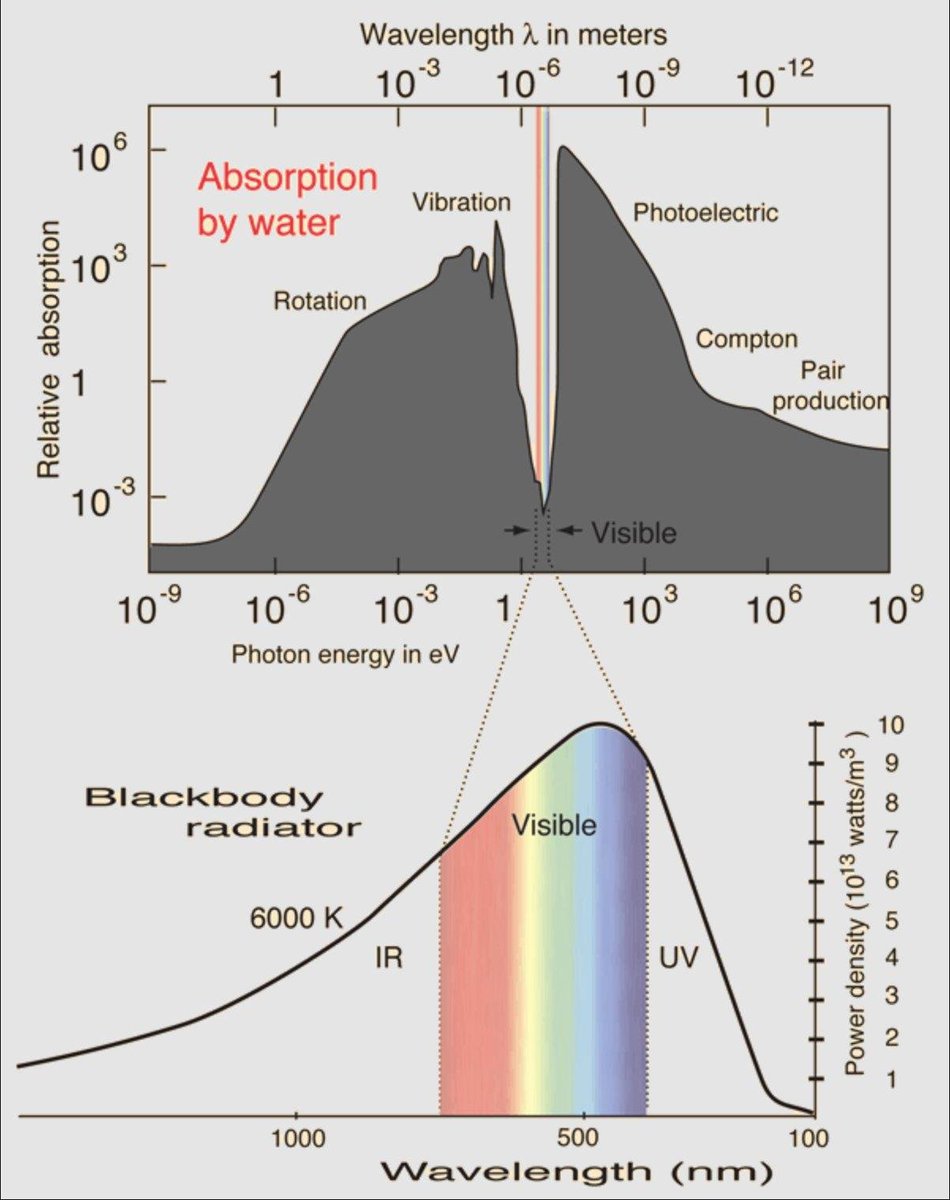
water is transparent only within a very narrow band of the electromagnetic spectrum, so living organisms evolved sensitivity to that band, and that's what we now call "visible light".
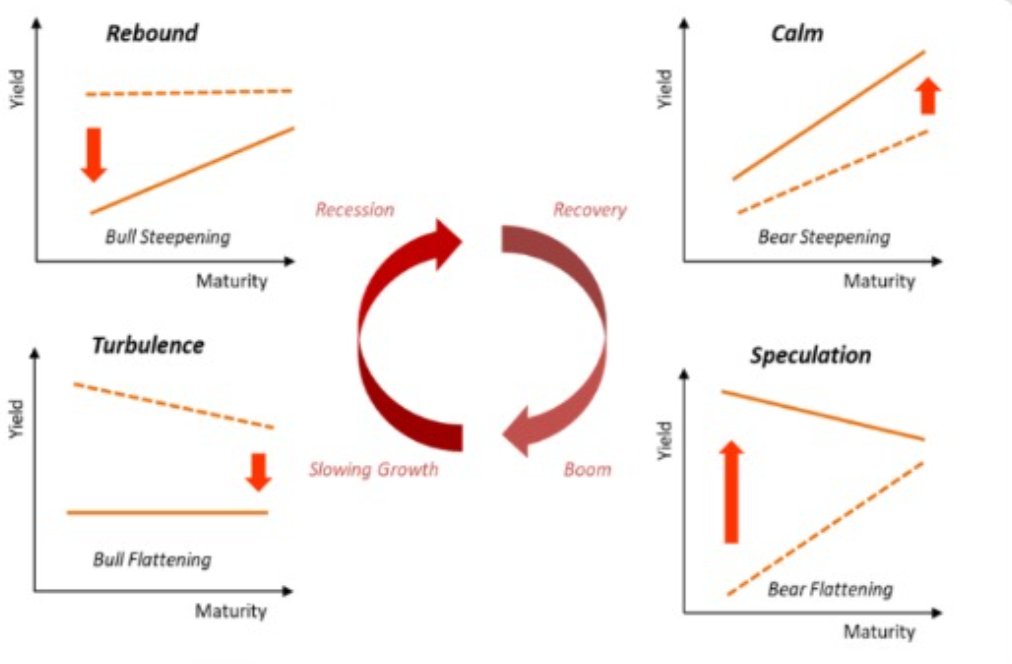
Las 4 formas en cómo se presenta la curva de tipos:
Bull => Alcista para los bonos: caen las TIR. Puede venir de "flight to quality" (el mercado busca refugio) o de bajadas de tipos del banco central.
Bear => Bajista para los bonos: suben las TIR. Puede venir del apetito por el riesgo o de subidas de tipos del banco central para frenar la inflación y el ciclo.
Lo importante es la pendiente de la curva, porque el aplanamiento/empinamiento es la expectativa que el mercado tiene del siguiente ciclo. Bull/Bear y Steepening/Flattening combinados son la lectura de lo que el mercado espera.
EL PROBLEMA DE NAVIER-STOKES
Para quienes están siguiendo esta noticia, les comparto un texto que hice hace tiempo, describiendo de forma sencilla este problema, y mencionando el experimento mental del "agua que explota" de Terence Tao:
https://t.co/im43LQomxD
@JDHamkins Speaking of games, you might be interested in webgoatguy's latest creation, a mashup of Rock-Paper-Scissors and Chess called "Intransitive": https://t.co/jfWhtQSrSM
The pieces move like chess kings. Rock can capture scissors, etc. The goal is to get to the opposite corner
Global bond markets are on fire. Every day yields rise in one place or another. Biggest mover today is Japan, where 10y10y forward (red) is up 10 bps. That spills over to everywhere else and pushes yields up globally. We're witnessing a global sell-off...
https://t.co/GRXneqxjUD
Intelligent people live a boring life. They go to bed at 10. Wake up at 6. Eat simple foods. Go for long walks. Read thick books. Say no to things that drain them. The world chases excitement. But they chase calm. Things that align with their soul. A calm routine. A quiet mind. A healthy body. Meaningful work. A small circle. A private life. Their life may look boring from the outside. But from the inside, they experience a kind of freedom most people spend their entire lives searching for.
El año pasado, volví a impartir la asignatura de Historia de la Ciencia. Disfruto explicándole a los estudiantes de filosofía cómo desde Aristóteles y Newton ninguna mente individual había alcanzado la creatividad de Einstein con su teoría de la relatividad y...