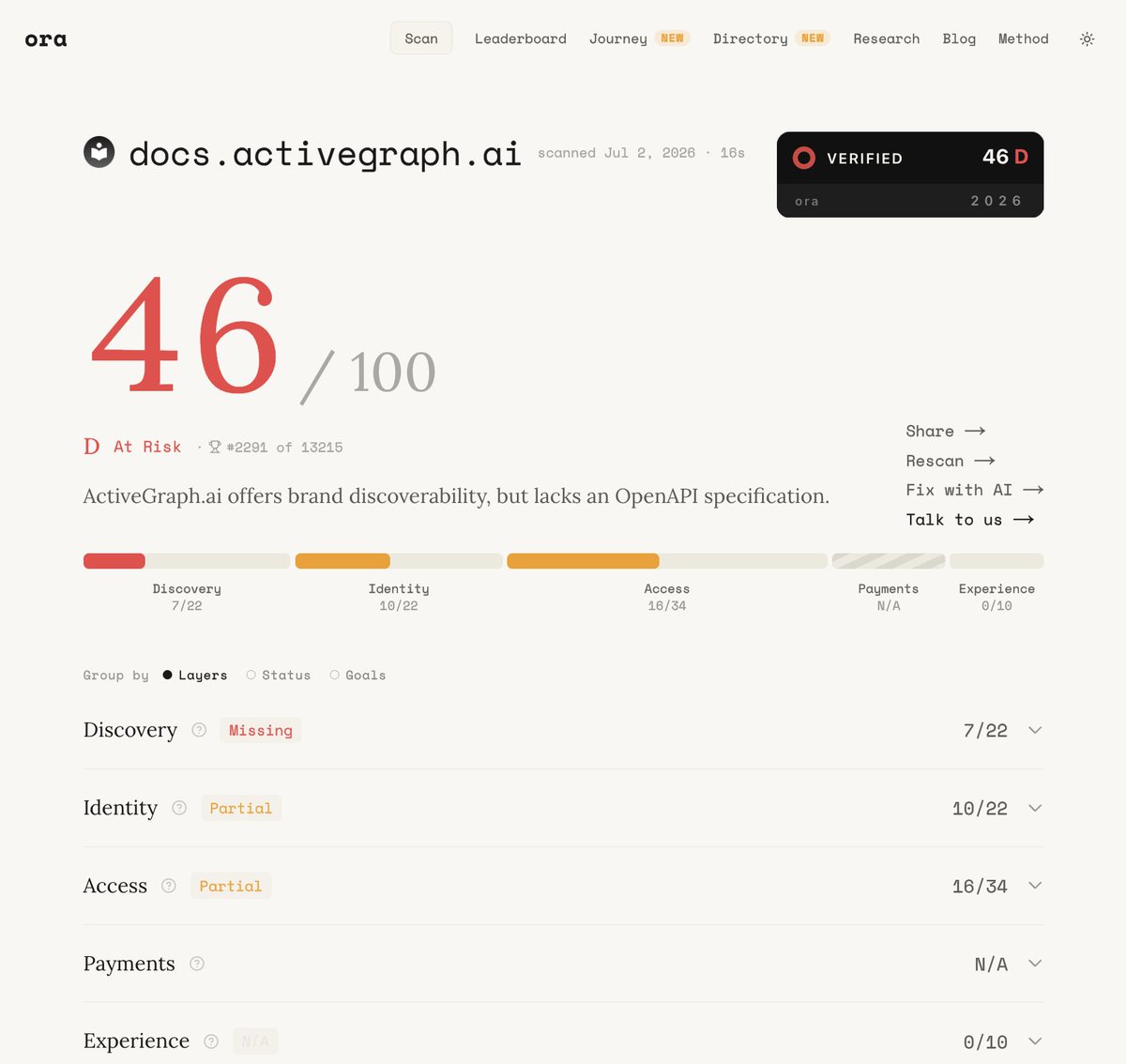
https://t.co/cW3m0HTc9C is super useful. analyzes the "agent readiness" of your site, and then gives you a prompt for your coding agents to fix
(i'm using it now)
As an AI Engineer. Please learn
>Harness engineering, not just prompt engineering
>Context engineering, not just long prompts
>Prompt caching vs. semantic caching tradeoffs
>KV cache management, eviction, reuse, and memory pressure at scale
>Prefill vs. decode latency and why they optimize differently
>Continuous batching, paged attention, and throughput optimization
>Speculative decoding vs. quantization vs. distillation tradeoffs
>INT8, INT4, FP8, AWQ, GPTQ, and when quantization hurts quality
>Structured output failures, schema validation, repair loops, and fallback chains
>Function calling reliability, tool contracts, argument validation, and idempotency
>Agent guardrails, loop budgets, tool budgets, and termination conditions
>Model routing, graceful fallback logic, and degraded-mode UX
>RAG architecture: chunking, embeddings, hybrid search, reranking, and freshness
>Retrieval evals: recall, precision, grounding, attribution, and citation quality
>Evals: golden sets, regression tests, adversarial tests, LLM-as-judge, and human evals
>LLM observability as a first-class discipline: traces, spans, tokens, latency, errors, and drift
>Cost attribution per feature, workflow, tenant, and user journey not just per model
>Safety engineering: prompt injection defense, data leakage prevention, and permission boundaries
>Multi-tenant isolation, cache safety, and cross-user context contamination prevention
>Fine-tuning vs. in-context learning vs. RAG vs. distillation and when each is the wrong tool
>Latency, quality, cost, and reliability tradeoffs across the full inference stack
>Production failure modes: hallucinated tool calls, malformed JSON, stale retrieval, runaway agents, and silent eval regressions
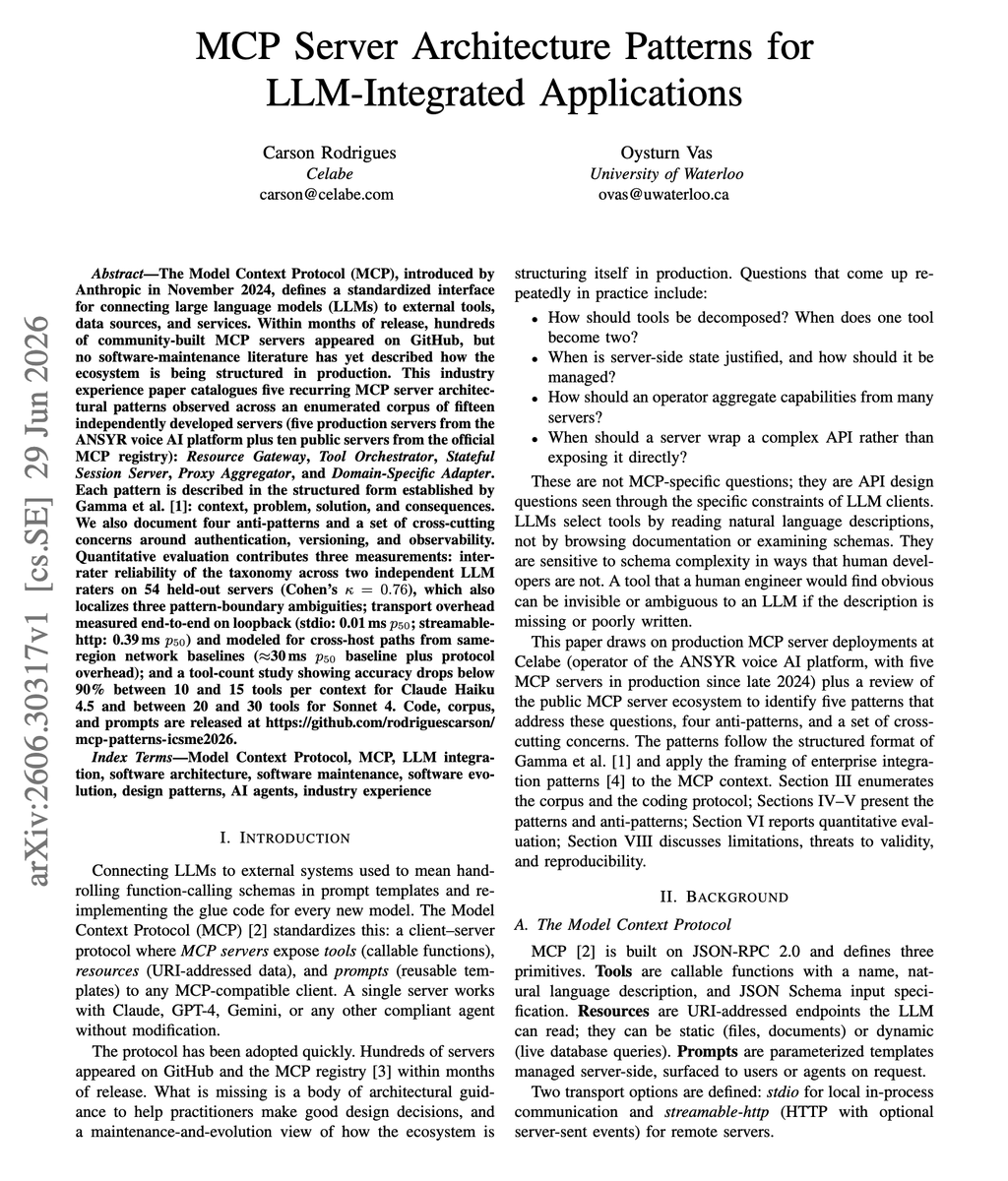
If you build with MCPs, this one is worth reading.
(bookmark it)
The paper covers five recurring MCP server patterns across fifteen independently developed servers.
That taxonomy is useful because I see many AI teams rebuilding the same shapes without shared names.
If you are building MCP servers, this is a practical reference for deciding whether your server is exposing resources, orchestrating tools, managing sessions, aggregating proxies, or adapting a domain workflow.
Paper: https://t.co/yA6mxq2NEQ
Learn to build effective AI agents in our academy: https://t.co/1e8RZKs4uX
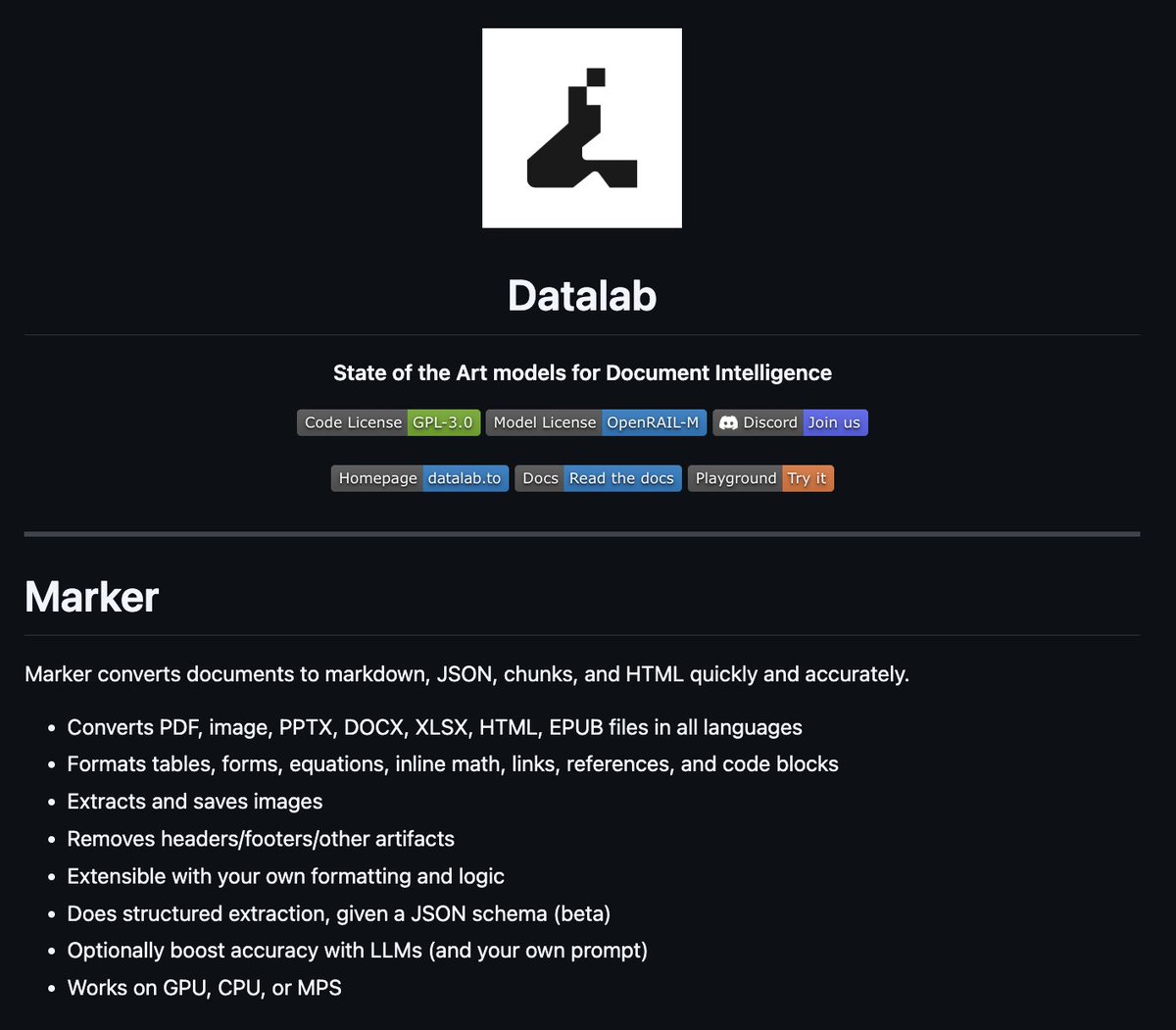
Someone open-sourced a tool that converts pdfs to markdown at 122 pages per second.
→ PDFs, DOCX, PPTX, XLSX, EPUB, images
→ Tables, equations, forms, inline math
→ Works on GPU, CPU, or even your Mac
→ Every language
100% Open Source. 36.6k stars on GitHub.
SOMEONE OPEN-SOURCED A DATADOG REPLACEMENT THAT COSTS 140X LESS TO STORE YOUR LOGS.
It's called OpenObserve. One single binary that does everything Datadog, Splunk, and Elasticsearch do, except it runs on your hardware and your S3 bucket.
Logs. Metrics. Traces. Frontend monitoring. Pipelines. Dashboards. Alerts. LLM observability.
All in one tool.
→ Built in Rust, single binary, under 2 minutes to deploy
→ Parquet columnar storage on S3, not your expensive disks
→ SQL and PromQL queries, no proprietary language to learn
→ OpenTelemetry native, no vendor lock-in
→ Free tier: 200 GB/day ingestion
→ Largest known deployment: 2+ petabytes per day
Here's the wildest part:
It uses 1/4 the hardware of Elasticsearch and runs queries faster.
The whole architecture is just Parquet files on cheap object storage with smart caching on top. That one design choice is why your Datadog bill could collapse by two orders of magnitude.
18.9K stars. 817 forks. 5,919 commits. 197 releases. Latest shipped May 14, 2026.
One honest note: License is AGPL-3.0. Free for self-hosting and commercial use, but if you build a SaaS on top of it, read the license carefully.
100% Open Source. Repo in the first comment.
@pyconcolombia ahora mismo desde San Francisco, California, en la @aiDotEngineer aprendiendo de quienes están construyendo el futuro de esta industria — y con muchas ganas de traer esas conversaciones a Colombia en el workshop. Nos vemos en PyCon 2026
Gemma 4 26B plus Hermes Agent, fully autonomous on 8GB VRAM. llama.cpp integration took 2 minutes.
Writes code, manages GitHub, browses the web, connects to Notion and Obsidian. All offline, all local, 24/7.
NVIDIA DROPPED SOMETHING BIG FOR AI AGENTS
Nvidia open-sourced a catalog of 110+ verified "agent skills" portable instruction sets that teach ai agents how to use cuda-x libraries and platform tools correctly
→ covers cuopt, nemo, dynamo, rag, deepstream, medical ai, physical ai, and more
→ every skill is signed with an oms signature verifiable against nvidia's trust anchor
→ works with claude code, codex, cursor, and kiro out of the box
→ install any skill in one line: `npx skills add nvidia/skills`
this is capability governance for ai agents not just tools, but verified, auditable instructions that agents can actually trust
https://t.co/WUF6OG9mSN