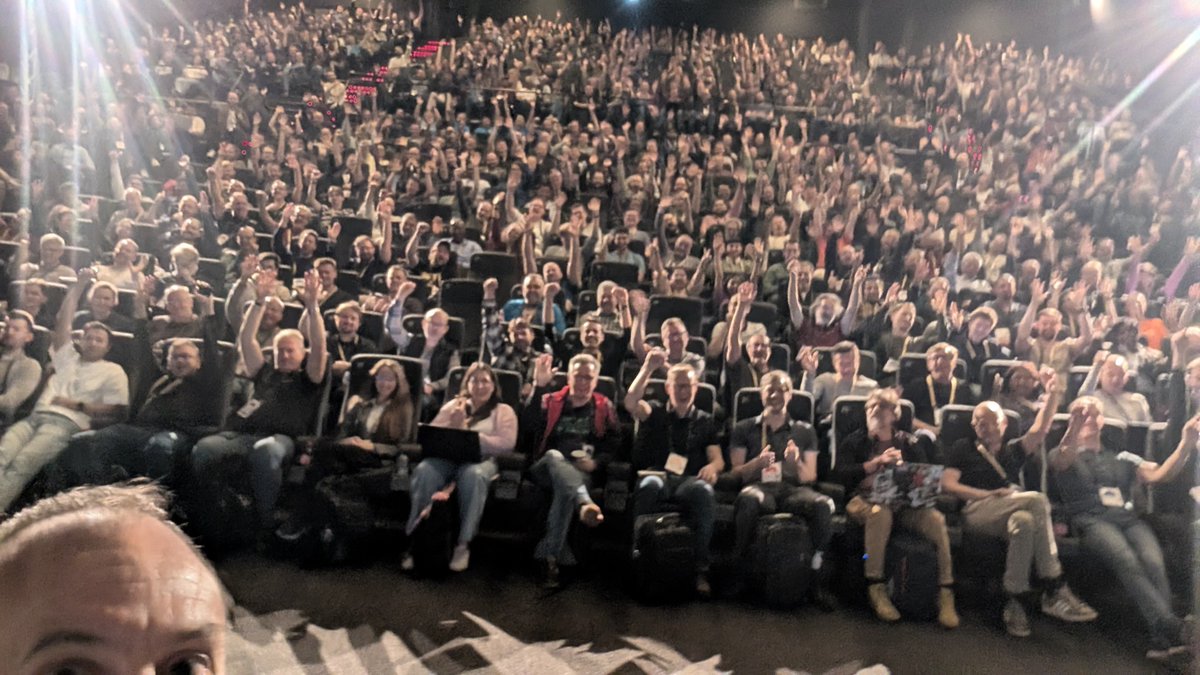
I can't express with enough words how happy I'm to join the amazing group of @Java_Champions!
I need to say thank you to the global @java community for being so good to me since the day one.
Thank you also to my fellows from @soujava: it wouldn't be possible without you!
#java
I think most people multi-tasking with agents could benefit from slowing down
most of the stuff you're doing wont really matter- what's your P0? what would it look like if you gave it your full attention?
The first scans have already reported 77 critical and 803 high model-rated findings to maintainers, and we're still scanning more projects.
@thepunit shared an update, including a curl fix and what we've learned in the first week
https://t.co/e1WOmRKkqf
Claude writes about 90% of Claude Code's code.
From June to September, merged PRs more than doubled while the share reverted fell by more than 40%.
We wrote about how we changed code review to get there, and how to adopt it:
https://t.co/9sZe64g3mb
So... In the last few days I have had my agents write:
1. A word processing app in which I will write future books. It replaces Scrivener.
2. A script writing app in which I will write future video scripts. It replaces FinalDraft.
3. Crapper, a tool that measures and records CRAP statistics for projects. The tool handles many different languages, and adding new ones is easy.
4. Mutator, a tool that runs mutation tests and records the results. The tool handles many different languages and adding new ones is easy.
5. Dryer, a tool that runs duplication analysis on a project. The tools handles many different language and adding new ones is easy.
6. UML-Viewer, a tool that displays the structure of a project in a UMLish diagram that shows modules and dependencies and highlights dependency cycles. Clicking on a module displays it's contents; which may be deeper UML diagrams or, at the leaves, code. The tools color codes the modules to reflect their CRAP and Mutation scores, and as you drill down you can see those scores for each module and function. The tool understands many different languages, and adding new languages is easy.
I recon that, last year, this would have been well over a man-year of effort.
All these tools are in https://t.co/YlxQ9sHH6D. I advise you not to use them directly. Instead, point your agents at them and use them as templates to build the tools that are customized to your needs. The licenses are all BSD Zero, meaning that there are no strings. Do what you like.
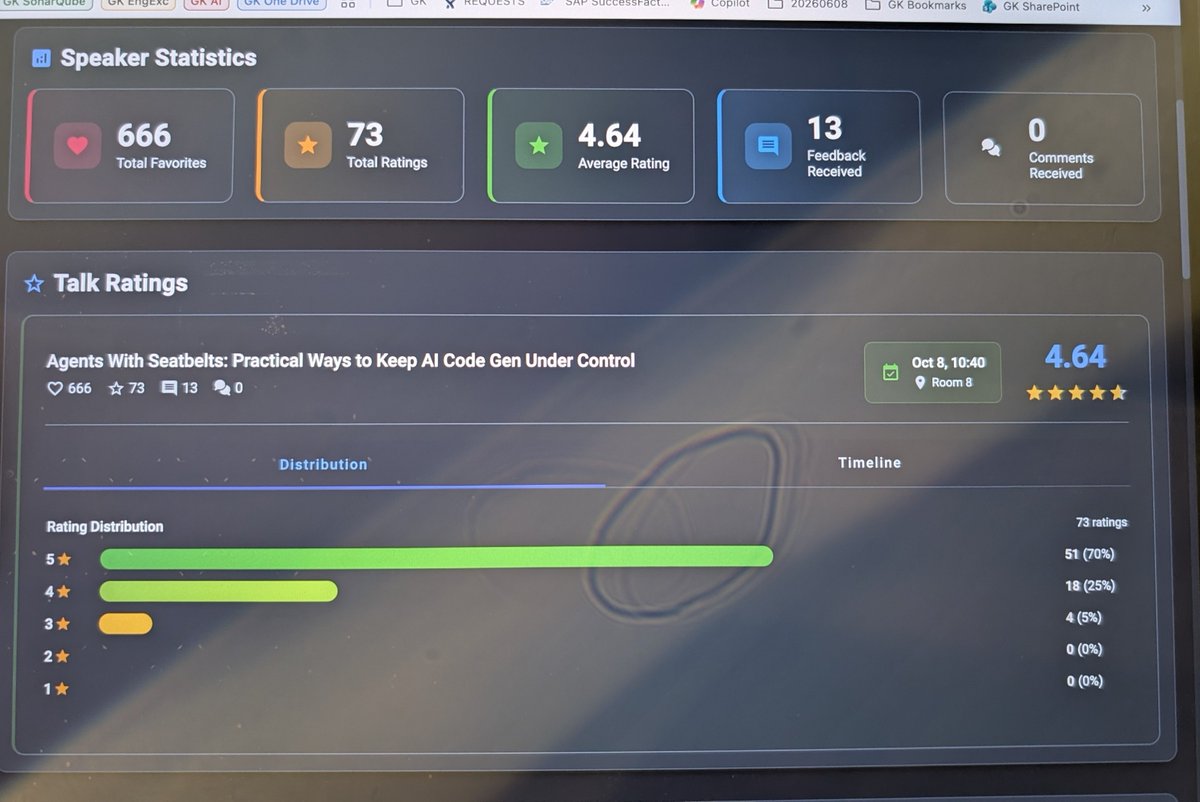
I can not expect more of my first time as #speaker at @Devoxx ❤️❤️
* Queues to enter my room
* 665 likes (3rd of all talks)
* 73 ratings + 83 in my form
* 4.64 rate
* 71 slides download