This Independence Day, we WEAR BLACK to mourn those who died for the cause #OneManOneVote; to resist those who wish to entrench rule by the few over the many; and to stand in solidarity with all those in prison for standing up for the dignity of all. Join us!
🖤❤️💛💚
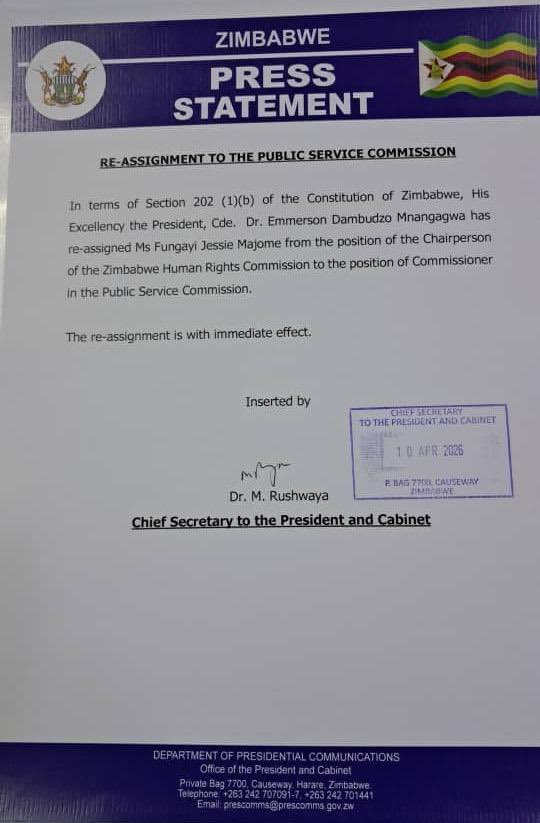
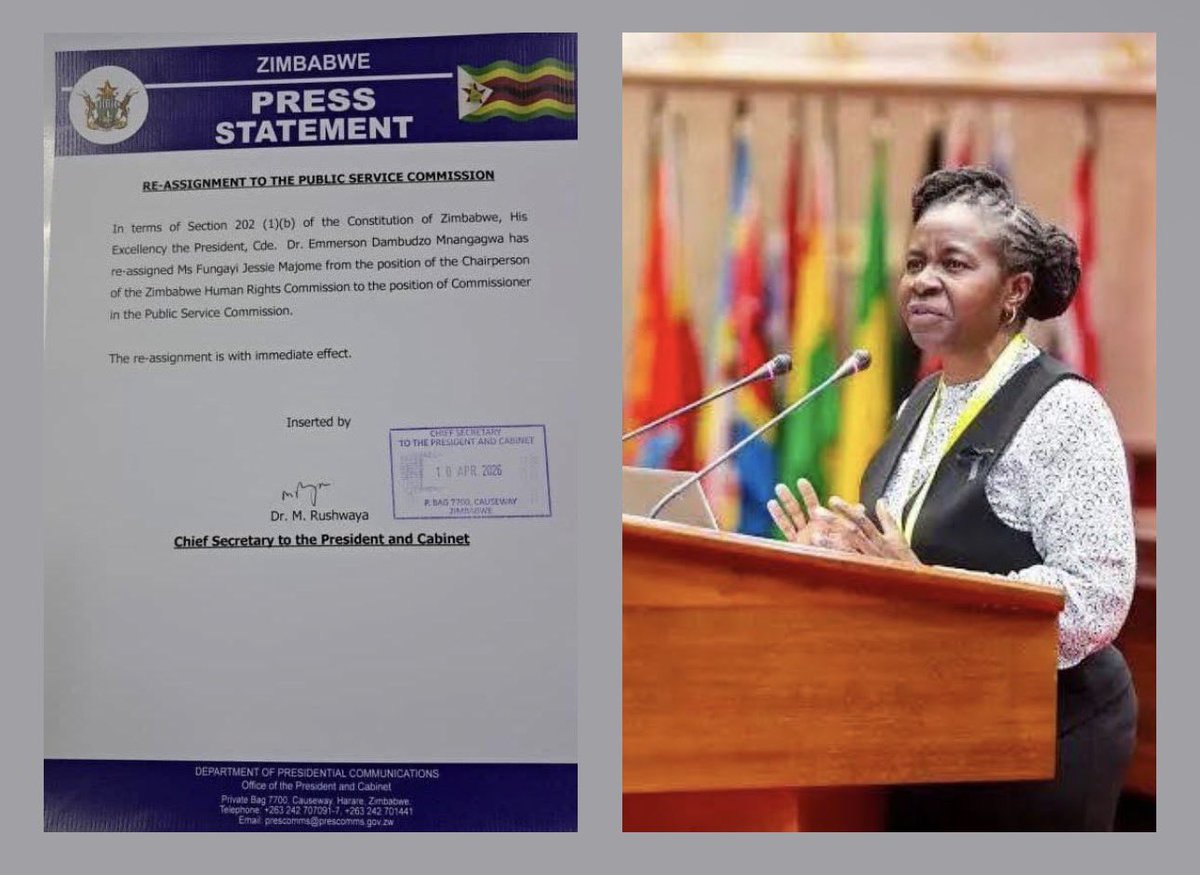
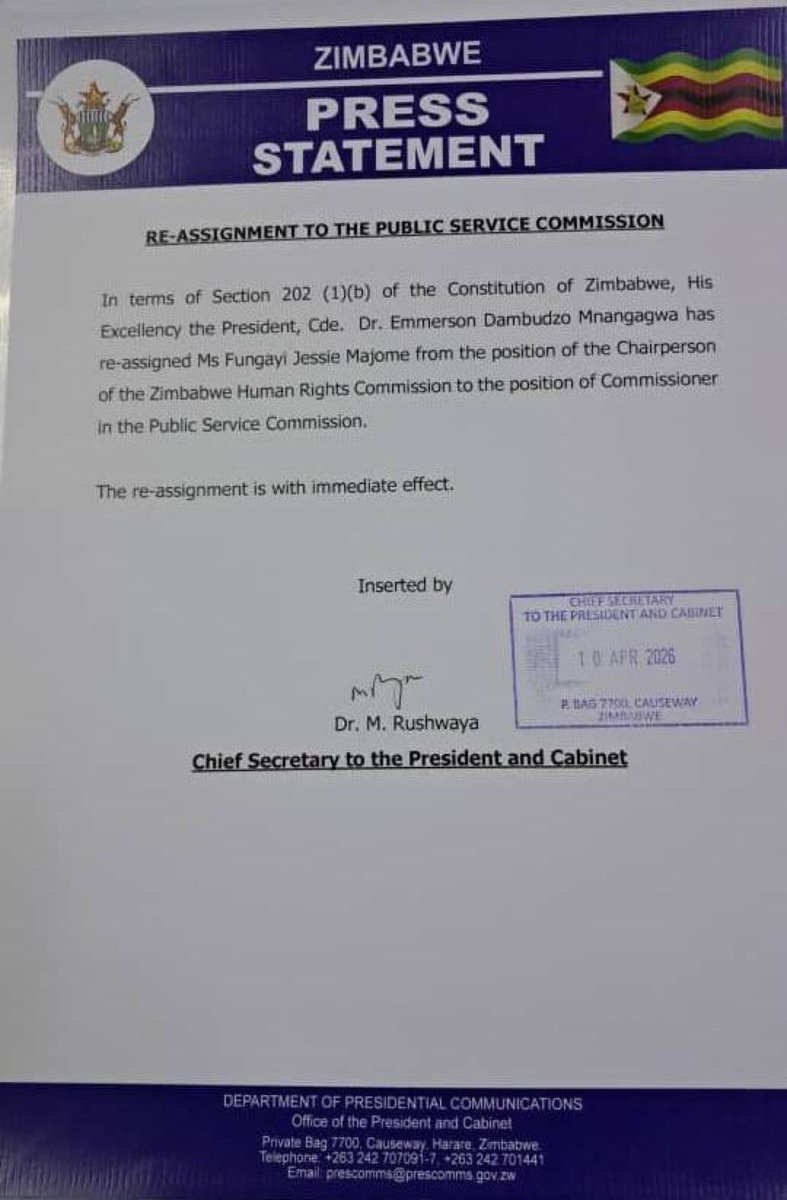
President Emmerson Mnangagwa has fired the chairperson of the Zimbabwe Human Rights Commission, Jessie Majome, and reassigned her to the Public Service Commission.
Majome’s firing comes after she publicly criticised the engagement process around Constitutional Amendment Bill No. 3, arguing that citizens were not given adequate time to air their views on the bill.
Shortly after raising these concerns this week, she was removed from her position today, a sequence of events that raises serious questions about whether her dismissal was linked to her stance on the bill and whether this constitutes punishment for expressing an independent constitutional opinion.
The president’s decision to remove Majome from her position is unconstitutional because the Constitution of Zimbabwe sets out a clear and strict process for the removal of commissioners of independent bodies such as the Zimbabwe Human Rights Commission.
These commissioners can only be removed from office on specific grounds, including misconduct, incapacity or incompetence, and must go through a formal procedure that involves the establishment of a tribunal to investigate the allegations. There is no provision that allows the president to arbitrarily dismiss, transfer or redeploy a sitting chairperson of a constitutional commission.
This development raises serious concerns about the erosion of the independence of constitutional institutions and signals a deepening pattern of executive interference in bodies that are meant to act as checks and balances on presidential power.
Jessie Majome turned the ZHRC into a truly independent body and led it in its principled rejection of CAB#3. For that, the President has dismissed her. This is unconstitutional and void. We will fight it. It is the continuation of the silencing of every voice against CAB#3.
A member of an Independent Commission, such as the Zimbabwe Human Rights Commission, can only be removed from office under section 237(2) of the Constitution of Zimbabwe. Section 237(3) expressly provides that the procedure for removing a judge also applies to members of an Independent Commission; accordingly, a tribunal must be appointed on the recommendation of the Judicial Service Commission and the member must be found guilty of misconduct before removal.
Reassigning Jessie Majome to the Public Service Commission therefore constitutes removal from office and is unconstitutional.
Reliance on section 202(1)(b) is unavailing: that provision does not affect the security of tenure enjoyed by Majome is of no application to the situation at hand, and the attempt effectively seeks to demote her from Chairperson of an Independent Commission to an ordinary commissioner of the PSC.
We cannot sit idly by while such serious violations occur. The Department of Justice has failed in its duties, with potentially grave consequences.
Zimbabwe Human Rights Commission Chair Adv. @JessieFMajome has paid dearly for her professional & objective report to Parliament regarding the controversial #CAB3 public hearings.
She berated the process for violence and exclusion of opposing voices. Watch 👇 @LynneStactia
The reassignment of @JessieFMajome shows that the regime is clearly in pursuit of this nonsensical 2030 agenda. Kudos to her for standing her ground and exposing the farce public consultations #NoTo2030
President Emmerson Mnangagwa has removed Zimbabwe Human Rights Commission chairperson Jessie Majome, days after the independent body issued a scathing report criticising thuggery observed during public consultations on the Constitutional Amendment No. 3 Bill
What happened to most of these deals, did they ever materialise. Some ended in court cases because someone went into a deal without doing proper research. Quick to announce figures of non existent or realistic deals. #NoTo2030 ‘Open for business’ Zimbabwe has little to show for $27bn - Moneyweb https://t.co/9yoeOlMcz2
@advocatemahere@PoliceZimbabwe Public hearings for legal reform have always been a farce to hoodwink the masses. What we are seeing with CBA3 is the climax on how to establish an authoritarian state through lawfare
Dear President and your ICT Minister,
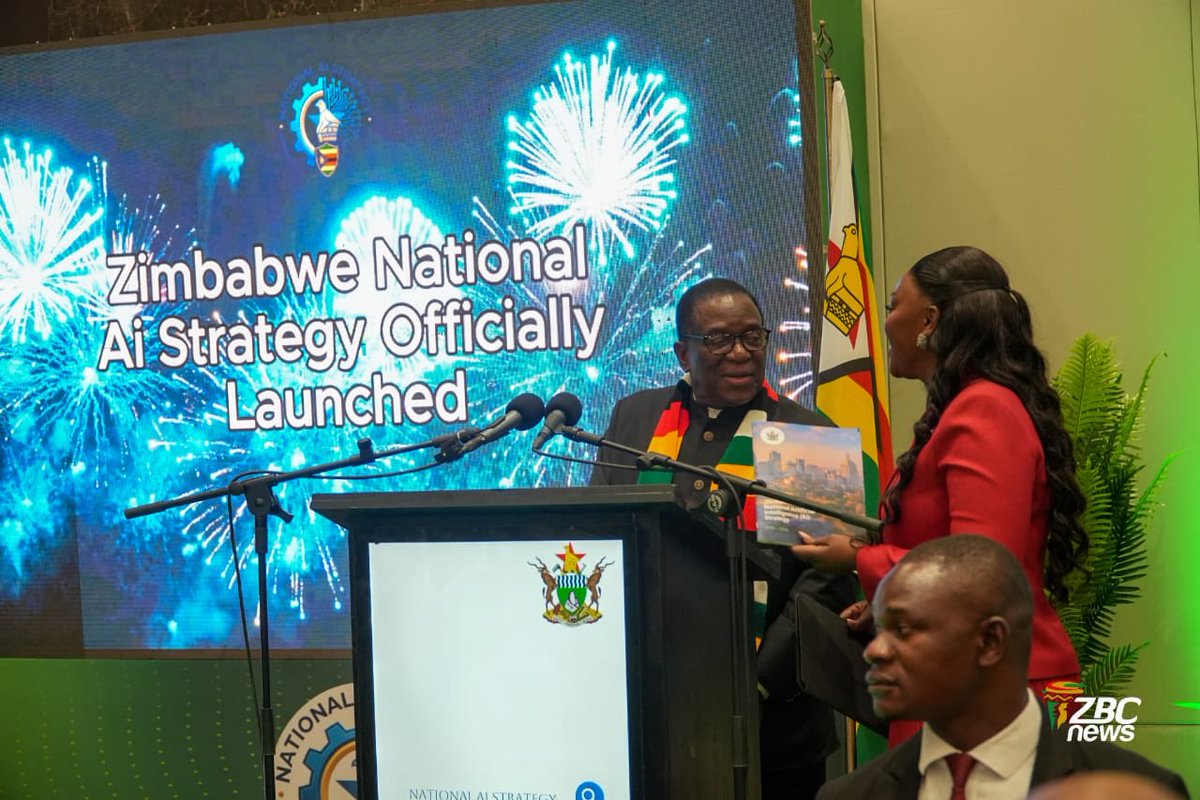
With the collapse of the formal retail sector and the increasing informalisation of the financial system, Zimbabwe has drifted even further from being prepared for the age of artificial intelligence. AI readiness is not achieved through glossy brochures, promotional conferences, or aspirational policy statements. It is built on the foundation of structured, high-quality, machine-readable datasets.
Modern AI systems depend on digitised transactional ecosystems where large volumes of economic activity are captured in structured formats that can be processed, analysed, and modelled. In economies where retail transactions occur through formal payment systems; integrated point-of-sale platforms, electronic invoicing, enterprise resource planning systems, and regulated banking infrastructure, vast streams of standardised data are continuously generated. This data forms the raw material for machine learning models, predictive analytics, and automated decision systems.
However, when an economy becomes dominated by informal trade, cash transactions, and fragmented financial channels, the data exhaust that AI systems depend on simply does not exist. Transactions remain undocumented, datasets become incomplete or inconsistent, and economic activity becomes opaque to digital systems. Under such conditions, the data pipelines required for training and deploying AI models are severely constrained.
In other words, artificial intelligence is fundamentally a data infrastructure problem before it is a technology problem. Without formalised digital records, interoperable databases, and reliable data governance frameworks, the promise of AI remains little more than a slogan.
Most of our politicians are lawyers. My hope is that even as Mnangagwa is closing the space for pple to openly debate Amendment 3, they all come out and explain what it means for the people in plain language that we all understand. Knowledge is power especially if it is shared.
Thanks for your question. Having been elected and sworn into office in Sept 2023, ED’s current term ends in Sept 2028. That term cannot be extended without (a) holding a referendum to ask Zimbabweans for their approval to extend Presidential term of office from 5 to 7 years (b) Another referendum to amend section 328(7) which prevents the extension from being applied to benefit the person holding the office of President, who in this case is President Mnangagwa. This is what @ChinamasaPA explained in detail at the 2024 ZANU PF conference in Bulawayo when the resolution to extend ED’s term to 2030 was passed. This is also the current legal position that has been articulated by the Constitutional Court of Zimbabwe.