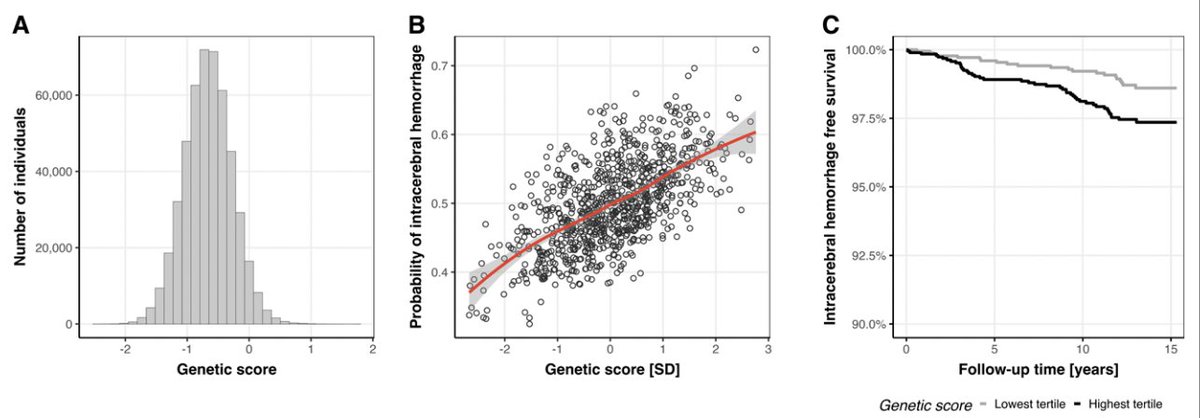
Enhanced risk stratification for anticoagulation-related intracerebral hemorrhage 💊🩸 is achieved with the use of a genetic risk score 🧬.
Recently published in @StrokeAHA_ASA
Get to know more at ⬇️
https://t.co/HqSVDPSEQb
@emayerho @livia_parodi @CDAndersonMD
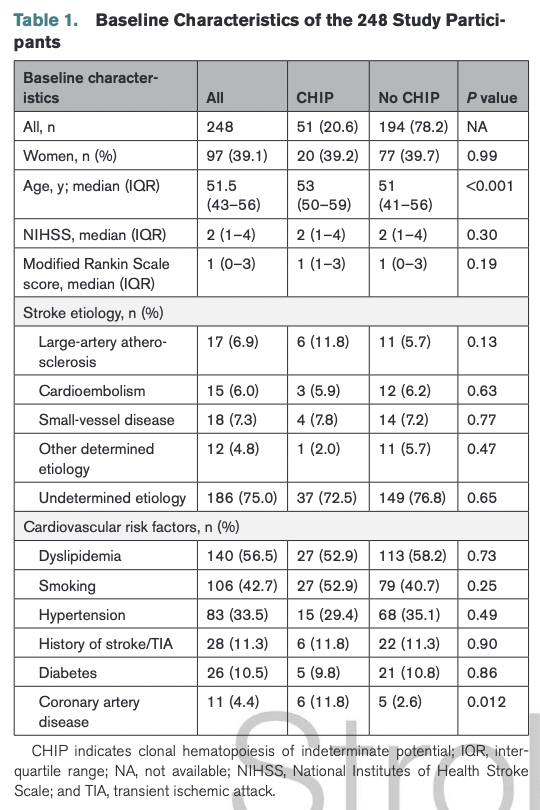
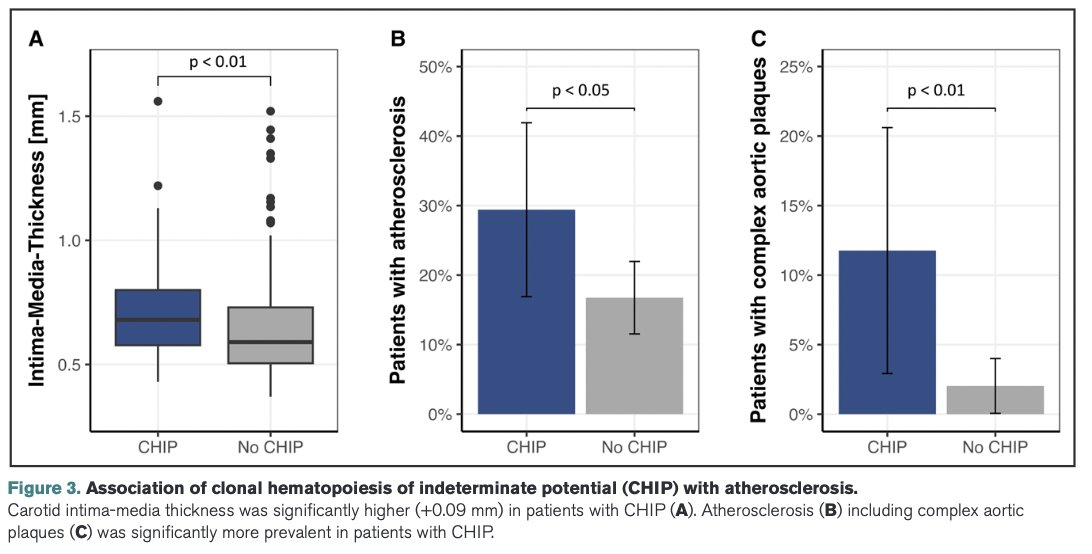
Delighted to contribute to this paper led by @emayerho showing that CHIP is enriched among young pts presenting with strokes of unknown etiology, including how CHIP testing changed the management for a subset of patients https://t.co/gff7az1YtF @StrokeAHA_ASA
Can polygenic scores be used in clinically relevant scenarios? Have a look at our @StrokeAHA_ASA paper by @emayerho@CDAndersonMD, where we show that adding a PRS for ICH to HAS-BLED in patients under anticoagulation improves risk stratification for ICH https://t.co/D9ZbT8KI8G
Happy to share our most recent work on PRS in ICH demonstrating how genetics can improve prediction in a clinical setting. Thanks to @CDAndersonMD @mgeorgakis1 @JRosand_MD @rainermpg et al for amazing mentorship!
Check our preprint with @emayerho@CDAndersonMD on a polygenic risk score for #ICH that when incorporated into a clinical score proxying HAS-BLED improves prediction for ICH among #anticoagulant-users. A window for a direct clinical application of #PRS? https://t.co/yY3WjaNFa0
Just out! 📢 📢 📢
The largest study on stroke genetics 🧬 with more than 2M individuals (incl. >200,000 cases) just published in @Nature!
Have a look here 👉 https://t.co/narkzZwWp9
🧵1/7
Glad to share our work highlighting the importance of treating uncontrolled BP in ICH survivors irrespective of hemorrhage location published in the official journal of @ESOstroke
https://t.co/FdicAbv3Ie
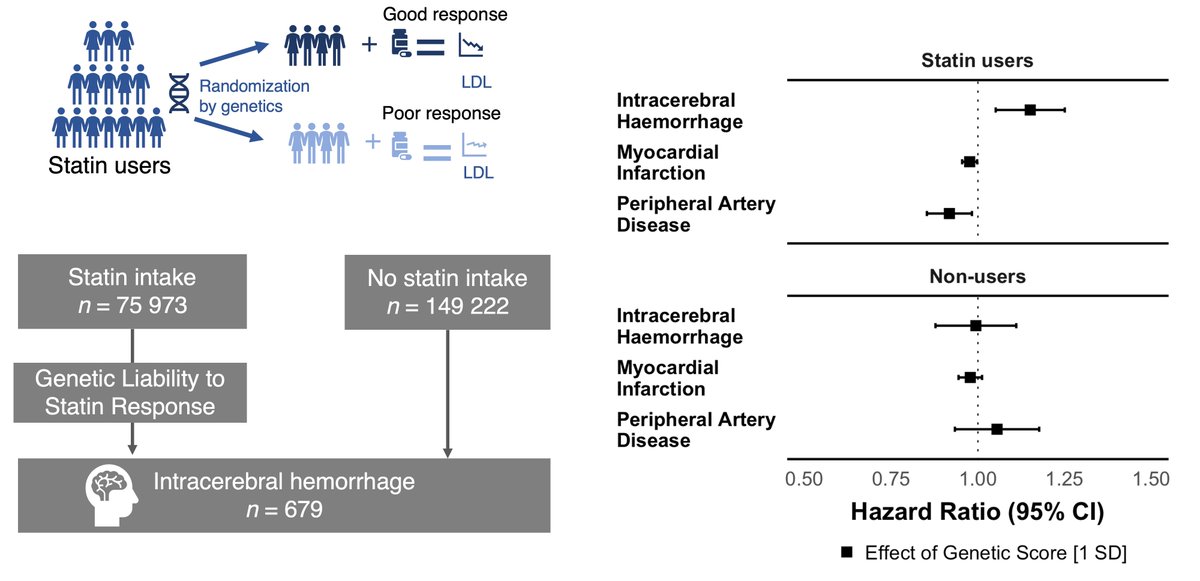
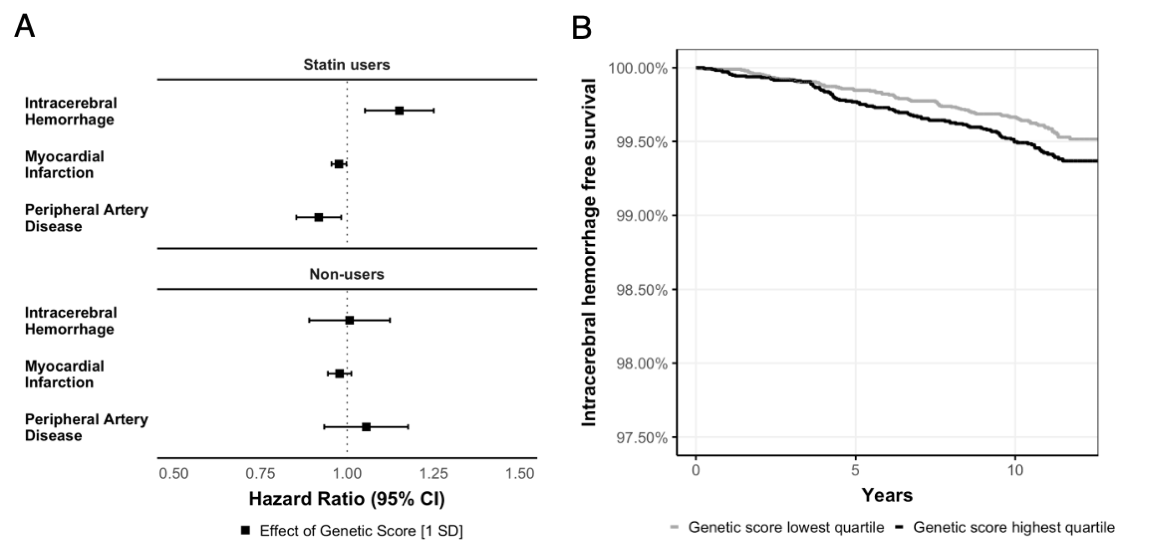
While the benefits of statins for preventing vascular disease are well-established, Mayerhofer et al. show that genetic factors influencing the response to statins are also associated with risk for intracerebral haemorrhage. https://t.co/ionp9kCBWA
ICYMI: "Genetically predicted on-statin LDL response is associated with higher intracerebral hemorrhage risk" led by @emayerho and @mgeorgakis1 at medRxiv: https://t.co/eib2mIta3V. Not the first example of this approach I've seen, but a really interesting one. Thread follows!
I am happy to share our recent work on statins and intracerebral hemorrhage that illustrates how genetic variation of drug response can be used to assess drug effects. Many thanks to @mgeorgakis1 @cdandersonmd @rainermpg @jrosand_md@stevesphd and others https://t.co/IxBQ6pTLYs
I am excited to share an article published today in Frontiers in Neurology, on which I have worked during the last three years. Thanks to @cdandersonmd and all other contributors! https://t.co/omA0j1T8db
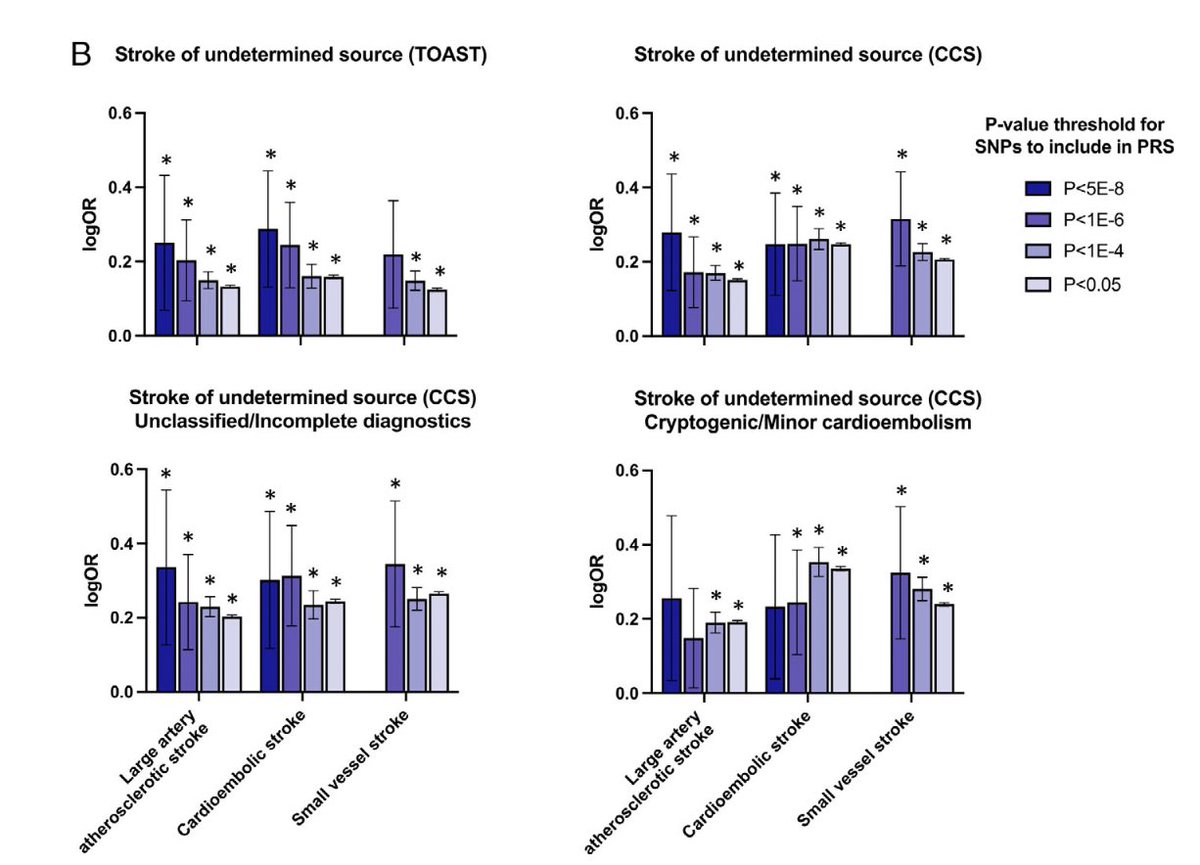
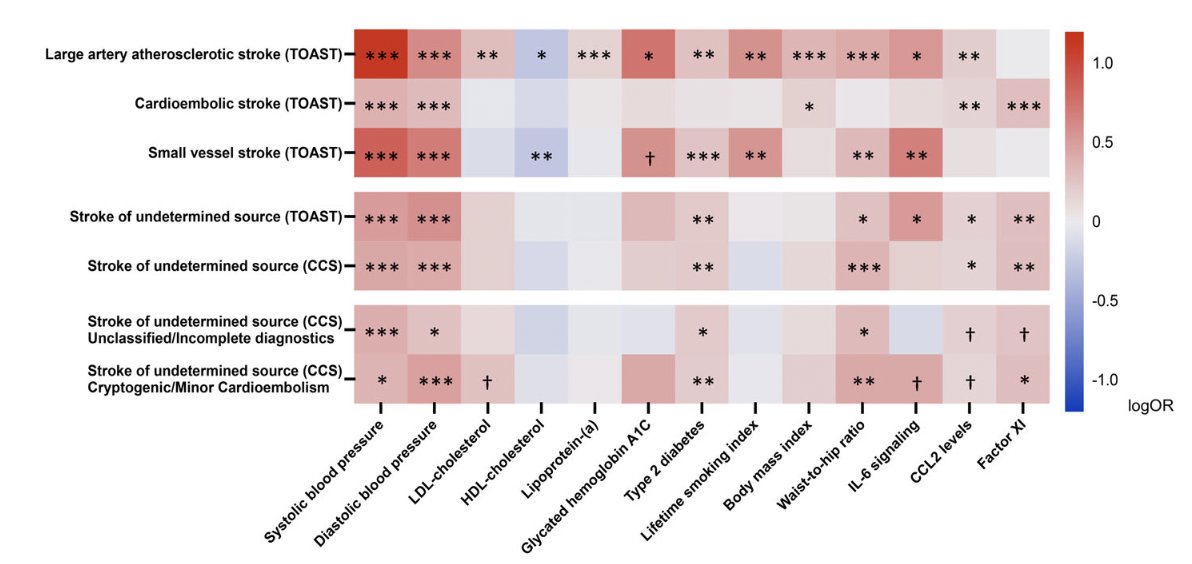
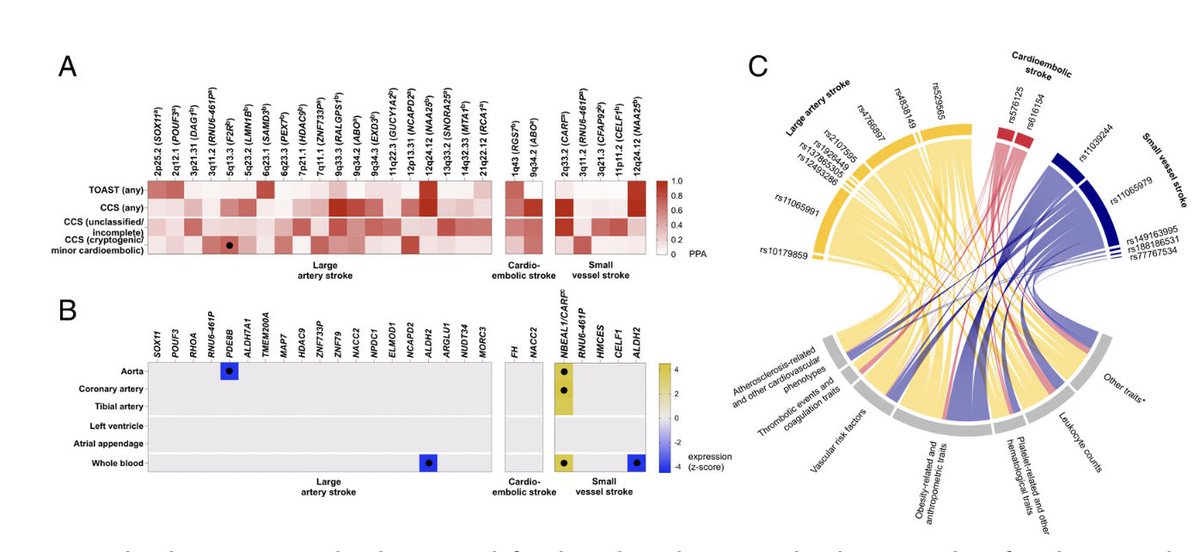
glad to share our article on the genetics of cryptogenic stroke in Annals of Neurology https://t.co/C82QKh8cTP reflecting my work @CGM_MGH@broadinstitute Main message: genetics don't respect our diagnostic boundaries