Esta semana pasaron dos cosas.
La #dolarización por ley se murió.
La dolarización por flujo llegó.
Para el #P2P#venezuela , la segunda es la peligrosa. Y casi nadie la está viendo.
7 años operando, +55.000 transacciones. Te explico. 🧵
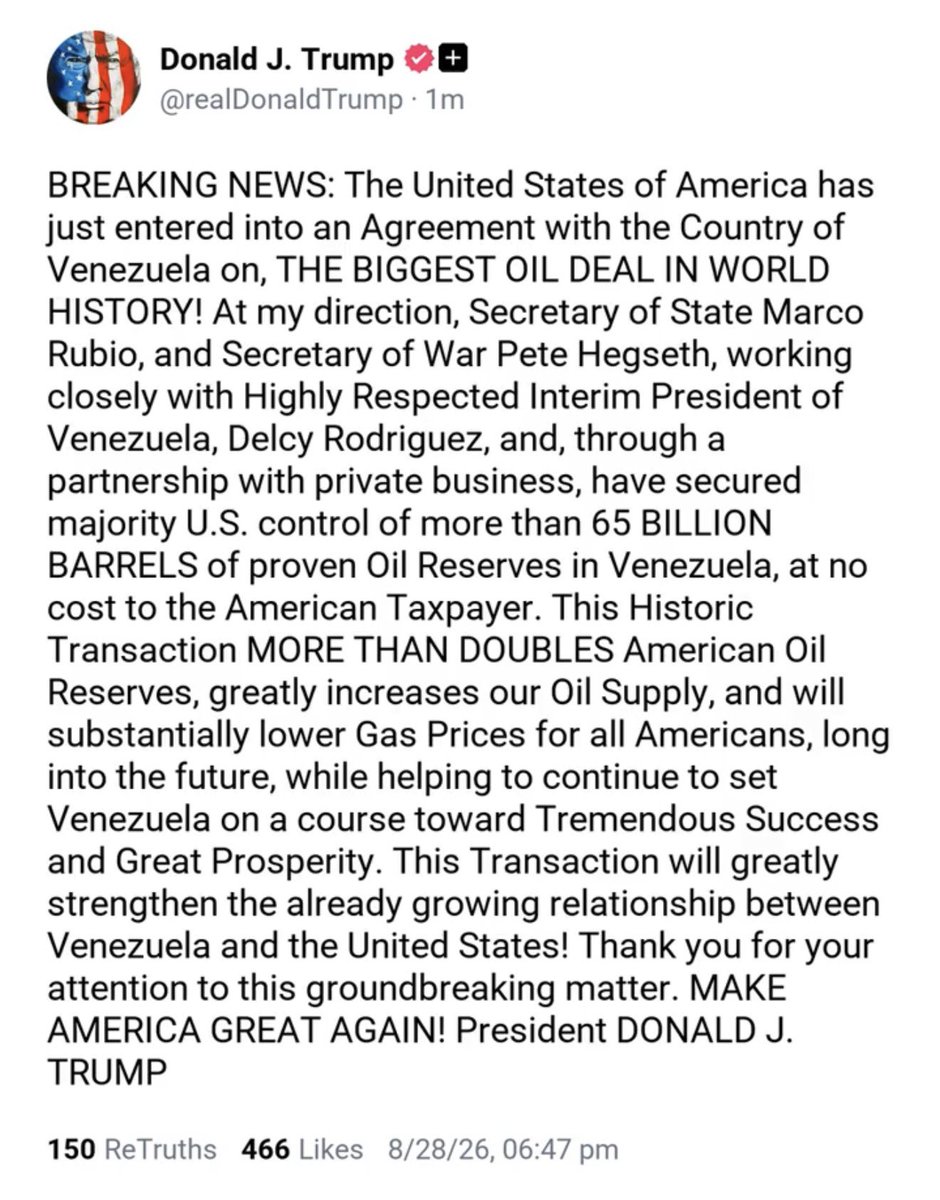
Tres comentarios sobre este posteo del presidente #Trump
1️⃣ Siento mucho olor a promesa de campaña electoral, de cara a las elecciones de noviembre que se presentan complejas para el Partido Republicanos. Se terminará consumando el “deal”.
2️⃣ No puede hacer “deal” cuando no hay dos partes negociando libremente.
3️⃣ De ser de cualquier manera cierto el anuncio, no creo que sea lo que mis amigos venezolanos esperaban cuando apresaron al dictador #Maduro. Espero que la democracia vuelva pronto a mi querida #Venezuela
Me gustaría escuchar a @EmmaRincon, @OrlvndoA, @Urruchurtu y también a @AntonellaMarty y a @agusantonetti, que saben mucho más que yo…
Y obviamente a cualquier otro que quisiera opinar!
He estado leyendo con atención lo que se conoce hasta ahora del acuerdo petrolero entre Venezuela y Estados Unidos. Por su magnitud, es imposible verlo como un asunto menor. Venezuela necesita muchísimo capital para recuperar su industria petrolera, además de tecnología, empresas con capacidad de ejecución y acceso estable a los mercados. Y en ese proceso, por razones económicas, geográficas e históricas, Estados Unidos está llamado a jugar un papel importante.
Ahora bien, tengo muchas preguntas. Porque una cosa es anunciar inversiones mil millonarias y otra bastante distinta es lograr que ese dinero efectivamente llegue y se convierta en pozos, infraestructura y producción. Estamos hablando de inversiones que necesitan años para madurar y, por tanto, requieren algo que Venezuela ha tenido dificultades para ofrecer: reglas claras y previsibles en el tiempo. Seguridad jurídica, contratos que se respeten, mecanismos de arbitraje y una institucionalidad que no dependa de quién gobierne en Caracas o en Washington.
Hay otro tema que seguramente generará discusión: el régimen fiscal. Venezuela va a tener que ser muy competitiva. Nuestro petróleo está en el subsuelo, pero sacarlo requiere capital y ese capital tiene muchas alternativas en el mundo. Con el nivel de riesgo que todavía representa Venezuela, pretender una carga fiscal demasiado elevada puede terminar haciendo inviables proyectos que sobre el papel lucen muy atractivos.
Por eso prefiero no caer ni en la celebración anticipada ni en el rechazo automático. Me parece una oportunidad importante y creo que una alianza energética entre Venezuela y Estados Unidos puede tener efectos muy positivos para el país. Pero el anuncio es apenas el comienzo. Lo verdaderamente importante será ver bajo qué reglas se hará, quién pondrá el capital, cómo se protegerá esa inversión y, sobre todo, qué instituciones vamos a construir para que esta vez el petróleo ayude a sostener una economía más estable y no simplemente otro ciclo de ingresos extraordinarios.
Let me get this straight.
When Maduro gave oil to the Cuban dictator for free, sold it to China at $20 below Brent, handed it free to Rosneft to pay debts, and let $21 billion go uncollected. That was "sovereignty."
Now, a $100 billion investment and a 30% royalty that will benefit Venezuelan citizens for the first time in decades, is considered "stealing."
Fascinating.
Data via Reuters, CNN, OFAC, and Venezuelan law. Image from Excel spreadsheet.
Druckenmiller on Bessent's bullshit
"I have spent five decades trading on a simple premise: Markets aggregate information no committee possesses, and prices are how that information reaches decision makers. The long-term Treasury yield is the most important price in the world. It is also the only fiscal disciplinarian the U.S. has left."
"Every basis point of artificial yield suppression is a subsidy to procrastination." "Return buybacks to their stated purpose: small, scheduled, off-the-run liquidity operations announced at quarterly refundings, never off-cycle responses to yield levels. Term out the debt honestly and pay the price the market sets."
"If the 30-year must trade at 5.5% to clear, that isn’t a crisis. It is an invoice. Then do the only thing that durably lowers long-term yields: address the primary deficit."
Stanley Druckenmiller, probablemente el mejor inversor de la historia y sin duda el mejor inversor macro, arremete contra su antiguo subalterno, hoy Secretario del Tesoro, por manipular los tipos de interés de largo plazo en una columna titulada "Deja hablar al mercado de bonos".
Por cierto, el nuevo presidente de la FED lo primero que dijo al llegar es que quería escuchar al mercado de bonos y si lo intervienen así lo único que va a escuchar es la mano de Trump.
1/3 ¿Qué dicen los economistas sobre dolarizar plenamente?
• Pedro Palma: EN CONTRA. Dolarizar frena la diversificación y causa recesión al caer el crudo. Propone un BCV autónomo (caso Perú). • Ronald Balza: EN CONTRA. Dolarizar no evita desfalcos; la clave es transparencia.
Escribir hoy en Venezuela lo contraproducente de la dolarización es ir contracorriente, y entiendo las razones perfectamente. Igual voy con algunos datos recopilados con IA.
En el planeta hay 195 países reconocidos y 180 monedas.
Este es un paso importante pues Venezuela necesita avanzar en una integración efectiva de la banca nacional con el sistema financiero internacional y ampliar sustancialmente el alcance de las corresponsalías bancarias. Recuperar estos canales permite procesar pagos y transferencias internacionales con menores fricciones, mejorar los mecanismos de compensación y liquidación y facilitar el movimiento de divisas asociado al comercio exterior y a los flujos de capital.
Además, hay una implicación particularmente relevante para el mercado cambiario: una red más amplia de corresponsalías permite que los bancos venezolanos movilicen divisas con mayor facilidad entre cuentas locales y externas, incorporen nuevos oferentes de moneda extranjera y desarrollen con mayor profundidad las operaciones interbancarias. Eso puede traducirse en más participantes, mayor volumen transado y mejor formación de precios, reduciendo las fricciones que hoy limitan la profundidad y liquidez del mercado.
Para que esto funcione, la infraestructura financiera debe venir acompañada de estándares sólidos de cumplimiento: KYC, prevención de legitimación de capitales y financiamiento al terrorismo, trazabilidad de fondos, gestión de riesgos y controles que permitan a los bancos corresponsales internacionales operar con Venezuela dentro de parámetros aceptables de compliance. La corresponsalía no es solamente una conexión bancaria; requiere confianza institucional y operativa.
Por eso este proceso es mucho más importante de lo que parece. Un mercado cambiario moderno no se construye únicamente aumentando la oferta de dólares: necesita una infraestructura bancaria capaz de canalizar esos flujos de manera eficiente, transparente y competitiva.
This paragraph from Lee Kuan Yew shows why Munger admires him so much...may as well have been written by Munger himself:
"We learned on the job and learned quickly. If there was one formula for our success, it was that we were constantly studying how to make things work, or how to make them work better. I was never a prisoner of any theory. What guided me were reason and reality. The acid test I applied to every theory or scheme was, would it work? This was the golden thread that ran through my years in office. If it did not work, or the results were poor, I did not waste more time and resources on it. I almost never made the same mistake twice, and I tried to learn from the mistakes others had made. I discovered early in office that there were few problems confronting me in government that other governments had not met and solved. So I made a practice of finding out who else had met the problem we faced, how they had tackled it, and how successful they had been. Whether it was to build a new airport or to change our teaching methods, I would send a team of officers to visit and study those countries that had done it well. I preferred to climb on the shoulders of others who had gone before us."
Una nota imperdible: Caracas, Belgrado, Beirut y Teherán prosperaron entre bloques, sanciones y reglas a medias gracias a una clase profesional que sobrevivió a su inestabilidad y aprendió a traducir entre mundos. Bienvenidos a las ciudades liminales. https://t.co/TblW2y5VmJ
Stan Druckenmiller told Alex Karp that the market would be flat for a decade, the same way it was from 1966 to 1982: "it's like driving a Porsche 200 miles an hour, not only taking the foot off the gas, but just slamming the brakes on"
this is him explaining which companies get built in a decade like that, the one rule that made him buy Palantir before almost anyone, and what Karp says his war products actually do
"there were companies that did very, very well in that environment back then. that's when Apple Computer was founded, Home Depot was founded. coal and energy companies, chemicals made a lot of money in the 70s"
"one of the cardinal rules I learned early on in venture capital is look where the kids are going. I bought your stock in 08, and I checked - you guys were a magnet for talent"
"I did quite well financially, but to tell you the truth, I've never been more proud to own a company"
bookmark & watch the full conversation ↓
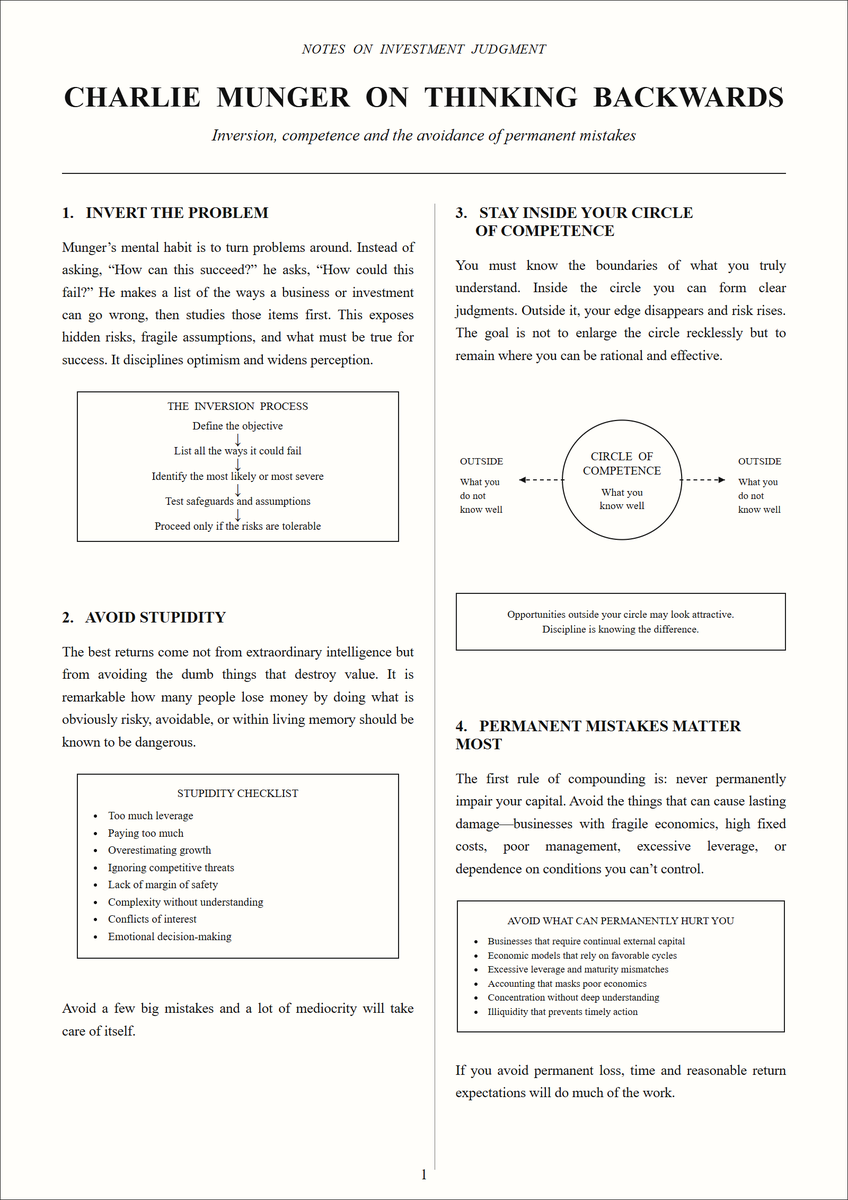
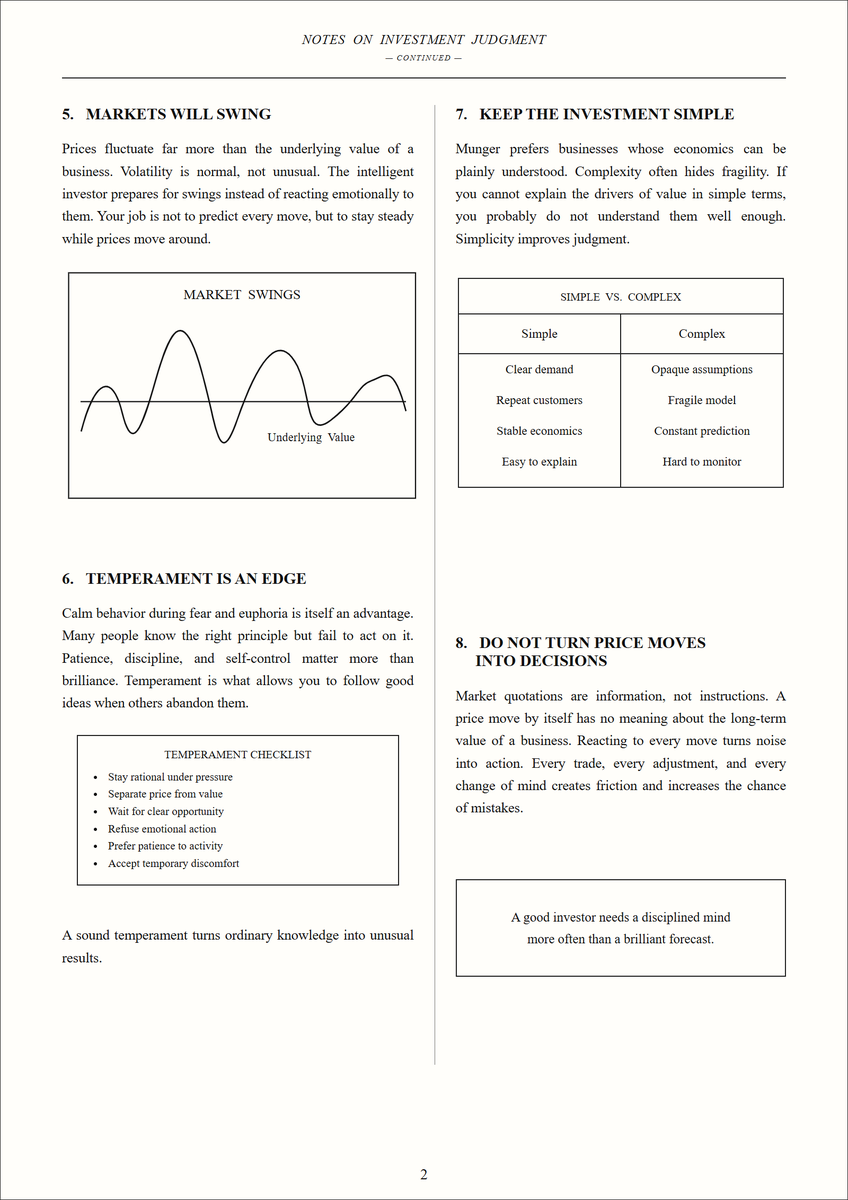
I found a hidden Charlie Munger document revealing the investing tricks that made him a billionaire
inside, Munger explains why the best investors think backwards, how they recognize risks before everyone else, and why avoiding stupid decisions can matter more than finding brilliant ones.
he also breaks down one of the hardest parts of investing: staying rational when prices are moving, headlines are screaming, and everyone around you is reacting emotionally.
the interesting part is how simple most of his framework actually is.
no complicated predictions. no constant trading. no need to know everything.
just a small set of principles designed to keep you away from the mistakes that permanently destroy capital.
bookmark this and read the full document below
LEOPOLD’S SITUATIONAL AWARENESS FUND BLOWUP TIMELINE
JULY 1: LEOPOLD’S HEDGE FUND SITUATIONAL AWARENESS REACHES $45 BILLION UP 450% YTD
JULY 10: SK HYNIX US IPO MARKS TOP OF THE AI SECTOR
JULY 10-20: MAJOR SELLOFF ACROSS ALL AI STOCKS, MOST DOWN 30%+ IN 2 WEEKS
JULY 10-20: HIS SHORT POSITIONS START GOING UP CAUSING MORE LOSSES (HE WAS SHORT ADOBE AND OTHER SOFTWARE STOCKS)
JULY 24: HE SENDS INVESTORS A LETTER CALLING THE SELLOFF A BUYING OPPORTUNITY AND ASKS FOR MORE MONEY
JULY 27: CITADEL SECURITIES SAYS THE FED IS GONNA DO A SURPRISE RATE HIKE
JULY 28: THE MARKET SELLS OFF AFTER CITADEL’S REPORT & LEOPOLD TRIES TO RAISE & BORROW MORE MONEY
JULY 29: BANKS MARGIN CALL HIM
JULY 30: CITADEL COMES IN AND BUYS HIS ENTIRE PORTFOLIO FOR A MASSIVE DISCOUNT
LEVERAGE IS THE MAIN REASON PEOPLE GO BROKE IN THE STOCK MARKET ALWAYS BE CAREFUL