Stars' color is a function of their surface temperature
The coolest stars are red, with surface temperatures of about 3,000°C. Wolf-Rayet stars possibly reach temperatures of 90,000°C
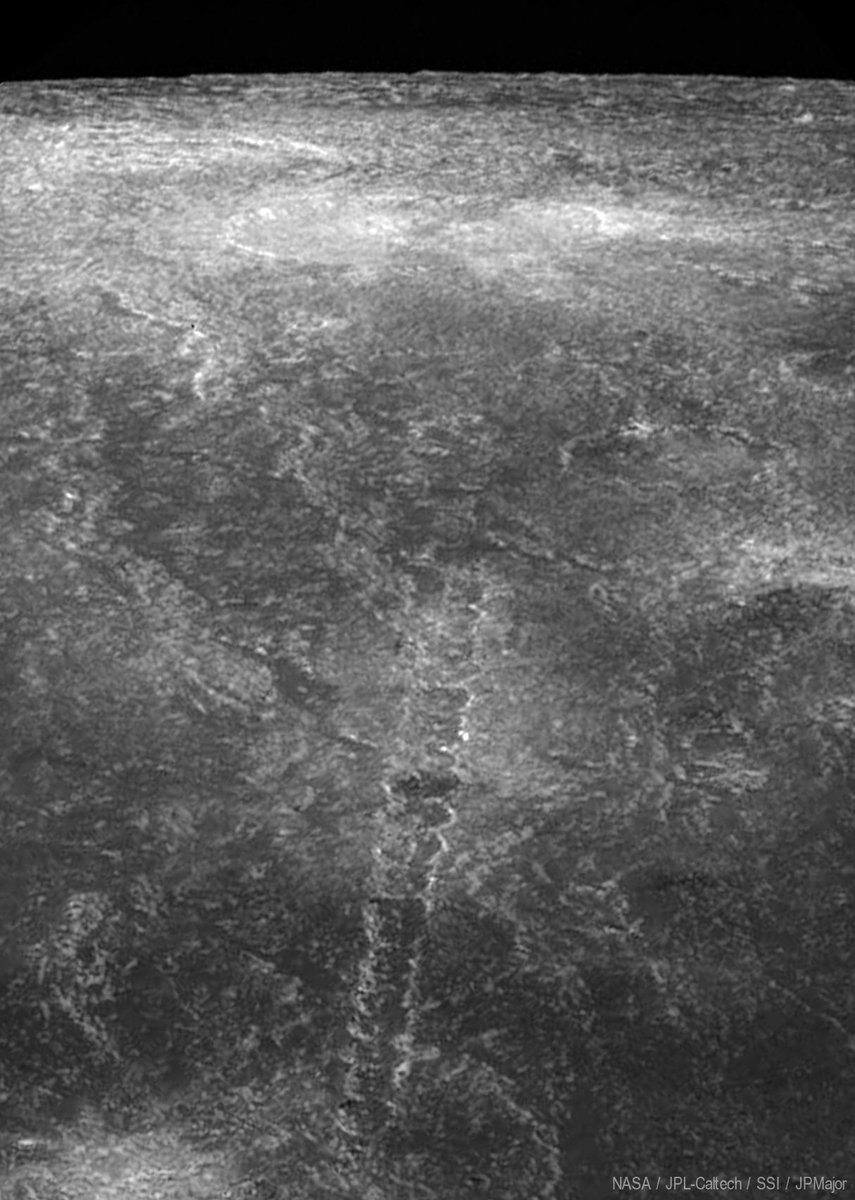
#PPOD: Jupiter's moon Callisto, taken by NASA's Galileo on 25 June 1997, shows the 350-km-long Gomul Catena crater chain—the result of a comet that broke apart just before impact into at least 26-27 separate major pieces! Credit: @NASA@NASAJPL@Caltech@spacescienceins@JPMajor
Can you SagDIG it?
This sparkling #HubbleClassic shows a small galaxy called the Sagittarius dwarf irregular galaxy (SagDIG for short).
Hubble's sharp vision reveals thousands of individual stars within the galaxy, located 3.5 million light-years away: https://t.co/lfZAylqfLO
A new study using conditions similar to the surface Enceladus finds organic molecules, like amino acids, can become concentrated in salt-rich ice particles. The data helps us better understand the potential habitability of the moon’s subsurface ocean and inform future search for life missions: https://t.co/EEHEvRjIvy
"Io sono nato in una Napoli difficile, ma sono stato fortunato perché sono stato amato dai deboli e siccome i deboli sono tanti sono stati una grande forza per me.
Sono stato fortunato ad amare la musica
La musica e la gente mi hanno salvato."
Nino D'Angelo❤
Durante l'esilio a Sant'Elena, Napoleone raccontò di quando un cane era riuscito a commuoverlo molti anni prima.
L'episodio avvenne intorno al 1796, quando Napoleone era generale dell'armata francese in Italia. La notte dopo una battaglia, Napoleone avanzò tra i cadaveri dei ⬇️