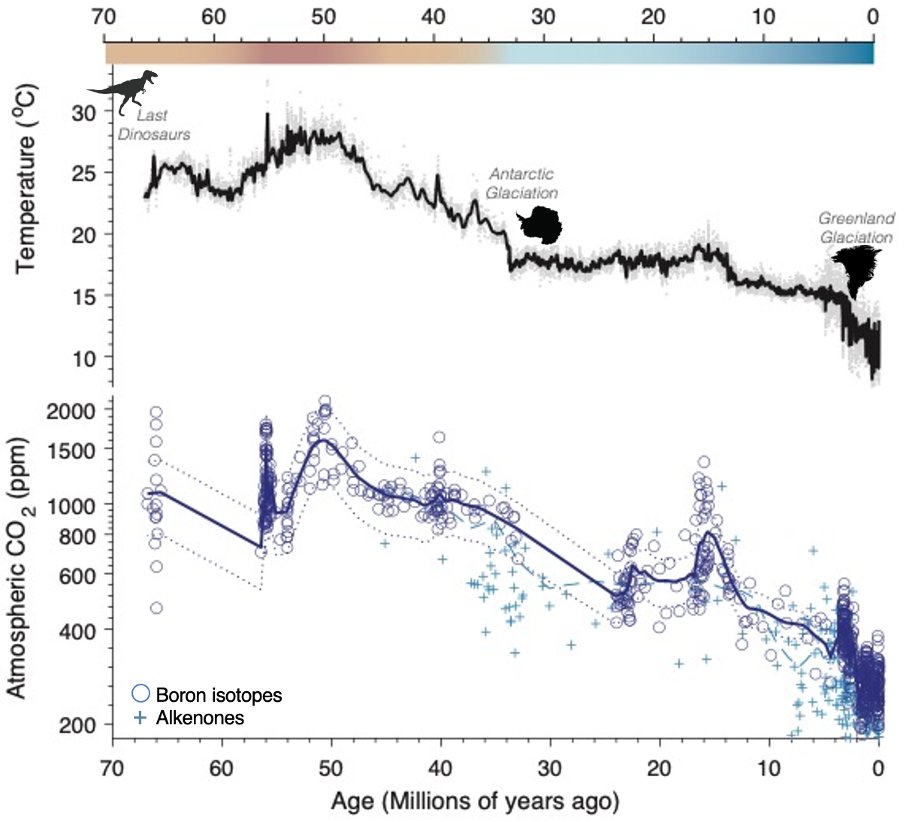
Our new paper on paleo CO2 is now out!
https://t.co/K9CcU1RqgB
We compile and reevaluate boron isotope & alkenone data, finding a striking correspondence between atmospheric CO2 & global climate for the past 66 million years (THREAD)
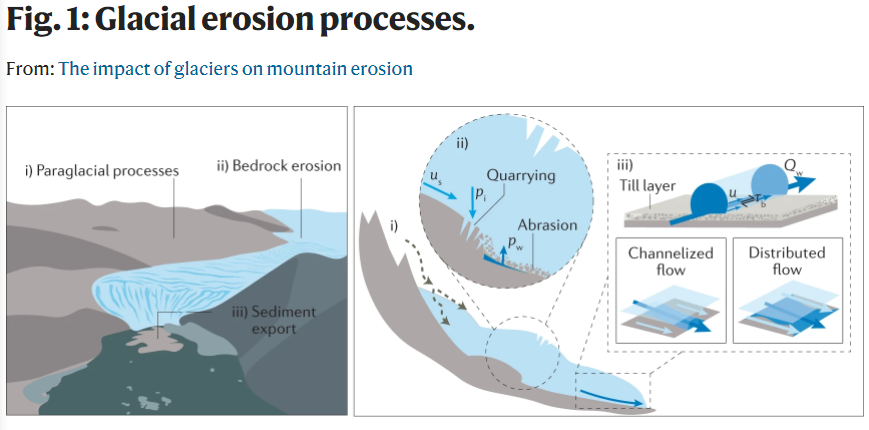
What processes control the magnitude and timing of mountain erosion by glaciers, and how do models reconstruct these processes during mountain growth?🏔️
Find out more in this Review
@michele_koppes@UBCGeog@FGSE_UNIL
https://t.co/vGxqkPSADl free to read: https://t.co/h2suej6IeU
My friend is putting together a program to bring together a "top-notch" chef & a marine conservation scientist to co-lead a sustainable seafood cooking demo w/a follow-on talk about ocean conservation.
Any of you marine conservation scientists interested? You will be paid.
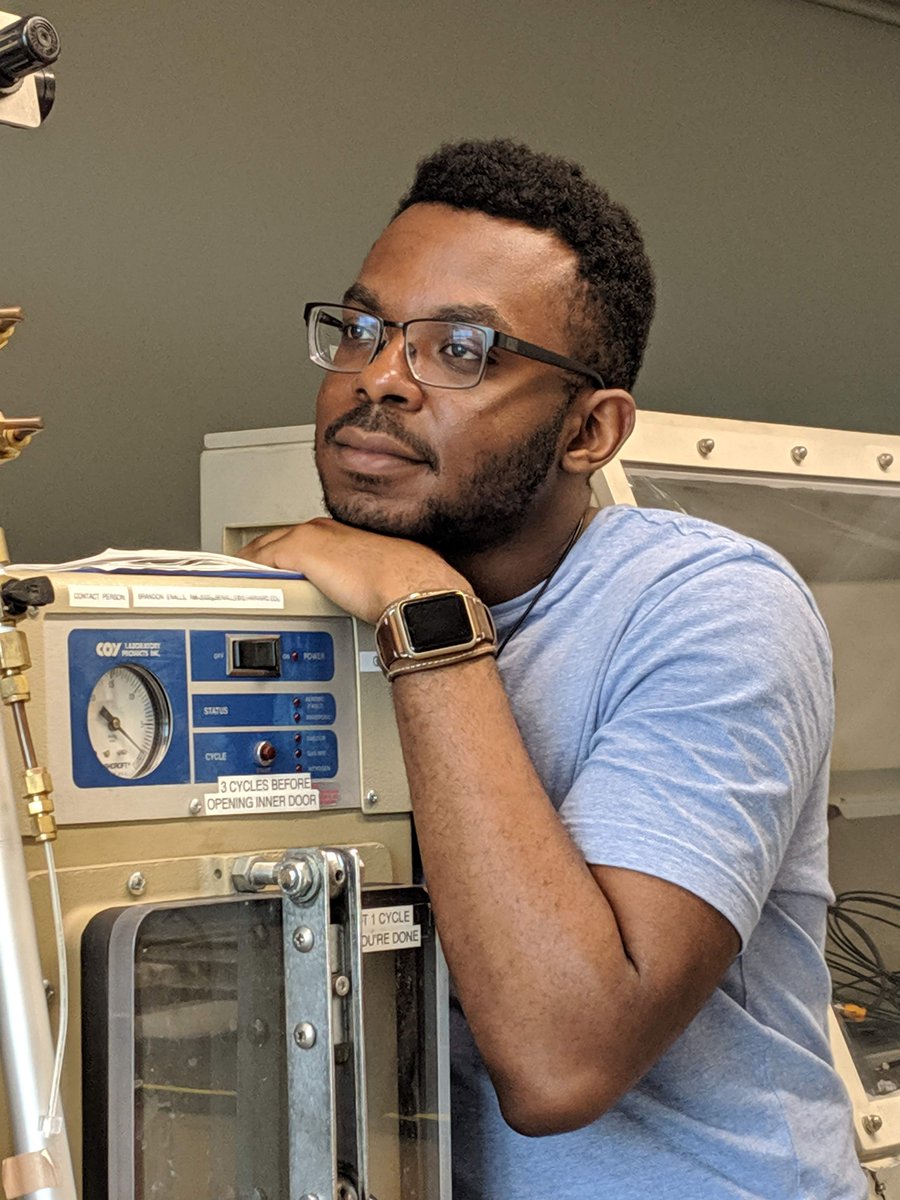
Congrats to DOCTOR Brandon Enalls on successfully defending your Ph.D.! your talk was a tour de force, showing us how some microbes help make vent chimneys and how other microbes pack away carbon for a "rainy day" (metaphorically speaking). You rock, Dr. Enalls!
@HarvardOEB
Meet Kim! 🤩
Kim is one of the co-founders of @aapigeosci. She is also an Assistant Professor at @penn_state. Kim is a sedimentary geochemist who uses isotopes and modeling to understand the controls & feedback on biogeochemical cycles in Earth’s past.
Long-story short, listen to your grandparents, especially to the techniques they’ve used long before we came along; you might discover a new way to clean water!
https://t.co/xbtBTOcaB2
“We–as geoscientists who work across nat’l boundaries & strive to protect the planet–acknowledge the current COVID19 crises in #India & across 🌎. We stand behind the calls for equitable access to healthcare, vaccines & immediate suspension of vaccine patents.”(1/5)
#VaccinEquity
🥳 To the entire Earth sciences community — today, we are officially launching...
Asian Americans & Pacific Islanders in Geociences (@aapigeosci)!
https://t.co/91SRblFRU2
Help us spread the word, to reach those who need this community now more than ever. ❤️
Learn more: ⏭️
Interesting work on quantifying uncertainties when estimating the remaining carbon budget. Not my direct field, obviously, but important nonetheless to know how these carbon budgets are determined. Check it out at: https://t.co/sjjCjd67if
From Russell Shapiro: The International Geobiology Course is ON for this year (in a modified COVID-safe version). Cutting edge of geology/microbiology. Some spots still open. Must be fully vaccinated & able to travel to US in June/July. Email Russel form more info ⚒️🦠🌊🌿🧪
Guess who just submitted her dissertation? 203 pages full of sulfur stories. I’m also very excited for the last chapter that talks about #scicomm research - the impact of showing diverse role models on @WomenDoingSci ! Two weeks till defense!
In today's edition of what's new in the @EPS_McGill Blog, we interview Dr Olivia Jensen and ask her about her journey in the Geosciences. Here is the link: (1/n) https://t.co/cZlADxWMWR
New 𝚋𝚎𝚍𝚖𝚊𝚌𝚑𝚒𝚗𝚎_𝟹𝚍 Matlab function makes it super easy to make 3D maps of Greenland or Antarctica.
Docs: https://t.co/PyUutdSAMW
GitHub: https://t.co/D0UXxr0mEW
I'm happy to finally be able to share this one. If you've ever wondered about Barium isotopes, look no further!
Barium Isotopes: Drivers, Dependencies, and Distributions through Space and Time https://t.co/amIahjfANR
Jessica Walter, the award-winning actress whose career spanned five decades, passed away in her sleep at home in New York City on Wednesday, March 24th https://t.co/bucNe6cJvy
Do you teach a stable isotopes course and like to include recent papers? The recent paper by @sarahjhurley et al. is a great paper to read after discussing the role that rubisco plays in determining C isotope fractionations: https://t.co/76FmR98Vs8
Very excited to share our latest paper in @NatureComms , showing that microalgae produce a polysaccharide that stores carbon in the ocean during algal blooms! This sugar resists bacterial degradation, accumulates and aggregates into particles. Thanks to all the co-authors!