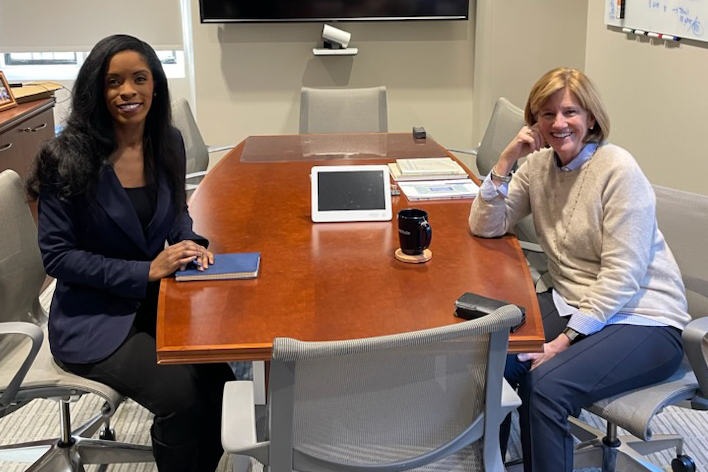
The lobby of our Duke Central Tower has been named in honor of Dr. A. Eugene Washington, Chancellor for Health Affairs and President & CEO of Duke University Health System from 2015-2023. We celebrate Dr. Washington's commitment to our mission of advancing health together.
The front page of tomorrow's @dailytarheel –
I shed many tears while typing up these heart-wrenching text messages sent and received by UNC students yesterday. Our campus was on lockdown for more than three hours.
Beyond proud of this cover and the team behind it.
@AllportReport@AmberIllig@halletecco Respectfully Justin, it is not just resource limitations and problems caused by false positive AND false negatives. There is and will continue to be inequity in the access. Until we dismantle the systems and policies from where inequity derives, we are in bad shape collectively.
@EddieMartucci@halletecco Health economists (HE) at academic medical centers can easily answer these questions through cost benefit analyses & cost utility analyses; not sure if HE in industry are focusing on these questions. Capitalism influences our culture. Sometimes inhibiting a culture of health.
@daniellgoldstei@halletecco These too are excellent points. If your suspicions are correct, I would not want them anywhere near by my PII and HIPAA eligible data 🤦🏽♀️
@premal2000@halletecco The combined risk assessment is helpful but it does not solve the primary causes of inequity in access. The cause of inequity is systemic: no PTO, reliable transportation or child care to get the tests or worse no insurance at all! Halle your original assessment 💯
@halletecco@sterespect Spot on here! The opportunity costs for clinicians and techs from scanning to biopsy or surgery to pathology to tell someone of normal (not high) risk that everything is benign IS problematic. Population health & epidemiology matter.
@halletecco I agree. Continued dialogue is imperative. So is raising the health literacy and numeracy of the “worried well.” Dialogue may help this demographic better understand the sensitivity and specificity of screening interventions.
Register now for @NASEM_Health#PopHealthRT webinar 8/30 highlighting the historical context for American democracy and international examples for improved #CivicHealth as a determinant of #PopHealth & #HealthEquity: https://t.co/jciaeKYkTG