🟥 Krwawa Niedziela na Wołyniu
🗓 11 lipca 1943 roku ukraińscy nacjonaliści zaatakowali Polaków w 99 miejscowościach przedwojennego województwa wołyńskiego na Kresach Wschodnich – wtedy zajętych już przez niemiecką III Rzeszę.
❗️ Tego dnia miało miejsce apogeum Zbrodni Wołyńskiej. O świcie oddziały UPA – często przy aktywnym wsparciu miejscowej ludności ukraińskiej – otoczyły i zaatakowały jednocześnie 99 polskich wsi w pow. kowelskim, włodzimierskim, horochowskim i częściowo łuckim. Doszło tam do eksterminacji ludności cywilnej i zniszczeń. Wsie były palone, a dobytek grabiony. Badacze obliczają, iż tylko tego jednego dnia mogło zginąć ok. 8 tys. Polaków – głównie kobiet, dzieci i starców. Ludność polska ginęła od kul, siekier, wideł, noży i innych narzędzi, nierzadko w kościołach podczas mszy św. i nabożeństw.
🟥 Za datę symboliczną dla ludobójstwa na Wołyniu uznaje się 10 lipca 1943 r., kiedy członkowie UPA rozerwali końmi wysłanego na pertraktacje z nimi przedstawiciela Polskiego Państwa Podziemnego Zygmunta Rumla. Po tej zbrodni rozpoczęły się masowe mordy na ludności polskiej na Wołyniu, a później w Małopolsce Wschodniej. Szacuje się, że ukraińscy nacjonaliści, wspierani przez chłopstwo, zaatakowali Polaków zamieszkałych w 4300 miejscowościach.
❗️ W pobliżu zniszczonych wsi i chutorów pozostały bezimienne masowe doły grobowe kryjące – najczęściej okaleczone – ciała polskich mieszkańców Kresów.
🟥 Celem ukraińskich nacjonalistów była jednak nie tylko fizyczna eliminacja polskiej społeczności, ale także wykarczowanie śladów świadczących o wielowiekowej obecności polskiej na Kresach. Dlatego równolegle z aktem ludobójstwa niszczyli polskie dobra kulturalne, zabytki, uderzali w kresową gospodarkę, wypalając polskie siedliska do fundamentów, ze szczególną zajadłością niszcząc katolickie kościoły❗️
ℹ️ W latach 1943–1945 na Wołyniu i w Małopolsce Wschodniej ukraińscy nacjonaliści wymordowali od 80 do 120 tys. Polaków. Precyzyjna liczba ofiar nie jest możliwa do ustalenia.
❗ 11 lipca obchodzimy święto państwowe: Narodowy Dzień Pamięci o Polakach – Ofiarach Ludobójstwa dokonanego przez OUN i UPA na ziemiach wschodnich II Rzeczypospolitej Polskiej.
We are pleased to announce that we have officially nominated Edward Reid for the IPN's "Ambassador of Polish History" Award.
Edward Reid is one of the most distinguished international advocates of Polish history and remembrance. For nearly two decades, he has devoted himself to promoting Poland's history among English-speaking audiences while consistently defending the good name of Poland on the international stage. He documents and shares stories that should never be forgotten.
The history of WWII lies at the heart of his work. Through meticulously researched publications, Edward Reid helps international audiences understand Poland's wartime experience, highlights the courage and sacrifice of the Polish people, and emphasises the immense contribution of Polish soldiers to the Allied victory.
Through his English-language publications and extensive social media presence, he reaches hundreds of thousands of people around the world, effectively countering historical misinformation and challenging harmful stereotypes about Poland.
The "Ambassador of Polish History" award would be a well-deserved recognition of Edward's many years of outstanding, entirely selfless dedication to preserving and promoting the truth about Poland's history.
Ukraine unquestionably suffered enormously during World War II under both German and Soviet rule. Millions of Ukrainians were victims of occupation, famine, deportation, and war.
However, it is historically inaccurate to equate the conduct of the Polish resistance with that of organizations such as the OUN-B and UPA. The Polish Underground State created institutions such as Żegota to aid Jews, fought both Germany and the Soviet Union, and did not adopt genocide as official policy. By contrast, the UPA carried out systematic ethnic cleansing of Polish civilians in Volhynia and Eastern Galicia, resulting in the deaths of tens of thousands of men, women, and children.
Recognizing Ukraine’s suffering should never require denying or minimizing the documented crimes committed by the OUN-UPA. Historical memory should make room for both truths.
"Volhynia is the forgotten massacre of WW2. Yet mere killing does not capture the essence of Volhynia. Time and again, the attackers engaged in extreme forms of gratuitous cruelty."
Norman Davies (2023)
https://t.co/xMmgn6olCI
Panie Prezydencie @NawrockiKn proszę mi wytłumaczyć, bo to przekracza moje możliwości intelektualne.
Jak to się stało, że ❓❓❓⬇️
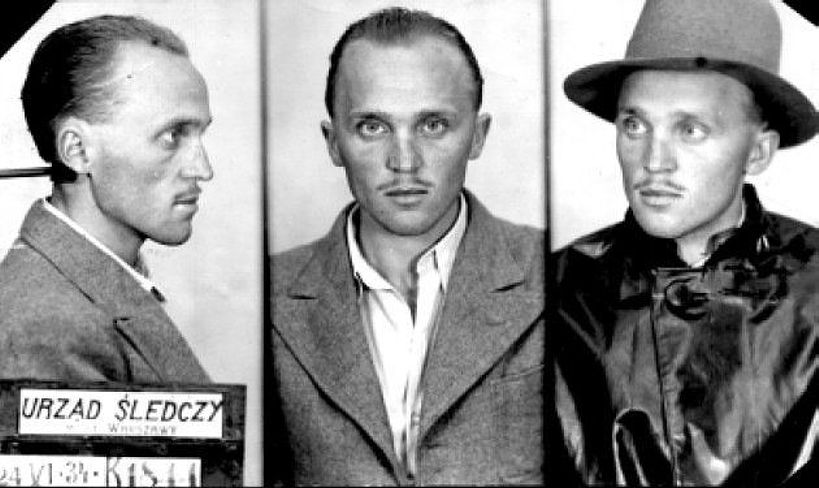
Mykoła Łebed ps. "Maksym Ruban".
Szef "Służba Bezpeky" - najbardziej ZBRODNICZEJ organizacji w historii świata, przy której Gestapo, NKWD i UB, razem wzięte to była dziecinna igraszka ❗️
Wykonawca GENOCIDUM ATROX na Polakach.
Zleceniodawca list proskrypcyjnych Profesorów Lwowskich.
Został po wojnie obywatelem USA i w latach 1952–1974, pod ochroną CIA, kierował Instytutem Badawczo-Wydawniczym Prolog z siedzibą w Nowym Jorku 😳❓❓❓
Jurij Stelmaszczuk ps. „Rudyj” :
„Druże Ruban, przekazuję do Waszej wiadomości, że w czerwcu przedstawiciel centralnego Prowodu OUN dowódca UPA - „Piwnicz” Kłym Sawur przekazał mi tajną dyrektywę w sprawie całkowitej fizycznej likwidacji ludności polskiej. Dla wykonania tej dyrektywy proszę rzetelnie przygotować się do tych akcji przeciw Polakom, i wyznaczam odpowiedzialnych : w rejonach nadbużańskich - kurinnego „Łysoho”; na rejon turzyski, owadnowski, oździutycki - „Sosenka”; na okręg kowelski - „Hołobenka”.
Sława Ukraini ! 24 czerwca 1943 r.
Dowódca grupy UPA „Turiw” - „Rudyj”.”
#UkraińskieZbrodnie
Źródło :
Archiwum SBU w Łucku (obwód wołyński),
sprawa karna nr 11315, tom 1, część 2,
strona 15-18 oraz 28.
Sprawy ORGANIZACYJNE ⬇️
Jestem pełna podziwu dla Domu Wolnego Słowa, co 10 minut przypominają o wsparciu. Efekt ? 400 wspierających w ciągu godziny. Może jest tu jakiś wybitny specjalista od marketingu, który zajmie się pro publico bono skutecznym promowaniem naszej Szkoły i kawiarki 🤔 ??? https://t.co/uYX0ELCMFj
The Forgotten Victims: How Poland Was Erased from World War II Memory:
Most Germans today still have limited knowledge of the atrocities committed against the Polish people during World War II. In responses to my posts over the years, I have frequently encountered a distorted understanding of Poland’s wartime experience, with some even implying that Poles bore responsibility for their own suffering or that they were primarily collaborators rather than victims.
The Holocaust is rightly one of the best known events in modern history. Throughout the United States, Holocaust museums educate millions of visitors, and many states require Holocaust education in public schools. As a former educator, I ensured that my students also learned about the fate of the Polish people under German occupation because understanding the war requires remembering all of its major victims.
Poland endured one of the most devastating occupations of any nation. It was attacked by both Germany and the Soviet Union, subjected to mass executions, deportations, forced labor, cultural destruction, and the systematic elimination of its political, religious, and intellectual leadership. Yet despite these immense losses, Polish victims remain far less visible in public memory than many other groups persecuted during the war.
This absence appears repeatedly in museums, memorials, educational materials, and public commemorations. I have encountered numerous websites and memorials that scarcely mention Polish victims, even at places such as Dachau, where Poles were among the principal prisoner groups. In a statement marking the anniversary of Auschwitz in 2020, Nancy Pelosi referred to Jewish victims, Roma, LGBTQ individuals, and people with disabilities, yet omitted Polish victims, even though ethnic Poles were the second largest group imprisoned and killed at Auschwitz after Jews.
The historian Gilad Margalit documents how this selective remembrance developed in his book Guilt, Suffering, and Memory: Germany Remembers Its Dead of World War II. He describes how German President Richard von Weizsäcker originally included explicit references to Polish and Soviet victims in a speech for the People’s Day of Mourning. However, when the speech was condensed for a commemorative plaque, those references disappeared.
As Margalit notes, “The explicit reference to Soviet and Polish victims… was eliminated.” He further argues that the suffering of Soviet and other Slavic victims, whose losses exceeded those of all other victim groups combined, never entered German public consciousness in the same way as the suffering of other victim groups. Even the German bombardment of Warsaw in 1939 received comparatively little attention within Germany’s landscape of remembrance.
Understanding this process of selective memory helps explain a troubling development in modern historical discourse. A nation that suffered invasion, occupation, genocide, and immense civilian losses has too often been pushed to the margins of public memory. In some discussions, the victims themselves have even been portrayed as collaborators, despite the overwhelming historical record demonstrating the catastrophic suffering inflicted upon Poland by both Germany and the Soviet Union.
Remembering the Holocaust should never come at the expense of remembering other victims. Honoring Jewish suffering and acknowledging the immense suffering of the Polish people are not competing truths. Together they present a fuller and more accurate understanding of one of history’s darkest chapters.
Source: Guilt, Suffering, and Memory: Germany Remembers Its Dead of World War II (Indiana University Press, 2010).
Photo: This is what occupation looked like. Not liberation. Not peace. A nation stripped of its freedom, its culture, and millions of its people, yet one that refused to surrender.
I do find it utterly astonishing that the Prime Minister happily took the knee for George Floyd, and is at the same time, accusing people of politicising Henry Nowak’s death.
It is political. Henry Nowak was failed by policy enacted by politicians.
Henry Nowak’s sister posted a heartbreaking video of her and her brother together, a reminder that behind every headline is a family whose world has been turned upside down
@cezarykrysztopa A tu wystąpienie ojca Henryka po ogłoszeniu wyroku.
Henryk powiedział policjantom "Nie mogę oddychać" aż 9 razy.
Jeden z nich odpowiedział "Nie wydaje mi się. "
Po czym skuli mu ręce kajdankami na plecach i formalnie aresztowali.
Wtedy Henryk zmarł.
https://t.co/11ld0iIiSf
Ja lubię takie aktorki co "umią" różne role zagrać. Np panie Celińska, Dymna, Cembrzyńska ale też Figura. Nawet ta niemądra Ostaszewska. A Janda to zawsze jedną rolę grała, czyli siebie, taką spięta aktywistyczną kobietę co z menopauzą się już chyba urodziła. Męskim odpowiednikiem Jandy był Holoubek, który zawsze grał przemądrzałych gości jakim był. Charakterystyczne, że oboje chyba uchodzą w naszym zakompleksionym kraju za najlepszych polskich aktorów a nie np. Pazura czy Pszoniak, bo grali bardziej dostojne role
Anna Smoleńska was twenty-three years old when she died in Auschwitz. She was not a soldier in uniform, nor a political leader, nor someone who sought recognition. She was a student of art history at the underground University of Warsaw, a young woman formed by books, culture, and the fragile belief that beauty and meaning endure even when the world collapses.
Under German occupation, culture itself became an act of defiance. The occupiers closed universities, outlawed higher education for Poles, and sought to decapitate the nation intellectually. Anna chose not retreat, but resistance. She joined the underground organization Wawer, composed largely of students who carried out small sabotage actions, distributed leaflets, and painted symbols on walls to remind Warsaw that Poland had not disappeared.
In 1942, she designed one of the most enduring emblems of occupied Europe: the “Kotwica,” the anchor formed from the letters P and W - Polska Walcząca, “Fighting Poland.” It was simple, bold, and unforgettable. It appeared on walls, on trains, on buildings scarred by occupation. It told a crushed nation that it still existed.
For this, she was hunted…
In November 1942, the Gestapo arrested Anna together with her parents. The Germans did not merely pursue individuals; they struck at families. Collective punishment was policy. Entire households were dragged into prisons so that resistance would carry unbearable personal cost.
They were taken to Pawiak prison in Warsaw, a place synonymous with torture, interrogation, and execution. Anna was beaten and abused during questioning. She refused to betray her comrades. The Germans deported her to Auschwitz in early 1943. There, stripped of name and identity, reduced to a number, weakened by disease and brutality, she was murdered on March 19, 1943.
She was twenty-three.
Her parents did not survive the occupation either. Like thousands of members of Poland’s educated class and resistance circles, they were executed by the Germans as part of systematic repression. The regime that tried to erase Poland did so not only by killing individuals, but by destroying entire family lines, severing memory at its root.
The tragedy of the Smoleńska family reflects something essential about occupied Poland. Resistance was rarely an isolated act. It was communal. It was familial. It was moral. When one person chose defiance, the entire household bore the risk.
Anna created a symbol meant to say that Poland was still alive. The Germans killed her, and they killed her parents, but they could not kill the symbol. The Kotwica survived the prison walls, the transport trains, the camp fences. It appeared again during the Warsaw Uprising. It appears still today on monuments, on armbands, on memorial plaques.
There is something profoundly moving in that contrast. A young woman of twenty-three perishes in a death camp. Her parents are murdered. Their home is destroyed and yet the mark she drew in ink continues to declare existence and outlives that occupation.
Her life reminds us that resistance is not always loud. Sometimes it is a student with a pencil. Sometimes it is a family who refuses to abandon conscience and sometimes, though the family is wiped away, the idea they stood for remains carved into the moral memory of a nation.
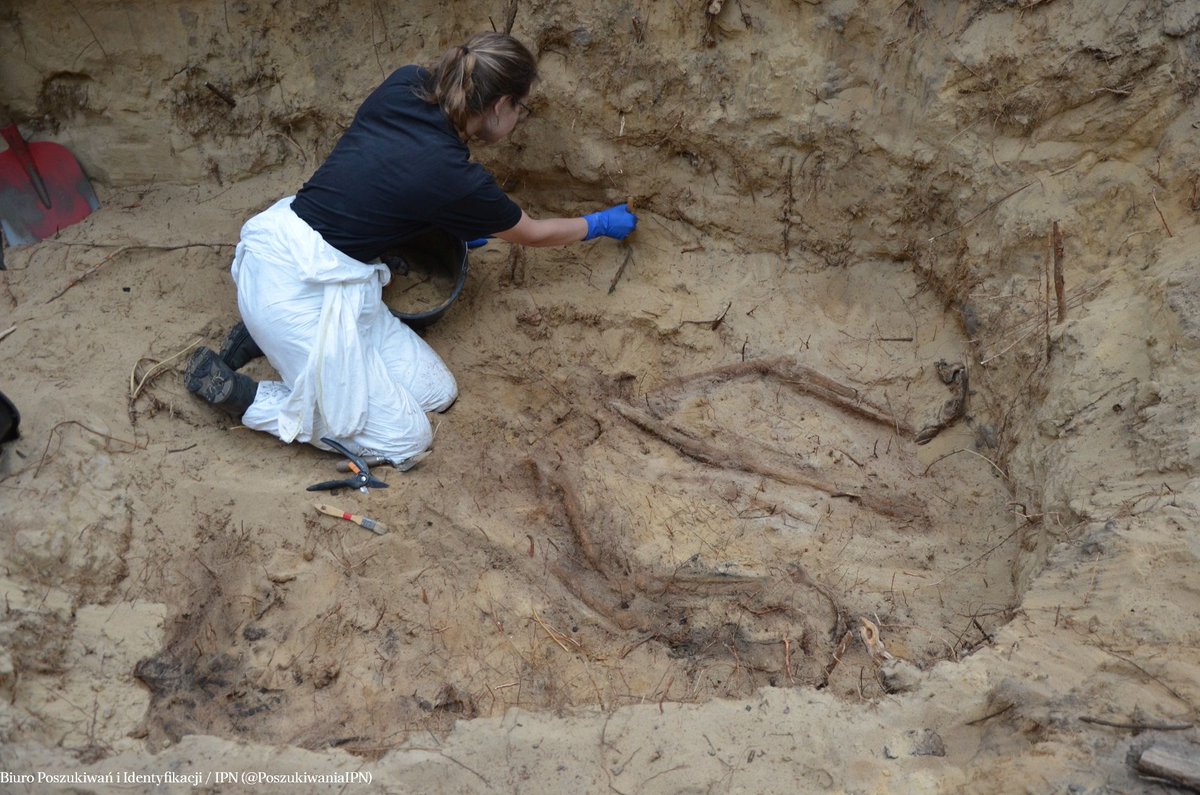
Rodzina Pochwatków zginęła, bo ukrywała Żydów. Przez lata spoczywali w bezimiennym grobie. Dziś przywrócono im godny pochówek. Zrobiliśmy film, który ocala ich historię. Link w pierwszej odpowiedzi.
„W trakcie przeprowadzonych prac odnaleziono na głębokości ok. 1,5 m, w pozostałościach ziemianki, szczątki ludzkie. Należały one do jednego mężczyzny, trzech kobiet oraz nienarodzonego dziecka”.
Nienarodzonego dziecka.
To szczątki Józefa Pochwatki, jego żony Bronisławy, oraz córek Pelagii Krystyny i Janiny (po mężu Czapla), która w chwili śmierci była w zaawansowanej ciąży, zamordowanych przez Niemców 5 stycznia 1943 r. w miejscowości Kolczyn koło Józefowa nad Wisłą za ratowanie Żydów.