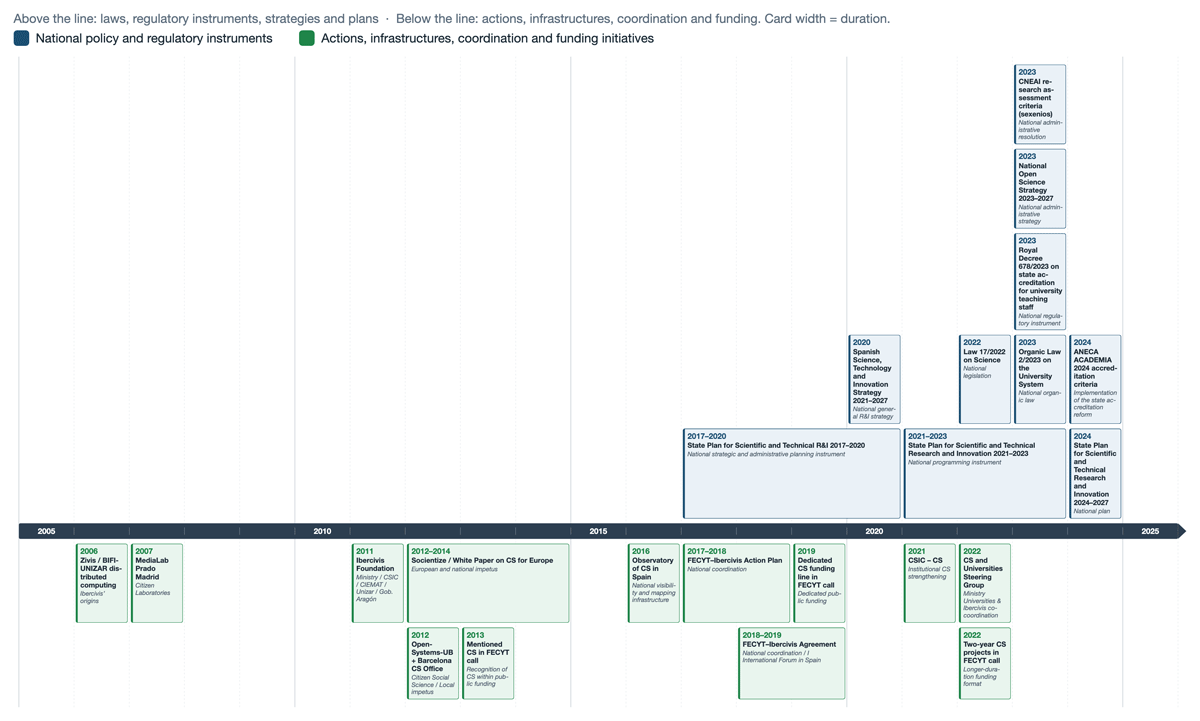
2/3 Seguimos su incorporación a la Ley de la Ciencia, a la Ley Orgánica del Sistema Universitario y a los criterios de evaluación de ANECA. Y exploramos cómo las comunidades, entidades como Ibercivis y FECYT y las instituciones públicas contribuyeron a ese proceso.
3/3 También nos preguntamos qué hace falta para sostener esos avances: financiación estable, infraestructuras que perduren y coordinación entre quienes impulsan la ciencia ciudadana.
🔓 Artículo en abierto: https://t.co/OlqchGAfGD
IEEE retira 1.417 ponencias compradas a fábricas de artículos. Ya son 1.522, según Anna Abalkina, coautora del estudio.
#PaperMills
https://t.co/sKf61A1yTv
Happy to share our new perspective “Beyond Assessing: Rethinking How We Measure the Sustainable Development Goals” with Rodrigo Lozano and Maria Barreiro-Gen , published in The Journal of Sustainability...
Google anuncia que en 2027 permitirá a las webs indicar, mediante robots.txt, si autorizan el uso de sus contenidos para entrenar IA.
Un paso hacia un estándar común basado en AIPREF (IETF), con implicaciones para editoriales y revistas científicas.
https://t.co/0DbV7TBptT
BREAKING NEWS
The Royal Swedish Academy of Sciences has decided to award the 2026 Sveriges Riksbank Prize in Economic Sciences in Memory of Alfred Nobel to Robert E. Hall and Michael Woodford “for microeconomic foundations of macroeconomic stabilisation.”
#NobelPrize
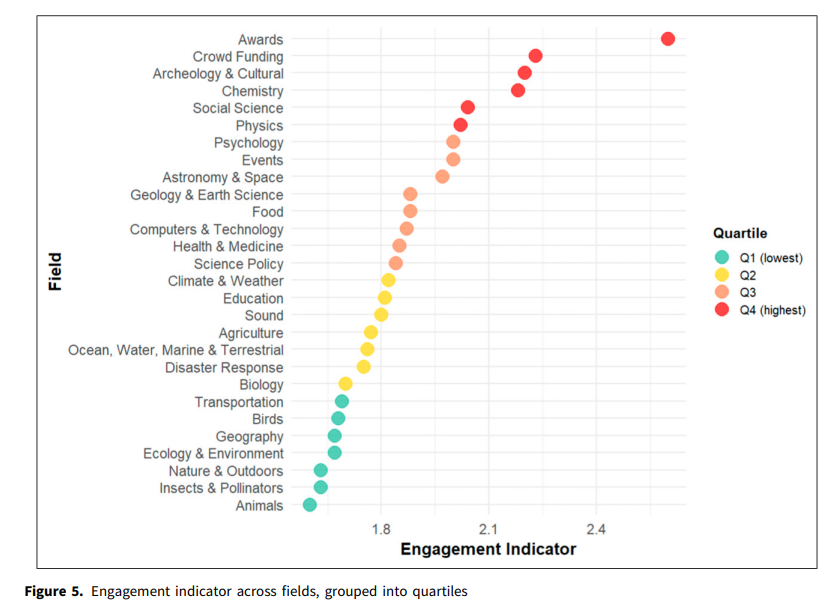
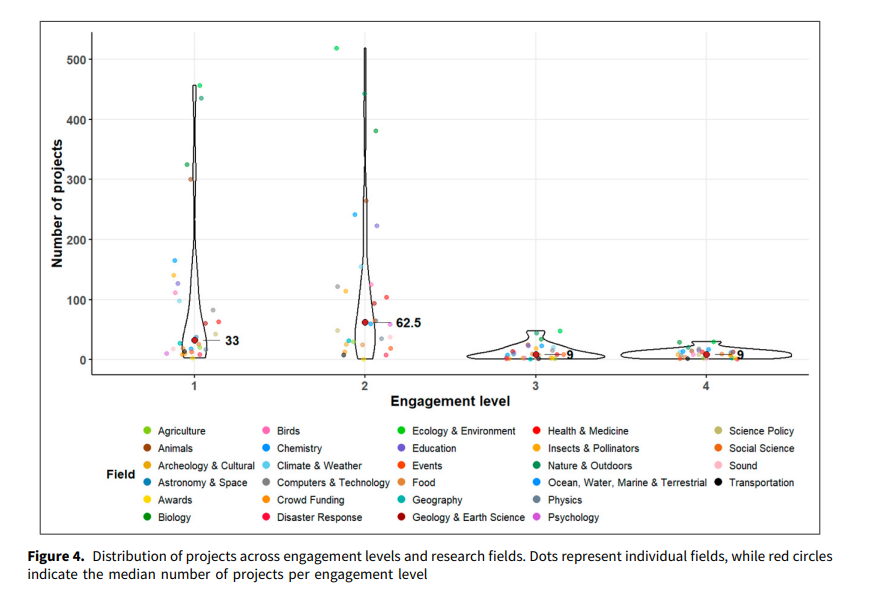
Our results highlight a key point: meaningful citizen science requires not only breadth of participation, but also depth of engagement.
Link: https://t.co/Kh2XKqqlyZ
#CitizenScience#PublicEngagement#KnowledgeProduction
9 key signs to monitor research integrity risk in an institution 🔍
Research integrity often displays early signals within publication data. Detecting atypical patterns early is key to moving from crisis management to a strategic, preventive approach.
To support institutions in this analysis, at SCImago we developed IRIS (Integrity Risk Indicators from SCImago): an open platform bringing together 9 essential indicators for visual analytics and early warning.
👉 Explore the analysis of each indicator in our full blog post:https://t.co/fD07SguQhF
He diseñado un protocolo para realizar análisis temáticos multinivel de corpus bibliográficos, utilizando LLM y validación experta. El resultado es el LATA Protocol: A Methodological Framework for LLM-Assisted Thematic Analysis of Bibliographic Corpora
https://t.co/CLpsDJx365
5 things every research leader must know about IRIS:
It detects structural integrity risks BEFORE a crisis by analyzing institutional patterns via 9 standardized bibliometric indicators. Strengthen scientific governance, not just metrics.
📄Full article https://t.co/MWjBOtc1Qp
Search models for academic search engines: a combination that me and @NuriaBautista7 have studied, proposing a conceptual model aimed at measuring scholarly information search behavior⤵️
https://t.co/RxkZpYBLNC
Please find the author version here ⤵️
https://t.co/B43ZJmnaI2
📢 ¡El próximo 14 de julio presentamos el libro Economía Circular: teoría e implementación! 📷 15:00–17:00 📷@CCHS_CSIC + modalidad online (registro en https://t.co/ciggdLigPD). ¡Os esperamos! 📷📷#EconomíaCircular ♻️
Plano / contraplano de la jornada de ayer sobre @CoARAssessment “de los planes a la práctica” en el marco de la #UOC#OpenScience Summe Camp 2026 ✨
Gracias a las 200 personas que participaron y a aquellas que lo hicieron posible, también a #UOC#UB e @IBECBarcelona 🙏
Together with @Cristina_Ipunto, @CarlosLopezosa, and @isidroaguillo, we evaluated the differences among SEO tools for science studies. The results suggest that tool selection significantly determines findings.
Online first version available here:
https://t.co/rDFCHOfU6S