@melinda42219886@SomaKazima2 Haha are you serious? This is just an ultra rich kid in a country with extreme poverty the likes of which we can’t understand in the West.
Spencer Pratt is going to demolish the two commie hacks, because he’s unabashedly showing the horror show Los Angeles turned into under their reign. This ad shows what we all dream of.
He might even win with enough of a margin to beat the Democrat cheat.
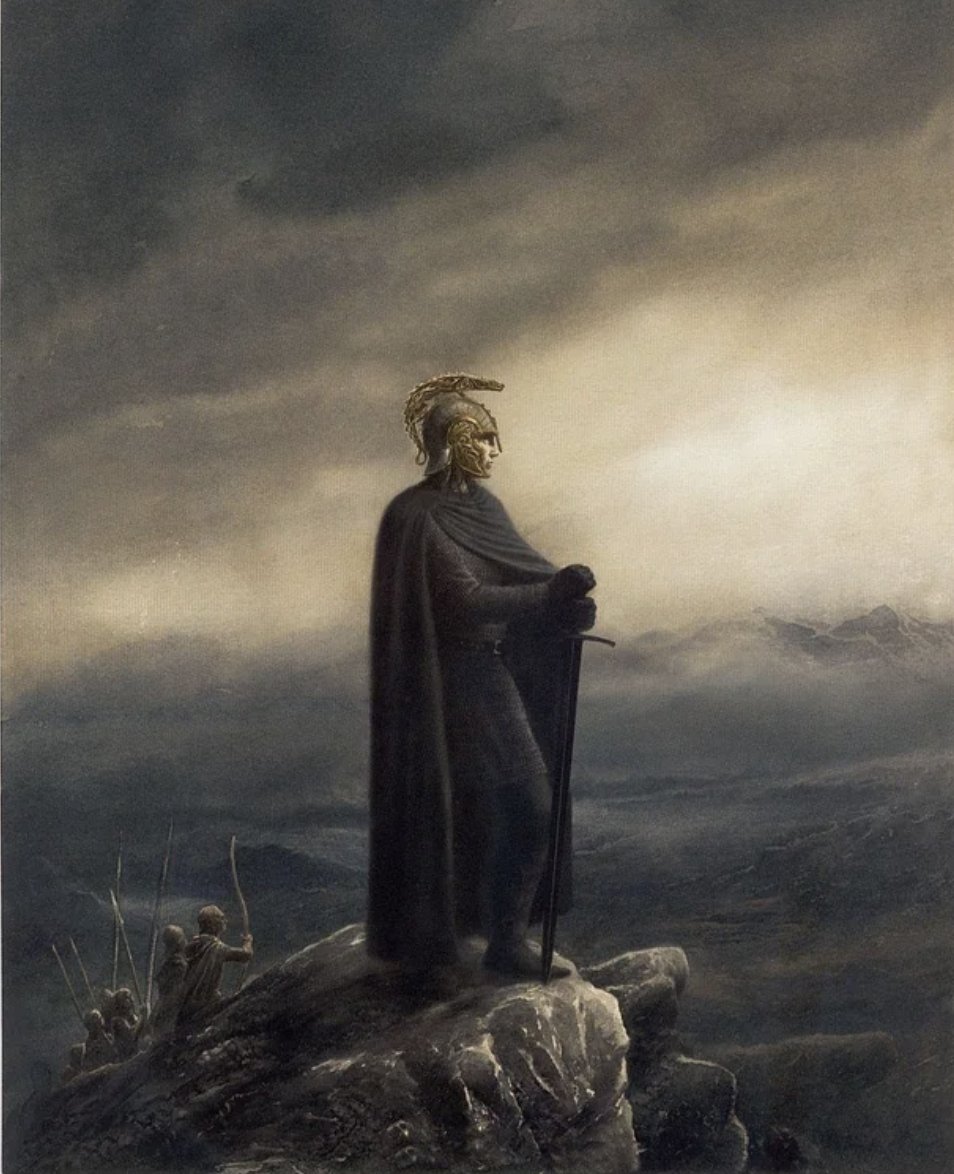
The Battle of Unnumbered Tears took its name honestly. It was the worst day in the recorded history of Tolkien's Middle-earth. The free peoples had assembled the largest host they could field, men and elves together, and they were broken on the plain of Anfauglith. Friends were betrayed. Allies turned at the worst possible moment. The host of the West was scattered, encircled, and slaughtered. By nightfall, the field was a mound of corpses so high that it became its own hill, the Haudh-en-Ndengin, the Hill of the Slain. Out of all the men who marched that morning, one stood at the close. His name was Húrin.
He stood alone, with a single axe, and his brother dead at his feet. He was surrounded by trolls and orcs and the Balrog lieutenants of Morgoth, and they were not killing him because Morgoth wanted him taken alive. With every stroke of the axe he shouted two words. Aurë entuluva. Translation - Day shall come again. He shouted it until his arm could no longer lift the weapon. He shouted it as he was overwhelmed, bound, and dragged into chains that would hold him for decades while his line was cursed and his children destroyed. A millenia of doom was now inevitable.
Day shall come again.
The phrase has stayed with me longer than anything else I have read.
Most people who love Tolkien quote the better-known lines. The road goes ever on. Even the smallest person can change the course of the future. Éowyn at the Witch-king. They are great lines and they belong on stone. Aurë entuluva is something else. Other lines belong to heroes who know the cause is winnable. This one belongs to a man who knows he is doomed to a fate worse than death.
That is what makes it the most important sentence in the legendarium and, for me, in any literature.
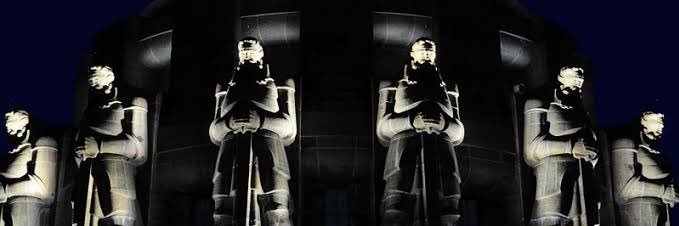
There is a passage from Oswald Spengler that does the same work in plainer language. Spengler wrote, near the end of Man and Technics, that optimism is cowardice. We are born into our time and must courageously follow the path to the end as destiny demands. There is no other way. Our duty is to hold on to the lost post, without hope, without rescue, like the Roman soldier whose bones were found in front of a door in Pompeii, who died at his post during the eruption of Vesuvius because they forgot to relieve him. The honorable end is the one thing that cannot be taken from a man.
This is the part our age cannot understand and cannot forgive.
We have been raised on a different theology. We were taught that you act because you believe things will work out. We were taught that the right kind of person is the one who can summon optimism on command, who speaks fluently in the language of inevitable progress, who never lets the dark thought finish itself. Anyone who notices the trajectory and names it is told he is being negative, defeatist, dramatic. Hope, in our era, is a posture you are required to perform in order to be taken seriously.
Spengler saw through it a century ago. The man who needs to believe he will win in order to fight has already lost. He has made his courage conditional. The moment the odds turn, he sits down. He calls it realism. It is the oldest cowardice there is.
The man who stands without hope is the one who built everything you are sitting inside.
Look at the long arc of the West from the outside, the way a foreign historian a thousand years from now would. Civilization is a story of men who held positions anyone with sense would have abandoned. The Greeks at the gates. Romans on the wall in winter when the wall had stopped paying. Saxons in the line when the line was already broken. Sailors who left port knowing what the Atlantic was. Men in trenches whose officers had told them, openly, that they would not be coming back. The pattern repeats so often it stops being a pattern and becomes the thing itself. The world we care to remember is built on the bones of men who stood at posts they did not expect to leave.
Pax Americana was built the same way. The soldiers who climbed the cliffs at Pointe du Hoc were not optimists. The pilots who flew into Berlin in 1944 with a thirty percent chance of returning were not optimists. The Marines on the islands in the Pacific were not optimists. They knew what the math was. They went anyway. The days so many of my generation dribble away doom scrolling in their air conditioning, were paid for by men who shouted some private version of aurë entuluva into the dark and died before the day came.
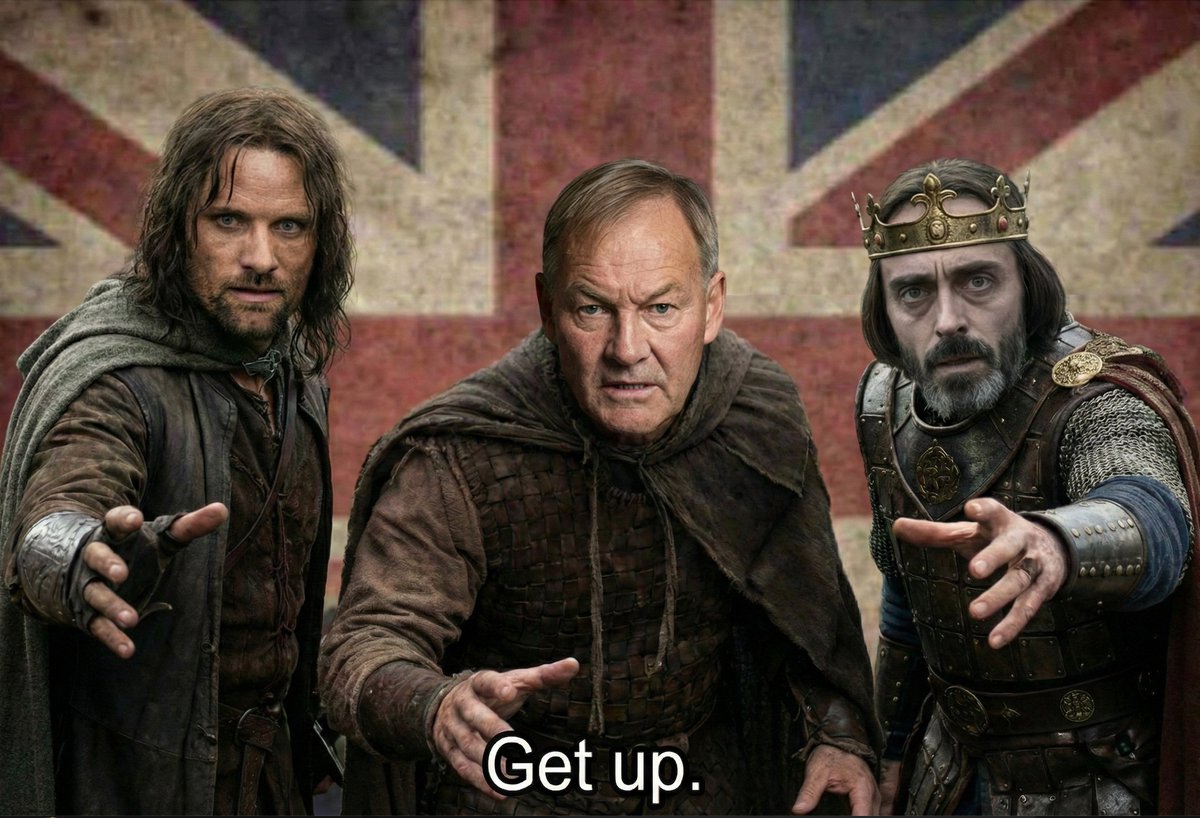
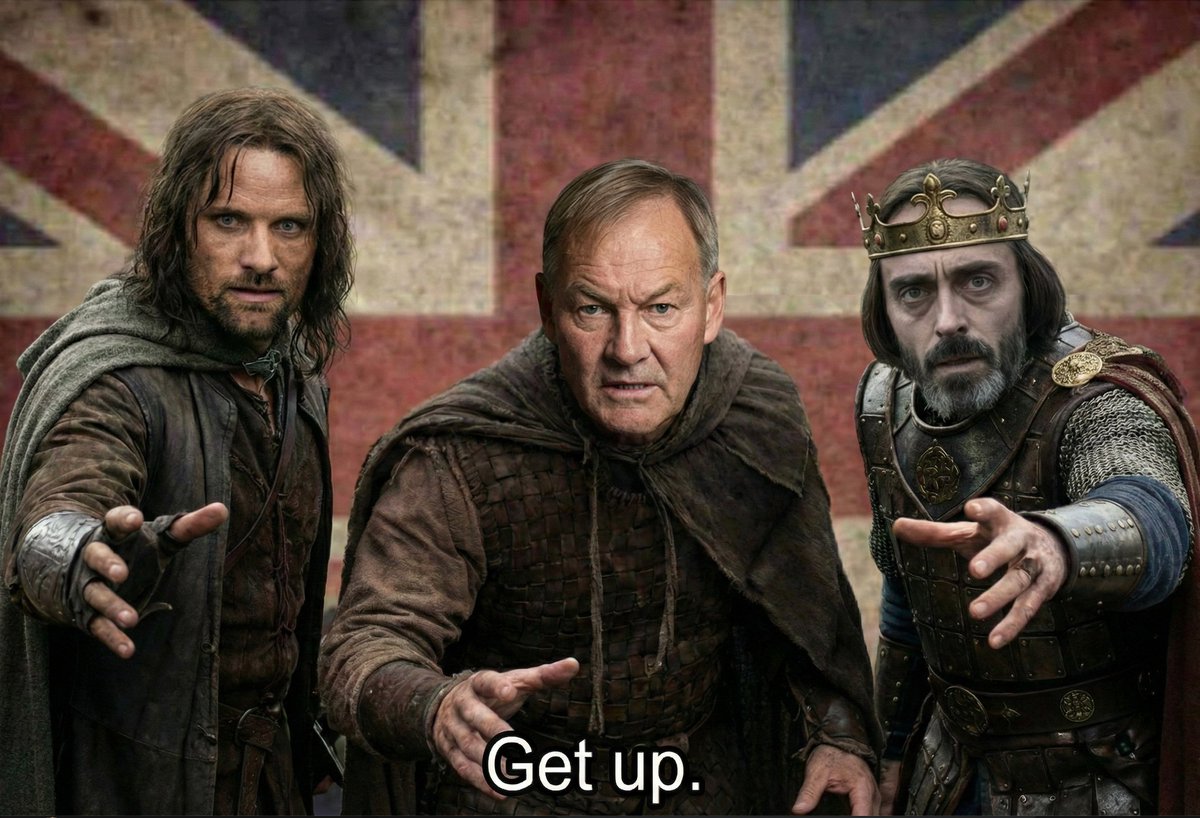
Get up.
Every generation has a Battle of Unnumbered Tears. Most of them are slower and quieter than the one Húrin fought. They are the long defeats, the ones where the rot is gradual, the ones where the men holding the line aren't remembered, their wars and their enemies too obscured to name. There is always a darkness. The darkness has different names in different centuries. It does not care what we call it. It wants the same thing in every age. It wants the post abandoned. It wants the wall unmanned. It wants the man on the field to sit down and admit that nothing is worth standing for and that comfort is the highest good a creature can pursue.
The voice that whispers this is patient. It speaks in the language of reasonableness. It tells you the cause is already lost, and that to keep standing is foolish, and that the men who built the wall would not, themselves, want you to die on it. It is the same voice in every age. It is the voice that took Númenor. It is the voice that took Rome. It is the voice that gets quieter as the wall thins out and louder as the city softens. It does not arrive in armor. It arrives in comfort, in irony, in tired sophistication, in the suggestion that all the old words mean nothing and the men who said them were fools.
The Tolkien answer to that voice is two words.
The phrases neither promises nor predicts. Húrin did not, in the moment, know that his line would survive him in secret. He did not know that an heir of his blood would, three ages later, refound a kingdom and unmake the dark lord. He did not even know if the sun would rise. He shouted aurë entuluva because the shout was a vow to his own soul, that he would not abandon it for fear or for comfort.
That is the only kind of courage that holds.
Nietzsche wrote about amor fati, the love of fate, and meant something close to this. The strong man does not need the universe to be fair, or the future to be bright, or the gods to be on his side. He says yes to the world as it is. He says yes to the work in front of him. He says yes to the post he was assigned even when nobody is coming to relieve him. He says yes to the day that may never come, and in saying yes, he becomes the reason it does.
Aurë entuluva is the shortest sermon ever preached on this. It calls upon the immortal spirit of the doomed man on the last hill, with the last axe, with the last breath. And it makes me feel like I could run through a brick wall.
I am not Húrin. Nobody reading this is Húrin. The world has been kind to most of us in ways our great-grandfathers would not have believed possible. Our trials may seem smaller, our walls thinner, but our enemies being less corporeal makes them no less dangerous.
Day shall come again is an instruction. Stand. The shout does not promise the day. The shout makes the man who shouts it worthy of one.
Stand.
Aurë entuluva.