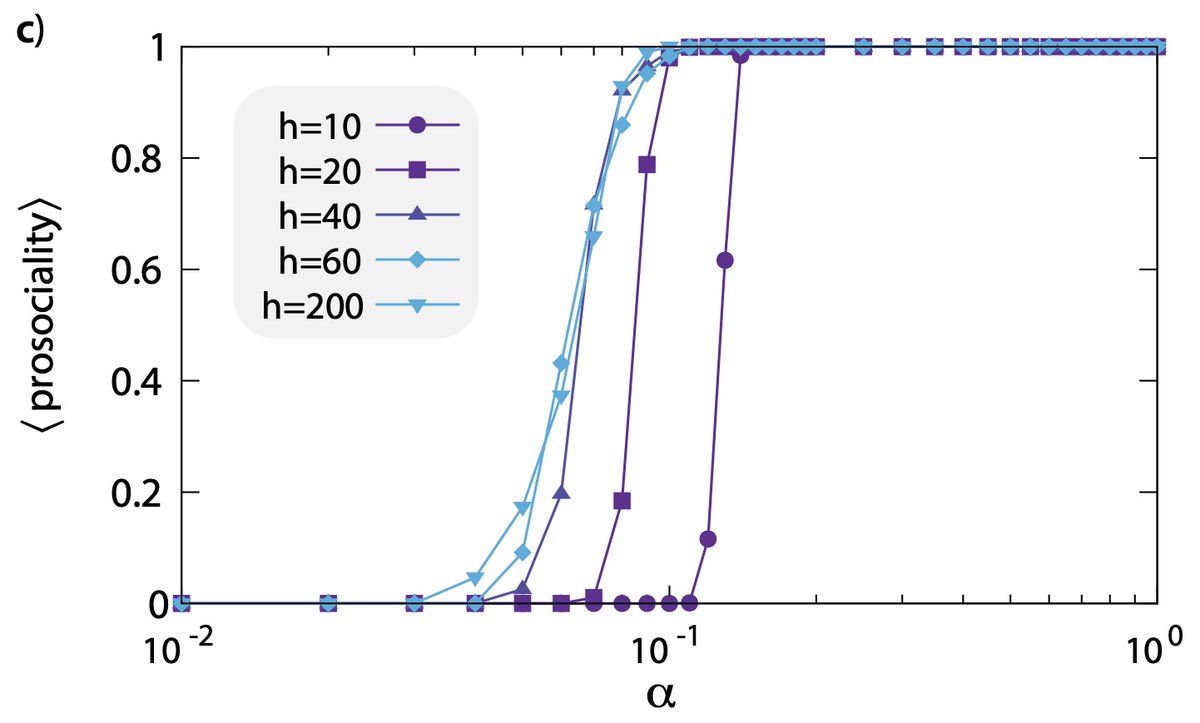
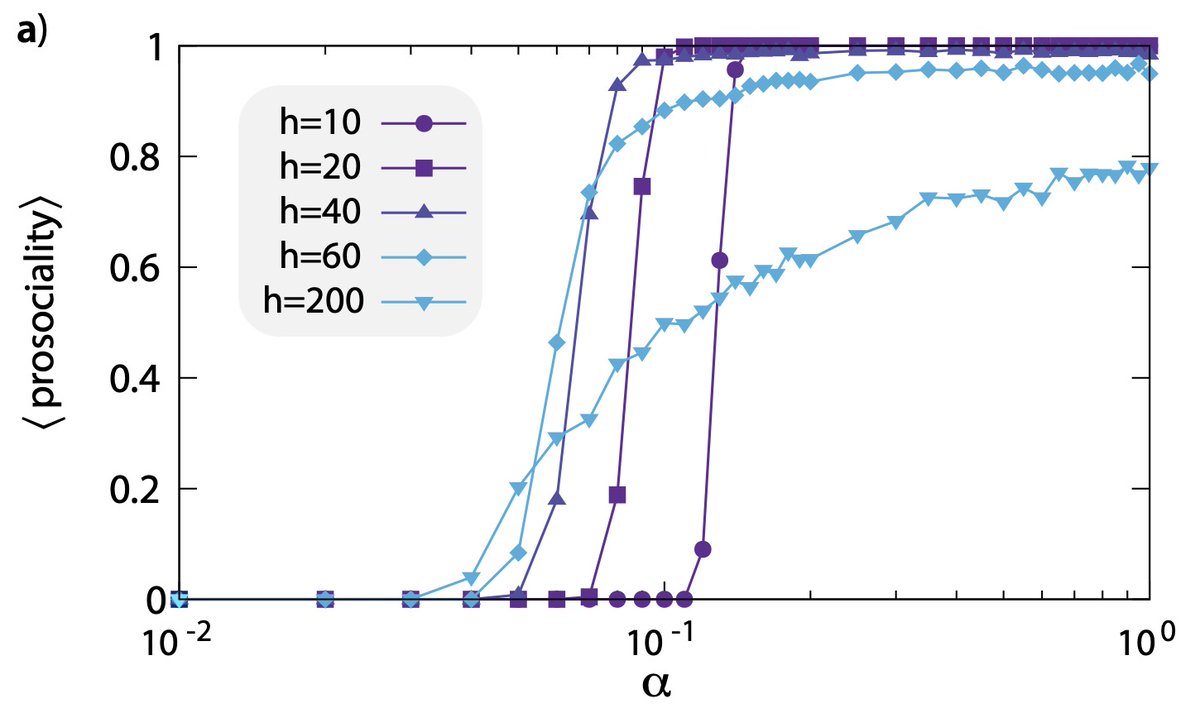
Just out in J. Phys. Complex. Through an ABM, we explore how stress between pro-family and prosocial behaviors impacts early settlement formation; we also study the effect of technology level and its nature.
Some of the unfair snark directed at @JonHaidt’s latest work shows a key weaknesses of the academic community. That the main enemies of a scholar trying to push a key question to the general public, are not misinformed click hungry influencers, but other scholars that do not understand what it takes to bring a conversation to the general public.
Haidt is a key academic from our generation. He has earned that spot by advancing important questions in difficult topics. As academics, we should be proud to have people like him in the public sphere. We don’t have to agree with everything he writes to value and respect his contributions. The righteous mind was a marvelous book that helped many of us understand moral psychology and learn about the moral foundations theory. Not an easy book to write. The Coddling of the American Mind also pushed an important and still ongoing conversation on how a culture obsessed with safety can induce extreme psychological fragility.
For a few years Haidt has been working to understand the impact of digital technologies on the psychology of teens. Anyone who became a parent in the last 20 years knows this is a relevant topic that deserves to be discussed publicly, openly, and here is the most difficult part, constructively.
We are seeing a fair share of snark. But there are a couple of classic arguments that we all need to consider here. One is the precautionary principle. Just like in the case of climate change, if the consequences are potentially dire, you don’t want to roll the dice, even if you are only a little bit unsure. The second one is the fact that a void of scholars like Haidt in the public sphere will not be filled by another scholar of your choice, but by a way less prepared talking head. Being able to engage in the public, for real, is very difficult and the truth is that we have relatively few people in academia that can do that. If we want scientists to have a voice, we need to lift each other up.
So if you are a scholar that thinks has something to say in this space, instead of getting all turfy, snarky, and antagonistic, try to write the clearest and most constructive account you can. Because the audience is not your narrow group of colleagues, but the world: the parents of children that are struggling with device addiction, the tech companies, the legislators, the school teachers that spend five days a week with teens. Be grateful that someone is opening a path in a busy public sphere to allow for a scientific discussion and add to it. Academia is tiny in the real world. We are all on the same team.
Just out: We present an agent-based model that explores the relationship between pro-family and prosocial behaviors, their impact on settlement formation, and the key role of technology in driving the transition between such behaviors. + Info at https://t.co/wwQjiUY6u0
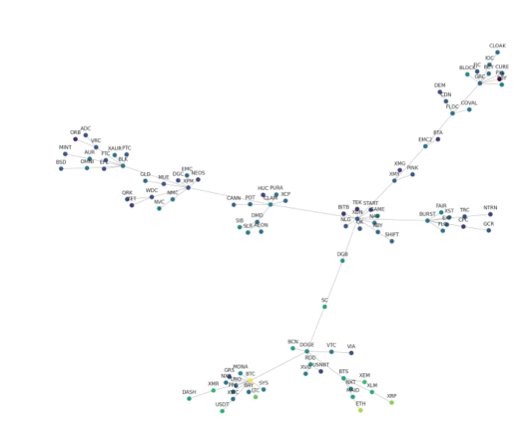
Inferring interactions is a difficult and important task both in ecology and in financial markets. Here is our study, which examines the cryptocurrency market case:
https://t.co/N2ZJ3PsRdo
@JeremyNguyenPhD@NickADobos Nice observation/idea, may be you can improve it even more considering a escale invariance principle by implementing other levels of memory consolidation. Just choose a base factor, like five, and repeat the process for 25, 125, 625 and so...
I described some of the most beautiful and famous mathematical theorems to Midjourney.
Here is how it imagined them:
1. "The set of real numbers is uncountably infinite."
1st of 2023 "Food composition databases in the era of Big Data: Vegetable oils as a case study" (https://t.co/WT7CIrklI9) Main conclusion: the information in such databases is in many cases limited, incompletely documented, old or unreliable. AI methods should help fill the gap.
oh! our intro to network science for kids (using Disney's Frozen as an example) has been translated into Portuguese:
https://t.co/9qny8HKrVE
@HirokiSayama@masonporter
@elonmusk@kylegrantham Twitter support a information distribution process based on synaptic like cascades. This setup is not appropriated for contentious topic discusion. At the end it propiciate a bipartisan mob behavior...