EXPERIENCE is a project (2023-28) dedicated to addressing a fundamental question: What is consciousness good for? Project led by @axelcleeremans at @crcnULB
🎊📜 NEW PAPER 📜🎊
Can we seriously build synthetic consciousness?
And if so, where do we start?
I’m super excited to present recent publication in Neuroscience & Biobehavioral Reviews where @jaaanaru and I confront this challenge head on.
https://t.co/6Jk9Ce6eE5
1/n
Really glad and honoured to have been part of this cohort of CIFAR Winter School on the neuroscience of consciousness. It was really an amazing experience, both the science and the warmth of this community.
ChatGPT refuses to say the name “David Mayer,” and no one knows why.
If you try to get it to write the name, the chat immediately ends.
People have attempted all sorts of things - ciphers, riddles, tricks - and nothing works.
My first monograph is going to the printer next week! For those interested in William James, pragmatism, decapitated frogs, mechanical automata, hemipelegic patients, self-experimentation involving wads of putty shoved into one's own eyeball sockets, etc; the usual fare.
This paper began as a chance encounter with David Carmel in 2017 and now paves the way for a whole new psychophysics - all thanks to the heroic work of @Renzo_Lanfranco 🙏👍😃
Here's our latest initiative to make research on consciousness engaging for young readers!👧👦
We just published an open-access paper in Frontiers for Young Minds 🌟 with contributions by Inès Mentec, @LMoncoucy and @axelcleeremans from our team. 👏
https://t.co/tWsJPEGux5
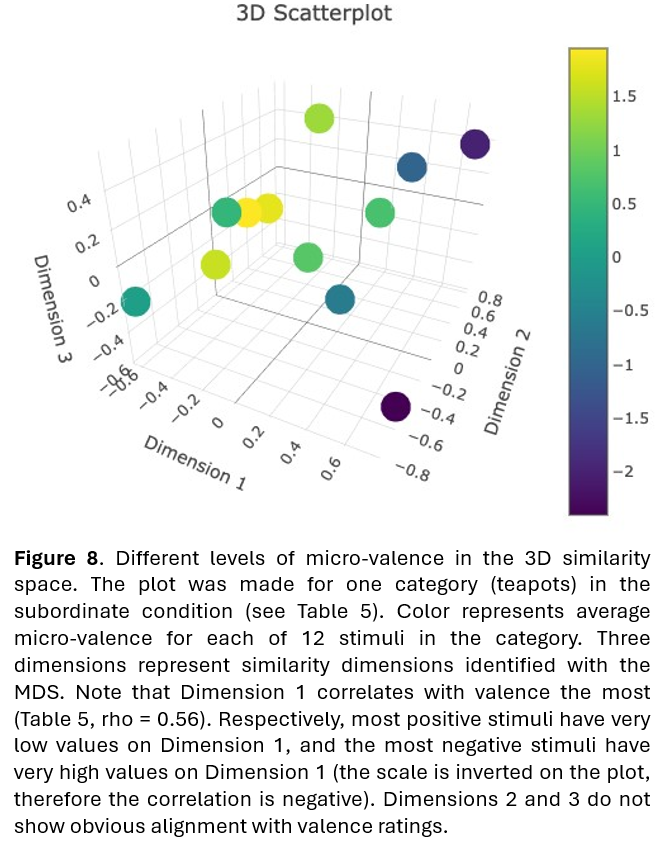
Our results indicate that valence computation may occur in early visual processing and that valence is involved in similarity judgments, corroborating recent claims for the functional role of conscious experience.
We are very excited to share our new preprint about the role of emotional valence in conscious perception (manuscript currently under review).
👉https://t.co/lNoPTPBtML
Leveraging representational similarity analysis, we compared human valence and similarity judgements with activation of deep neural networks' layers to better understand the role of valence in the similarity space.
Has anyone cracked 𝘃𝗮𝗹𝗲𝗻𝗰𝗲 (good/bad)?
Evolutionary argument seems necessary. But there will always be some who argue that it does not explain why it *feels* bad or good. So we're back to the starting point of having to determine why anything has to feel like something...
We have a small armada of presentations at the forthcoming @ASSC27tokyo, with a symposium, three talks and four posters lined up 😃🇯🇵⚡️. Details and schedule here: https://t.co/1xByZK26uM
@erikphoel Perhaps consciousness is the primary function of consciousness, but what is the function of consciousness? That’s the question we’re asking https://t.co/6T3TsL3mTS
“Millions are dead around the world and the most likely cause is an accident during a risky experiment in a laboratory. Should we not be learning lessons from that?” MUST READ new piece by @mattwridley. https://t.co/SsiB18wvhu
The spread of LLMs has accelerated debates on whether AI could be conscious. While experts have weighed in on this issue, in a new study (preprint: https://t.co/NZXc2H96hB) we surveyed the general population on whether they attributed consciousness to LLMs. A thread: (1/n)
I mis-clicked on one of my 150 open tabs and it happened to be a tab that's been open since 2019 with a paper that has a solution to the exact research problem I've been puzzling over today. This is the moment I've been waiting for and I've decided to never close any tabs again
On the fence whether you should submit your abstract? Wait no longer, and submit today! Deadline is tomorrow, and we're looking forward to reading your contribution!