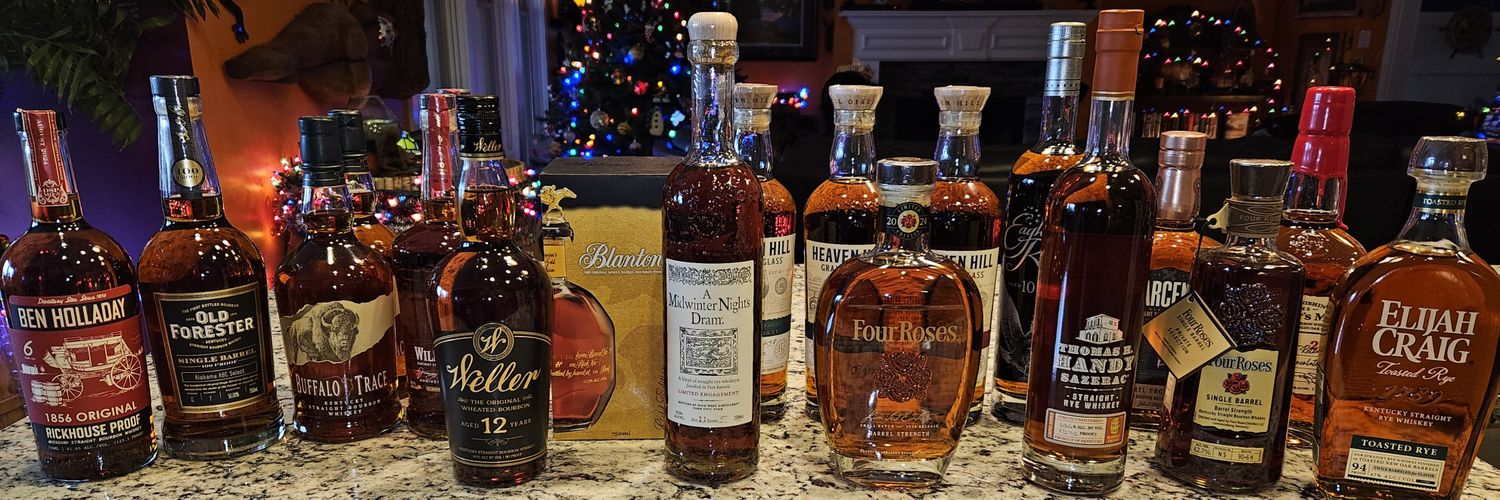
@TheDailyDraught Of bourbon in general. I drink more of Small Batch Select than anything. Now, I have had bottles that are better. Those are highly allocated and rare bottles. 4RSBS is my go-to. Cheers!
Thanks to the @oasishealthapp I’ve switched from poisonous FairLife Protein Milk to Bourbon and I can’t even begin to explain how much healthier I feel.
@DAILYCONTROVERS@JoeyMannarino@RepThomasMassie "Always votes with Democrats"??? He 1.2% votes with Democrats. Massie supports the Constitution more than anyone. I honestly don't get the Massie hate.
It's possible to be both a Trump supporter AND a Massie supporter.
Every Honeycrisp apple is a clone of a single tree planted at the University of Minnesota in 1962. Every one. Apple seeds are random. Plant a Honeycrisp seed and the new tree produces a small, sour apple that’s usually inedible.
So apple growers do something old and clever. They cut a small branch off the original Honeycrisp tree, slot it into a slit in a young apple sapling, wrap the joint, and wait. The branch fuses to its new host and starts producing Honeycrisps. About 20 million Honeycrisp trees exist worldwide, every one a piece of that 1962 tree on different roots.
Same goes for Gala, Fuji, Pink Lady, Granny Smith. Every Granny Smith on Earth traces back to a seedling found in 1868 by a woman named Maria Ann Smith in Australia. She’d thrown French crab apple cores onto her compost heap, one of them sprouted, and the apples it bore were unusually tart and good for cooking. That one tree is the ancestor of every Granny Smith in every grocery store on the planet.
Wine has the bigger story. In the 1860s, a tiny aphid called phylloxera caught a boat from America to France, hidden in some grapevine cuttings. It eats grape roots. French vines had no defense and started dying everywhere. Within 15 years, French wine production crashed from about 11 billion bottles a year to 3 billion. The blight then tore through Italy, Spain, and Germany, and European wine was on the edge of collapse.
The rescue came from Missouri and Texas. American grapevines had grown up with phylloxera and were immune to it. So growers chopped French grape varieties off at the trunk and joined them to American roots. Above the soil: still French grapes. Below the soil: aphid-proof American root. It worked. Today, almost every bottle of French, Italian, Spanish, Australian, and Californian wine you’ve ever drunk sits on top of an American root.
The technique is ancient. Chinese farmers were grafting trees by 1000 BCE. A Greek medical text from 424 BCE describes it casually, like it was already old news. It works because plants don’t have a rejection system the way animals do. Cut two branches. Match the green layers just under the bark. Wrap them tight. In a few weeks the plumbing has fused into a single plant.
A Syracuse University art professor named Sam Van Aken has spent 18 years building a single tree that grows 40 different fruits: peaches, plums, apricots, cherries, nectarines, almonds. In spring it blossoms in pink, white, and crimson all at once. He’s made more than a dozen. They sell for up to $30,000 each.
Without grafting, there would be no commercial apple industry, no global wine industry, and most of the heirloom fruits humans have bred over the centuries would have gone extinct. One clean cut, and you’ve kept entire species alive.
@BourbEnthusiasm I'd like to see some reviews of regular shelfers...like my favorite Four Roses Small Batch Select, or Heaven Hill Bottled-in-Bond seven year, Maker's 101, and the like. Cheers, Frank!
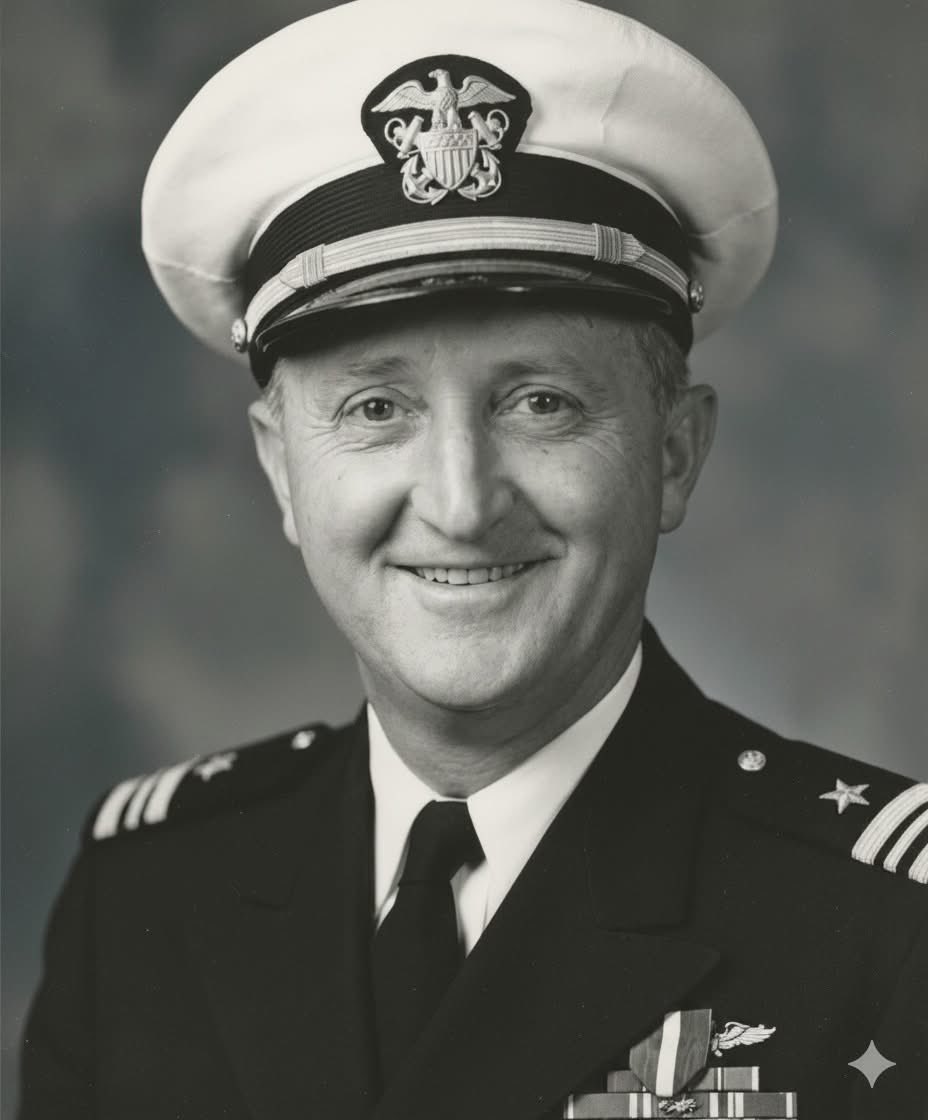
Nobody Remembered Him in School. The Navy Called Him “Average.” Then He Said 4 Words That Saved 80 Men.
Selma, Alabama. 1902. Howard Gilmore is born.
“Quiet kid,” a classmate said later. “Type you’d forget was in the room.”
1920. Age 18. He joins the Navy. No family name. No favors. Just test scores.
Naval Academy, 1926. Graduates 34th of 436. “Solid,” instructors wrote. “Not flashy. Won’t stand out.”
They were wrong.
1930. He volunteers for submarines.
Everyone else avoids them. “Steel coffins,” sailors called them. 1 in 5 didn’t come home in WWII. Some said 1 in 4.
Gilmore: “Sign me up.”
Life keeps hitting him.
Panama. Shore leave. Thugs. Knife. Throat slit. Left in an alley. “Should’ve died,” a corpsman said. He didn’t. Went back to sea.
First wife: dies of illness.
Second wife, Hilda: falls down stairs. Coma.
December 7, 1941. Pearl Harbor. She’s still unconscious.
December 8. New orders. “Commander, USS Growler. Report to new construction.”
He kisses Hilda goodbye. Doesn’t know if she’ll wake up. Goes to war anyway.
Then he becomes a nightmare for Japan.
July 1942. Kiska, Alaska. Three Japanese destroyers. He sinks one, wrecks two, dodges torpedoes. Navy Cross.
Next patrol. East China Sea. Four merchant ships. 15,000 tons. Gone. Gold Star.
By 1943: “Most aggressive sub driver in the Pacific,” Admiral Lockwood said. “Crazy enough to win.”
February 7, 1943. 1:00 AM. Solomon Islands.
Growler surfaces to charge batteries. Lookout: “Gunboat! Closing fast!”
Japanese. Coming to ram.
Gilmore doesn’t turn. Doesn’t dive. “Ramming speed,” he orders.
11 knots. Steel on steel. Growler tears the gunboat open.
But the dying ship fires. Machine guns. Bridge gets hosed.
Two lookouts dead. Exec wounded. Gilmore: chest, abdomen. Multiple hits. Blood.
He’s still standing. Still thinking.
To get below: climb down the hatch. Seconds. Maybe 10. Maybe 20.
Every second: Growler is a target. 80 men inside. Damaged. If another ship shows up, they all die.
He looks at Lieutenant Commander Schade. At the hatch. At the sea.
“Take her down.”
Schade freezes. “Sir—”
Gilmore, bleeding out: “Take. Her. Down.”
Schade dives through the hatch. Slams it.
Growler sinks.
Howard Gilmore doesn’t.
February 17. Brisbane. Growler limps home. Bow crushed. 80 men alive.
Commander’s bunk: empty.
May 7, 1943. Story declassified. Front page, USA.
July 13. New Orleans. Hilda Gilmore — awake now from her coma — receives his Medal of Honor. Two kids at her side.
First submariner in WWII to get it. Only 6 more would.
USS Howard W. Gilmore launches months later. Hilda christens it.
Today at Annapolis they still teach it.
“Take her down.” Four words.
He could’ve said “Help me.”
Could’ve said “Wait.”
Could’ve said “I’m the captain.”
He did the math. 80 > 1.
“No hesitation,” Schade wrote later. “He knew. And he chose us.”
The “unremarkable” kid from Selma.
The “average” officer.
Throat cut. Wife in coma. War on his shoulders.
And when it mattered, he made himself zero.
So 80 others could be one.
“Take her down.”
Then the Pacific.
Then legend.